
Chevrolet Bel Air buyer's guide
Chevrolet Bel Air -- the model's own buyer's guide: variants, values and what to check.
Years listed: 1934-1971 · Series: Impala
Overview and history
The Bel Air is not one car. It is a name Chevrolet used for a quarter of a century, on four generations of full-size car, and the first job of any buyer is to work out which Bel Air the seller is describing — because a 1952 Styleline hardtop, a 1957 fuel-injected convertible and a 1970 big-block sedan share a badge, a maker and almost nothing else. This guide covers the name across its whole run, with the weight where the market is: on the 1955–57 Tri-Fives.
The name arrived in 1950, borrowed from Bel-Air, the wealthy Los Angeles neighbourhood, and at first it was not a trim line at all. It was a single body style: the Styleline DeLuxe Bel Air, Chevrolet's first pillarless hardtop coupe — a convertible's open, pillar-free glasshouse with a fixed steel roof, put within reach of the cheapest car line in the GM empire. For 1950–52 the Bel Air is that hardtop and only that hardtop: a two-door, six-cylinder car in the rounded Styleline body, distinguished by a three-piece rear window and a plusher cabin.
In 1953 Chevrolet promoted the name. The Bel Air became the top trim series in a three-step range — 150 at the bottom, 210 in the middle, Bel Air on top — offered as sedans, a sport coupe, a convertible and a wagon. That is the pattern the name would keep: never a separate model in the engineering sense, always the best-trimmed version (later, the middle version) of Chevrolet's standard full-size car. The 1953–54 cars kept the pre-war formula underneath — a stovebolt six and a torque tube — while looking entirely modern on top.
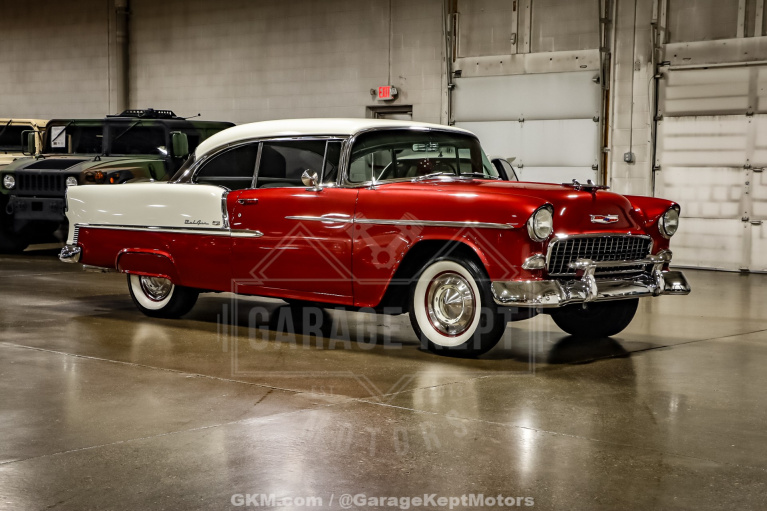
Everything changed in 1955. The all-new body, the new chassis and above all the new 265 cu in small-block V8 turned Chevrolet, and the Bel Air at the top of it, into the defining American car of the decade. The 1955, 1956 and 1957 cars — the Tri-Fives — were facelifted from the same basic body three years running, each year more flamboyant than the last, and they have never stopped being collectible since. Of the 426 Bel Airs we currently track, 364 sit in the Tri-Five series; the single biggest year is 1957, with 171 cars, followed by 1955 with 128 and 1956 with 65. When someone says "Bel Air" without a year, this is the car they mean.
After 1957 the name's story is one of slow demotion inside a growing range. For 1958 the Bel Air was still the top series, but the one-year-only Impala sub-series sat above it in spirit, and from 1959 the Impala took the top rung outright, pushing the Bel Air into the middle, above the Biscayne. Through the 1960s the Bel Air became the sensible full-size Chevrolet — family sedans, wagons, and many fleet, taxi and police cars — available with everything from a thrifty six to the same big-block engines as the Impala, because trim and engine were still separate decisions at Chevrolet. The Caprice, from 1966, squeezed it from above again. The last United States Bel Airs were built for 1975, a single sedan line in the biggest bodies Chevrolet ever made; the name carried on in Canada to 1981.
Why does the demotion matter to a buyer now? Because value, parts support and identity checks all follow it. A Tri-Five Bel Air is a blue-chip classic with a repro industry behind it. A 1960s Bel Air is the same basic car as the Impala everyone wants, usually for less money, but with plainer trim that is harder, not easier, to replace. A 1970s Bel Air is a vast, honest sedan almost nobody is restoring, which makes originality — not restoration potential — the whole game.
The models
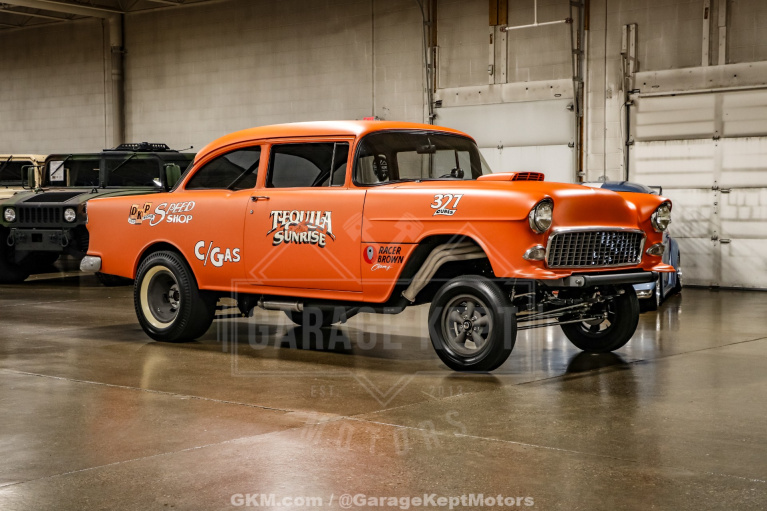
Read the range as four generations. Within each, the Bel Air badge sits on many body styles — sedans, hardtop coupes and sedans, convertibles and wagons — and the body style moves the value more than almost anything else. A convertible or a Nomad wagon is a different market from a four-door sedan on the same chassis, in the same year, with the same engine.
| Model | Years | Engine | Output | Built | Character |
|---|---|---|---|---|---|
| Styleline DeLuxe Bel Air hardtop | 1950–1952 | 216/235 six | 90–105 hp | — | The original hardtop coupe; six only, gentle pace |
| Bel Air series (150/210 range-topper) | 1953–1954 | 235 Blue Flame six | 108–115 hp | — | Top trim on the last pre-V8 body; convertible the prize |
| Bel Air (Tri-Five) | 1955–1957 | 235 six / 265 / 283 V8 | 123–283 hp | — | The icon; hardtops, convertible and Nomad lead values |
| Bel Air Nomad | 1955–1957 | 265 / 283 V8 (six offered) | 162–283 hp | 8,386 (1955); 7,886 (1956); 6,103 (1957) | The two-door sport wagon; rarest regular Tri-Five body |
| Bel Air convertible | 1955–1957 | 265 / 283 V8 (six offered) | 162–283 hp | 47,562 in 1957 | The open Tri-Five; check top frame and floors hardest |
| Bel Air / Bel Air Impala | 1958 | 235 six / 283 / 348 V8 | 140–315 hp | — | One-year body; Impala sport coupe and convertible on top |
| Bel Air (mid-range) | 1959–1960 | 235 six / 283 / 348 V8 | 135–335 hp | — | Batwing cars; Impala above it, Biscayne below |
| Bel Air (mid-range) | 1961–1964 | Six / 283 / 327 / 409 V8 | 135–425 hp | — | Bubbletop 1961–62, then squared-off; 409 cars are sleepers |
| Bel Air (mid-range) | 1965–1970 | Six / 283–454 V8 | 140–450 hp | — | Sedans and wagons; big-blocks available to order |
| Bel Air (US) | 1971–1975 | 250 six / 350 / 400 / 454 V8 | 100–245 hp net | — | Sedan only by the end; size is the appeal and the problem |
(Production figures are given only where they are reliably published for the individual body style; Chevrolet's period totals were usually reported by series rather than by body, so a dash means the figure is not honestly separable, not that the car is rare. Outputs are period gross figures except the 1971–75 cars, which are quoted net from 1972 on.)
The first cars, 1950–54. The 1950–52 Bel Air hardtop is a style purchase: you buy it for the pillarless roofline on the rounded Styleline body, and accept six-cylinder performance, a torque-tube driveline and 6-volt electrics as the price. The 1953–54 series cars broaden the choice — the convertible and the two-door hardtop are the collectible ones, the four-door sedan the value buy — and gain the improved 235 Blue Flame six and, on many cars, Powerglide. None of these early cars is fast; all of them are simple, and that simplicity is a genuine ownership virtue the later cars cannot match.
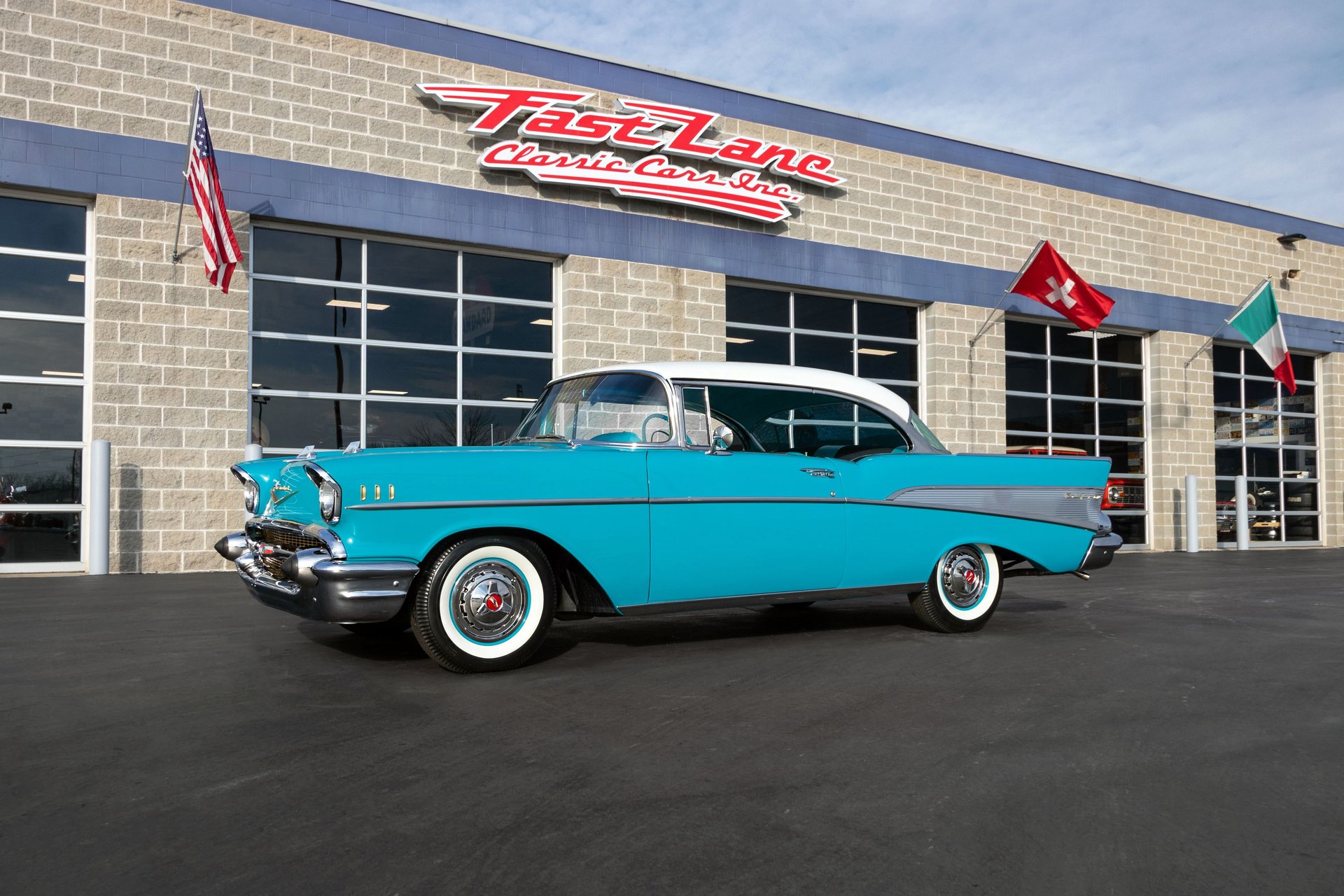
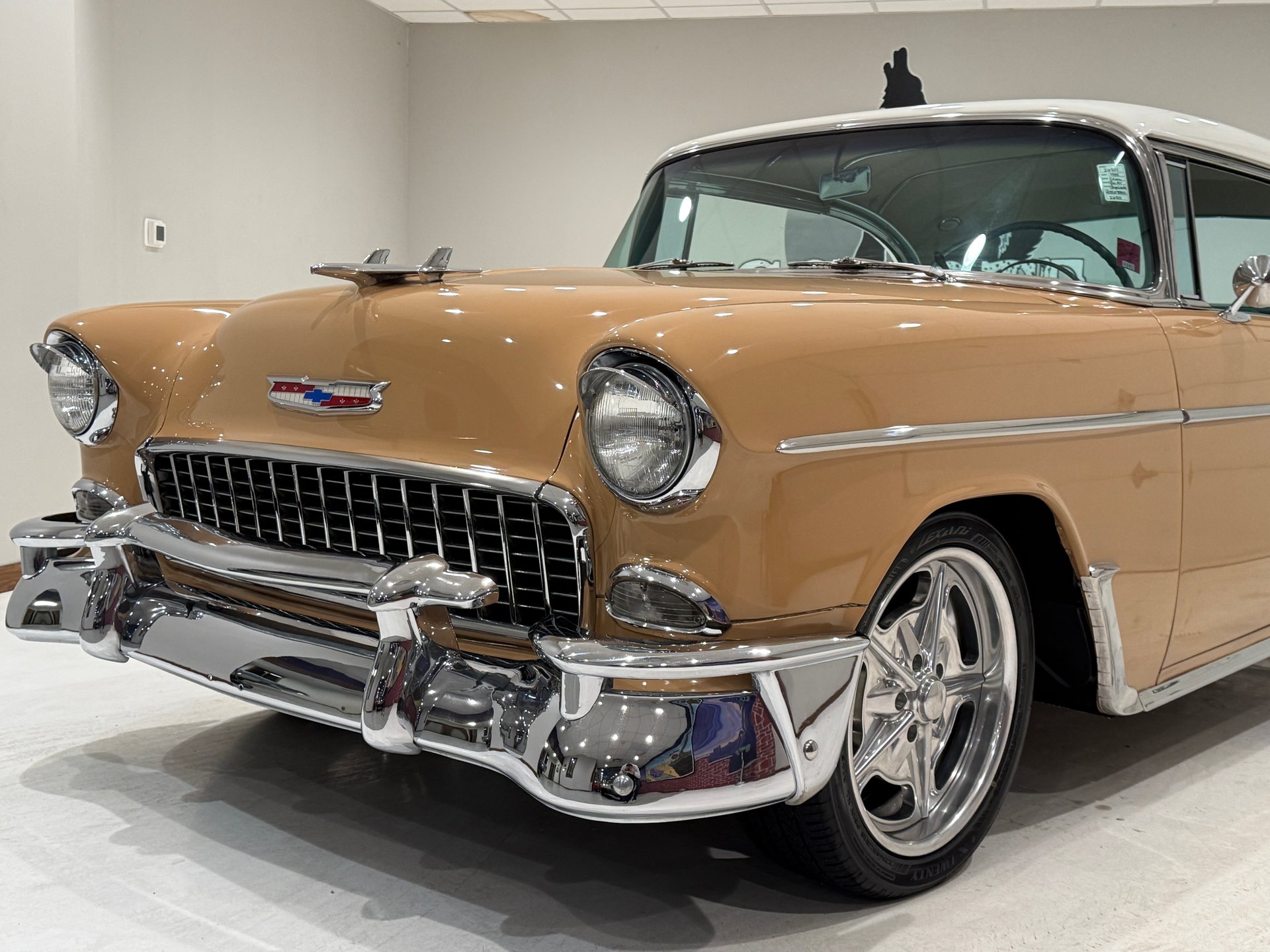
The Tri-Fives, 1955–57. This is the heartland. The body styles that matter: the two-door hardtop (Sport Coupe), the four-door hardtop (Sport Sedan, from 1956), the convertible, the sedans, and the wagons — two-door Handyman, four-door Townsman, and at the top the two-door Nomad with its sloped pillars and ribbed roof. Year tells are absolute and worth learning before you view anything: 1955 is clean and finless with a small egg-crate grille; 1956 has a full-width grille, longer side trim and small fins beginning; 1957 has the big fins, the wide grille with bumper bullets, gold anodised trim and the fuel-injection option at the top of the engine list. Cars are routinely dressed across years — a 1955 wearing 1957 trim is a question to ask, but you price it as what it is.

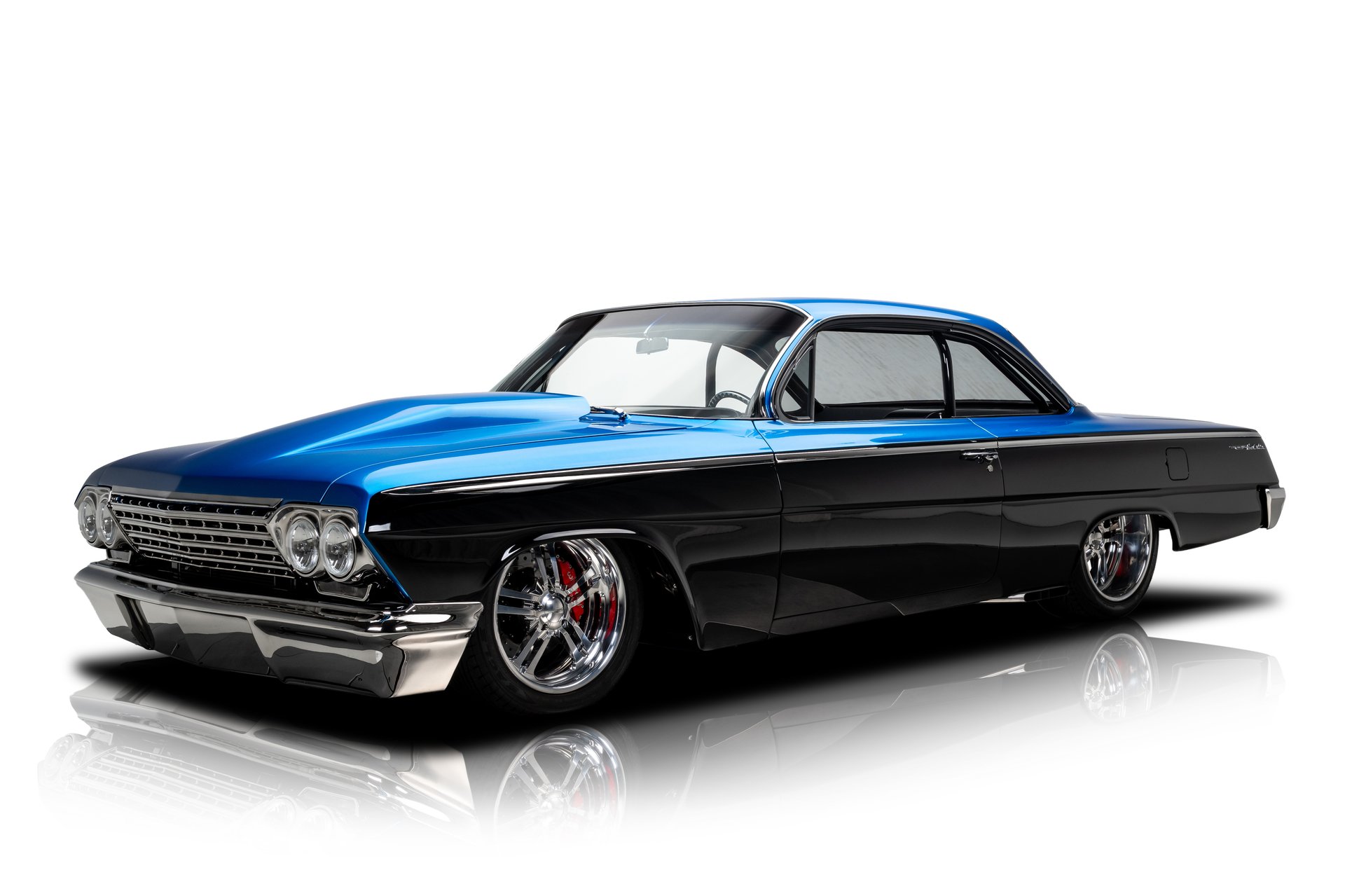
1958 and the batwing years, 1959–60. The 1958 is a one-year body — longer, lower, wider, on the new X-frame — and the Bel Air Impala sport coupe and convertible launched the Impala name inside it. One-year cars mean one-year panels and trim; condition and completeness outrank everything. The 1959–60 cars, with their horizontal batwing fins and cat's-eye tail lamps for 1959 and a cleaner tail for 1960, were controversial when new and are sought-after now precisely because nothing else looks like them. The Bel Air sits in the middle of these ranges, and many survivors are four-door sedans — honest cars, but price them as sedans, not as the Impala hardtops they are photographed next to.
The sixties and seventies, 1961–75. The 1961–62 cars share the sought-after bubbletop coupe roof on hardtops, and the range includes the 409-powered sleepers described in the engines section. From 1963 the styling squares off, from 1965 the cars get the long B-body that runs to 1970, and from 1971 the final, largest generation runs to the US name's end in 1975. In these years the Bel Air is mostly a sedan and wagon story, with two-door sedans — the post cars beloved of drag racers, as the lightest and stiffest shell — as the enthusiast exception. Fleet history is common and not automatically bad: a police or taxi past means heavy-duty parts and hard use in equal measure.

Engines and gearboxes
The sixes: 216, 235 Blue Flame, and the later 230 and 250
Every Bel Air before 1955 is a six, and a six remained the standard engine for the whole life of the name. The 1950–52 cars use the 216.5 cu in Thrift-Master or the 235.5 cu in engine paired with Powerglide — splash-and-pressure lubrication in the early cars, babbit bearings, and a pace that suits the car. The 1953 Blue Flame version of the 235 brought full-pressure lubrication and, in Powerglide form, 115 hp; for 1955–57 the 235 continued as the base Tri-Five engine at up to 140 hp, and a version of it served on to 1962. From 1963 the six became the thinner-wall 230, and from 1967 the 250, with seven main bearings and a thoroughly modern bottom end.
Judge a six by its noises and its oil. These are low-stressed engines that wear slowly but visibly: tappet noise that does not quieten as the car warms, oil pressure that falls away at a hot idle, and blue smoke on start-up after a descent all tell the truth. The specific trap on the early engines is the oiling system — decades of short runs and old oil sludge the passages feeding the rocker shaft, and a dry, clattering top end is the result; the fix ranges from cleaning the feed to the head coming off, and you cannot tell which from the seller's driveway, so price the noise in. Six-cylinder cars are worth less than V8 cars in every generation, and converting one is a bigger job than the engine swap itself, so buy the six because you want the six, at a six price.
The small-block V8s: 265, 283, 307, 327 and 350
The 265 cu in small-block that arrived with the 1955 Bel Air is the most consequential engine in this guide and one of the most consequential ever made: overhead valves, a short stroke, a lightweight cast block, 162 hp with a two-barrel carburettor and 180 hp with a four-barrel in its first year. For 1956 the outputs rose, with a 225 hp dual-four-barrel version offered in the passenger-car line. In 1957 the block was bored to 283 cu in and the range ran from 185 hp with a two-barrel through 220 hp with a four-barrel and 250 hp with fuel injection to the famous 283 hp injected engine — one horsepower per cubic inch, a marketing line Chevrolet earned honestly. The 283 stayed the staple Bel Air V8 into the early 1960s, joined by the 327 from 1962 in 250 and 300 hp forms, then by the 307 as the base V8 from 1968 and the 350 from 1969, which carried the name, in ever milder states of tune, to the end.
The small-block's virtues are the reason Tri-Five values hold: it is light, compact, tolerant, and supported by the deepest parts trade in the classic world. Its failure modes are equally well mapped. Worn valve guides and hardened stem seals give the classic puff of blue smoke on start-up and on the overrun — an inexpensive fix that sellers describe as "uses a little oil," which it does, through the guides. A rattling timing chain and a rear main seal that marks its territory are age items, not verdicts. What should stop you is smoke under load (rings and bores), a knock from the bottom end, or coolant in the oil. On identity: the small-block was swapped between cars for seventy years, and value often rides on the engine being the right one. The stamped pad ahead of the right-hand cylinder head carries the codes that identify displacement, specification and, on later cars, the car it was built for. Read it and decode it before you pay a premium for any claimed original engine — the badge on the wing proves nothing.
The Rochester Ramjet fuel injection, 1957–59 in the Bel Air range, deserves its own warning because it carries the biggest premium and the biggest trap. The Ramjet is a mechanical, continuous-flow system: an engine-driven fuel meter and an air meter on a cast plenum, metering against manifold vacuum and temperature. When it is right, a fuelie starts cleanly, idles evenly and pulls with a sharpness no carburettor matches. When it is wrong, the symptoms are hard hot starting, a rich idle, hesitation and fuel smells, and the causes are usually wear in the fuel meter, a maladjusted enrichment control, perished diaphragms or a previous owner's adjustments layered on top of each other. Genuine units were removed from many cars in period and replaced with a four-barrel, and carburettor cars have been dressed as fuelies since. A real fuelie needs evidence: the unit's own numbers, the correct plenum and air cleaner, and ideally paperwork. Budget realistically $2,500–5,000 for a full rebuild and calibration of the injection unit by one of the few shops that still do them — and treat any car priced as a fuelie without evidence as a carburettor car with expensive jewellery.
The big-blocks: 348, 409, 396, 427 and 454
Chevrolet's first big-block, the 348 cu in W-series, arrived in 1958 at 250 hp, with triple two-barrel versions up to 315 hp and, by 1961, 350 hp. Its scalloped rocker covers — the W shape that gives the family its name — are the quickest identity check in this whole guide. For 1961 the 348 was joined and then replaced by the 409: 360 hp in its first year, then 380 and 409 hp single-four-barrel versions and the dual-quad 425 hp engine for 1962–65. The 409 made the early-sixties Bel Air two-door sedan a drag-strip legend precisely because the plain mid-trim shell was light. From 1965 the Mark IV big-block took over: the 396 at 325 or 375 hp, the 427 at 385 or 425 hp from 1966, and the 454 from 1970, rated up to 450 hp in its first year in other Chevrolet lines and fitted to Bel Airs in milder tune, declining through the net-rated, emissions-era seventies to the 245 hp range by the middle of the decade.
W-series engines (348 and 409) are a specialist world. They share almost nothing with the small-block or the later big-block, their heads and blocks are finite, and a genuine 409 car needs the stamped-number discipline of a fuelie, doubled: 409s have been described out of 348s for decades, and the casting and stamping evidence is the only arbiter. Mark IV engines are tougher and far better supported, but they run hotter and punish a marginal cooling system. On any big-block Bel Air, check temperature stability at a hot idle, oil pressure and smoke on the overrun — then check the numbers, because on these cars the engine is most of the money.
Gearboxes: three-speed manual, Powerglide, Turboglide, four-speeds and Turbo Hydra-Matic
The standard gearbox for most of the Bel Air's life was a three-speed manual with a column change — the famous three-on-the-tree — with synchromesh on second and top. It is a light, pleasant box when the linkage bushes are fresh and a vague, graunching puzzle when they are not; linkage wear, not gearbox wear, is the usual fault, and it is a cheap parts fix. A floor-shifted four-speed manual, the Borg-Warner T-10 at first and then Muncie M20 and M21 boxes, was offered on performance cars from the late fifties and is the desirable option on any 348, 409 or big-block car; judge it on second-gear synchromesh and on whether it stays in gear on the overrun.
The automatic story has three acts and one warning. Act one is Powerglide, the two-speed that served from 1950 to the early seventies in various forms: cast-iron cases on the early cars, aluminium from 1962, only two ratios and a reputation for being unkillable that is mostly deserved. A healthy Powerglide shifts once, cleanly, and does not flare or hunt; a long, sliding shift or a delay engaging drive or reverse means the box needs work, and a rebuild at a shop familiar with them runs roughly $1,800–3,200. The warning is Turboglide, Chevrolet's continuously variable-style automatic offered 1957–61: clever, smooth, fragile when new and a specialist-only proposition now. A Turboglide car that drives correctly is a curiosity; one that does not is a conversion conversation, so price it accordingly. Act three is Turbo Hydra-Matic — the TH350 and the stronger TH400 — which took over the automatic role through the later sixties and seventies and is the easiest automatic of all to live with and to have rebuilt, typically $1,500–2,800 for a rebuild at a general transmission shop. On the latest cars, check for the lock-up and emissions-era drivability bodges of the seventies: disconnected vacuum lines and defeated controls that make a car run worse, not better.
One cross-cutting point: gearbox swaps are endemic — four-speeds into automatic cars, overdrive automatics into everything. A well-done overdrive conversion makes a Tri-Five a far better road car, but it must be priced as a conversion, and the holes cut and crossmembers moved in a bad one are all visible from underneath.
Problem areas
Start with the evidence from our own listings. We have photo-checked 261 Bel Airs in detail, and rust is mentioned in the notes on 81 of them — just under a third — with visible damage noted on 46. Read that the right way round: these are sellers' photographs, chosen to flatter the car, and rust still shows in a third of them. The underside and trunk floor are systematically under-photographed, so treat the photo figure as the floor, not the ceiling. Leaks and smoke barely appear in the photo record — one leak mention and no smoke mentions in 261 cars — which tells you about photographs, not engines: you cannot photograph a puff of smoke on start-up, so those checks belong to the in-person inspection.
Rust: the map
Bel Air rust follows water, road salt and trapped mud, in that order, and each generation has its own map. Learn the map for the car in front of you.
Tri-Five floors, braces and rockers, 1955–57. The structural heart of the check. The floor pans rot from the top down where water sits under carpets and from the bottom up where the underfloor braces trap mud against the pan. The braces themselves — the pressed channels that stiffen the floor — are the expensive part: a pan is a straightforward panel, but a set of rotted braces means the body needs proper jigged welding, and a car with soft braces flexes, squeaks and shuts badly. Rockers go at both ends, behind the front wheel and ahead of the rear, and the inner rocker goes first and invisibly. Press hard along the full length, look at the seam from underneath, and be suspicious of fresh stone-chip over the bottom six inches of the car. A floor and brace repair done properly is a body-off or body-braced job at $3,000–7,500 depending on how many braces and pans are involved; rocker replacement fitted and painted runs roughly $900–2,000 a side. Any seller describing floor work as "just a small patch" is describing the patch he fitted, not the braces underneath it.
Tri-Five upper-body traps. The 1957 headlamp eyebrows trap mud behind them and perforate from inside, and a wing with bubbling eyebrows needs surgery or replacement. Door bottoms fill with water when the drain holes block, and rot along the lower seam; run a fingertip along the bottom edge of every open door. The cowl and the base of the windshield leak into the front footwells. The trunk floor rots over the rear crossmember and in the spare-wheel well, fed by a perished trunk seal and the rear window seal above it. Rear quarters go behind the wheel and along the lower edge. The Nomad adds its own items: the tailgate and liftgate frames, the ribbed roof's seams and the sliding side-glass channels all hold water, and Nomad-specific sheet metal is the hardest Tri-Five metal to replace.

The early cars, 1950–54. The Styleline and 1953–54 bodies rot in the rockers, the floor over the torque tube tunnel, the trunk floor and the lower doors and rear quarters, and their frames — a top-hat section design on the early cars — trap water inside the rails. Panel supply for these cars is thinner than for Tri-Fives, so a hole in a 1953 is a fabrication conversation where the same hole in a 1956 is a catalogue order. Check the frame rails by tapping along them with a small hammer or screwdriver handle, with permission: sound steel rings, rotten steel crunches.
The X-frame cars, 1958–64. These cars sit on an X-frame with no full-length side rails, which gives two specific checks. First, the frame's centre section and the body-mount outriggers collect mud and rot, and a car can look straight while its mounts are sinking — sight along the rockers for a sagging middle, and check the body-to-frame gaps at every mount. Second, these bodies are bigger and their floors wider, so floor and trunk rot covers more square feet before anyone notices; the 1959–60 cars add wide, flat trunk floors that hold water under the mat. The one-year 1958 body has the thinnest panel supply of any car in this guide; on a 1958, completeness and solid original metal outrank everything.
The late cars, 1965–75. The perimeter-frame B-bodies rot in the frame rails behind the rear wheels, in the trunk floor, in the lower front wings behind the wheel, and — on the 1971–75 cars — in the vast rear quarters and around the rear window, where water sits in the channel and works down into the trunk. These cars were cheap for decades and many were driven through northern winters long after the Tri-Fives were garaged, so a late Bel Air needs the same forensic rust check as a Tri-Five and will fail it more often. Vinyl roofs hide roof and pillar rust completely: bubbling or a crunchy feel under the vinyl at the base of the rear pillars is a walk-away-or-price-it signal, because the panel underneath is structural.
Chassis, steering and brakes
The Tri-Five front suspension is a conventional independent design with coil springs and ball joints, and its wear items are honest: ball joints, idler arm, tie-rod ends and the steering box itself. Play at the steering wheel is usually the sum of five small wears rather than one big one, and a full front-end refresh with quality parts is a $1,200–2,500 job at a shop. Grease matters — joints that have run dry for years wear oval and no amount of grease brings them back. Saginaw power steering, where fitted, leaks from the pump, the hoses and the control valve in that order of cost, and the recirculating-ball boxes wear in the straight-ahead position, which is why a car can feel tight on lock and vague at cruise.
Rear suspension follows the years: leaf springs on the Tri-Fives and early cars, with sagging springs and worn shackles giving the classic tail-down stance; coil springs and a live axle on the 1958-on cars, where stance problems are usually tired springs and perished trailing-arm bushes. A car that sits down at one rear corner on a coil-sprung car wants measuring, not just new springs.
Brakes are drums all round on everything before the late sixties, with front discs arriving as an option and then standard fitment through the seventies, varying by year and model — check what the car actually has, not what the year suggests. The system itself is simple and the parts are cheap; what costs money is undoing decades of sitting. A full hydraulic refresh — master cylinder, wheel cylinders or calipers, hoses, and lines where they are corroded — runs roughly $900–2,200 with labour, and any car that has stood for years needs it whether the pedal feels firm in the driveway or not. Single-circuit master cylinders on the earlier cars deserve a special mention: one leak anywhere is no brakes everywhere, and a dual-circuit conversion is the single most sensible safety upgrade on a Tri-Five, widely accepted even by originality-minded buyers when it is done neatly.
Interior, trim and chrome
This is where Bel Air money quietly goes. The Bel Air was the trim flagship, so it carries the most brightwork, the most elaborate upholstery patterns and the most year-specific detail — and brightwork is where the reproduction market is selective.
Chrome and pot metal. The bumpers are steel and re-plate predictably, at roughly $600–1,200 a bumper for a quality re-chrome job. The grilles, headlamp rims, tail-lamp housings and decorative castings are die-cast pot metal, which pits from within as the zinc alloy ages, and pitting cannot be polished out — it has to be filled, copper-plated and refinished by a specialist, at prices that make a full set of Tri-Five castings a four-figure decision. Count the pitted castings on any car and price them individually; "chrome needs a polish" in a listing usually means the pot metal needs a specialist. The anodised aluminium side inserts on a 1957 fade, dent and corrode at the edges, and good originals are hunted.
Upholstery and soft trim. Tri-Five Bel Air interiors use patterned vinyl and cloth combinations that are reproduced for the popular body styles, but the four-door and wagon patterns and the sixties Bel Air-specific fabrics are thinner ground. Seat frames crack at the hinges, springs sag, and padding turns to dust. Sit in the driver's seat of every car you view: a collapsed driver's cushion over a shiny passenger seat is the normal, honest pattern. Convertible top frames bend and their mechanisms wear; a top that does not sit square on the windshield header is a frame problem, not an adjustment.
Glass, seals and the dashboard. Laminated windshield glass delaminates at the edges — a milky border that spreads — and curved glass for the fifties cars is available but not cheap, with fitting a specialist job. Every rubber seal on a car this old is a consumable; budget a full seal set into any car that leaks, and remember the leaks are what rot the floors. Dashboards crack on the sixties and seventies cars, and the elaborate Tri-Five dash needs its chrome and painted surfaces judged as trim, not as mechanics. Heater cores leak into the front footwell and are an awkward half-day of labour for a cheap part; a sweet smell and a misting windshield on a test drive are the tell.
Electrics, cooling and the age items
Six-volt systems on the pre-1955 cars are not a defect — they are a specification — but they demand good earths, clean connections and a healthy generator, and they punish neglect with dim lights and lazy starting that owners then blame on the starter. Twelve-volt cars from 1955 on are conventional, and their failures are conventional too: earth straps corroded where they bolt to the body, generator or alternator bearings, voltage regulators, and wiring that previous owners have extended, Scotch-locked and rerouted. A car where every electrical item works — lights, horn, wipers on all speeds, heater fan, instruments, interior lights — has been used and maintained, and that is one of the best buying signals there is on any Bel Air.
Cooling is the small-block's one systemic weakness in old age: the radiators are now elderly, the cores silt up, and a car that runs cool on the road but creeps up at a hot idle has a flow problem, not a thermostat problem, nine times out of ten. A recored or quality replacement radiator is a $400–900 part fitted, and cheap insurance against the one failure that can kill an engine in an afternoon. Air conditioning, where fitted — common on sixties and seventies cars, rare and valuable on Tri-Fives — should be judged as fitted-or-not plus a recommissioning budget, not as working-or-not on the day: compressors seize in storage, hoses perish, and a full recommission with a refrigerant conversion is a $1,500–3,500 job at a shop.
Finally, the sitting-still tax, which applies to every generation. Fuel tanks varnish and rust from inside on ethanol fuel, sending debris through lines, pumps and carburettors; a tank clean or replacement, lines and a pump are a $600–1,500 recommissioning line on a long-stored car. Tyres age out in six to ten years regardless of tread, and every flexible hose — fuel, brake, coolant — has a life: price them all before the first real drive, not after the first failure.
How to inspect one
Allow a full hour, bring a torch, a magnet wrapped in cloth and a friend to work the pedals and lights while you watch. Insist on seeing the car cold, outdoors, and — if it passes you — pay for half an hour on a lift before money changes hands. On a Bel Air the lift is not a luxury; the floor braces, frame and trunk floor that decide the car's value are all invisible from above.

- Paperwork and identity first. Match the VIN on the title to the plate on the car — on Tri-Fives, the plate is on the driver's door hinge pillar; on later cars it moves to the cowl and then the dashboard corner visible through the windshield. Confirm the year from the VIN and the body style from the cowl or trim tag, not from the seller's description. Then read the trim tag for the original paint and trim codes: a car whose codes match its colours has a story that hangs together. Ask for invoices, and weight a thick file heavily — on a Bel Air, documented work is worth real money.
- Cold start. The engine should be stone cold when you arrive; a warmed-up car is a seller managing a symptom. A carburettor car should start with a couple of pumps and a fast idle that kicks down. A fuel-injected car should start cleanly and settle. Watch the tailpipe: a brief puff that clears is valve seals; continuous blue smoke is rings; white vapour that does not clear and smells sweet is coolant, and that ends the viewing until it is explained.
- The engine, standing still. With it idling, listen for the top-end clatter of a starved six or a worn small-block valvetrain, look for leaks at the rocker covers, the rear main and the fuel pump, and pull the dipstick: oil that is thin, black and petrol-smelling on an injected car points at the Ramjet unit; mayonnaise under the oil filler cap points at coolant. Check the stamped pad ahead of the right-hand head and decode it on the spot — on any car priced for its engine, this stamp is the price tag's evidence.
- Underneath: floors, braces and frame. On the lift, or on your back with the torch, work front to back. Prod the Tri-Five floor braces and the inner rockers; tap the early cars' frame rails; on a 1958–64 car examine the X-frame centre and every body-mount outrigger; on a late car, the rear frame rails. Perforation in braces, mounts or rails is structural money — the repair-cost ranges in the rust section are the ones to carry into the negotiation. Read the underseal as you go: patchy, chipped and honestly dirty is factory age; a fresh, uniform black coat over everything, fitted the week before the sale, is a question, not an answer.
- Trunk and spare well. Lift the mat and the spare. Look for water staining, active rust in the well corners and daylight where the floor meets the rear panel. Check the trunk seal and the rear window channel while you are there — they are where the water came in. On a Nomad, work the tailgate and liftgate and check their frames and the roof seams with the same suspicion.
- Body, gaps and the magnet. Run the wrapped magnet over the rockers, lower quarters, door bottoms and — on a 1957 — the headlamp eyebrows. Filler announces itself by the magnet falling away. Sight down each flank for ripples, check that the doors shut without lifting or dropping, and run a fingertip along every door's bottom edge for bubbling. Count the pitted pot-metal castings and price them one by one.
- Floors and interior from inside. Lift the carpets in all four footwells and feel for damp; a dry-stored car with wet carpets has leaking seals and starting rust. Sit in the driver's seat and feel for collapsed springs and padding, check the glass edges for delamination, and on a convertible, power the top up and down and watch it meet the windshield header squarely.
- Steering, suspension and stance. Stand back and check the car sits level; a tail-down Tri-Five is springs and shackles, a sagging middle on an X-frame car is mounts, a low rear corner on a coil car wants measuring. Rock each front wheel top-to-bottom and side-to-side for ball-joint and bearing play, then bounce each corner: it should settle in one movement. On the drive, the steering should be free of a dead band in the straight-ahead position.
- The test drive. Fifteen minutes minimum, including a stretch at highway speed. A small-block should pull cleanly from low revs without hesitation — a flat spot is carburation or ignition until proved otherwise. A Powerglide shifts once, cleanly, with no flare; a four-speed should take second gear without a graunch and stay in gear on the overrun. Brake firmly from speed: the car should stop straight, the pedal should stay firm, and a drum-braked car that pulls has a cylinder or adjustment fault to price.
- Heat and electrics at a hot idle. Let it idle after the drive. The temperature should stabilise, not creep — creep at idle with cool running on the road is the radiator-flow fault from the problem areas section. Run the heater fan on every speed, work every light, the horn, the wipers and every instrument, and watch the charging gauge or light. On an air-conditioned car, engage the system and listen for the compressor clutch; price a recommission either way.
- Oil pressure and the second start. Hot, at idle, the oil pressure should be steady and should rise cleanly with revs. Then switch off, wait five minutes, and start it hot: the hard hot start is the classic Ramjet and heat-soak complaint, and a car that will not restart hot in the seller's yard will not restart hot in a fuel station either.
- Decide on the shell, not the shine. Add up what you found in this order: structure first, identity second, mechanics third, trim fourth. A Bel Air with a sound shell, the right engine and tired mechanics is a good buy at the right price. A shiny car with soft braces or a story that does not match its stamps is not cheap at any price — it is a restoration you have not been quoted for yet.
Values
The build below this guide carries the live market — the cars listed now and the recorded sales — refreshed at every build, and that block, not this section, is where the numbers live. What this section gives you is how to read them, because the Bel Air market is really five markets wearing one badge, and the spread inside each is driven by the same few things.
The first driver is generation. The Tri-Five market is deep, liquid and international: good cars sell, project cars sell, and parts support means a buyer can price a car's faults with confidence, which keeps the whole market honest. The early-fifties cars trade in a thinner, older market where the right buyer matters more than the asking price. The 1958 is its own one-year market. The sixties cars follow the Impala's coat-tails — a Bel Air is valued as the plainer relation of a fashionable car, which makes the best sixties Bel Airs look cheap next to an equivalent Impala and the worst look correctly priced. The seventies cars barely have a market at all, which cuts both ways: there is no liquidity, and there is also no competition when a good one appears.
The second driver is body style, and within a year it outweighs everything else. Convertibles, two-door hardtops and Nomads sit at the top of every generation's range; two-door sedans carry a drag-racing premium in the early sixties; four-door sedans and wagons — Nomad excepted — sit at the bottom, even though the wagon is often the most usable car of the set. Compare a car against its own body style first: a four-door priced against two-door money is the commonest valuation error in this market.
The third driver is the engine, and here the asking-versus-achieved gap is widest. Sellers ask premiums for fuel injection, for 409s and for big-blocks, and the market pays them only on evidence — stamps, castings, paperwork — of the kind the inspection section describes. An undocumented claim earns a fraction of the premium asked for it. Six-cylinder cars, conversely, are asked cheap and sell cheaper; the gap between a six and a small-block V8 in the same body is the most predictable discount in this market, and fair value if you actually want the six.
Condition spread is the fourth driver, and it is unusually wide because the restoration economics are unusually clear. A Tri-Five can be restored at a known cost against a known finished value, so the gap between a project and a finished car tracks the cost of the work between them — floors, chrome and paint, in that order. On a sixties or seventies Bel Air the arithmetic inverts: the finished car is worth less than a full restoration costs, so the gap between a project and a good original car is enormous, and the good original car is almost always the rational purchase.
Negotiation reality, finally. These are mostly private and small-dealer sales of cars with no two alike, so the asking price is an opening position, not a valuation. The sellers who achieve their number have evidence: stamps photographed, invoices filed, cold-start videos, lift photographs. The buyers who pay the right number bring the same evidence the other way — an inspection list with the structural items priced. The negotiation is won by whoever did the homework on the specific car.
Parts and ownership
The Bel Air splits into two ownership worlds, and knowing which world your car lives in matters more than any single parts question.
The Tri-Five world is the best-supported in the classic hobby. Chevrolet built them in the millions across the range, the aftermarket followed the money, and today you can buy reproduction floor pans, braces, rockers, glass, seals, interior kits, chrome and trim for the popular body styles from multiple suppliers, alongside a deep stock of original and new-old-stock parts. Mechanical parts for the small-block and the running gear are available everywhere, often off the shelf at a general parts store. If a part exists for a fifties American car, it exists for a Tri-Five first.
Every other Bel Air lives in the second world, and the gradient is steep. The 1950–54 cars are supported by early-Chevrolet specialists for mechanical parts, but body panels and trim are repair-and-fabricate or second-hand. The 1958 suffers its one-year body in every catalogue. The sixties cars share their mechanicals with the Impala, which helps enormously underneath, while Bel Air-specific trim, badges and upholstery patterns are the thin part, because the reproduction trade follows the Impala and the Super Sport. The seventies cars are the hardest of all to trim and the easiest to keep running: the mechanicals are pure late GM and still cheap, while a cracked dashboard or a missing piece of brightwork can be a year-long hunt.
Easy, on almost any Bel Air: small-block and six-cylinder service parts, filters, ignition, carburettor kits, brake hydraulics and friction parts, suspension wear items, exhausts in standard form, glass rubbers and weatherstrip for the popular years, and Turbo Hydra-Matic and Powerglide rebuild parts.
Harder and dearer: Rochester Ramjet injection components and the specialists who calibrate them; W-series 348 and 409 engine parts, where original castings are finite; pot-metal castings in unpitted condition, in any year; Nomad-specific sheet metal and tailgate hardware; 1958-only panels and trim; convertible top frames; and correct patterned upholstery for the less popular body styles. A quality repaint on a big fifties body is a five-figure decision at professional rates, which is why the standing advice for this name is the same as for any trim-led car: buy the body, the chrome and the interior, and fix the mechanics.
Running costs are the Bel Air's great virtue. A sorted car of any generation is a realistic regular-use classic: fuel consumption in the mid-teens for a small-block car in mixed driving, worse for a big-block and better for a six, and servicing any competent independent shop can handle. The budget line that catches new owners is the catch-up year. Bringing a running but deferred car up to standard — brakes, hoses, tyres, seals, cooling, the electrical niggles — honestly runs $2,500–6,000 in the first year at shop rates, and recommissioning a car that has slept for years runs $5,000–10,000 before any improvement begins. Buy a car in regular use over a sleeping car at the same price, every time: use is maintenance on these cars, and storage is decay.

Which one to buy
- The all-rounder: a 1956 Bel Air two-door hardtop with a small-block V8. The middle Tri-Five year is often the least fashionable of the three and therefore the best value, the parts support is total, and a 283- or 350-powered car is a genuine long-distance classic. Buy the best shell you can find.
- The icon: a 1957 Bel Air convertible or hardtop. The fins, the gold trim, the dashboard — this is the car the posters show. It is also the most faked and the most optimistically priced, so the identity checks matter most here. A documented fuel-injected car is a blue-chip purchase; an undocumented one is a carburettor car at a fuelie price.
- The value buy: a 1955 Bel Air four-door sedan with a V8. The same chassis, engine family and parts support as the hardtops, in the body style the market undervalues. If you want to drive a Tri-Five rather than invest in one, this is the rational door in.
- The style buy: a 1959 or 1960 Bel Air. Nothing else looks like a batwing car. Buy on completeness and original metal — the wide floors and quarters hide a lot — and accept that Bel Air trim makes it the affordable way into a shape whose Impala versions carry the premium.
- The sleeper: a 1961–64 Bel Air two-door sedan with a 327 or a 409. The plain post sedan is the lightest shell, and a numbers-checked 409 car is the most exciting Bel Air of all to drive. The numbers check is not optional: on these cars the engine is the value.
- The honest classic: a 1950–54 Bel Air. A hardtop from the first years, or a 1953–54 convertible, bought for its looks and its simplicity by someone who tours at fifty-five and enjoys it. Cheapest to buy, slowest to drive, and — panel supply aside — the simplest to keep.
- The big-car buy: a 1965–70 Bel Air wagon or sedan with a small-block. Vast, comfortable, mechanically pure late GM and still priced as an old sedan rather than a classic. Buy the most original one you can find, because restoring one makes no financial sense — which is exactly why the good ones are worth hunting.
And the rule that overrides all of the above: buy the soundest shell with the most honest identity you can find, in the generation you actually want. Gearboxes can be rebuilt, injection calibrated, chrome re-plated and engines swapped back — at prices you can plan for. Rotted floor braces, a sunk X-frame mount or a rear rail gone behind the wheel cost more to put right than the finished car will forgive, and a Bel Air whose stamps do not match its story is never the bargain it is priced as.
See the 317 Bel Air cars currently listed.