
Chevrolet 3100 buyer's guide
Chevrolet 3100 -- the model's own buyer's guide: variants, values and what to check.
Years listed: 1946-1958 · Series: 3100 Trucks
Overview and history
The Chevrolet 3100 is not one truck. It is a badge — Chevrolet's designation for its half-ton pickup — carried across three distinct generations between the end of the Second World War and the end of the 1950s, and understanding which generation you are standing in front of matters more than the year on the title or almost anything a seller tells you about how it drives. Get the generation right and the engines, brakes, electrics, rust map and buying checks all fall into place. Get it wrong and you will price the wrong truck and miss the faults that kill that particular design.
The story starts with a carryover. Chevrolet resumed civilian production after the war with the AK Series introduced for 1942 — tall, narrow trucks with separate fenders and headlamps perched on the front fenders, often called the Art Deco trucks today. A 1946 3100 belongs to that world: a 216.5-cubic-inch six with splash lubrication and babbitt bearings, a torque-tube driveline, and brakes and steering a full generation older than what came next. In the pool behind this guide they are a tiny minority — three trucks dated 1946 out of 215 tracked.
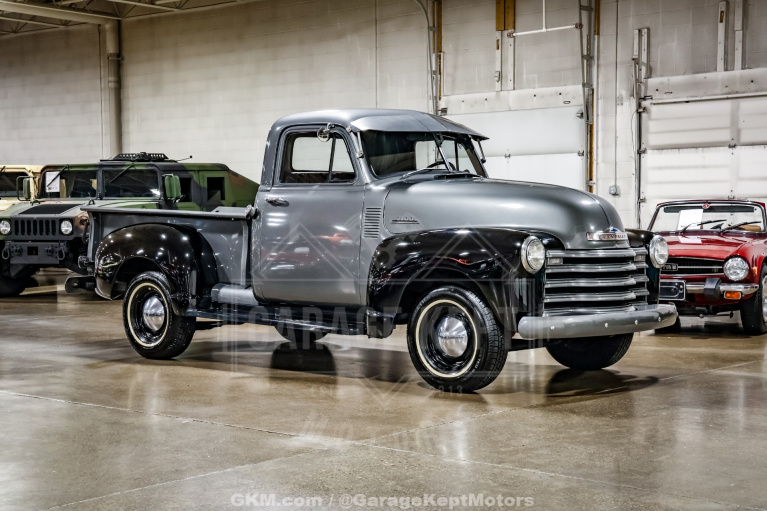
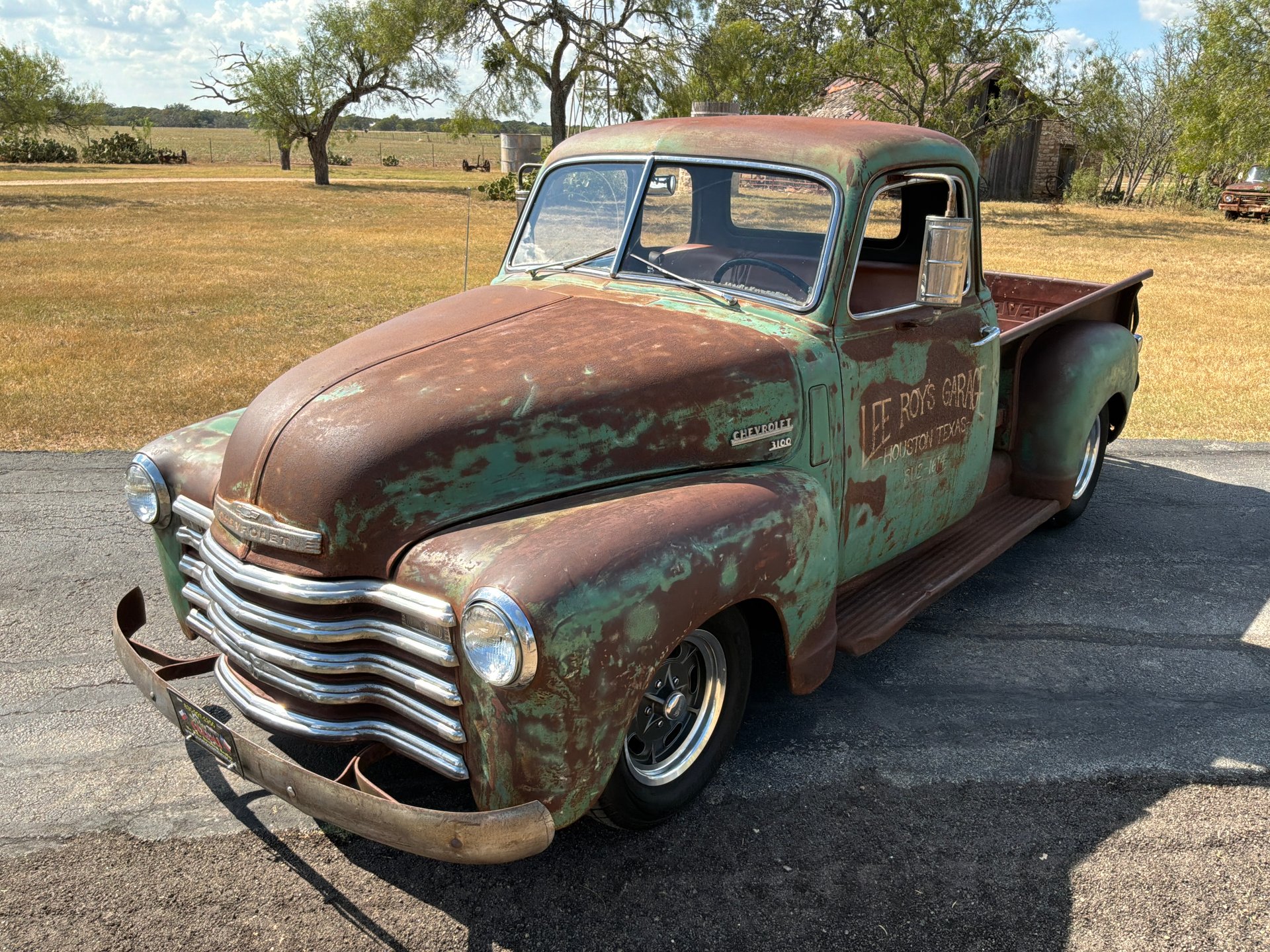
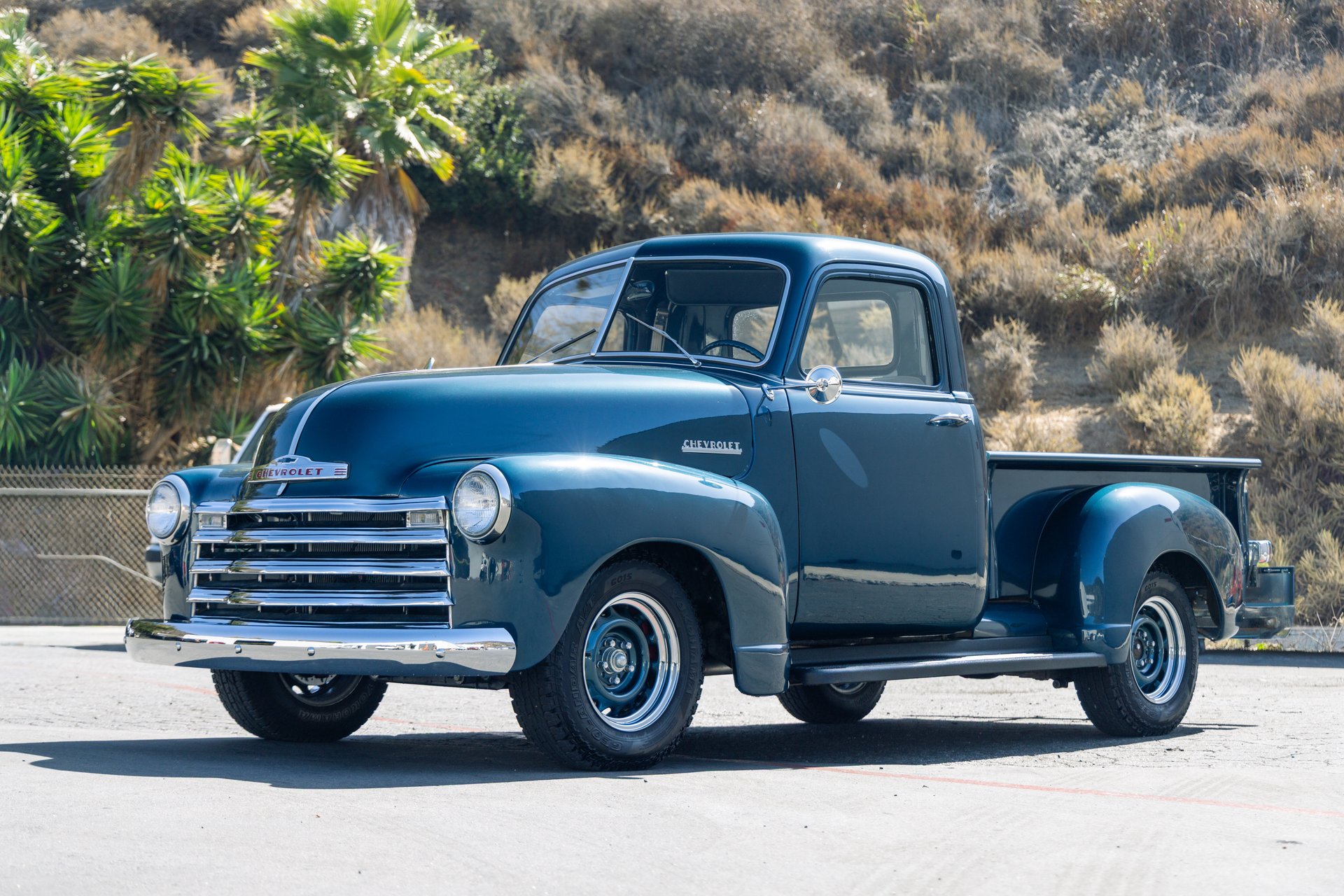
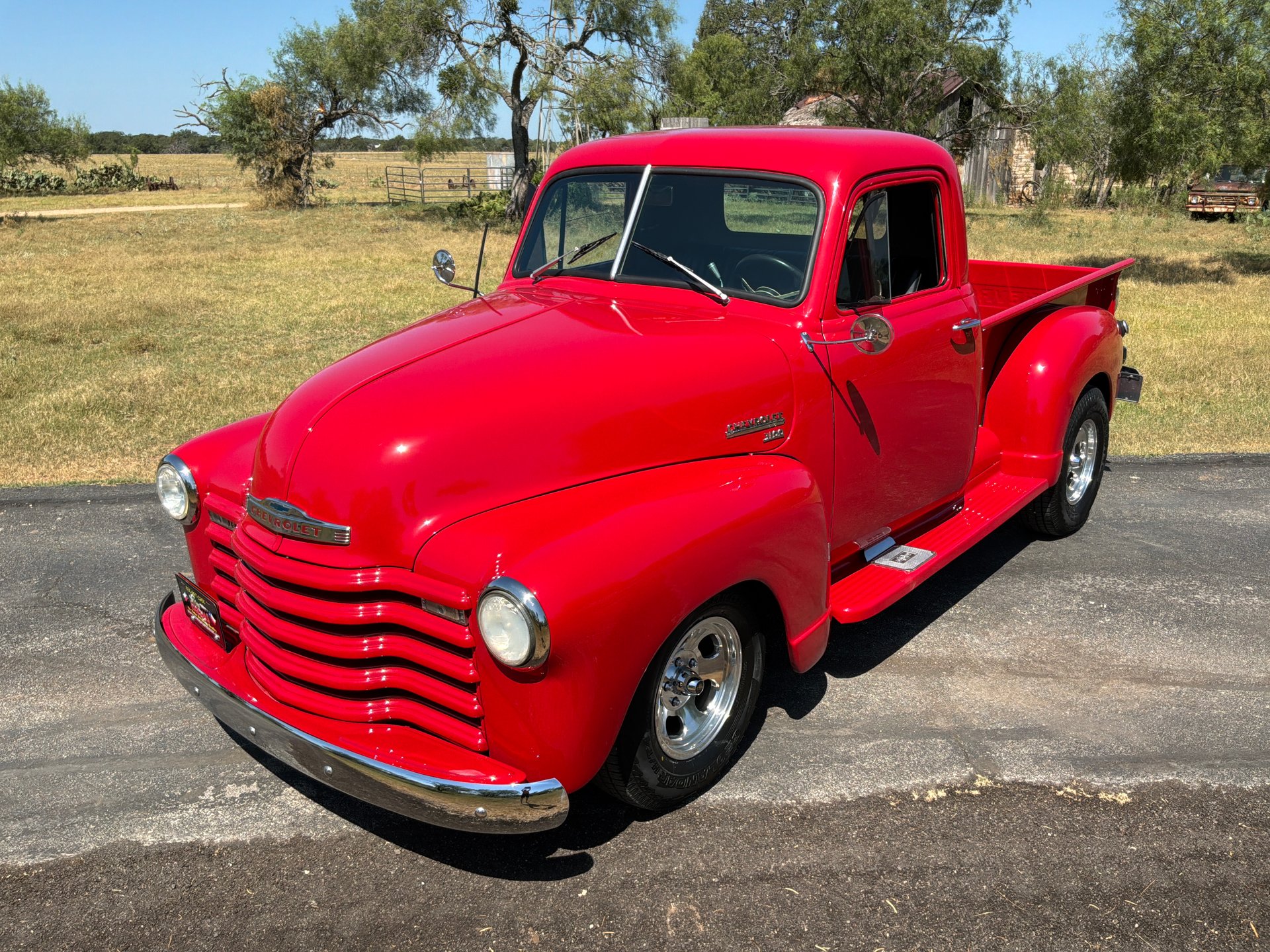
What followed in mid-1947 changed Chevrolet trucks for good. The Advance Design range — Chevrolet's first genuinely new post-war line, launched alongside its GMC New Design sister — moved the cab forward, widened it by eight inches, integrated the headlamps into the front fenders, lowered the silhouette, and gave the driver a proper three-across bench and a much larger glass area. The five-bar grille, rounded cab corners and teardrop fenders are its signature. Underneath it remained thoroughly conventional: a ladder frame, leaf springs at both ends, a solid front axle and live rear axle, an overhead-valve six, and a column-shift three-speed as standard. That combination — modern looks, simple mechanics — made it the default classic American pickup, and it dominates the market today. In our tracked pool of 215 Chevrolet 3100s, 1951 is the most common year with 38 trucks, followed by 1953 with 31, 1954 with 23 and 1950 with 21.
The Advance Design did not stand still, and its yearly changes are dating tools: vent windows arrived for 1951, push-button handles for 1952, and for 1954 a one-piece curved windshield, a redesigned dashboard, a standard full-pressure 235 six, a single-bar grille, and a Hydra-Matic option. A correct truck wears the details of its year together; a truck wearing three different years at once needs its story explaining before you pay a correctness premium.
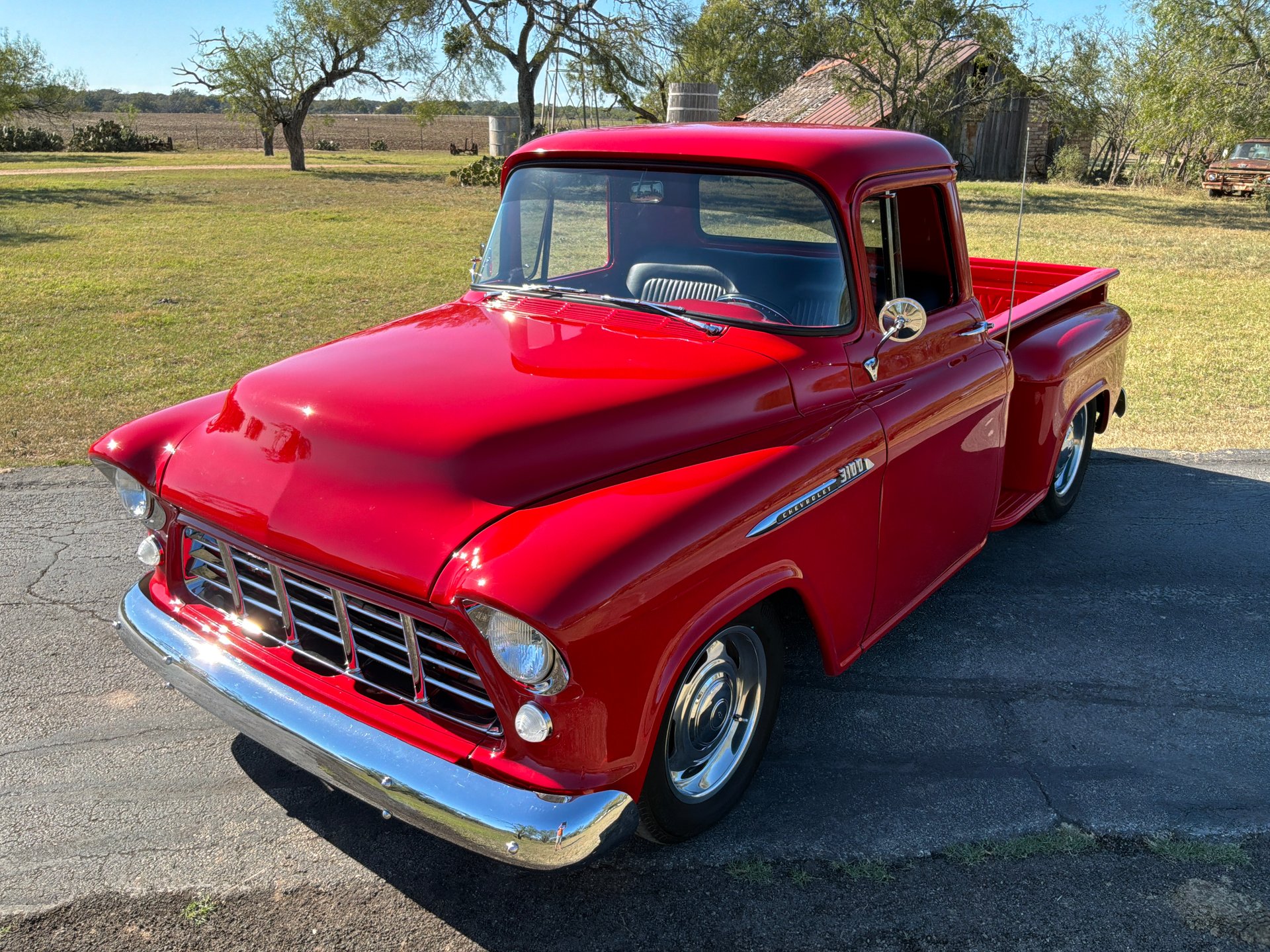
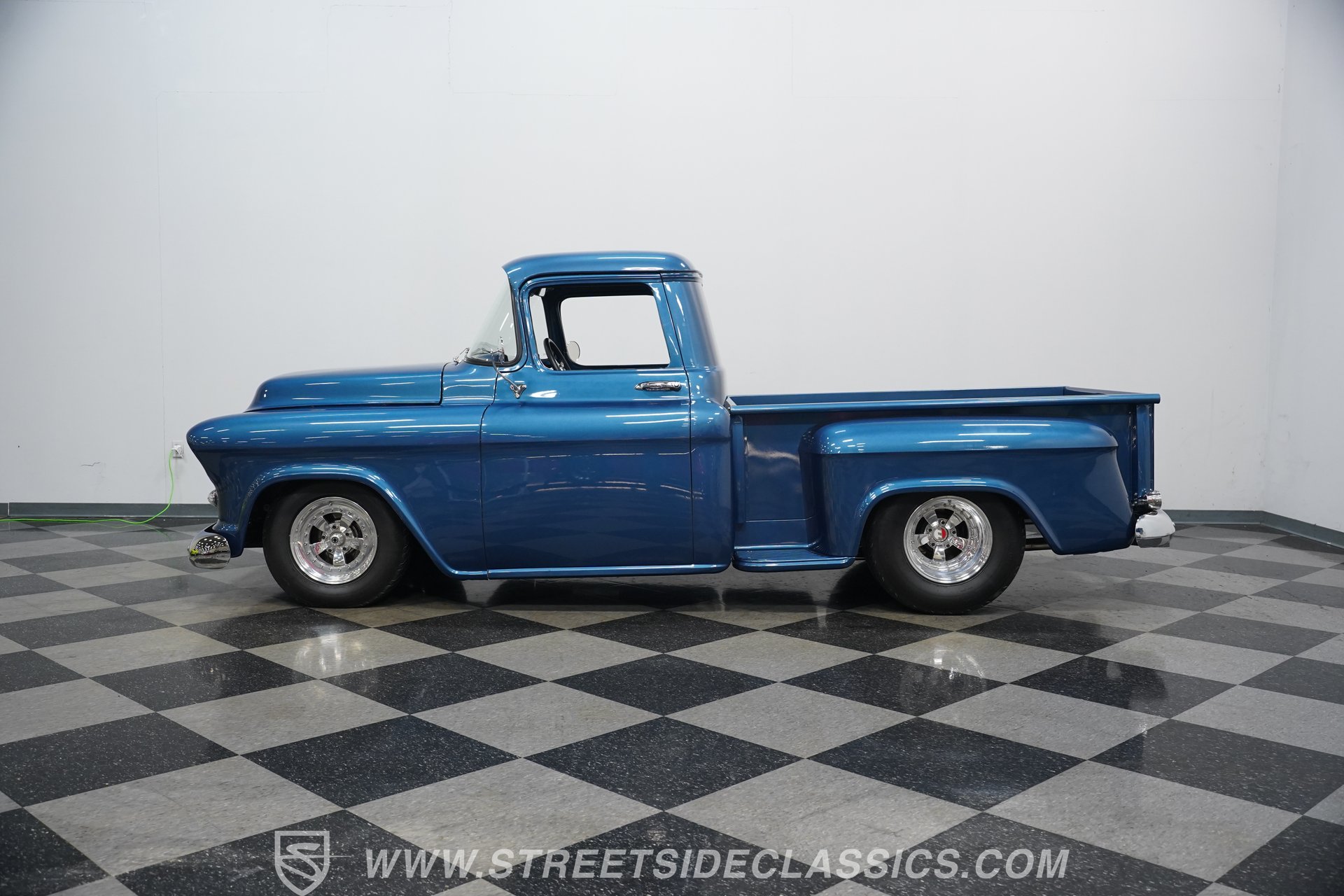
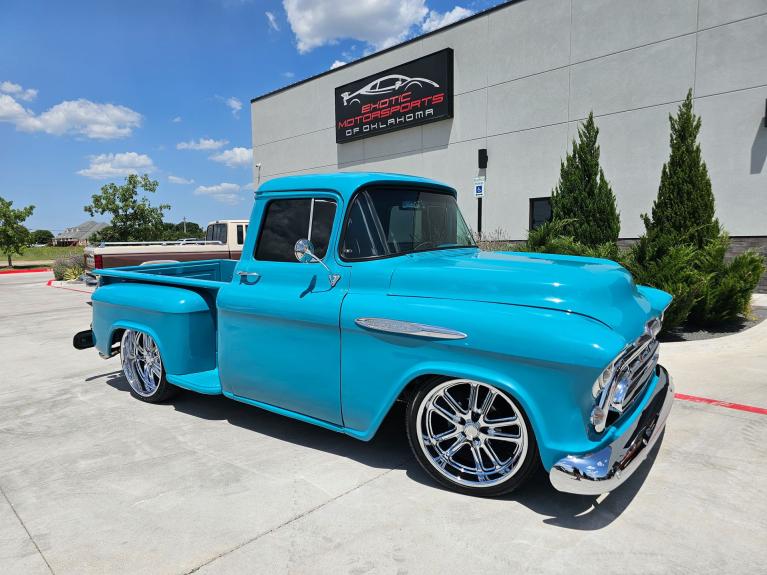
In March 1955 Chevrolet replaced it, after a short 1955 First Series run of the old design, with the Task Force range — the 1955 Second Series. This third generation is a different truck in feel as much as looks: a wraparound windshield, a hooded, car-like front end shared in spirit with the Tri-Five Chevrolets, a lower, wider cab, twelve-volt electrics from 1956, an open driveshaft, and — decisively — the option of Chevrolet's new small-block V8, the 265 for 1955 and the 283 after it. A Task Force 3100 with a factory V8 is a relaxed highway truck in a way no stock Advance Design ever was. For 1958 the 3100 gained a name as well as a number — Apache, with quad headlamps and a Fleetside bed option — and carried it through 1959, the last year before the new C/K generation of 1960 retired the 3100 designation altogether.
That arc explains the market. Advance Design trucks are bought for shape, nostalgia and simplicity, and increasingly as restomod bases; Task Force trucks are bought by people who want to cover distance. Both generations have been valuable long enough that almost everything you view will have been restored, modified, re-engined or all three — automatics far outnumber original manuals in the listings, and V8 swaps are everywhere. A supposedly stock truck deserves more scepticism, not less, than an honestly declared restomod.
The models
Every 3100 is a half-ton, and in this period that means, overwhelmingly, a pickup. Chevrolet built the chassis as a short-wheelbase pickup — 116-inch wheelbase in the Advance Design years, 114 inches for the short-bed Task Force with a long-bed option — and also offered it as a panel truck, a stake truck and, most collectably today alongside the pickup, the Suburban Carryall, the windowed wagon that is the ancestor of the modern SUV. When sellers talk about a 3100 they mean the pickup in nine cases out of ten, and the body-style counts in our own pool bear that out. Judge any non-pickup on its own, much thinner, trim supply.
The table below is an orientation across the generations, not a trim list. Outputs are period gross ratings; production was not published in a clean, separate 3100-pickup series for most of these years, so the built column says so honestly rather than inventing a figure — anyone quoting an exact figure for a single year and body should be asked for their source.
| Model | Years | Engine | Output | Built | Character |
|---|---|---|---|---|---|
| 3100 AK Series | 1946 | 216.5 cu in six | 90 hp | Not published separately | Pre-war carryover; Art Deco looks, oldest mechanics |
| 3100 Advance Design, early | 1947–1949 | 216.5 cu in six | 90 hp | Not published separately | The original post-war truck; purest and simplest |
| 3100 Advance Design, mid | 1950–1953 | 216.5 cu in six, 235 on late automatics | 90 hp, 235 about 105 hp | Not published separately | The market's centre of gravity; vent windows from 1951 |
| 3100 Advance Design, final | 1954–1955 First Series | 235 cu in six | 112 hp | Not published separately | One-piece windshield, full-pressure engine, Hydra-Matic option |
| 3100 Task Force | 1955 Second Series–1957 | 235 six, 265 / 283 V8 optional | 123 hp six, V8 about 145–160 hp | Not published separately | Wraparound screen, factory V8, the usable classic |
| 3100 Apache | 1958–1959 | 235 six, 283 V8 optional | Six about 145 hp late gross rating, V8 about 160 hp | Not published separately | Quad lamps, Fleetside option, last of the line |
The AK truck (1946). Buy it for its looks and rarity, not for ease of use. Every warning in this guide applies to it in its strongest form: the splash-lubricated 216 in its least developed state, the earliest brakes, the narrowest cab, and the thinnest reproduction support of any 3100.
The early Advance Design (1947–49). The original form: split windshield, no vent windows, a three-speed column shift and the 216 six. These trucks established the shape everyone wants, but mechanically they are much closer to the AK than their looks suggest — same engine architecture, same torque tube, same need for sympathetic, low-speed use. Originality is the whole game: a correct early truck with its matching 216 is worth preserving as it is.
The mid Advance Design (1950–53). This is where the market lives. The changes accumulate into a better truck: vent windows for 1951, push-button handles for 1952, and reproduction parts aimed squarely at these years because this is where the demand is. Most trucks you view will be these — and most will have lost their original 216 for a later 235, a 261 or a small-block V8 at some point in seventy years. That is a buying decision, not automatically a defect. What matters is that a swap was done completely and is declared.
The final Advance Design (1954–55 First Series). The connoisseur's Advance Design and, for many experienced buyers, the sweet spot of the whole 3100 story. You keep the beloved shape and gain the one-piece windshield, the new dashboard, the full-pressure 235 with insert bearings as standard, and the factory Hydra-Matic option. Mechanically this is the Advance Design with its worst flaw — the splash-and-babbitt engine — finally engineered out. A 1954 with its correct 235 is a materially better proposition than a cosmetically identical 1951 with a tired 216, and the price gap rarely reflects the whole difference.
The Task Force (1955 Second Series–57). Two trucks in one badge. With the 235 six it is a handsome, improved evolution of the Advance Design idea — twelve volts from 1956, better cab and visibility, open driveshaft. With the factory 265 or 283 small-block it is something else: the first Chevrolet half-ton that cruises at modern highway speed without strain, and the specification commanding the strongest Task Force prices when the V8 is factory-fitted and documented rather than swapped in later. The Cameo Carrier, built from 1955 to 1958 with smooth fibreglass bed sides, is the collector flagship of the whole 3100 line — rare, expensive to restore correctly, and the one 3100 where verifying what you have, panel by panel, matters most.
The Apache (1958–59). For 1958 the 3100 gained the Apache name, quad headlamps, revised trim, and the option of the Fleetside bed — smooth outer sides with a full-width floor, the shape every modern pickup follows. Apaches are heavily restomodded, and a stock, correct truck is now the unusual find. 1959 is the last year; there is no 1960 3100, whatever a listing says, because the C/K C10 replaced it.
Two naming traps close this section. First, 3100 says nothing about bed or cab beyond capacity: Stepside and Fleetside, standard and deluxe cab trim, all wear the same badge — decode the truck in front of you, not the badge. Second, the GMC sister is not a Chevrolet: GMC's half-tons share the cab architecture but carry GMC engines — a 228 or 248 six early on, a Pontiac-derived V8 later — and different trim. A GMC rebadged as a Chevrolet surfaces regularly; the VIN plate settles it.
Engines and gearboxes
The 216 and the early sixes: splash lubrication and babbitt bearings
Every 3100 built before 1954 left the factory, late automatic exceptions aside, with the 216.5-cubic-inch overhead-valve inline six — 3.5 litres, 90 hp, a design whose roots reach back to 1929. It is a willing, torquey, unhurried engine with one defining limitation that dictates how the truck can be used, what its oil pressure gauge is telling you, and what a rebuild involves.
The 216 does not pressure-feed its connecting-rod bearings the modern way. The mains are pressure-lubricated, but the big ends rely on splash: dippers on the rod caps scoop oil from troughs in the sump and fling it where it is needed. The rod bearings are not replaceable shells but poured babbitt — soft bearing metal cast directly onto the rod, then machined and shim-adjusted to fit. At the speeds the system was designed for — sustained running at 40 to 45 mph, brief excursions higher — it works well. Sustained modern highway running is its enemy: hold a 216 at high revs for an hour and the splash supply thins exactly as bearing loads peak, the babbitt overheats and wipes, and the first symptom is a deep knock under load that no oil change cures. This is not a myth, and it is not a reason to reject every 216 truck. It is a usage contract. A 216 Advance Design is a 45-mph truck in its original gearing, and a seller who says theirs cruises at 70 all day is running very different gearing, very different internals, or a different engine.
Identification is straightforward. The engine number is stamped on a flat pad on the block, just behind and below the distributor; the serial and casting codes there, with the casting date near the starter, give the engine's year and application. A 216 is also betrayed visually — a valve cover held by two central studs, and a side cover shape that differ from the later 235. Sellers confuse the two constantly: externally the 216 and the early low-pressure 235 are close cousins, and Chevrolet blurred the line by fitting a version of the 235 to Powerglide cars from 1950. Learn the pad, check the pad, photograph the pad. On a truck priced as numbers-matching, the pad is the price.
Living with a 216 is a matter of rhythm. Oil pressure that looks alarmingly low at a hot idle can be normal — what matters is that it rises promptly with revs and the engine is quiet. Valve clearances are mechanical; a silent top end is often a tight one, and tight exhaust valves burn. The single downdraft carburettor — Carter W-1 early, Rochester Model B through most of the run — faults honestly: a worn throttle shaft spoiling the idle, a tired accelerator pump cup giving a flat spot on tip-in, heat soak flooding a hot restart. None of that is expensive. A full 216 rebuild is, because babbitt work is a specialist trade now, and a complete rebuild at a shop that knows the engine realistically runs $4,500–7,500. Many owners convert to insert bearings during a rebuild, or fit a later 235 instead. What you are pricing is which decision has already been made, and by whom.
The 235 and 261: the full-pressure sixes
The 235.5-cubic-inch six — 3.9 litres — is the engine that makes an old 3100 easy to own, and telling its two generations apart is the most valuable mechanical skill in this guide. The early 235, fitted to Powerglide cars from 1950 and found in countless trucks as a later swap, kept the 216's splash-and-babbitt bottom end with more displacement and about 105 hp. The late 235, introduced for cars in 1953 and standard in trucks for 1954, is a different engine where it counts: full pressure lubrication to the rod bearings, precision insert shells you can buy off the shelf, and a higher-pressure oil pump. In truck tune it was rated at 112 hp for 1954, rising to 123 hp in the Task Force. A full-pressure 235 cruises at 55 to 60 mph in stock gearing without the splash system's anxiety, and rebuilds with ordinary machine-shop practice. If you intend to drive your 3100 rather than show it, this is the six to have.
The tells are learnable. The full-pressure 235 wears a valve cover secured by four screws around its flange rather than two central studs, has a shorter side cover that no longer encloses the spark plugs, and — definitively — its pad and casting codes date it to 1953 or later. Do not buy a full-pressure claim on appearance alone, because covers swap in minutes; the casting date is the evidence. The 261, Chevrolet's 4.3-litre heavy-duty six from the two-ton range, is the swap the cognoscenti prize: near-identical outside, stronger inside, with full pressure lubrication and torque a 235 cannot match; a declared 261 is a genuine asset, verified by its own block casting. Budget a quality 235 rebuild at $4,000–6,500 — but insist on knowing whether the head has hardened valve seats for unleaded fuel, because that job, at roughly $600–1,200 as part of head work, is the difference between an engine ready for modern fuel and one quietly recessing its exhaust seats.
All the sixes share period systems whose faults cross generations. Cooling is marginal when neglected: a narrow-core radiator, a low-pressure cap — around 4 psi on Advance Design trucks, higher later — and a water pump whose bearing and seal are a consumable. Overheating is almost never a head-gasket-first problem; work the experienced order: radiator flow and cap, thermostat, pump play and weep, belt and shroud fit, timing, and only then the head. The six-volt system starts a healthy engine well but has no margin for tired cables or corroded grounds, so slow cranking is a connections diagnosis before it is a starter purchase. Chevrolet was negative-ground throughout. Task Force trucks went twelve-volt for 1956, with 1955 the transition year. Ignition faults are worn distributor bushings scattering the timing, a failed vacuum advance diaphragm leaning the cruise mixture and cooking the engine on the highway, and perished plug wires. An electronic module inside the original distributor is the most forgivable modification on a driven truck. Ethanol perishes fuel-system rubber, and tanks rust from inside during storage — a truck that has sat needs its tank inspected, not merely drained.
The small-block V8s: 265, 283 and everything swapped in since
Chevrolet's 265-cubic-inch small-block arrived in the Task Force for 1955 at about 145 hp in truck tune and changed what a 3100 could be. The 283 followed for 1957 at about 160 hp in the trucks, and these factory V8 trucks — identifiable by VIN series and factory V8 pad codes, not by the engine sitting in the bay today — are the performance originals of the range. The small-block needs no defence: overhead valves, a short-stroke crank, full pressure lubrication, insert bearings, five mains and the deepest aftermarket support of any engine family ever made. In a Task Force it gives relaxed 65 to 70 mph cruising and real overtaking ability. Its weak points are the cars' weak points: the early 265 lacks a full-flow oil filter as standard — filtration was an accessory bypass unit — so service history matters; valve stem seals harden and give a puff of blue smoke on start-up and the overrun; rear main seals weep; and a flat hydraulic cam lobe, announced by a rhythmic tick, was its signature age fault. A stock small-block rebuild is the best-understood job in the hobby, broadly $4,500–8,000.
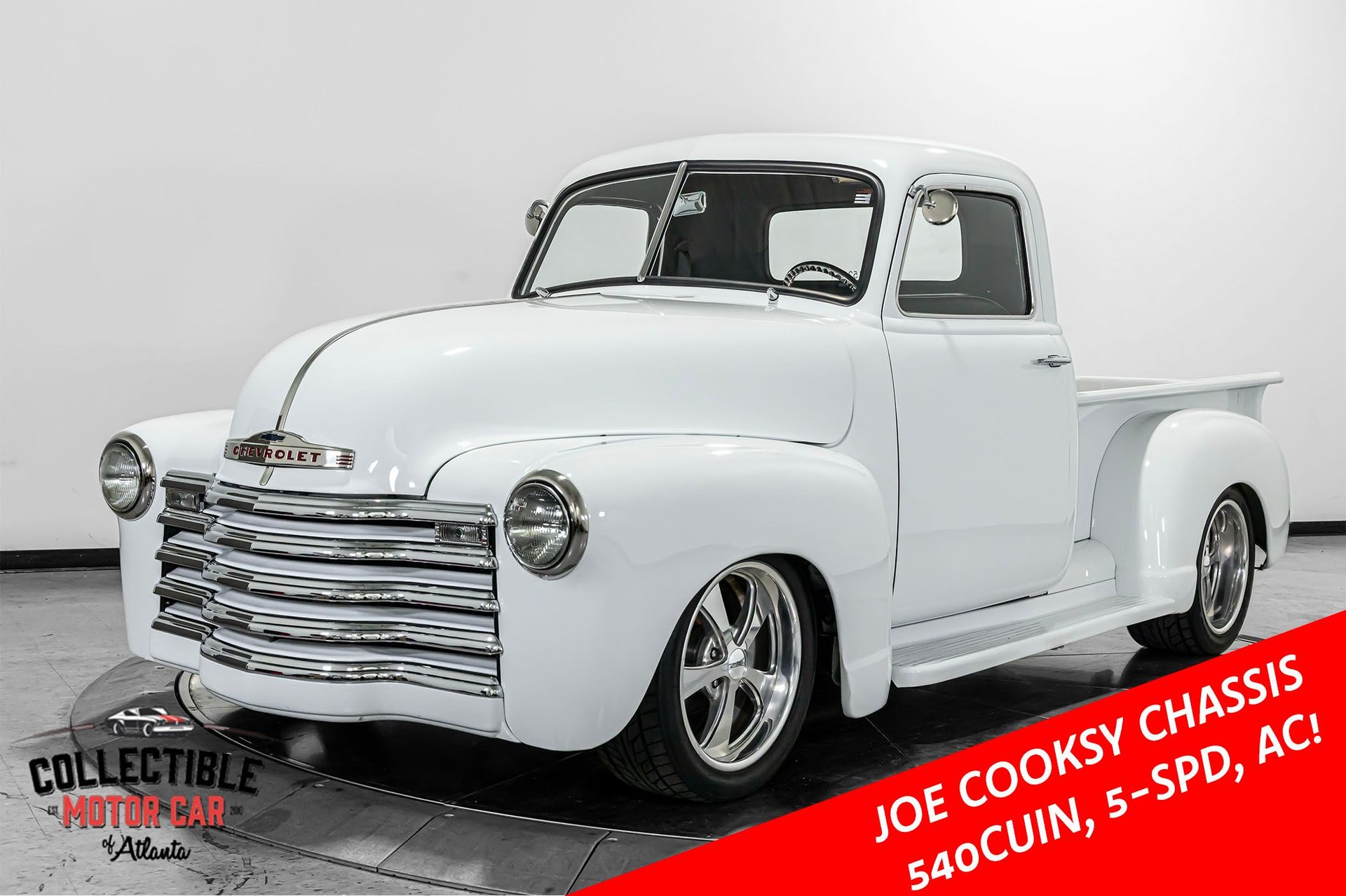
The harder problem is that the small-block's virtues made it the default swap into everything. Advance Design trucks with 283s, 307s, 327s and above all 350s are everywhere, Task Force sixes have been replaced wholesale, and the restomod wave has added LS-series engines with modern automatics, air conditioning and disc brakes. Much of it is excellent. What changes is the questions. On a swapped truck the pad no longer authenticates it, so value moves to installation quality: proper mounts rather than fabricated plates under strain, a cooling system sized for the engine — a stock Advance Design radiator does not cool a healthy 350 on a summer grade — exhaust clearance at the steering box, a correctly regulated fuel system, wiring fused and routed rather than twisted and taped, and a driveline rated for the torque now arriving at it. The stock torque tube and rear axle were designed around 90 hp; a 350 feeding them through enthusiastic use is a countdown, and the inspection covers whether axle, shaft and brakes were upgraded with the engine or left as the fuse.
Gearboxes, the torque tube and final drives
The standard gearbox is Chevrolet's three-speed Synchro-Mesh manual on a column lever — three-on-the-tree — synchronised on second and third only, with first a sliding gear engaged at rest. In good order it is light, pleasant and adequate behind a six, and it wears honestly: second-gear synchromesh crunching on a hurried downchange, jumping out of third on the overrun, and column linkage slop that makes the pattern vague long before the box itself is at fault. Rebuild the linkage before you condemn the box; a bush kit is $50–150 in parts, while a gearbox rebuild is a $1,200–2,500 job. The optional four-speed is the SM420, with a compound low first of roughly seven to one, designed for starting loaded on grades rather than speed. It is enormously strong, famously notchy, unsynchronised on first, and transforms low-speed control while adding nothing at cruise. Drive one before deciding whether that character is for you.
Automatics divide by generation. The Advance Design's factory option from 1954 is the four-speed Hydra-Matic — a heavy fluid-coupling automatic with a distinctive stepped change and a specialist rebuild cost of $2,500–4,500 when it needs one; a Hydra-Matic 1954 is rare and historically interesting, and its box should be judged by a specialist on any serious purchase. In practice the automatics you will meet today are overwhelmingly modern — Turbo Hydra-Matic 350 and 700R4, the 4L60E behind LS swaps — because that is what driver and restomod builds use; our pool shows automatic descriptions accounting for well over half the trucks with a recorded transmission. Judge one on fluid colour and smell, shift quality cold and hot, and evidence of a proper cooler.
Between gearbox and rear wheels sits the 3100's most generation-defining divide. Advance Design trucks use an enclosed torque-tube drive: the shaft runs inside a tube rigidly connecting gearbox to rear axle, the axle is located by the tube, and driveline and rear suspension are one system with a single universal joint at the front. It is smooth and strong at stock power, and it means a gearbox, axle or open-shaft conversion is a system job, not a component job. Worn tube bushings give a characteristic vibration and clunk on take-up. The Task Force moved to an open Hotchkiss drive with two universal joints and the axle located by its leaf springs — conventional, and the reason Task Force trucks accept swaps with a fraction of the fabrication. Stock axle ratios are low — around 4.11 to 1 in many Advance Design applications — which is why a stock six feels busy at 55 mph and driver builds so often include a ratio change or an overdrive five-speed. Never assume the speedometer tells the truth on a modified truck: gearing, tyre size and drive gears are changed independently and rarely all corrected together.

Problem areas
Everything here is ordered by what ends purchases, not by what is cheapest to fix. A 3100's mechanicals are all rebuildable with money and patience; its cab is not so forgiving. Where our examined-photo evidence exists it is cited as measured: we photo-checked 77 of the 3100s tracked for this guide, and rust was mentioned in the notes for 22 of those 77, with visible damage noted on 13. That is a floor, not a total — sellers photograph rust last — and even through listing photography, nearly three in ten examined trucks showed rust worth writing down.
Rust: the cab map
Rust follows water, gravity and trapped mud, and the cabs rot in a recognisable order you can work through in ten minutes on any viewing.
Cab corners. The most famous 3100 rust spot, and the first place to put your hand. The rear cab corners form a closed pocket that collects road spray and condensation with no meaningful drainage, and they rot from the inside out: paint bubbles in a crescent at the lowest point, the metal turns to lace, and by the time a hole shows outside the inner structure is usually involved. Press firmly, and look from inside behind the seat and from underneath. Panels are cheap; cutting, welding, aligning and painting is realistically $800–2,000 per side finished — and a truck needing both corners usually needs the next items too, because they share the same water.
Floor pans, toe boards and cab mounts. The windshield and cowl leak, wet boots come in for seventy years, and the floor pays. Lift every mat — a seller who will not let you has answered the question — and prod the toe board where the floor rises to the firewall, around the seat mounts, and above each cab mount. The mounts matter structurally: when the floor around a mount rots, the cab settles, door gaps change and doors begin to catch. Sections and mount repairs are ordinary fabrication, but a cab needing full floors, both corners and rockers is a cab-off restoration, priced as one whatever the paint suggests.
Rocker panels and lower door skins. Rockers trap mud thrown by the front wheels and rot along their inner face first. Doors fill with water when their drain slots block — and they always block — and rot from the bottom seam upward, bubbling along the lower edge while the outer skin presents well from standing height. Open every door, crouch, and run a fingertip along the bottom edge and inner seam. A door that sounds dull and feels thick at the bottom is carrying filler. Repair sections exist; rust-free original doors are hunted parts, and aligning a repaired door to shut like a factory door is skilled time.
The cowl, the windshield frame and the vent. Cowl side panels, the side vent on early trucks, the fresh-air vent on later ones, and the windshield frame all channel water into the cab when seals and drains fail. Rust at the base of the windshield pillars is the expensive end: structural to the cab, distorting as it weakens, and coachwork to repair invisibly. Water staining down the inner cowl, a musty cab, and fresh sealer smeared around a windshield rubber are the tells. On Task Force trucks add the wraparound windshield's corners — a complex curve whose rubber and frame perish, whose glass costs real money, and whose leaks feed the dash structure and floor in silence.
Front fenders, running boards and the bed. Fenders rot at the rear lower edge where they meet the running board, around the headlamp buckets, and along the crown. Running boards rust from underneath, under their rubber mats, until the board flexes under your weight stepping in — stand on each board, deliberately, on every viewing. Stepside bed sides rot at the lower edges and fender mountings, the front bed panel rusts where it meets the cab's splash, and the rear sill under the tailgate is a mud trap; Fleetside beds add the inner wheelhouse seams. Most panels are reproduced and none is individually ruinous — but a truck needing fenders, boards, corners, floors and bed work at once is not a truck with some rust. It is a restoration with a donor attached.
The frame. Chevrolet ladder frames survive remarkably — except where they trap mud: inside the rails at the rear kick-up, around spring hangers, at crossmembers, and anywhere a previous repair plated over corrosion and sealed it in. Surface scale is normal. Perforation, cracking at hanger rivets, and patch-plating end a purchase at driver money. Get underneath with a torch and tap along both rails. Sound steel rings; rot thuds.
Chassis, steering, suspension and brakes
A 3100 rides on leaf springs at both ends — a solid I-beam front axle, a live rear axle — and every joint is a wear item with a grease fitting, so its condition is a direct record of whether anyone maintained it.
Kingpins and the front axle. Steering pivots on kingpins in the beam axle ends, bushed in bronze, and they want grease regularly. Starved, they wear oval: play rocking the top of the front wheel in and out, wander at speed, uneven tyre wear. Grease first before you condemn — hardened old grease blocks the passages, a dry joint feels destroyed and can come measurably back once lubricated and worked. If play remains, the parts are inexpensive and the cost is the reaming and fitting, putting a proper job at roughly $600–1,200 for both sides. Check tie rod and drag link ends and the steering box the same way: the recirculating-ball box wears at centre, adjusts only so far, and a box adjusted tight to hide centre wear binds at the locks. More than roughly two inches of free play at the wheel rim, with the linkage proven tight, is a box rebuild conversation.
Springs, shackles and shocks. Leaf springs sag, crack leaves — usually the main leaf at the eye — and wear their shackle pins and bushings until the axle shifts under braking, felt as a clunk and a vague rear end. Sight each pack for a leaf out of line, check the truck sits level, and bounce each corner: early lever-action shocks gave way to telescopics during the run, and a truck on empty or seized lever shocks rides on its springs alone. A spring, shackle and shock refresh is one of the best-value jobs on a 3100 at $800–1,800 fitted — but cracked hangers point back to the frame, and those are not a refresh.
Brakes: Huck versus Bendix, and the single circuit. Brake generation is a safety dividing line. Early Advance Design trucks use Huck brakes — an older drum design with a justified reputation for higher pedal effort and less reserve. From 1951 Chevrolet moved to Bendix self-energising duo-servo drums, a materially better brake, continued through the Task Force years. Identify which system a pre-1952 truck actually has; many Huck trucks have been converted, an improvement to welcome if done completely, axles and backing plates together. Every stock 3100 has a single-circuit hydraulic system and a single master cylinder: one failed hose, cylinder or line means no brakes, only the parking brake. That is the strongest argument for the dual-circuit master conversion most driver builds include — a $300–700 job that changes no visible character and removes the single-point failure. Wheel cylinders weep with age and contaminate shoes silently, so peer behind backing plates; a truck that has sat needs a full hydraulic renewal at $800–2,000 fitted, budgeted up front rather than discovered circuit by circuit. Disc conversions, engineered with the correct master cylinder, booster and proportioning, are the biggest usability upgrade a 3100 can receive; engineered badly, they lock, dive and pull. The road test tells you which kind you have.
The bed, wood and the working-truck evidence
A Stepside bed floor is wood — pine boards, originally painted, separated by steel skid strips, on cross sills over the frame — and it is both a wear item and the most honest record of how hard the truck worked. Rotted or plywood-over boards mean decades of loads in weather, which is no disgrace, but replacing the floor properly is a bed-off job: a wood kit with strips runs roughly $600–1,200 in parts, plus renewing cross sills, which rot where they sit on the frame. Check the sills while underneath judging the frame; bed wood is cosmetic, bed structure is not. A steel plate floor welded over the original traps water against everything below. Tailgates are dented and replaced more than any other panel; the lettering and fit date the bed's rear end.
Interior, glass, trim and electrics
The cab is simple and durable, and its costs concentrate in a few items. The bench seat is a steel frame, springs, padding and a cover; springs sag and break at the driver's position first, padding crumbles, and a seat that looks recovered but feels like a hammock has been recovered over dead springs. A proper rebuild — springs repaired, new padding, correct cover — runs roughly $800–1,800 and transforms the truck. Headliners are cardboard panels on Advance Design trucks and perish at the edges; door cards warp; and rubber — windshield, rear window, door seals, window channels — ages out as a complete system, a full kit fitted at $500–1,200 that also stops the leaks feeding the floor rust above. Treat new rubbers as rust prevention, not cosmetics.
Instruments divide by generation — paired round clusters on Advance Design trucks, a car-like dash on Task Force — but in both, the fuel gauge is the chronic liar, and its fault is almost always the tank sender or its ground, not the gauge: a gauge that reads full with the sender wire disconnected and drops to empty when the wire is grounded has proven itself good and the sender guilty. The Advance Design fuel tank lives inside the cab behind or under the seat on most trucks, so a fuel smell in the cab is a tank, sender gasket or filler neck finding to take seriously, not period charm; Task Force arrangements moved over the run, so locate the tank on the truck in front of you. Wipers are vacuum-operated on Advance Design trucks through a Trico motor: they slow to a stop climbing a grade at full throttle, exactly when rain needs them, cured by a rebuilt motor, a vacuum reservoir, or the electric conversion most drivers fit. A seller demonstrating wipers at idle has shown you nothing; ask for them under load.
Brightwork is where restorations spend money invisibly. Grilles are large, year-specific and expensive to restore well — a straight five-bar grille is a real asset — stainless trim dents and is specialist to restore, and Cameo trim includes pieces that are effectively restoration-only, its fibreglass bed sides cracking in ways that must be judged by someone who knows fibreglass. Count missing and wrong trim piece by piece; trim is where an asking price assumes you will not. Electrics are honest: cloth-braided wiring on early trucks perishes at flex points, and a reproduced harness at roughly $400–800 plus fitting is one of the best investments in a keeper Advance Design. Task Force PVC wiring fails at grounds first. Added switches and dangling wires are a map of previous faults solved by bypass — unpicking them should be your time at your price.
How to inspect one
Allow an hour, bring a torch, a cloth-wrapped magnet and a phone with a GPS speedometer app, insist on a cold start, and drive at least twenty minutes including a faster road. The sequence asks three questions: is the cab sound, is the driveline what it is claimed to be, and was every modification finished.
- VIN plate and paperwork. The serial plate is on the driver's door hinge pillar on Advance Design trucks, in the driver's door jamb area on Task Force. Match it to the title character by character, decode series, year and plant, and check its fixings look factory. Confirm it is a Chevrolet 3100, not a GMC or a 3600 in 3100 badges. Restoration photographs showing corners and floors in bare metal outweigh any paint receipt.
- Cold start. Stone cold, watch and listen. A six should start on choke and settle without a deep knock, a tick rising with revs, or blue smoke beyond a first puff. A 216 knocking under light load is reporting its babbitt bearings — believe it. A small-block puffing blue at start-up is showing valve stem seals; smoking under load, rings or bores. Oil pressure should rise cleanly with revs.
- Engine identity. Straight to the stamped pad behind the distributor on a six, the front pad on a V8, and the casting dates. Four valve-cover flange screws and a 1953-or-later casting support a full-pressure 235 claim; two central studs and an early casting refute it. This step prices the truck — the gap between a tired 216 and a full-pressure 235, or a swapped 350 and a factory 283, is the largest number in the negotiation.
- The cab rust circuit. Work the problem-areas map in order: press both rear cab corners, from outside, inside and below; lift every mat and prod floors at toe boards, seat mounts and cab mounts; run a fingertip along both door bottom seams; press the rockers; stand full weight on each running board; examine the windshield pillars and, on a Task Force, the wraparound corners. Sweep corners, rockers and door bottoms with the cloth-wrapped magnet. Corners plus floors plus mounts perforated means a cab-off restoration.
- Frame and underside. Tap along both frame rails, concentrating on the rear kick-up, spring hangers, crossmembers and any plated repair. Then read the driveline back from step 3: torque tube or open shaft, which axle, and whether a swap's mounts, exhaust and cooling were engineered or improvised. Hunt leaks yourself — our photo sample recorded leak mentions in only 1 of 77 examined trucks, which says more about sellers' photography than about seventy-year-old seals.
- Bed and rear body. Under the bed: cross sills where they sit on the frame, front bed panel, rear sill, and the wood from below, where rot shows first. From above: gaps, oil soaking, plywood patches, a welded steel overlay. Work the tailgate latches, sight down each bed side, check rear fenders at their flanges. On a Fleetside add the wheelhouse seams; on a Cameo, examine every fibreglass edge and price damage as a specialist job.
- Steering and springs, stationary. Rock each front wheel top-to-bottom for kingpin play and side-to-side for linkage play, remembering the grease-first rule: note the play, do not yet price a rebuild as certain. Measure free play at the wheel rim while a helper turns it and watch which joint moves first. Sight the spring packs for cracked or displaced leaves, check ride height at all four corners, and bounce each corner for the shocks.
- Brakes before the road. Pedal feel, height and reserve at rest. A pedal sinking slowly under sustained pressure is passing fluid — master cylinder internally or a wheel cylinder externally. Check the fluid's colour, confirm the parking brake holds on a slope, and establish the system fitted: Huck or Bendix drums, disc conversion, dual-circuit or stock single master. Do not road-test at speed a truck whose pedal, hoses or lines you have already condemned.
- Test drive: driveline. In a three-speed manual, feel second-gear synchromesh both ways, listen for third jumping out on the overrun, and judge column linkage separately from the box. In an SM420 expect a heavy change and a granny first you will barely use. In an automatic, judge shifts cold in the first mile and hot in the last. Compare speedometer against GPS at two speeds; the error tells you gearing or tyres changed.
- Test drive: chassis and brakes. Brake firmly from 40 mph on a quiet straight road, hands light: straight stop, no dive, no single-corner lock-up. Judge Huck brakes against their system, not against a disc conversion. Listen over bumps for shackle clunks, feel for camber-following wander, and work vacuum wipers under load on a climb — the slowdown described in the problem areas should appear; an electric conversion should not slow.
- Heat, electrics and cab. End with a hot idle: temperature gauge story, weeping pump, slipping belt, correct radiator cap rating. Work every electrical item — lights, indicators, horn, gauges, applying the fuel-gauge test from the problem areas if the reading looks wrong — plus the heater fan and every added switch, asking what each bypasses. Sit in the driver's seat a full minute and judge its springs. Smell for fuel in an Advance Design cab and inspect the tank seams if you find it.
- Price the truck you inspected. List what the inspection proved: cab work by panel, brake system and renewal state, engine family and generation, driveline originality, trim missing or wrong, and first-year items — tyres by date code, hydraulics, rubbers, fluids. A short list with paperwork matching the metal is the rare truck, worth stretching for. A long list is a purchase at project money.
Values
The market content following this guide on the site — trucks listed now and recorded sales, refreshed at each build — carries every current figure, and this section deliberately carries none. It teaches how to read those figures, because a headline number applied without the generation and condition framework above will mislead you more than no number at all.
The first driver is generation and identity. A Task Force with a factory V8 sits in a different demand pool from a six-cylinder Advance Design, and a documented factory V8 is worth a clear premium over an identical-looking truck whose V8 arrived in a swap, however well done. Within the Advance Design, the 1954 and 1955 First Series trucks carry a quiet premium with knowledgeable buyers for their full-pressure engine and one-piece windshield — one the general market underprices, which is why experienced buyers hunt them. The Cameo is its own market, priced on rarity, correctness and its unique panels, never by reference to an ordinary Task Force. The 1946 AK is valued as a pre-war truck wearing a post-war badge: scarce, characterful, and with a thinner buyer pool than its rarity suggests.
The second driver is the condition spread, wider here than on almost any car of the era, because one badge covers a field-found project, a working farm truck, an honest driver, a rotisserie restoration and a high-cost restomod, listed side by side. Sort listings into those bands and compare only within a band. The project-to-driver gap is in substance the cost of the cab work, brake renewal and recommissioning in this guide — which is why a project far below driver money is usually, once corners, floors and hydraulics are honestly priced, no cheaper at all. The mistake is paying an upper band's money for a truck whose inspection list belongs to a lower one.
Asking and achieved prices diverge predictably. Ordinary drivers are advertised optimistically and sold after negotiation for meaningfully less than the headline — recorded sales, not listings, are your evidence, and a truck listed for months is telling you its price is wrong. Correct trucks in desirable specifications — a 1954 with its full-pressure 235, a factory V8 Task Force, a sound Cameo — attract several buyers and sell close to asking. Restomods break every rule, because their value is the build: a documented build by a known shop holds value like a modern custom, while an undocumented build, however much was plainly spent, is valued by the next buyer as a shell plus a guess, and the discount for that guess is severe. Negotiation is therefore an evidence exercise: the itemised inspection list, priced from the job costs in this guide, is your leverage.
Parts and ownership
The 3100 is one of the best-supported classic trucks in the world: Chevrolet built them in enormous numbers, they were worth saving early, and a reproduction industry grew up around the Advance Design that now supplies everything from patch panels to complete repair sections. Support is not uniform across the generations, and knowing where your truck sits on that curve is part of choosing it.
Easy, for every 3100: service consumables for sixes and small-block alike, Bendix brake shoes, cylinders and hardware, kingpin kits, shackle pins, shocks, wheel bearings, universal joints, manual clutch kits, stock-pattern exhausts, flat and simply curved glass, and a full range of cab rubber — mostly order-today, fit-this-weekend, at prices close to modern-vehicle money. Easy because the Advance Design aftermarket is enormous: cab corners, floor sections, rockers, door repair sections, bed wood kits with skid strips, bed panels, tailgates, running boards, grilles for the volume years, correct wiring harnesses, seat covers and padding, and deep small-trim catalogues — deepest for the 1949 to 1953 trucks the market centres on, one more reason those years are the sensible first 3100.
Harder, dearer or specialist: Huck brake components, where conversion to Bendix is often the rational answer; babbitt work on a 216 or early 235, a shrinking skill that must be booked, not assumed; Hydra-Matic rebuilding; correct early-year details where reproduction thins; Task Force wraparound windshields and rubbers; Cameo fibreglass and deluxe trim, which are restoration problems, not catalogue orders; and GMC-specific parts on any truck that turns out to be a GMC under Chevrolet badges — why the VIN check comes first. A quality repaint on a truck involves more area and disassembly than a car of the same age, which makes buying good paint cheaper than commissioning it, as always.
Running costs and the first year. A sorted 3100 is a cheap classic to run: a six returns fuel economy in the mid-teens in period terms, servicing is within any competent general mechanic's scope, and insurance sits in line with similar classics. The budget that catches new owners is the catch-up. On an honest running truck allow a first-year figure in the low thousands for the deferred list — hydraulics, rubbers, tyres if date codes demand it, fluids, ignition service, small leaks — and roughly double that on a truck that has sat for years, because storage attacks in a specific order: fuel tank and carburettor first, brake hydraulics second, tyres and rubber third, every driveline seal as soon as it returns to work. Our photo evidence hints at the same pattern: damage was noted on 13 of the 77 trucks examined — working trucks carry working scars, and ownership cost is usually renewal of the perishable, done once, properly, in year one.

Which one to buy
- The all-rounder: a 1954 Advance Design. The classic shape with its worst flaw engineered out — full-pressure 235, insert bearings, one-piece windshield, Hydra-Matic available. If you want one Advance Design to drive, keep and understand, this is it.
- The value buy: a 1950–53 Advance Design with a declared 235 swap. The deepest pool and the best parts support, with most of the 1954's usability where a tired 216 has already been replaced completely. Pay for the swap's quality, not its presence.
- The purist's truck: an early Advance Design, 1947–49, with its 216. Correct, simple and increasingly scarce unmodified. Buy the best cab you can find, drive it at its pace, and preserve it as the document it is.
- The highway truck: a Task Force with a factory 283 V8. The 3100 that cruises at modern speed in period form. Verify the V8 is factory from VIN and codes, because that verification is most of the premium.
- The collector flagship: the Cameo Carrier. Rarity, style and the strongest following in the range, priced accordingly. Buy a correct, complete one; a Cameo missing its unique panels is a Task Force with a story.
- The modern driver: a documented restomod. LS power, modern automatic, discs and air conditioning in the shape you love. Buy the build sheet as much as the truck, and walk away from undocumented builds at documented money.
- The entry point: the Apache Stepside, 1958–59. The last of the line, characterful, well supported mechanically, and often overlooked — the connoisseur's quiet buy.
And the rule that overrides all of the above: buy the soundest cab you can find, in the generation you actually want. Engines swap, gearboxes rebuild, brakes renew and bed wood is a kit — but cab corners, floors, pillars and frame are the truck, and a rotten cab costs more to put right than the finished 3100 will ever be worth.
See the 101 3100 cars currently listed.