
Chevrolet 1500 Regular Cab Short Bed buyer's guide
Chevrolet 1500 Regular Cab Short Bed -- the model's own buyer's guide: variants, values and what to check.
Years listed: 1960-2001 · Series: C/K Trucks
Overview and history
The Chevrolet 1500 is not, for most of its life, a badge Chevrolet actually used. It is the modern name for an unbroken line of half-ton pickups that began as the C10 and K10 in 1960, became the C1500 and K1500 in 1988, and became the Silverado 1500 in 1999. Sellers, parts catalogues and listing sites now file all of them under 1500, and this guide does the same — but when you stand in front of a truck, read the fender badge, not the listing title. A 1965 truck that says C10, a 1979 truck that says Silverado, a 1994 truck that says 1500 and a 2001 truck that says Silverado 1500 are four generations of the same idea: a full-size, body-on-frame, rear-drive or four-wheel-drive half-ton built to work, priced to sell in enormous numbers, and simple enough that a competent owner could keep it running with hand tools.
That continuity is the reason to buy one, and the reason you have to inspect one carefully. Chevrolet built these trucks by the millions, sold them to farmers, fleets, tradesmen and families, and built them to a price. Nothing on a classic 1500 is exotic. Almost everything wears, rusts or leaks in predictable places, and almost everything can still be bought. The difference between a good truck and an expensive one is never the badge or the mileage on the odometer. It is rust in the cab and frame, the state of the fuel system for its era, and whether the last twenty years were maintenance or neglect.
The line divides cleanly into five generations, each with its own character and traps. The 1960–66 first generation introduced independent front suspension on two-wheel-drive trucks and a coil-sprung rear on most half-tons. The 1967–72 Action Line is the collector sweet spot: handsome, simple, available with V8 power up to big-block size, and supported by a reproduction industry that can supply almost every panel. The 1973–87 Square Body ran fourteen years with one basic cab, making it the easiest classic truck in America to find parts for and the hardest to find unrusted where the design traps water. The 1988–98 GMT400 OBS trucks brought a much better cab, throttle-body then Vortec injection, and overdrive automatics — modern enough to use daily, old enough to feel classic. The 1999–2001 GMT800s brought the LS-family V8s, the most durable small-blocks Chevrolet ever fitted to a half-ton, in an otherwise modern truck with modern rust problems in northern states. Choose the generation for how you will use the truck, then buy the best example of it you can find. Generation loyalty is cheap. Rust repair is not.
A word on names, because sellers get them wrong in ways that cost money. Before 1988, Silverado, Cheyenne, Scottsdale and Custom Deluxe are trim levels, not models — a 1978 Silverado is a well-trimmed C10. C means two-wheel drive, K means four-wheel drive. Fleetside means the straight-sided bed; Stepside means separate rear fenders and a narrow bed. Short bed is roughly six and a half feet, long bed eight feet. The VIN and the Service Parts Identification (SPID) label in the glovebox on later trucks settle every argument about how a truck left the factory. Learn to read both before you haggle.
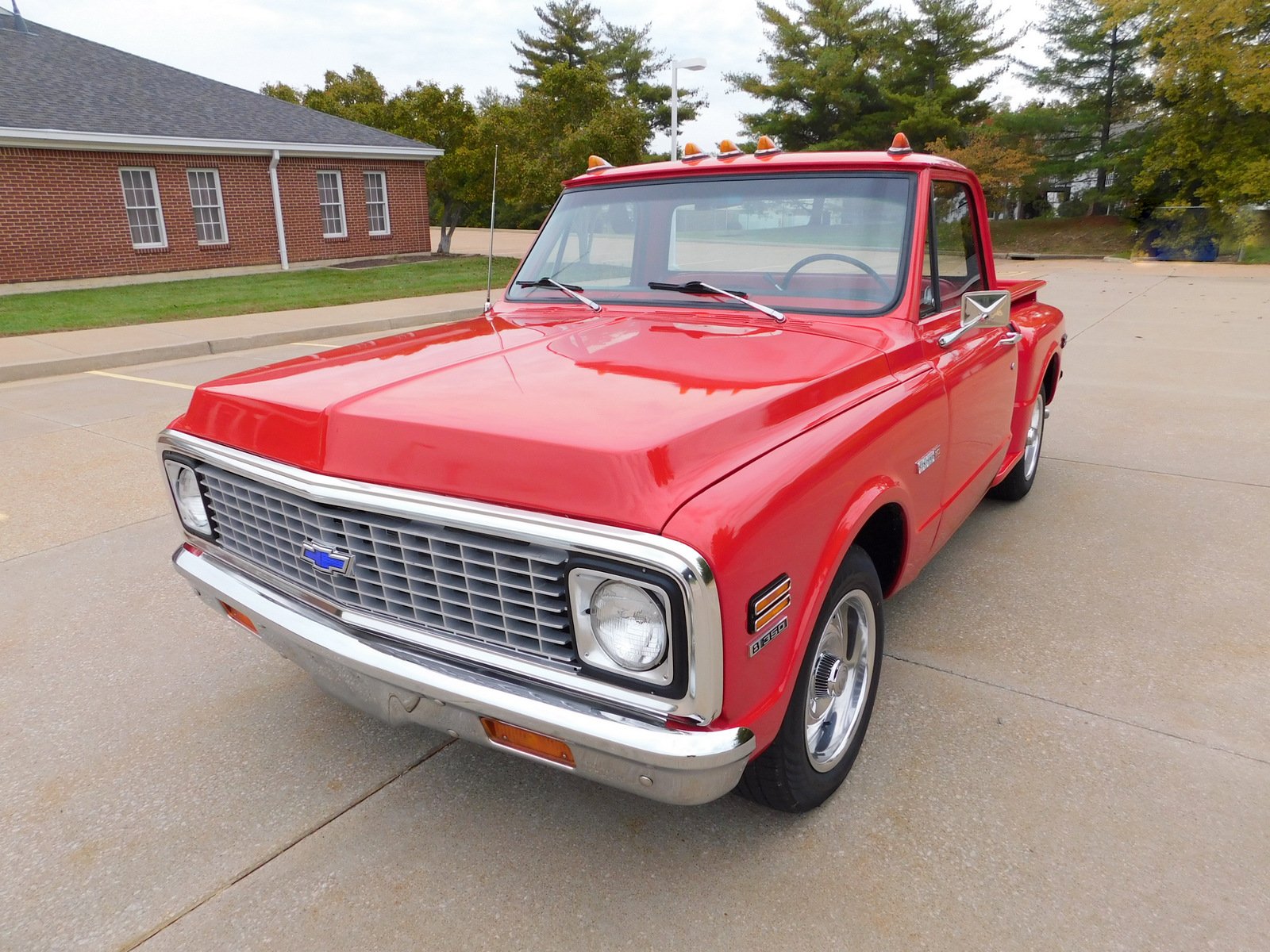

The models
Every 1500 in this guide is a full-size half-ton pickup on a separate ladder frame. Within that sentence there are five generations, two drive layouts, two bed styles, three bed lengths across the years, regular cabs throughout and extended and crew cabs appearing in the later generations, and trim ladders that climb from a vinyl-seat work truck to something with carpet, air conditioning and two-tone paint. The table below is the buying map. Production totals are given only where the factory record is genuinely established at generation level; Chevrolet built half-tons in such volume, across so many plants and model codes, that precise per-trim figures for individual years are not reliably published, and any seller quoting you an exact build count for a common trim is guessing.
| Model | Years | Engine | Output | Built | Character |
|---|---|---|---|---|---|
| C10 / K10 first generation | 1960–1966 | 230/250 six, 283/327 V8 | 120–220 hp | Very large numbers across all half-tons | The stylish starter classic; coil rear, simple everything |
| C10 / K10 Action Line | 1967–1972 | 250/292 six, 307/350/402 V8 | 120–240 hp | Very large numbers across all half-tons | The collector favourite; best repro support of the early trucks |
| C10 / K10 Square Body | 1973–1987 | 250 six, 305/350/454 V8, 6.2 diesel | 110–230 hp | Millions across the Rounded Line run | The workhorse; cheapest entry, worst cab-corner rust |
| C1500 / K1500 GMT400 (OBS) | 1988–1998 | 4.3 V6, 305/350 V8, 6.5 diesel | 160–255 hp | Millions across the GMT400 run | The usable classic; TBI simple, Vortec stronger |
| Silverado 1500 GMT800 | 1999–2001 in this guide | 4.3 V6, 4.8/5.3 LS V8 | 200–285 hp | Very large numbers | The modern truck; LS power, electronic complexity |
(Outputs are period factory ratings and vary by year, market and rating method — gross ratings before 1972, net ratings after. Treat any single figure as approximate for the family, not a promise for a specific truck.)
The first generation, 1960–66. Torsion-bar independent front suspension on the C10 for 1960–62, changing to coil springs for 1963–66, with coil springs at the rear on most half-tons where rivals still used leaves. The K10 kept a solid front axle on leaf springs, as every K truck would until 1988. Styling went from the dramatic 1960–61 wrap-around windshield to the cleaner 1964–66 cab most buyers prefer. Mechanical parts are easy and popular panels are reproduced — but a rusty early cab is a fabrication project, because early cabs rust in the roof, windshield frame and mounts as well as floors and rockers.
The Action Line, 1967–72. The generation the market loves most. Styling is clean, the cab roomier, front discs arrived for 1971–72, and the bay takes everything from a 250 six to the 402 big-block badged as a 400. Trim climbs from Custom to CST and, from 1971, Cheyenne and Cheyenne Super. Coil-spring rear suspension stayed standard on C10s — a coil C10 rides noticeably better than a leaf truck and handles a load noticeably worse. Short-bed Fleetsides carry the strongest demand; long beds, Stepsides and six-cylinder trucks are cheaper for the same condition, and better buys if you intend to drive rather than show.
The Square Body, 1973–87. Fourteen years, one cab, endless variation. Trim ran from Custom Deluxe through Scottsdale and Cheyenne to Silverado, top trim from 1975. Diesel arrived with the unloved 5.7-litre diesel for 1978–81 and the much better 6.2 from 1982. A 4.3 V6 replaced the inline sixes in the mid-1980s, and throttle-body injection reached the half-tons for the final 1987 year, badged R10 and V10 for that year. Easiest classic truck to own mechanically, hardest to buy honestly: the design traps water in cab corners, rockers, bed supports and front fenders, and values now reward cosmetic cover-ups. There is always another one. Wait for a good one.
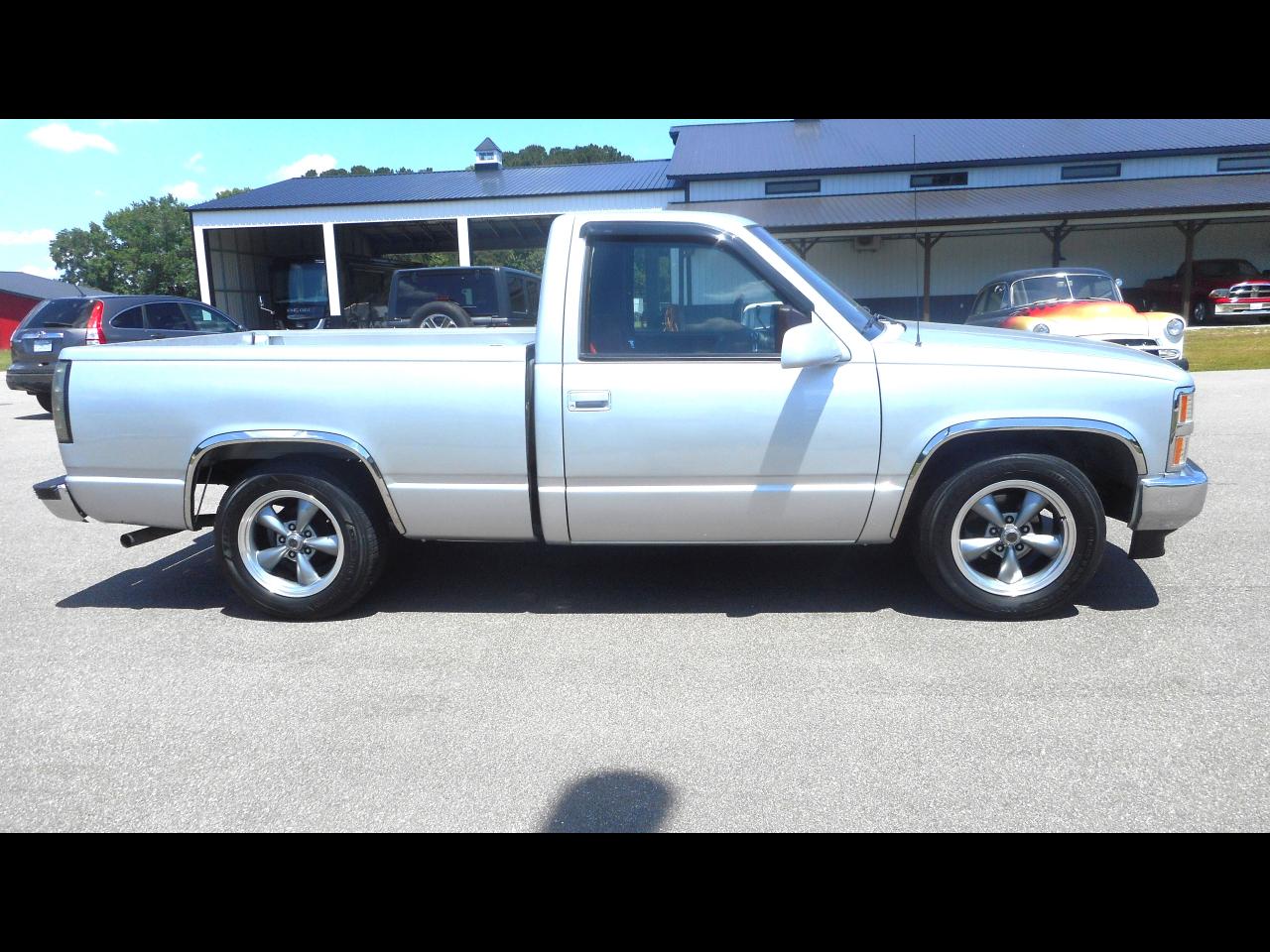
The GMT400, 1988–98 — the OBS. New frame, new cab, independent front suspension on K1500s for the first time, standard throttle-body injection. Trim simplified to Cheyenne and Silverado, with the stripped Work Truck from 1990 and the 454 SS for 1990–93 — a regular-cab short-bed with the 7.4 big-block and a premium condition alone must justify. Extended cabs became common and the interior finally felt like a car. The 1996 Vortec engines are the performance pick; earlier TBI engines are slower and simpler in equal measure. A handful of 1999–2000 trucks are GMT400s sold as Classics — check which platform you are looking at before comparing prices.
The GMT800 Silverado 1500, 1999–2001. Hydroformed frame sections, four-wheel discs, and the 4.8 and 5.3 LS V8s. The 5.3 is the default choice — strong and famously long-lived. These are not simple trucks: clusters, pumps and transfer-case controls are electronic, and northern trucks rust frames, rockers and brake lines with enthusiasm. Buy one as a modern used truck and inspect it that way.


Engines and gearboxes
The sixes and the small V6s: the working engines
The inline sixes carried the early trucks and deserve respect. The 230 and 250 sixes fitted from 1963, and the taller-deck 292 heavy-duty option, are overhead-valve, seven-main-bearing engines with hydraulic lifters and a reputation for outlasting the cabs around them. The earlier 235 of 1960–62 is an older design — confirm exactly which six is in an early truck before ordering anything. A healthy 250 idles smoothly and shows good oil pressure hot. Check every six for side-cover and rear-main leaks, lifter tick that does not fade as it warms (worn lifters or low pressure, not character), and exhaust-manifold cracks, which tick loudly cold and quieten as the manifold expands. Manifold replacement is cheap unless the studs snap — which, at sixty years old, they often do. Never let a seller tell you an exhaust tick is a lifter.
The 4.3 V6 that replaced the sixes in the 1980s and ran into the GMT800 is a 350 V8 with two cylinders removed, sharing bore, stroke and much hardware. In TBI form it is adequate in a regular cab and strained in an extended cab with a load; in Vortec form it is genuinely decent. Its faults are shared with the V8s below — Vortec intake gaskets, distributor wear, oil cooler line leaks — plus a balance-shaft rattle that sounds alarming and matters less than it sounds. A 4.3 truck is always cheaper than the equivalent V8. If you do not tow, that discount is real value. If you do, it is a false economy felt on every hill.
The small-block V8s: carburettor, TBI and Vortec
The small-block Chevrolet is the reason these trucks are viable classics at all. Fitted sizes run from the 283 of the early trucks through the 307, the 305 and the definitive 350, with the 400 small-block offered in the 1970s. The architecture never changed in essentials: cast-iron block and heads (until the later Vortec era), a camshaft in the block, hydraulic lifters, and a tolerance for neglect that no European engine of the period would match. A good small-block starts promptly, idles without rock, pulls without hesitation and does not smoke. Blue smoke at start-up that clears is valve stem seals — common, cheap in parts, a weekend job. Blue smoke under load is rings or bores and means a rebuild. Grey smoke and a sweet smell is coolant. Learn the three smokes before you view a single truck.
Carburettor trucks, to 1986. Most V8s wear a Rochester Quadrajet or a two-barrel depending on year and size; sixes wear single-barrels. The Quadrajet is excellent when tight and a misery when worn: throttle-shaft wear admits air and makes the idle unstable however you adjust it, well plugs leak fuel into the manifold overnight and cause long morning cranking, and choke faults mimic ignition faults. Diagnostic order matters: fuel pressure and volume first (a tired pump or clogged filter starves any carburettor), vacuum leaks second, including booster hose and PCV. Only then condemn the carburettor. A specialist rebuild that bushes the throttle shafts runs roughly $400–800; a cheap exchange unit that has not been bushed buys the same faults back. Budget $150–350 for pump, filters and hoses on any truck that has sat, before judging how it runs.
Throttle-body injection, 1987–95. TBI — two injectors in a throttle body on the 5.0 and 5.7 — is the simplest injection Chevrolet ever made and the most reliable system in this guide. Faults are few and legible: a spray pattern you can watch with the air cleaner off (a fine, even cone, not drips), a base gasket that leaks vacuum and raises the idle, a weakening pump that shows first as lean surge at highway load, and a gummed idle air valve that makes the idle hunt. Fuel pressure is low, around 9–13 psi, and a gauge settles most arguments. A pump is $250–600 fitted. A TBI 350 in a Square Body or early OBS is the low-hassle pick of the whole range for exactly this reason.
Vortec injection, 1996–98. The 1996 Vortec 5000 (5.0) and 5700 (5.7) brought better cylinder heads, a higher compression ratio and central sequential fuel injection — a central injector unit with poppet valves at each port, universally called the spider. The engines are stronger and more economical. The system has two defining faults. First, the poppet valves gum and stick, especially on trucks run on poor fuel or left sitting, giving misfires and rough running that a later conversion to the updated multi-port spider kit cures permanently for roughly $600–1,200 fitted. Second, the intake-manifold gaskets fail — the plastic carrier gaskets crack around the coolant ports and leak coolant externally, into the valley, or into the oil. Coolant loss with no puddle, mayonnaise under the oil filler cap, and a misfire on a Vortec should have you pricing gaskets ($700–1,400 fitted) before anything exotic. Distributor cap and rotor quality matters on these engines — cheap caps cross-fire — and the distributor itself wears its drive gear. None of this should put you off a Vortec truck. It should put you off a Vortec truck with no invoices and a low coolant bottle.
The 305 warning, stated plainly. The 5.0-litre 305 is not a bad engine, but it is a slow one in a heavy truck, it carries flat spots in the market because everyone wants the 350, and the soft-camshaft years of the late 1970s and early 1980s gave it a reputation it only partly deserves — cams did wear lobes in that era, on 305s and 350s alike, showing as a popping back through the carburettor under load and a cylinder that will not come in. Test any carburettor V8 under load, not just at idle. A 305 truck in excellent condition is a better buy than a tired 350 truck at the same money. A 305 truck priced as a 350 is not. The eighth digit of the VIN and the casting and suffix codes on the block settle which engine is actually fitted — check them, because engine swaps in both directions are common and badges prove nothing.
The big-blocks and the diesels
The big-block arrived for 1968 as the 396, badged 400 from 1970 in 402 form, returned in the Square Body as the 454, and finished in the GMT400 as the 7.4, including the 454 SS. A big-block half-ton is a towing and presence choice, not a speed choice: torque from idle, fuel consumption in single figures to low teens, no spare room in the bay. Heat is the enemy — marginal radiators, cooked starters, vapour lock on carburettor trucks in summer traffic — all curable with cooling honesty and heat shields. Verify a factory big-block on the VIN and SPID label; a swapped truck is worth its condition, not a factory premium.
The diesels divide sharply. Avoid the 1978–81 5.7 diesel unless you are a specialist buying a curiosity: adapted from a petrol design, its head-bolt and head-gasket failures are structural, not bad luck. The 6.2 Detroit Diesel of 1982–93 and the 6.5 of 1994–98 are honest, slow, economical work engines with their own checklist — glow-plug cold starts, injector and pump condition (a Stanadyne rotary pump rebuild runs roughly $900–1,600), harmonic balancer rubber failure that can take the crankshaft if ignored, and on the electronic 6.5 the pump-mounted driver module that overheats in its factory position and is routinely relocated on a cooler for $250–500. A relocated module with an invoice is a good sign. An electronic 6.5 that cuts out hot and restarts cold is describing that module until proved otherwise.
The LS engines: GMT800 4.8 and 5.3
The 1999 Vortec 4800 (4.8, LR4) and 5300 (5.3, LM7) share an architecture with iron blocks and aluminium heads in most half-ton applications, and they are the most durable engines in this guide: 250,000 miles is unremarkable with oil changes. Their faults are specific. Exhaust-manifold bolts break at the rear of the heads, ticking when cold — extraction runs roughly $400–1,000. Dry intake gaskets leak vacuum and set lean codes. Knock sensors live under the intake in a valley that collects water, corrode, and need manifold removal to replace ($500–900 fitted). Oil consumption on higher-mileage 5.3s traces most often to the PCV arrangement in the driver-side valve cover. Cold piston slap — a diesel-like rattle for the first minute — is common and documented, and alone is not a reason to walk away. Carry a cheap code reader when you view a GMT800; it tells you more in two minutes than an hour of listening.
Gearboxes
Manuals. The base gearbox for decades was a three-speed column-shift manual nobody wants and nobody should fear. The SM465 truck four-speed, with a crawler first, is nearly unbreakable and changes like a tractor, because it is one; car-type four-speeds in early trucks are lighter and weaker. Test for clutch judder, a high biting point, and noise in neutral with the clutch up that vanishes with it down (input bearing). From the late 1980s, five-speeds — Getrag, then NV3500 in half-tons, NV4500 behind diesels and big-blocks — brought overdrive; both suffer worn synchronisers on second and third. A clutch runs roughly $800–1,500 fitted; an SM465 rebuild is rarely needed and $1,500–2,500 when it is.
Automatics. The two-speed Powerglide is a durable period piece and a genuine deduction in usability. The Turbo-Hydramatic three-speeds are the classic default — TH350 in most half-tons, stronger TH400 behind big-blocks — simple, rebuildable anywhere for roughly $1,500–2,800, and judged on fluid colour and smell (dark and burnt means borrowed time), shift firmness (soft, sliding shifts mean wear; a single harsh shift can be a cheap modulator fault on a TH350), and delay engaging reverse, the classic first symptom of a tired box. The 700R4 overdrive transformed highway cruising and earned a fragile early reputation; by 1987 factory updates had largely fixed it, and the critical check is the throttle-valve cable — a misadjusted cable starves line pressure and burns the box, sometimes in one drive. Never keep driving a 700R4 with a slack or disconnected TV cable. Its electronic successor, the 4L60E, fills the GMT400 and GMT800: same fluid and shift tests, plus harsh 1–2 shifts and loss of overdrive as early warnings, rebuilds at $2,200–3,800. The 4L80E behind diesels and 7.4s is the strongest automatic here and priced like it when it fails. On any automatic, an auxiliary cooler and clean fluid in the file are worth money; towing without a cooler is how most of these boxes died.
Four-wheel drive. K trucks use a part-time transfer case — the gear-driven NP205 is prized in early trucks; chain-driven cases (NP208, NP241, electronic-shift versions later) are lighter and adequate, with chain stretch showing as slap or ratcheting under load. Test four-wheel drive on a loose surface, never forced on dry tarmac, check hub engagement, and on GMT400 and GMT800 trucks test the electronic front-axle actuator — its failure is common, cheap ($150–400 fitted), and routinely misdescribed as a transfer-case failure.

Problem areas
A note on evidence before the map. The photo record behind this guide is small — only six trucks in the pool carry detailed photo examinations — and in that small sample rust was noted on five of the six and visible damage on all six, with fluid leaks noted on two. Treat those numbers as a prompt to look, not as statistics: six trucks prove nothing about thousands. What proves the pattern is forty years of the same failures on the same panels, set out below. Assume every truck you view has the faults for its generation until your own inspection clears it.
Rust: the map
Rust decides the value of every pre-1999 truck in this guide, and it follows the water and the mud traps each generation built into itself. Work in this order, and remember that fresh paint, fresh underseal and fresh bedliner over the areas below are selling tools, not repairs.
Cab corners, rockers and cab mounts — all generations. The cab corner behind each door is the signature rust of the Square Body and a major trap on every other generation: the design collects wet dirt behind the rear of the cab, the drain blocks, and the corner rots from inside out. Push hard on the corner from outside and look from underneath and inside the rear cab wall. Bubbling paint here means perforation behind it. Rocker panels rot along their full length, worst at the front where the front wheel throws water, and the cab mounts — the rubber and steel sandwich that bolts the cab to the frame — collapse as the floor support rusts, letting the cab sag until the door gaps close at the top and the doors drop on their latches. A door that has to be lifted to shut is telling you about mounts and hinge pins together; hinge pins are a $30 kit and an hour, mounts and floor supports are welding. Cab corner and rocker replacement, cut out, welded and painted, runs roughly $800–2,000 per side at a body shop, and floors travel with them more often than not. On GMT800 trucks the rockers rust just as enthusiastically under plastic cladding that hides it — press along the cladding and look from underneath, where the truth is unpainted.
Floors and toe boards. Water enters past the windshield seal, the cowl vents and the heater box, then sits under rubber mats and sound deadening. Lift every mat and carpet. On Square Bodies the cowl and kick-panel area deserves a hose test or at least a look for water tracks down the inner kick panels, because cowl rust repairs are dashboard-deep. Surface scale is treatable; a floor you can flex with your thumb is a panel. Floor sections are reproduced for every generation and a side fitted and painted runs $600–1,500 — but floors, like cab corners, rarely rot alone, so price the set, not the panel you happened to find first.
Front fenders, inner fenders and the core support. The bottom of the front fender behind the wheel rots on every generation, the inner fender traps dirt against the outer skin, and on Square Bodies the battery tray area and the core support rust where acid and road salt combine. Open the hood and look at the inner fenders from inside the bay as well as from the wheel arch. A replaced fender is no disgrace — they bolt on — but fresh fenders on a truck with original cab corners usually means the seller repaired what shows in photographs and left what does not.
Beds. The bed floor rots over its cross-supports, worst over the rear wheels and at the front panel where water stands; the wheel arches bubble from the inside where the inner and outer skins trap mud; and a spray-in or drop-in bedliner hides all of it. Get underneath the bed with a torch and read the supports and the underside of the floor — the top surface under a liner tells you nothing. Stepside beds add wooden floor boards on early trucks: replacement is straightforward carpentry and steel strips, and a rotten wood floor is a deduction, not a disaster. A complete bed floor and supports is a $1,500–3,500 job done properly; a rust-free southern bed swapped onto a northern truck is a legitimate and common repair, so mismatched bed paint alone is not a walk-away — mismatched bed paint over rotted cab corners is a strategy, and you should price it as one.
Frames. The ladder frame itself is thick steel and survives well in dry states, but check three places on every truck: the frame rail around the steering box on the driver side, where stress cracks form on hard-used and big-tyred trucks (a factory and aftermarket brace exists for the Square Body because the problem is known); the rear rails and spring hangers on northern trucks, where salt scale thins the steel from the outside; and the GMT800 frame generally, where hydroformed sections rust from inside and a frame that rings when tapped with a small hammer is sound while one that thuds and sheds scale is not. Spring hangers, shackles and their rivets or bolts are wear-and-rust items on every leaf-sprung rear. Frame repair is fabrication, priced per truck, and a perforated frame on a common truck ends the negotiation: there is always another 1500.
The smaller traps. Door bottoms (drain holes block, doors fill, the bottom seam bubbles — run a fingertip along the lower edge of every open door), the bottom of the tailgate, the windshield frame and roof drip rails on the early cabs, the cowl sides on Square Bodies, and the rear wheel-arch lips on GMT800 trucks under their flares. None alone kills a truck. Together they date its storage and its winters more honestly than any odometer.

Chassis, steering and brakes
The two-wheel-drive front suspension is independent in every generation — coils and double wishbones, with torsion bars on the 1960–62 C10 only — and wears in the ball joints, the control-arm bushings and the idler and pitman arms. Jack the front up under the lower control arm so the suspension is loaded as designed, then rock the wheel: play top-to-bottom is ball joints or wheel bearings, play side-to-side is steering linkage. Judging ball joints unloaded gives the wrong answer on these trucks, and sellers know viewings rarely bring a jack. The four-wheel-drive GMT400 and GMT800 use torsion-bar independent front suspension with its own ball-joint and CV-boot checklist; earlier K trucks use a solid front axle on leaf springs, where kingpin-style steering joints, spring bushings and a worn steering stabiliser produce the wander that owners blame on alignment. Steering boxes wear loose in the centre of travel on high-mileage trucks of every era — a small adjustment exists, overtightening it is a classic bodge that makes the box bind off-centre, and a rebuilt box runs $300–600 plus fitting. Power steering pumps whine when low, when aerated, and when dying, in that order of cost: check the fluid first.
Sag is information. A coil-rear early C10 that sits low at the back has tired coils or a life of overload; air shocks fitted to any truck are a confession that the springs are done. Leaf springs flatten, crack leaves (look along each leaf, especially the main leaf at the eyes) and eat their bushings. A full spring and bushing refresh is $600–1,400 in parts and a day of labour, and transforms a truck — budget it on any truck that sits wrong, and do not let a seller sell you the air shocks as an upgrade.
Brakes divide by era. Early trucks run drums all round or front discs from the late 1960s as an option and standard on half-tons from 1971–72, and a drum truck stops adequately when everything is fresh and poorly when any one wheel cylinder weeps — pull the drums or at least test for a pull under braking and check the backing plates for fluid. Square Body and OBS trucks are front disc and rear drum with vacuum boost, and the standard recommissioning list is seized calipers, perished flexible hoses, a corroded master cylinder and a rear proportioning and height-sensing valve nobody has touched in decades. GMT800 trucks have four-wheel discs and two era-specific hazards: brake lines that rust through — a full stainless line set fitted runs roughly $800–1,500 and is the single best safety spend on a northern truck — and ABS modules that fail and light the dash. On every generation, a pedal that sinks slowly at a standstill is a master cylinder or a leak, never a characteristic. A full hydraulic refresh — calipers or cylinders, hoses, master, fluid — runs $800–1,800 fitted depending on era, and it is the first money any bought truck should get.
Cooling, electrics and the cab
Overheating kills more small-blocks than wear does. The cooling system on a classic 1500 is a radiator that silts up, a water pump whose bearing you check by rocking the fan, a fan clutch that should roar when hot and spin freely when cold (a clutch that freewheels hot is why the truck boils in traffic and behaves on the highway), hoses that look fine and collapse internally, and a heater core whose failure announces itself as a sweet smell and a misted windshield — a $150 part behind $600–1,200 of labour on later trucks where the dash must come apart. Pressure-test the system on any truck you are serious about; it finds the radiator seams, the core plugs and the intake gasket leaks that a visual check misses. Core plugs deserve their own sentence: the steel plugs in the block rot, the ones behind the engine mounts and at the back of the block are engine-out or transmission-out to reach, and a weeping rear core plug misdiagnosed as a rear main seal leak has sold many engines short. Distinguish them with a mirror and a torch before pricing either job.
Electrics fail at grounds and connections first, in every generation. Dim lights, slow cranking with a good battery, gauges that wander and TBI or Vortec trucks that set random codes all trace to engine-to-frame and battery ground straps that cost almost nothing and hide in plain sight. Fusible links on earlier trucks mimic total electrical death when they blow. The GMT400 and GMT800 add known electronic failures: GMT400 wiper motors that park mid-sweep or work only on high from circuit-board solder cracks, HVAC control heads and blend-door actuators that click and stick, GMT800 instrument clusters whose stepper motors fail gauge by gauge (a cluster rebuild runs $150–350 and is a solved problem), window regulators on the later trucks, and fuel-pump wiring at the tank that overheats its connector. A truck where everything electrical works, in any generation, has been used and maintained. That remains the cheapest health signal there is.
Inside the cab, price what you sit on and touch. Bench-seat foam collapses on the driver side, vinyl splits along its seams, and a re-trim in correct material runs $800–2,000 for a bench done properly — more for GMT400 and GMT800 buckets and consoles. Headliners sag on every truck that has them. Dash pads crack in the sun on Square Bodies and OBS trucks, and a crack-free original dash is worth real money because reproduction quality varies. Heater and air-conditioning controls, vacuum-operated on many Square Bodies, fail by perished vacuum hoses under the dash — cheap parts, fiddly hours. Factory air conditioning that blows warm is either a $200–400 recharge-and-seal conversation if the system is complete and holds vacuum, or a $1,200–2,500 compressor, condenser and conversion conversation if it does not. Make the seller demonstrate it, and price the answer, not the promise.
How to inspect one
Allow ninety minutes, bring a torch, a small hammer for the frame test, a magnet wrapped in cloth, a jack if the seller allows, and a code reader for a 1996-or-later truck. Insist on a cold engine. A truck warmed up before you arrive is hiding its cold-start behaviour, its choke or cold enrichment, its piston slap and its glow plugs, and the seller knows it.
- Paperwork and identity first. Match the VIN on the title to the VIN plate — dash plate visible through the windshield on later trucks, door jamb or glovebox locations by era — and read the SPID label in the glovebox on trucks that carry one: it lists the engine, gearbox, axle ratio and trim as built. Check the engine against the codes, not the badge, exactly as the engines section warns. A thick invoice file is worth real money on any generation; a diesel or Vortec truck with no fuel-system invoices should be priced as if the known jobs are still to do.
- Cold start. Start it yourself from cold. A carburettor truck should fire with one pump of the pedal and hold a fast idle that kicks down; a TBI truck should start and settle without throttle; a Vortec or LS truck should start cleanly with no misfire or rattle beyond a brief LS cold slap that fades. Watch the exhaust for the three smokes — blue at start-up is stem seals, blue under load later is rings, sweet white that does not clear is coolant. Note the oil pressure gauge behaviour cold and remember it for the hot test.
- Under the hood, systematically. Check every fluid for level and for what it is telling you: oil thin and petrol-smelling on a carburettor truck means fuel dilution from a flooding carburettor or short-trip use, coolant low with no leak means find the leak before it finds you, transmission fluid dark and burnt prices the gearbox. Rock the water-pump pulley for bearing play, spin the fan clutch test in mind for later, look at the belts, the core plugs you can reach, the battery tray and the inner fenders, and count the broken exhaust-manifold bolts on an LS truck by listening for the cold tick.
- The rust circuit, in order. Cab corners first — push, look underneath, look inside. Then rockers along their full length, cab mounts and floor supports, then lift the mats and read the floors. Front fender bottoms, inner fenders and core support next. Then underneath the bed for the floor supports, and finally the frame with the hammer test at the steering box, the spring hangers and, on a GMT800, along both rails. Perforation in cab structure or frame ends most inspections here, and it should: those are the jobs that exceed the value of a common truck.
- Doors, gaps and the magnet. Run the magnet over cab corners, rockers, fender bottoms and wheel arches — filler announces itself by the weak pull. Open and shut every door: dropping on the latch is hinge pins, mounts or both. Check the tailgate for straightness and the bed sides for the wavy reflections of filler and hard use. Panel gaps that wander on one side only are accident history until proved otherwise.
- Front suspension and steering, loaded. Jack under the lower control arm on a two-wheel-drive or torsion-bar truck and rock each front wheel top-to-bottom and side-to-side as the problem areas section describes. On a solid-axle K truck, check steering joints and spring bushings and look for cracked leaves. Turn the steering lock to lock at a standstill and listen for pump groan; check for box play in the straight-ahead position and for binding off-centre that betrays an overtightened adjustment.
- The test drive, at least twenty minutes. Include a cold pull-away, a full-throttle run through the gears to load the engine (a soft cam pops back, a tired automatic flares, a starved fuel system surges), a steady highway cruise (700R4 and 4L60E overdrive engagement, TBI surge, Vortec misfire under light load), and a long hill if you can find one. Note every shift: firm and clean is right, sliding is wear, harsh on one shift only is a diagnosis, not a verdict. Test reverse engagement at the end, warm, and time any delay.
- Brakes, hard and straight. From speed, brake firmly: the truck should stop straight with no pull, no judder and a pedal that stays where it met you. Then hold the pedal hard at a standstill for thirty seconds — a slow sink is a master cylinder or a leak, and either ends the drive until it is priced. Work the parking brake on a slope. On a GMT800, ask when the brake lines were done and look at them: original lines on a northern truck are a budget line, not a detail.
- Four-wheel drive, on a loose surface. Engage it on gravel or grass, drive in a straight line and in gentle turns, and listen for chain slap or ratcheting from the transfer case. Check hub engagement on manual hubs and actuator engagement on electronic trucks — shift, wait, confirm. A truck that will not engage four-wheel drive has a fault the seller should price, and the common actuator fault in the problem areas section is cheap while a stretched chain is not, so distinguish them if you can.
- Heat, idle and electrics, hot. Let it idle fully hot for ten minutes. Temperature should stabilise, the fan clutch should engage audibly on a clutch-fan truck, oil pressure at hot idle is the number that judges the bottom end, and the idle quality hot is the number that judges the fuel system. Then work everything: heater and blower on all speeds, air conditioning if fitted, wipers and washers, every light, every gauge, windows, locks. On a 1996-or-later truck, plug in the code reader now and read stored as well as live faults.
- Stance and the walk-around. Stand back on level ground. The truck should sit level side to side; a rear sag is springs, a front corner down is a spring or a mount, and a GMT800 nose-high or nose-low stance has its own causes in torsion-bar adjustment and wear. Look down each flank for ripples and mismatched paint, then photograph the truck from all four corners — faults you talked yourself out of in person are obvious in pictures that evening.
- Underside last, and price the list. On a lift if you can, on your back if you must: exhaust, every leak located rather than just noted (rear main versus core plug versus valve covers matters to the price), pinion and axle seals, fuel and brake lines, spring hangers, and the spare carrier nobody operates until it seizes. Write the fault list with job costs from this guide beside it before offering. An offer built on a priced list holds; one built on a feeling does not.
Values
The market content computed from current listings appears beneath this guide and is refreshed at every build — read it after this section, because this section teaches you how to read it. No figures are printed here on purpose: the 1500 market moves by generation, by region and by rust, and a printed number would be out of date before it helped you, while the structure of the market below does not change.
Start with the condition spread, which is wider for these trucks than for almost any classic car. The gap between a project truck and a sorted driver in the same generation is routinely several times the project truck's price, and the gap between a sorted driver and a genuinely excellent, correctly detailed truck is wide again on top of that. The reason is the repair arithmetic in this guide: cab and bed rust repair, a gearbox rebuild and a fuel-system overhaul together cost more than the difference between a cheap truck and a good one. When the computed market block shows a broad range for a generation, that is not noise. That is the condition spread, and your job is to place the specific truck inside it by its cab corners, its frame and its invoices, not by its paint.
Generation sets the band. Action Line trucks carry the strongest collector demand, short-bed Fleetsides most of all, and factory big-block and Cheyenne Super trucks carry premiums that must be verified on the VIN and SPID label because clones and badge upgrades are common and a tribute truck is worth driver money, not factory money. Square Bodies have risen from work-truck money into genuine classic money, with the same short-bed and top-trim premiums and a steep discount for the 305 and the 6.2 diesel that a patient driver-buyer can use. OBS trucks are the value end of the classic market — Vortec short-beds are the pick — and the 454 SS is its own small market where originality is everything. GMT800 trucks are priced as used trucks, by mileage, cab configuration and rust, with the 5.3 carrying a premium over the 4.8 and the 4.3 that reflects real capability. First-generation trucks price on style and condition, with the 1964–66 cab preferred and four-wheel-drive K10s scarce enough to command their own level.
Asking prices and achieved prices part company predictably. Private sellers of project trucks ask driver money and wait; dealers of polished trucks ask excellent money for driver-condition cabs with fresh paint over the traps listed in the problem areas; auction results for honestly described, well-photographed trucks are the best reality check you have, and they reward documentation — the same truck with an invoice file and cold-start and underside photographs achieves visibly more than the same truck with neither. Rust-free southern and western trucks carry a regional premium that is usually worth paying, because it is smaller than one side of cab-corner and floor work. Conversely, a northern truck priced at southern money is the most common overpayment in this market.
Negotiate from the priced fault list you built in step 12 of the inspection, not from a percentage off the asking price. Intake gaskets on a Vortec, a spider conversion, brake lines on a GMT800, a soft automatic in any generation — each is a specific, costed job with a range in this guide, and a seller faced with a specific job and a specific cost concedes more readily than a seller faced with a general claim that the truck needs work. Walk away from perforated structure at any discount on a common truck. The supply of 1500s is the deepest in the classic market; patience is a pricing strategy.
Parts and ownership
The 1500 is, by a wide margin, the best-supported classic vehicle in this entire programme. Chevrolet built the trucks in the millions, the mechanicals stayed in production for decades, and the aftermarket followed the numbers. If you are choosing a first classic partly on whether you will be able to buy parts for it in ten years, this is the answer.
Easy and cheap: every service item for every engine in this guide; small-block and LS engine parts at every level from gaskets to complete crate engines; brake, steering and suspension wear parts for all generations; carburettor and TBI service parts; radiators, water pumps, alternators and starters; glass, weatherstrips and seals; and reproduction sheet metal for the popular panels of the Action Line, Square Body and OBS generations, including cab corners, rockers, floors, fenders and bed panels. Order today, fit this weekend is a realistic description for most of the mechanical catalogue, at prices at or below modern-car money.
Harder and dearer: correct trim, badges and interior materials for the early trucks and for Cheyenne Super and 454 SS specification; early-cab structural panels beyond the popular reproductions; good original dash pads; 6.2 and 6.5 diesel injection pumps and the specialists who rebuild them; the Stanadyne electronic pump and its driver modules; NP205 transfer-case parts in good condition; factory air-conditioning parts in correct form rather than universal replacements; and rust-free original beds for any generation, which the market prices as the panels they save you buying. None of it is unobtainable. Some of it requires patience and the owners-club and forum knowledge that this huge community produces in abundance — wiring diagrams, option-code decoders and repair threads exist for every fault in this guide, usually with photographs.
Running costs. Expect low-to-mid teens mpg from a carburettor or TBI V8 in mixed use, better from a Vortec or LS truck driven gently, single figures from a big-block or a towing truck. Diesels return the best economy and charge it back in specialist maintenance. Servicing is cheap on everything before the GMT800 and still reasonable on it; any competent independent shop can work on a small-block or LS. The budget line that catches new owners is the first year: catching up deferred maintenance — fluids, brakes, hoses, belts, tyres aged out rather than worn out — costs in the low thousands before you improve anything, and recommissioning a truck that has sat costs more, because sitting kills fuel systems, brake hydraulics and seals. A truck in regular use at a higher price is cheaper in year one than a stored truck bought cheaply. A sorted 1500 of any generation is a realistic daily driver — OBS and GMT800 especially, which is why the best of them do not stay cheap.
Which one to buy
- The all-rounder: a GMT400 Vortec 5.7, 1996–98. Car-like cab, real performance, TBI-era simplicity mostly retained, parts everywhere. Budget for intake gaskets and the spider unless invoices prove both done, and it is the easiest classic 1500 to live with every day.
- The value buy: a Square Body TBI 350, 1987 — or a clean 305 at a 305 price. The last Square Body year gets the best fuel system of the generation. A tidy 305 truck discounted for its engine is the cheapest honest entry into classic truck ownership there is; just buy it at its own price, not a 350 price.
- The collector pick: a 1967–72 short-bed Fleetside, Cheyenne or CST, 350 or verified 402. The strongest demand, the best reproduction support, the best resale. Verify factory specification ruthlessly, because the premium lives in the paperwork as much as in the truck.
- The worker: a GMT800 5.3, 1999–2001. The strongest engine here, modern brakes, modern parts support. Buy it as a used truck — mileage, frame, brake lines, manifold bolts — and it will out-work and out-last everything else in this guide.
- The character buy: a 1964–66 C10. The prettiest early cab, the simplest mechanicals, the most honest driving experience. Buy the best cab you can find; early sheet metal forgives nothing.
- The cruiser: an OBS extended cab, 1996–98. Space, comfort, Vortec pace and air conditioning that works. The classic truck for people who actually travel in their classics.
- Avoid unless specialist: the 1978–81 5.7 diesel, and any truck with perforated cab structure or frame at driver money. The diesel's faults are designed in. The rusty truck's faults are priced wrong. Both have better uses for your money elsewhere in this same guide.
And the rule that overrides all of the above: buy the least rusty truck you can find, in the generation you actually want, with the invoices to prove its fuel system and gearbox. Engines, brakes, suspensions and interiors are all fixable at prices you can plan for from this guide. A rotten cab and frame cost more to put right than the finished truck is worth — and with the deepest supply of any classic in America to choose from, there is never a reason to settle for one.
See the 33 1500 Regular Cab Short Bed cars currently listed.