
Cadillac Seville Sedan 4D buyer's guide
Cadillac Seville Sedan 4D -- the model's own buyer's guide: variants, values and what to check.
Years listed: 1977-1995 · Series: Seville
Overview and history
The Cadillac Seville is not one car but five, built across twenty-nine model years under a single nameplate, and the first job of any buyer is to work out which Seville a seller is actually offering you. The name ran from 1976 to 2004, and in that time the car changed driven wheels, engine philosophy, size and character so completely that almost nothing except the badge, the four doors and the idea carries over from the first car to the last. The idea matters: the Seville was Cadillac's answer to a market turning away from sheer size. Mercedes-Benz and BMW were selling smaller, tighter, more expensive sedans to exactly the buyers Cadillac could not afford to lose, so in the spring of 1975, as a 1976 model, Cadillac launched the smallest and — pound for pound — most expensive car it had ever made: an international-sized luxury sedan, engineered with unusual seriousness, and priced above the big DeVilles it parked next to.
That first Seville, built from 1976 to 1979, was rear-wheel drive, V8-powered and fuel-injected as standard at a time when almost nothing else American was. The second, from 1980 to 1985, switched to front-wheel drive and acquired the famous — and divisive — bustleback tail, a sloping, razor-edged trunk borrowed from 1930s British coachbuilding. The third, from 1986 to 1991, shrank hard in the great GM downsizing, went transverse-engined, and spent its early years saddled with an engine its buyers did not forgive, before recovering late in life with bigger V8s and the first STS models. The fourth, from 1992 to 1997, restored the name: a handsome, fast, Northstar-powered flagship the press rated against the German cars without embarrassment. The fifth, from 1998 to 2004, refined that formula, added the first production magnetic ride control, and gave way to a rear-drive replacement that took the STS letters and left the Seville name behind.
This is the model-level guide, organised generation by generation, engine by engine, fault by fault. A companion series guide tells the broader Seville story; here the emphasis is on what differs between the cars in front of you — which engine is under the hood, which failure it is known for, and which test settles the question before you pay.
A plain disclosure about the cars this guide is weighted towards, because it shapes everything that follows. The pool of Sevilles we currently track runs to 24 cars — 16 for sale and 8 recorded as sold — and it is heavily weighted to the early cars. Ten of the 24 are first-generation cars from 1977 to 1979, nine are bustlebacks from 1984 and 1985, four are downsized third-generation cars from 1988 and 1991, and just one is a Northstar-era car, a 1995 SLS. There is not a single 1998–2004 final-generation car in the pool at all. That weighting reflects the surviving market as we see it — early Sevilles are the cars being kept and traded as classics, while later cars are still mostly living as old used cars — so the early generations get the most space below because they are most of what you will actually be offered, and the later generations are covered on their known merits and faults, not on a large sample of listings. Only one car in the pool carries a detailed photo note on file, a sample of one, too small to draw any incidence conclusions from — so this guide makes none, and judges condition car by car, exactly as the inspection section will ask you to do.
Two threads run through all five generations. The first is electronics ambition: the Seville was repeatedly the car Cadillac used to debut technology — standard electronic fuel injection in 1976, digital instrumentation and variable-displacement V8 power in the early 1980s, the Northstar system in the 1990s, magnetic dampers at the end. That ambition is the car's charm and its principal ownership risk, because forty-year-old first-generation electronics are a very different proposition from forty-year-old carburettors. The second is that a Seville was always an expensive car bought by people who, for the first decade at least, maintained it properly — so survivors tend to be unusually original and well documented, the good ones are genuinely good, and the neglected ones stand out a mile.
The models
Every Seville is a four-door sedan — there was never a coupe, wagon or convertible from the factory — and every Seville is automatic. What changes across the years is everything else. Read the table below as five separate buying decisions that happen to share a name.
| Model | Years | Engine | Output | Built | Character |
|---|---|---|---|---|---|
| Seville (first generation) | 1976–1979 | 5.7 V8, electronic injection | 180 hp | High volume for a flagship; the survivor pool's core | The original: rear-drive, injected, the connoisseur's early car |
| Seville Diesel | 1978–1979 | 5.7 diesel V8 | 120 hp | Low thousands | The economy experiment; most were later converted to petrol |
| Seville (bustleback) | 1980–1981 | 6.0 V8, then V8-6-4 | 145–150 hp | Strong early sales | The razor-edge car with the last big Cadillac V8s |
| Seville (bustleback) | 1982–1985 | 4.1 HT4100 V8; 4.1 V6 and diesel options | 125–135 hp | The bulk of bustleback survival | The controversial car: styling loved or loathed, engine to buy carefully |
| Seville (downsized) | 1986–1987 | 4.1 HT4100 V8 | 130 hp | Modest; sales fell sharply | The shrunken car — smallest, lightest, least loved |
| Seville / STS | 1988–1991 | 4.5 V8, then 4.9 V8 | 155–200 hp | Recovering through the run | The recovery: real performance arrives, STS is born |
| Seville STS / SLS | 1992–1997 | 4.9 V8 (1992), then 4.6 Northstar V8 | 200–295 hp | Strong; a genuine flagship again | The modern classic: fast, handsome, Northstar caveats apply |
| Seville STS / SLS | 1998–2004 | 4.6 Northstar V8 | 275–300 hp | Steady to the end of the line | The final car: the most capable, the least collected — so far |
(Outputs are period SAE net ratings for US cars. Trim names need care: Elegante was the top trim of the first two generations, STS — Seville Touring Sedan — began as a limited handling package in 1988 and became the sporting model line from 1992, with SLS — Seville Luxury Sedan — as its comfort-biased sister from 1994. Before 1994, the non-STS car is simply a Seville.)
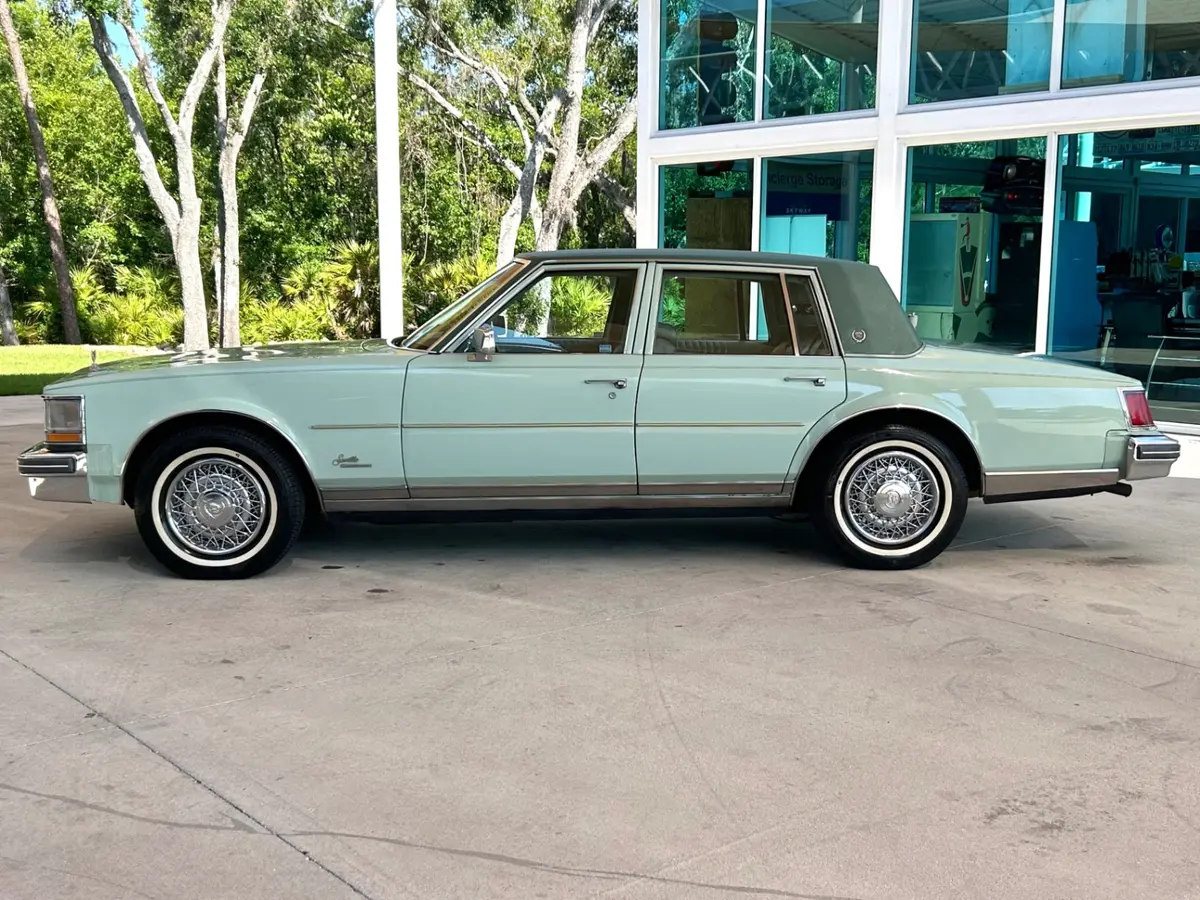
The first generation (1976–79). The car that started it was based, distantly, on GM's compact X-body understructure — the bones beneath a Chevrolet Nova — but so thoroughly re-engineered and re-trimmed that the connection is a pub fact, not a driving characteristic. It rode a 114.3-inch wheelbase, carried Cadillac's first standard fuel injection, and was finished to prove an American maker could build a Mercedes rival. The Elegante trim, from 1978, added two-tone paint, wire wheels and a distinctive interior, and is the first-generation car collectors look for first. The diesel, also from 1978, is a curiosity now — see the engines section before buying one, because a large share of diesel Sevilles no longer have diesel engines.
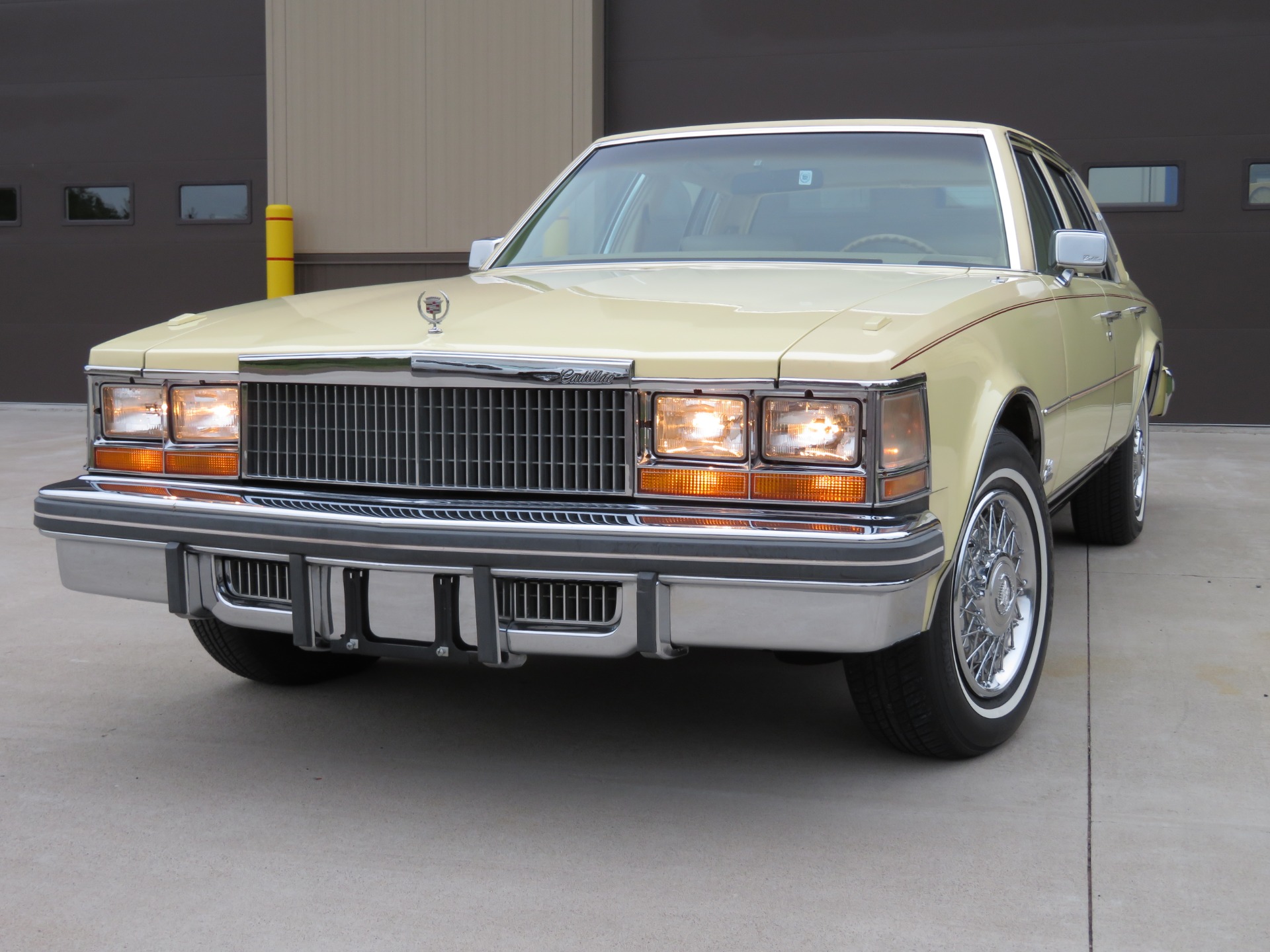
The bustleback (1980–85). For 1980 the Seville moved to the front-drive platform it shared with the Eldorado coupe, and chief designer Bill Mitchell gave it the most argued-about rear end in Cadillac history: a sloping bustle trunk modelled on the razor-edge Hooper-bodied Daimlers of the 1930s. You will love it or you will not, and the market has spent forty years in both camps. Underneath, the first two years are the mechanically traditional ones — a 6.0-litre Cadillac V8, in 1981 with the V8-6-4 variable-displacement system — and 1982 brings the HT4100 4.1-litre V8 that defines the rest of the run, for better and worse. A Buick-built 4.1 V6 and the 5.7 diesel were the low-take options. Six of the nine bustlebacks in our pool are 1985 cars, the last and most developed of the line, which is typical: late cars survive in the best trim and colours.

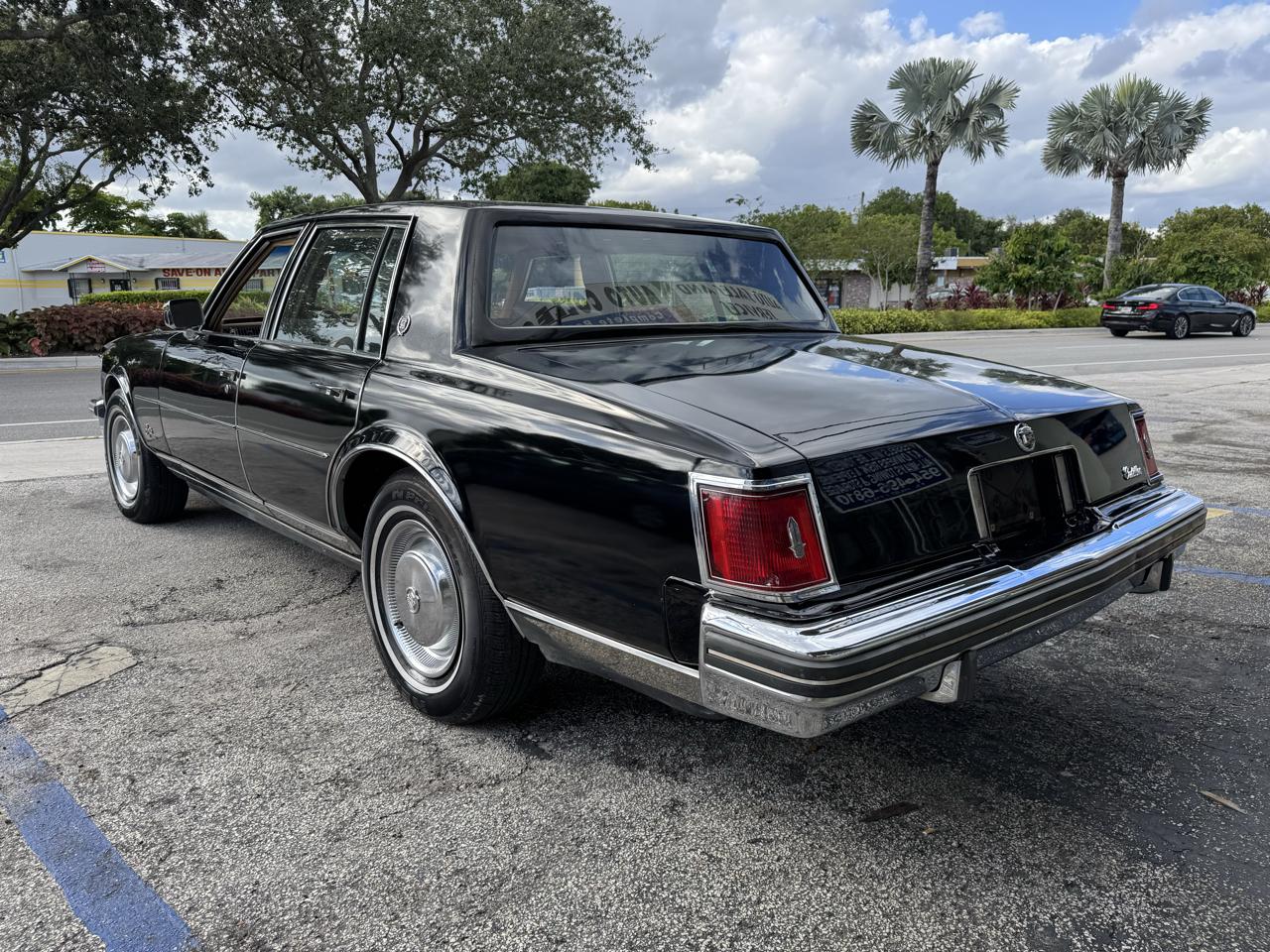
The downsized car (1986–91). The 1986 Seville is the shock of the range: dramatically smaller, lighter, transverse-engined and styled so anonymously that contemporary buyers stayed away in numbers that embarrassed GM. The engineering was respectable; the presence was not. Two things rescue the generation. The STS package of 1988 — firmer suspension, quicker steering, distinctive trim — showed where the name was going. And the engines grew up: the 4.5 of 1988 and the 4.9 of 1991 turned a slow car into an adequately quick one, and the 1991 cars are quietly well-regarded by people who have driven them. Three of the four downsized cars in our pool are 1991s, which again matches the market's judgement.
The Northstar cars (1992–2004). The 1992 redesign is the hinge of the whole Seville story: longer, sleeker, a flagship again, and from 1993 powered by the Northstar 4.6 V8 in two states of tune — the high-revving L37 in the STS, the torque-biased LD8 in what became the SLS. These are genuinely rapid, genuinely luxurious cars, carrying the generation's one big mechanical shadow, the Northstar head-gasket question, dealt with at length below. The 1998 final generation kept the formula, tidied the styling and, on the STS from 2002, added magnetic ride dampers — a world first on a production car. It is the most complete Seville ever made and often the most car for the money — though with none in our current pool, that is a judgement about the wider market, not about cars we can show you today.

Engines and gearboxes
No part of a Seville purchase matters more than identifying the engine correctly, because the Seville used six distinct V8 families in twenty-nine years, plus a V6 and a diesel, and their characters, costs and risks have almost nothing in common. The badge will not always tell you — engines have been swapped and diesels converted — so the sections below give you the identification points as well as the behaviour.
The injected 350: the first-generation engine (1976–79)
The original Seville's engine is an Oldsmobile-built 5.7-litre (350 cubic inch) V8, rated at 180 hp, and its distinction is the fuel system: a Bendix electronic fuel injection system, analogue-computer controlled, fitted as standard equipment. Cadillac made a great deal of this at launch, and rightly — it was the first standard electronic injection on an American production car. The system is a speed-density design: an electronic control unit, mounted in the cabin, reads manifold pressure, throttle position, engine speed and temperature, and meters fuel through a rail feeding eight injectors, with a cold-start injector for enrichment. There is no carburettor, no choke and no float bowl, and a healthy system starts instantly in any weather, idles cleanly and gives the 350 a crispness its carburetted Oldsmobile cousins never had.
The iron-block 350 itself is a known, tough engine — conventional pushrod V8, hydraulic lifters — and in Seville tune it pulls the car along with easy, quiet torque rather than outright speed. Expect the engine itself, as opposed to its fuel system, to be the least of your worries if the oil has been changed. Oil leaks from rocker covers and the rear main seal are the usual age items; overheating from a silted radiator does more damage to these engines than mileage ever does.
The injection system is where first-generation ownership is won or lost, and its failure modes have mechanisms you can test. The control unit is an analogue computer, now forty-five-plus years old: capacitors age, solder joints crack, and the classic presentation is a car that runs well cold and develops a rich, hunting or cutting-out fault hot. The manifold pressure sensor and throttle-position switch wear and drift, producing flat spots and a sooty, rich cruise. Fuel pressure is the first check on any sick car, before anyone condemns electronics: a tired pump or clogged filter drops pressure and mimics computer failure convincingly. The trap to avoid is the carburettor conversion. Faced with an injection fault and no specialist, many owners removed the Bendix system and fitted a four-barrel carburettor. Converted cars run — often quite well — but they lose the originality the first-generation market pays for. Open the hood on any 1976–79 car and look before you listen: injector rails and the distinctive throttle body mean the system survives; a round air cleaner over a carburettor means it does not, and the price should say so.
The bustleback engines: 368, V8-6-4, HT4100, V6 and diesel (1980–85)
The 1980 car launched with Cadillac's own 6.0-litre (368 cubic inch) V8, carburetted in 1980 and fitted for 1981 with throttle-body digital fuel injection and the famous V8-6-4 variable-displacement system, which shut down two or four cylinders under light load by deactivating their rocker arms with solenoids. The idea was twenty-five years ahead of its reliability. In service the switching was rough, the control gave trouble, and a great many cars had the system disconnected — a V8-6-4 car running as a permanent V8 is not necessarily a bad buy, but know which state it is in: a functioning original system is now a rarity, and a disconnected one should be priced as the simpler car it has become. The plain 368, where it survives unmodified, is a lazy, durable engine in the old Cadillac mould.
From 1982 the bustleback's standard engine is the HT4100, and no Seville engine needs a clearer-eyed assessment. It is a 4.1-litre V8 with an aluminium block, cast-iron cylinder heads and throttle-body injection, rated at 125 hp at launch and 135 hp in its later form. It was designed light and efficient for a downsizing era, and it was, to put it plainly, not ready: early cars suffered main-bearing noise, intake-manifold gasket failures that leaked coolant, head-gasket trouble, and camshaft and distributor-drive wear, all aggravated by an engine that needs its coolant maintained with the sealant tablets GM specified and is unforgiving of overheating or neglect. An overheated HT4100 is an engine living on borrowed time, because heat is what pulls the aluminium-and-iron sandwich apart. And yet: the design was progressively improved, the 1984–85 versions are materially better than the 1982 originals, and an HT4100 with a thick file of coolant services, no overheating history and clean oil can give good service — it is simply an engine you buy on evidence, never on optimism. Performance is gentle: an HT4100 bustleback is a cruiser, full stop.
The two optional engines are footnotes with teeth. The Buick-built 4.1-litre V6 (125 hp) is a durable enough engine in a car too heavy for it, and rare. The 5.7-litre Oldsmobile diesel, offered across both early generations, is dealt with below with its first-generation version, because the story is the same: a fuel-crisis engine with fundamental weaknesses, most examples long since converted to petrol power.
The recovery engines: 4.5 and 4.9 (1988–95)
The 4.5-litre V8 of 1988 is the HT4100's architecture grown up — same aluminium-block, iron-head layout, bored and stroked, better detailed, rated at 155 hp with throttle-body injection, then 180 hp when port injection arrived for 1990. It does not erase the family's need for coolant discipline, but in service it proved far sturdier, and it transformed the downsized Seville from embarrassingly slow to respectably brisk. The 4.9 of 1991 takes the same formula to 200 hp, and it is the pick of the transverse-engine family: torquey, comparatively simple, and free of the Northstar questions that follow. In the 1992 car it makes a combination some buyers actively prefer — the new body with the old, understood engine. Judge a 4.5 or 4.9 as you would a late HT4100, only with more confidence: coolant history, no overheating, clean oil, quiet bearings from cold.
The Northstar: 4.6 L37 and LD8 (1993–2004)
The Northstar is the engine that defines the last two generations, and it deserves its reputation in both directions. It is a 4.6-litre, all-aluminium, double-overhead-cam, 32-valve V8, designed as the heart of a complete vehicle system — engine, 4T80-E transmission, road-sensing suspension and electronics developed together. In the STS it is the L37 tune, 295 hp in its first form and 300 hp in the final generation, biased to power at high revs; in the SLS it is the LD8, 275 hp, biased to low- and mid-range torque — and in real driving the SLS never feels like the poor relation, just the same engine in a different mood. Both are smooth, eager, genuinely quick engines that still feel modern today. A healthy Northstar starts instantly, idles almost silently and pulls hard and clean to the redline.
The shadows are specific, and they are all in the problem-areas section in testable form: head gaskets that fail when the head-bolt threads pull in the aluminium block, oil leaks from the case-half joint and the oil pan that are engine-out jobs to fix properly, and oil consumption on higher-mileage engines from carboned piston rings. None of this makes a Northstar Seville a car to avoid. It makes it a car to buy on test results — a combustion-gas block test, a cold start, a hard drive — rather than on a seller's assurance. A Northstar with documented head-gasket repair done with thread inserts, or a clean block test and a thick history file, is one of the great performance-luxury bargains of its era. A Northstar with a sweet smell in the expansion tank and no history is a four-figure negotiation, and the inspection section shows you how to tell them apart.

The diesel footnote (1978–85)
The Oldsmobile 350 diesel was offered from 1978 to 1979 and again in the bustleback years, promising near-30 mpg economy in a full luxury car. The engine was a petrol-block conversion, and its weaknesses are structural: head bolts that stretch and head gaskets that fail, injection pumps that wear, glow-plug and starting troubles, and a sensitivity to fuel quality and maintenance its original owners rarely matched. Rated at 120 hp in early form, it also made a slow car slower. The market's verdict arrived decades ago — a large proportion of diesel Sevilles were converted to petrol V8 power. If you are offered a diesel, establish first whether it still is one: check the engine, the fuel filler and the title history, not the badge. A genuinely surviving, running diesel is a rare period artefact, to be bought with specialist eyes and a spares budget; a converted car should be priced as the petrol car it now is, and judged on the quality of the conversion.
Gearboxes
There is no manual Seville, and there never was — every car in this guide is an automatic, which matches our pool, where every recorded transmission is an automatic of one description or another. What changes is which automatic, and the differences matter to feel and to repair bills.
The first-generation car uses the Turbo Hydra-Matic 400, GM's heavy-duty three-speed, one of the strongest automatics ever made. It should shift firmly and cleanly, engage drive and reverse without a long pause, and it tolerates mileage that would kill lesser boxes. A TH400 rebuild is a known quantity, realistically $1,800–3,000 fitted, and specialists are everywhere. The bustleback moved to the TH325 and then the TH325-4L four-speed overdrive transaxle; both want fluid that has been changed, and slipping or delayed engagement is a rebuild priced into the offer, not a fluid top-up. The downsized cars use the TH440-T4, later called the 4T60, and its electronic 4T60-E development — durable transaxles whose commonest killers are heat and neglect, so clean, red, unburnt fluid is what you are looking for on the dipstick.
The Northstar cars use the 4T80-E, a heavy-duty electronic four-speed designed for the Northstar's torque — a strong box with an electronic failure vocabulary of its own: shift solenoids and pressure-control faults announce themselves as harsh shifts, missing gears or a warning light with the car defaulting to a limp gear. Solenoid work is an in-car job on many faults and far cheaper than a rebuild, so get the codes read before you price the car, not after. Across all generations the rule is the same: cold behaviour tells the truth. A box that flares, shudders or delays when cold and behaves when warm is describing wear, not temperament.
Problem areas
A Seville's problems sort themselves by generation more sharply than almost any other car's, because the engineering changed so completely under the same name. What follows is organised by system, with the generation named at every step — do not apply a bustleback warning to a Northstar car, or forgive an early car a fault because a later car does not have it. Nearly everything mechanical on a Seville can be fixed with money and patience, and the costs below are honest shop-rate ranges. The two exceptions — structural rust on an early car, and a Northstar with pulled head-bolt threads and no repair history — are the two that can turn a bargain into a write-off, and both are testable before you buy.
Body, rust and structure
The first-generation car is a conventional steel monocoque of the 1970s, and it rusts the way 1970s American cars rust: from the bottom up and from the inside out. Work the map in order. The rocker panels and lower front wings trap road dirt and rot behind bright trim; the floor pans collect water from perished windshield and rear-window seals and rust under carpets that feel dry on top; the trunk floor and spare-wheel well collect what the trunk seal lets past; and the vinyl roof fitted to so many cars traps moisture against the roof and rear pillars, so bubbling at the base of the vinyl or around the rear window is a roof repair, not a paint blemish. Door bottoms fill with water when their drain slots block. Structural work is priced per car, and a sill, floor and trunk campaign on a cheap car will pass the value of a good one with room to spare — sill and floor welding realistically runs $1,000–2,500 a side, before paint. The definitive test is the era's usual one: get it on a lift, prod the seams where the seller allows it, and read fresh underseal as a question, not an answer.
The bustleback adds two generation-specific traps. The first is the bustle itself: the sloping trunk, its seams and its lid collect and hold water in ways a conventional trunk does not, so the rear panel and the floor beneath it deserve the same forensic attention as the rockers. The second is the sheer amount of padded vinyl, brightwork and applied trim the design carries — every badge, moulding and vinyl seam is a moisture trap, and two-tone paint schemes hide filler at exactly the break lines where panels meet. The front-drive cars also carry their engine and transmission on a front cradle whose mounts and surrounding structure corrode in salt-belt service; many cars in our pool live or lived in New York, Pennsylvania, Ohio and Wisconsin, which is salt country, so a bustleback or downsized car from the Northeast or Midwest gets a cradle and brake-line inspection as routine, not suspicion. Perished steel brake and fuel lines are a safety job, not a negotiating chip: budget $600–1,200 for a full line campaign at a shop, and do not drive a car home on lines that weep.
The later cars are better protected and rust later and less dramatically, but they are not immune, and their rust hides in more expensive places: front cradles, rear suspension mounting points, brake lines, and the bottoms of doors and wings on salt-belt cars. A 1992–2004 car with a clean underside is normal; one with a cradle rotted through is a parts car wearing a flagship's clothes. On every generation, check panel fit and paint consistency for accident history — these were expensive cars, usually repaired properly when young and badly when old — and a mismatched bustleback rear quarter or a Northstar car with one cloudy headlamp and one clear one is telling you a story worth hearing before money moves.
The HT4100 and diesel legacies
The HT4100's problem list was set out in the engines section; here is how it presents on a car in front of you. The most informative test is the coolant story. Look in the service file specifically for coolant changes and the GM sealant tablets the engine was specified to use; an owner who knows about the tablets has maintained the car correctly, and an engine with no coolant history at all is a gamble at any price. From cold, listen for a deep main-bearing rumble in the first seconds after start-up — the early cars' known wear point — and look for coolant staining and crust around the intake-manifold joints, a sweet smell at the exhaust, and an expansion tank that needs topping up with no visible leak. Any of those means the cooling system is consuming coolant internally, and on an aluminium-block, iron-head engine that is a head-gasket conversation, realistically $1,500–2,800 at a shop — with the caveat that opening a neglected HT4100 sometimes reveals an engine not worth closing again. Overheating history is the disqualifier: one serious overheat can warp the partnership between block and heads beyond economic repair, so a car that "just needs a thermostat" deserves a compression test and a cooling-system pressure test before it deserves your money.
The 4.5 and 4.9 that followed share the architecture and the coolant discipline but not the fragility, and their commonest faults are ordinary: intake and valve-cover oil leaks, tired water pumps, and the deferred maintenance of a car that was cheap for a long time. Price them as maintenance, not doom — a weeping 4.9 with a good file beats a dry HT4100 with none.
The diesel's legacy is simpler and more final. If the car still has its diesel engine, its head gaskets, head bolts, injection pump and glow-plug system are all age-expired wear items on an engine with a known weakness for exactly those parts, and parts and expertise are now specialist-only. If the car has been converted to petrol — as so many were — your problem is the conversion: was the fuel system cleaned and changed properly, does the wiring make sense, and does the fitted engine match what the seller claims? A tidy, documented conversion is a perfectly usable car. A lash-up with diesel ancillaries still hanging off a tired petrol engine is a project wearing a price tag.
The Northstar questions
Every Northstar buyer hears about head gaskets, and the mechanism matters because it decides the test. The failure is rarely the gasket itself: the head bolts, threaded into the aluminium block, lose their grip as the threads in the block pull and weaken under heat cycling — a problem most associated with hard use, overheating and, in the specialist trade's received wisdom, the middle years of production — and combustion gas then leaks into the cooling system. The symptoms build in a recognisable order: an expansion tank losing coolant with no external leak, overheating under sustained load or on grades rather than in traffic, a sweet smell at the tank, a cold-start misfire that clears, and in the end a car that pressurises its cooling system from stone cold within a minute of starting. The settling test is a chemical block test — a fluid that changes colour in the presence of combustion gas, applied at the expansion tank — backed by a pressure test and a long, loaded drive. Do not accept a five-minute idle as evidence either way: a borderline car idles beautifully and fails on the freeway grade. A proper repair means engine out, block threads repaired with steel inserts — Timesert and Norm are the two systems the trade uses — and new gaskets throughout, realistically $3,500–5,500 at a specialist. Documented evidence of that job, done with inserts, is worth a real premium; an untested car should be priced with the job in mind.
The Northstar's second signature fault is oil: leaks from the case-half joint — the horizontal split in the block — and from the oil pan and rear seal, which are engine-out or engine-lift jobs to reseal properly and are therefore often lived with instead. A car that marks its parking space is not automatically a bad car, but price the difference honestly: a full reseal campaign runs $2,000–3,500, labour dominating. Oil consumption is the third item: higher-mileage engines carbon their piston rings and begin to use oil, sometimes briskly, and the trade's remedy of hard driving and top-engine cleaner works only on the carbon, not on wear. Ask the seller directly how much oil the car uses between changes, watch for smoke on hard acceleration after a trailing throttle, and treat a quart every thousand miles as a fact to price rather than a surprise to discover. Add the pricey ancillaries — water pump and crossover gaskets, alternators living low in the vee's heat — and the Northstar rule writes itself: the engine is superb, the history file is the product, and the block test is non-negotiable.
Suspension, steering and brakes
First-generation cars ride on coil springs with automatic level control at the rear — air-assisted shocks fed by a compressor — and the system that kept a loaded Seville level in 1977 now mostly keeps it sitting oddly in old age. A car sitting down at the rear has tired springs, dead air shocks or a dead compressor, in ascending order of cost; chasing a level-control system through valves and compressors is a specialist afternoon at $400–900. Front ends wear the way all heavy 1970s cars wear: ball joints, bushings, idler arms and tie-rod ends, announced by vagueness, wander and knocks, and cured by a front-end rebuild at $800–1,800 fitted. Brakes are discs at the front and drums at the rear on most first-generation cars, and after decades of intermittent use the standard list applies — seized calipers, perished hoses, a tired master cylinder — with a full hydraulic refresh at $800–1,800.
The front-drive generations replace most of that with struts, electronic level control at the rear and, on sporting cars, actively managed dampers. The cost gradient is the story. A conventional strut job is ordinary money. The road-sensing dampers of the STS-era cars, and the magnetic ride dampers of the final STS, are not: they are electronic units priced individually, historically at several hundred dollars a corner and rising as supply thins, and a car with a suspension warning light and four tired electronic dampers carries a bill that can run $2,000–4,000 to put right properly. Many cars have been converted to conventional passive struts with resistor kits to silence the warnings — a legitimate, much cheaper path that drives well, but a converted car should be priced as a converted car, and you should be told, not left to discover it. Steering on the front-drive cars is rack-and-pinion and generally durable. On all generations, tyres are a truth-teller: uneven wear across a front pair is a worn or misaligned front end described in rubber.
Electrics, climate and interior
The Seville's electronics ambition is where ownership patience is spent. The first-generation car's injection computer is covered above; add the era's automatic climate control, whose vacuum-operated programmer and servo are famous for faults that present as heat in summer, cold in winter and a blower with a mind of its own — diagnosable, repairable by specialists, and a $500–1,500 conversation when programmer and servo both need attention. The bustleback added optional digital instrumentation; the later cars layered on body computers, electronic dashboards and anti-theft systems — the Pass-Key pellet keys of the 1990s cars can immobilise a car over a worn key or a broken wire in the column, a cheap part and an infuriating diagnosis. The general law is kind, though: these electronics fail at connectors, grounds, solder joints and vacuum diaphragms far more often than in their expensive modules, and a methodical auto-electrician cures most of it for labour money. A car where everything electrical works has been maintained by someone who cared — one of the best buying signals there is on any Seville.
Interiors were the Seville's glory and they age in specific places. Leather cracks and splits on the driver's bolster first, and the loose-pillow seats of the bustleback and Elegante cars collapse as their padding crumbles; a professional retrim runs well into four figures and past $5,000 for leather done properly, so a sound original interior is worth real money on any generation. Headliners sag on every front-drive generation once the foam backing lets go — a $300–600 job at a trimmer, and a useful small test of whether a seller maintains or neglects. Wood trim lifts and crazes, chrome pits, the big steering wheels crack, and on bustlebacks the sheer acreage of vinyl and velour means a tired interior is a large, visible tiredness. Seat motors, window regulators and switches are the standard small-fault list: cheap individually, tedious in aggregate, and best priced by working every single one of them on the viewing, in silence, while the seller watches you do it.
How to inspect one
Allow ninety minutes, bring a torch, a cloth-wrapped magnet and a tyre gauge, and — for a Northstar car — insist in advance that a block test and a proper road drive are part of the deal. Work in this order: the early steps are the walk-away steps, and there is no point falling for an interior before the structure and engine have passed.
- Paperwork and identity first. Match the VIN on the title to the plate on the car, and establish which generation, which trim and — above all — which engine the car left the factory with. On a 1978–85 car, settle the diesel question here: was it built as a diesel, and is it still one? On any car, an engine that does not match the paperwork is a price conversation before it is anything else.
- Cold start, from stone cold. Insist the engine is cold when you arrive. Watch for smoke — blue at start-up that clears points to valve seals, white that persists and smells sweet points to coolant, and on an HT4100 listen in the first seconds for the deep bearing rumble the problem-areas section describes. A car that will not start cleanly cold is telling you its fuel or injection system needs money.
- The coolant interrogation. Expansion tank level and colour, crust at the intake joints on an HT4100 or 4.5/4.9, a sweet smell at the tank on a Northstar, hoses squeezed for crunch or ballooning. Ask directly when the coolant was last changed and whether the car has ever overheated — and weigh the answer against the service file, not against the seller's confidence.
- Under the car. Torch along the rockers, floors, trunk floor and, on front-drive cars, the front cradle and its mounts. Prod seams where you have permission, read fresh underseal as a question, and check steel brake and fuel lines for weeping and heavy scale. Structural perforation on an early car ends the inspection here, exactly as the rust section sets out.
- Trunk and vinyl roof. Lift the spare and the mat, look for water staining and rust in the well corners, and then walk the vinyl roof with your fingertips: bubbling at its base, around the rear window or along the pillars means water has been living under it. On a bustleback, give the trunk seams and the floor beneath them the same minute.
- Body and gaps. Run the magnet over rockers, lower wings, door bottoms and the bustleback's rear quarters — filler announces itself. Check door bottoms for bubbling, panel gaps for accident history, and the two-tone break lines on formal cars for the filler they so often hide.
- The Northstar block test (1993–2004 cars). With the engine warm, apply the chemical combustion-gas test at the expansion tank, exactly as the Northstar section prescribes, then take the long loaded drive in step 9 and watch the temperature gauge on every grade. A failed or refused block test reprices the car by the cost of the thread-insert repair — or ends the purchase.
- Gearbox from cold. Before the car warms up, engage drive and reverse and feel for delay or thump, then note the fluid on the dipstick: clean and red is a maintained box, dark and burnt-smelling is a negotiation. On a 4T80-E car, any harsh shift, missing gear or gearbox warning means codes read before money, as the gearboxes section explains.
- The test drive, properly long. Twenty minutes minimum, including a freeway stretch and, for a Northstar, a sustained grade under load. Feel for front-end wander and knocks on early cars, damper behaviour on later ones, and brake hard from speed: straight, no judder, no pull. An HT4100 car should feel gentle and stay gentle — if the seller promises hidden performance, the drive will correct him.
- Heat, air and every switch. Whatever the weather, run the climate control to full heat and full cold and through every blower speed — the climate faults in the problem-areas section hide behind a system never exercised. Then work every window, seat motor, lock, mirror and dash function in silence. Count the dead ones; they are a bill, itemised.
- Stance and suspension warnings. Stand back and look: level is correct, tail-down on an early car points to springs, air shocks or the level-control compressor, and any suspension warning light on an STS-era car means pricing the electronic dampers — or confirming the car has already been converted to passive struts, and pricing it as converted.
- Interior last, driver's seat first. Sit where the driver sits: bolster wear, collapsed padding and cracked leather price the retrim, and a sound original interior is the hardest thing on the car to recreate. Check the headliner with a fingertip, the wood and chrome piece by piece, and look under the mats for the damp that betrays the seals you checked in step 4. Only now decide what the car is worth to you.
Values
The Seville market is really five markets wearing one name, and the first skill in reading it is refusing to average them. The build appends the current listing and recorded-sales figures beneath this guide and refreshes them at every build; what follows is how to read those numbers when you get there — what drives them, where they mislead, and where the real gaps between cars open up.
Start with the condition spread, because on Sevilles it is wider than on almost any comparable car. These were expensive cars that depreciated brutally, spent years cheap enough to neglect, and are now old enough that survival itself is a filter. The distance between a tired example and a genuinely good one of the same year and badge is not a percentage but a multiple — and the cheap end of every generation's listings is dominated by cars whose needs, added honestly, exceed the price of the good car at the top. There is no inexpensive Seville that stays inexpensive: the HT4100 car with no coolant history, the Northstar car with no block test, the early car with fresh underseal are all priced low for reasons the inspection section exists to find. Read any low figure as a question about which known fault the car is carrying.
Asking prices and achieved prices part company predictably. Sevilles are emotional purchases at the top — a first-generation Elegante in the right colours, a bustleback in two-tone, a low-mileage STS — and sellers of such cars ask with their hearts, while the auction record, where it exists, shows what the room actually paid. A fairly priced, well-documented driver sells; an optimistically priced one sits until the listing itself becomes the reason buyers suspect the car. Compare any car against achieved sales of the same generation and engine first, asking prices second, and treat a single exceptional result — one concours car, one desperate sale — as an outlier, not a level.
Within each generation, the premiums have clear logic. In the first generation, originality is the currency: an unconverted injected car with its Bendix system intact outranks a carburettor conversion every time, the Elegante trim outranks the standard car, and documented low mileage in original colours outranks a respray in a fashionable one. In the bustlebacks, formal two-tone cars and Elegantes lead and plain cars follow, while the discount follows the engine room: an undocumented early HT4100 is the cheapest way into the shape precisely because informed buyers price its risks, and a late car with a full coolant file closes much of that gap. The downsized cars are the value end of the whole story, the 4.9-litre 1991 cars and early STS models the pick of them. In the Northstar generations the premium is documentation made visible: a car with the thread-insert repair on file, or a clean block test and a thick history, commands money an identical-looking car without either cannot, and the STS outranks the SLS on badge and tune even though the SLS is the gentler ownership proposition. Diesel cars trade at a discount as drivers and a small, specialised premium as surviving curiosities — and a converted car should always be valued as the petrol car it now is.
The project-versus-driver gap deserves its own word, because Sevilles punish project buyers. A project early car needs structure, paint, interior and mechanical recommissioning in some order, each a trade-priced job on a big, complex car; a project Northstar car may need the one engine job that rivals the car's whole value. In both cases the finished car is worth less than the sum of the purchase and the work — which is why the rational money stretches for the best documented driver it can reach. Negotiate from evidence: a failed block test, a dead climate system, four tired electronic dampers and a coolant file that does not exist are priced facts, and a seller who has maintained a Seville properly will have the file to prove it and the confidence to let you test. That confidence, in the end, is what the premium buys.
Parts and ownership
Seville ownership is eased by scale and complicated by ambition. Cadillac built these cars in serious numbers for two decades, they share their bones and much of their running gear with other GM cars of their eras — Eldorados, DeVilles, Oldsmobiles and Buicks — and the American parts trade knows them well. What varies by generation is how much of the car is ordinary GM hardware and how much is Seville-only electronics and trim, and your budget should follow that line.
Easy: service items for every engine — filters, plugs, belts, hoses, water pumps on the iron engines — plus brake discs, pads, calipers and hydraulics, wheel bearings, alternators and starters for the mainstream engines, exhaust systems in standard form, glass, seals and weatherstrip, and the wear parts of the TH400 and the front-drive transaxles. Order today, fit this weekend, at prices close to ordinary American-car money.
Harder and dearer: the first-generation Bendix injection system, whose control units, sensors and injectors are now the preserve of a small number of specialists — a rebuilt control unit and system recommissioning realistically runs $800–2,000 depending on how much needs attention. HT4100 internals are available but the expertise is thinning. Northstar work is specialist work by nature: the thread-insert head-gasket repair at $3,500–5,500, case-half reseals at $2,000–3,500, and electronic dampers at several hundred dollars a corner while they last. Bustleback-only sheet metal and trim, Elegante-specific interior pieces, digital dashboards and climate programmers for the middle cars, and correct wire wheels for the early ones all reward patience and club contacts over open-wallet urgency.
Running costs. A sorted Seville is a realistic regular-use classic, with two honest qualifications. The first is fuel: consumption in the mid-teens around town and the low twenties on a gentle highway run is the realistic band for the petrol cars, Northstar cars at the better end of it. The second is the first-year catch-up, which catches almost every buyer of a car that spent years cheap: deferred coolant, brake, tyre, belt and fluid work on a newly bought driver honestly runs $1,500–4,000 before you improve anything, and recommissioning a car that has sat for years runs $3,500–7,500 at a shop. Insurance and club support are in line with other American classics of the value, and the single best ownership investment across all five generations is the same — a relationship with one specialist who knows your generation, established before you need him, not after.
Which one to buy
- The original: a 1976–79 Seville, Elegante if you can find one. The car with the strongest claim to classic status, the Bendix injection intact, and the deepest survivor pool to choose from. Buy the least rusty, most original car, and let a carburettor-converted example be someone else's bargain.
- The stylist: a 1984–85 bustleback. The razor-edge shape in its most developed form, with the HT4100 in its best years. The non-negotiable is the coolant file: with one, this is the most distinctive Seville per dollar in the whole range; without one, it is a lottery ticket in two-tone paint.
- The value buy: a 1991 Seville or STS. The 4.9-litre engine, the mature chassis, none of the Northstar questions, and prices that still treat the downsized generation as an embarrassment it no longer deserves to be. The quietest good decision in this guide.
- The modern classic: a 1992–97 STS. The Northstar car in its sharpest form — provided the block test passes or the thread-insert repair is on file. A tested STS is a genuinely fast, genuinely luxurious car; an untested one is a price negotiation you have not finished.
- The comfort pick: a 1993–2004 SLS. The torque-biased Northstar tune, the softer ride, usually the gentler life and the lower price. Same block-test rule as the STS, applied without exception — the SLS badge softens the suspension, not the engine's one big question.
- The brave buy: a surviving diesel. Only as a documented, running curiosity bought with specialist advice and a spares budget. As transport, buy the petrol car the market converted it into instead — and price any conversion as the car it is now.
And the rule that overrides all of the above: buy the history file and the test results, not the badge, the mileage or the paint. Every generation has one or two faults that decide its value — rust and a missing injection system on the early cars, coolant history on the HT4100 cars, the block test on the Northstars — and every one is knowable before you pay. A Seville whose known fault has been tested, documented or repaired is a car you can own with pleasure for years. A Seville whose seller will not let you look is a car you already know enough about.