
Cadillac DeVille Coupe 2D buyer's guide
Cadillac DeVille Coupe 2D -- the model's own buyer's guide: variants, values and what to check.
Years listed: 1953-2002 · Series: Full Size
Overview and history
The DeVille is not one car. It is a name Cadillac kept in continuous production, with only brief interruptions in badging, from 1949 to 2005 — longer than almost any other American model name — and across those fifty-six years it was, at different times, a pillarless hardtop coupe for the country-club set, the biggest production sedan in America, a downsized rear-drive survivor of the fuel crises, a front-wheel-drive car with a transverse engine, and finally a Northstar-powered flagship that shared almost nothing with its ancestors except the script on the trunk lid. That is the first thing to understand before you buy one: "DeVille" describes a position in the Cadillac range — the volume luxury car, one step below the Fleetwood at the top and a clear step above a Calais or a base Series 62 — far more consistently than it describes any particular engineering. The guide that follows is therefore an orientation across generations. The inspection logic, the rust map and the ownership costs change substantially from era to era, and each section flags which cars it is talking about. A rule that is gospel for a 1968 car can be meaningless on a 1998 one.
The name itself is French — coupé de ville, a town car — and it arrived in 1949 on the Coupe DeVille, a Series 62 hardtop coupe with no B-pillar and a vinyl-covered roof section, priced above the standard coupe and aimed squarely at buyers who wanted a convertible's profile with a closed car's weather protection. A four-door hardtop, the Sedan DeVille, joined it in 1956. For the 1959 model year, with the famous tailfin restyle, DeVille became a series in its own right — the Series 6300 — rather than a trim of the Series 62, and from then until the end it was Cadillac's best-selling line: in most years the DeVille was not merely the typical Cadillac, it was the majority of Cadillac production. A DeVille convertible arrived in 1964, taking over the open car from the Series 62, and convertibles remained in the range until 1970, the last year Cadillac built a DeVille drop-top.
The generations break down like this. The 1959–60 cars are the fin cars, all drama and chrome, on the 390 V8. The 1961–64 cars pulled the styling back toward elegance — skeg fins, cleaner flanks, and from 1964 the 429 engine and the Turbo Hydra-Matic gearbox that would serve Cadillac for decades. The 1965–70 cars are the stacked-headlight generation: a complete restyle for 1965 with vertically paired lamps, perimeter frame, and from 1968 the 472 V8, one of the great torque engines. The 1971–76 cars are the biggest DeVilles ever built — the 1975–76 cars carry the 500-cubic-inch V8, still the largest engine fitted to a production American car — and they are also the cars where emissions tuning, weight and 1970s build quality begin to fight the basic engineering. The 1977–84 cars are the downsized rear-drivers: roughly 800 pounds lighter and a foot shorter than what came before, initially and surprisingly better cars for it, then progressively strangled by the engines the fuel-economy rules forced on them — the variable-displacement V8-6-4, the Oldsmobile diesel and the HT4100. The 1985–93 cars went front-wheel drive on the C-body platform, smaller again, and live or die by the health of the HT4100 and its 4.5 and 4.9 successors. The 1994–99 cars brought the Northstar V8 and a return to genuine performance, and the 2000–05 final generation refined that formula before the name was retired in favour of DTS for 2006.
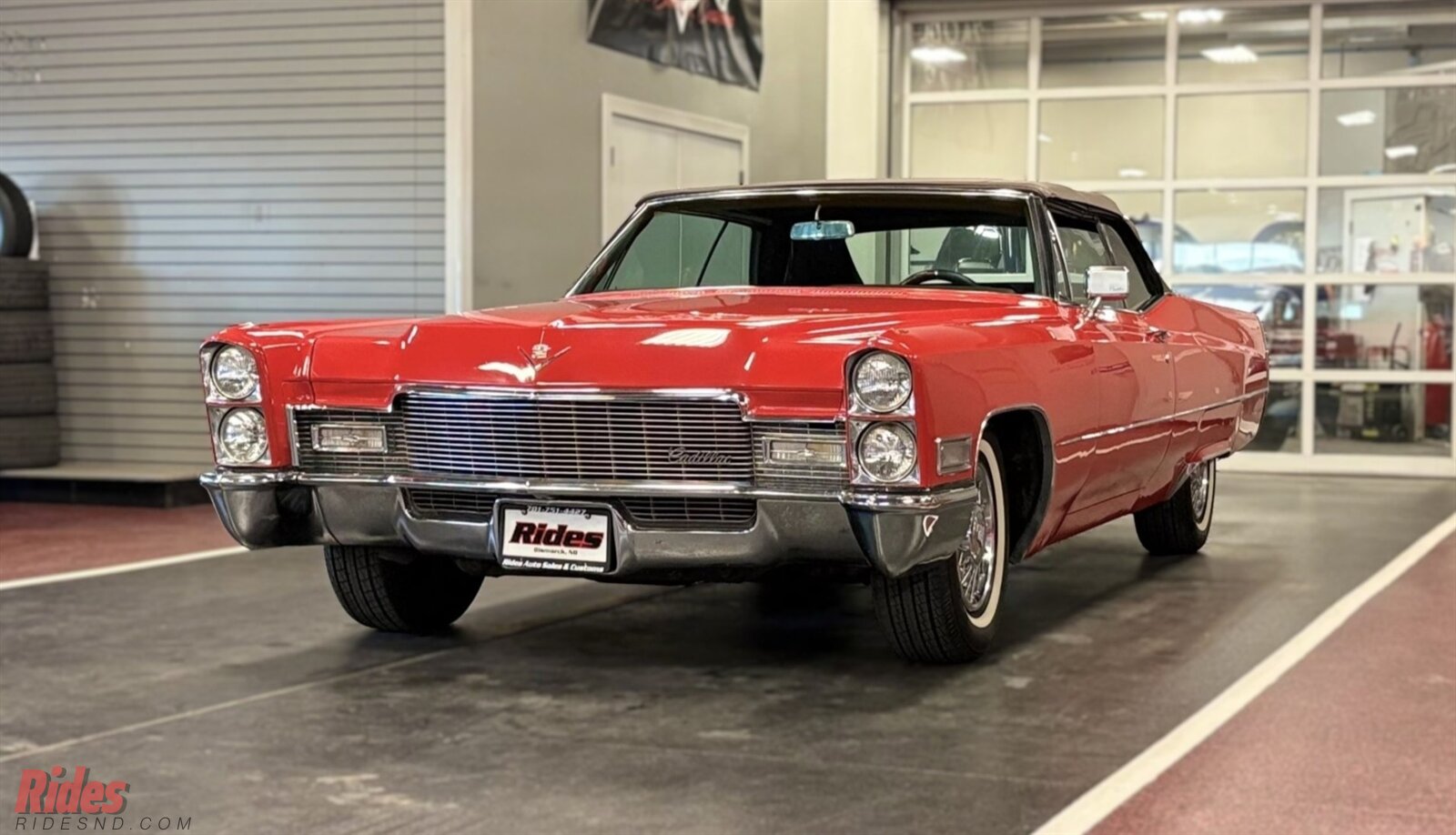
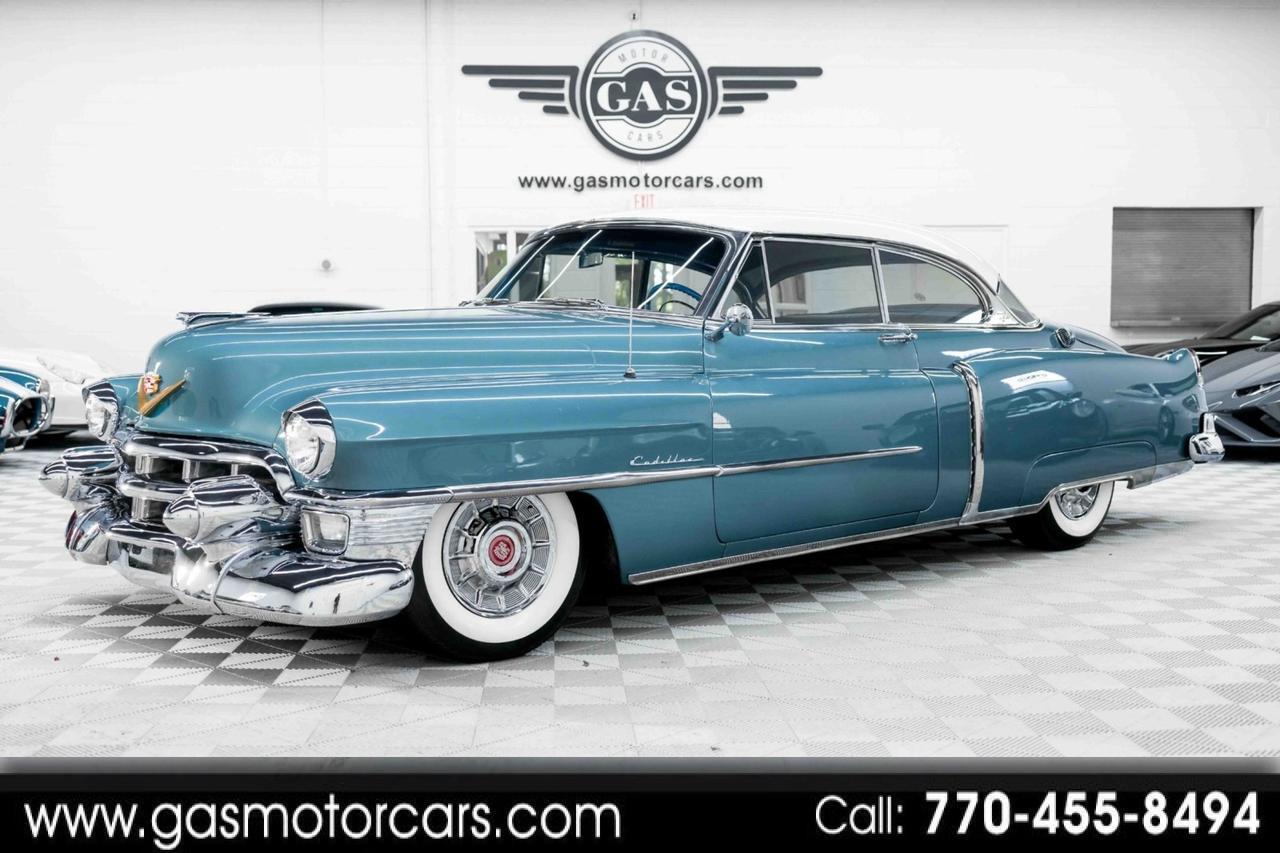
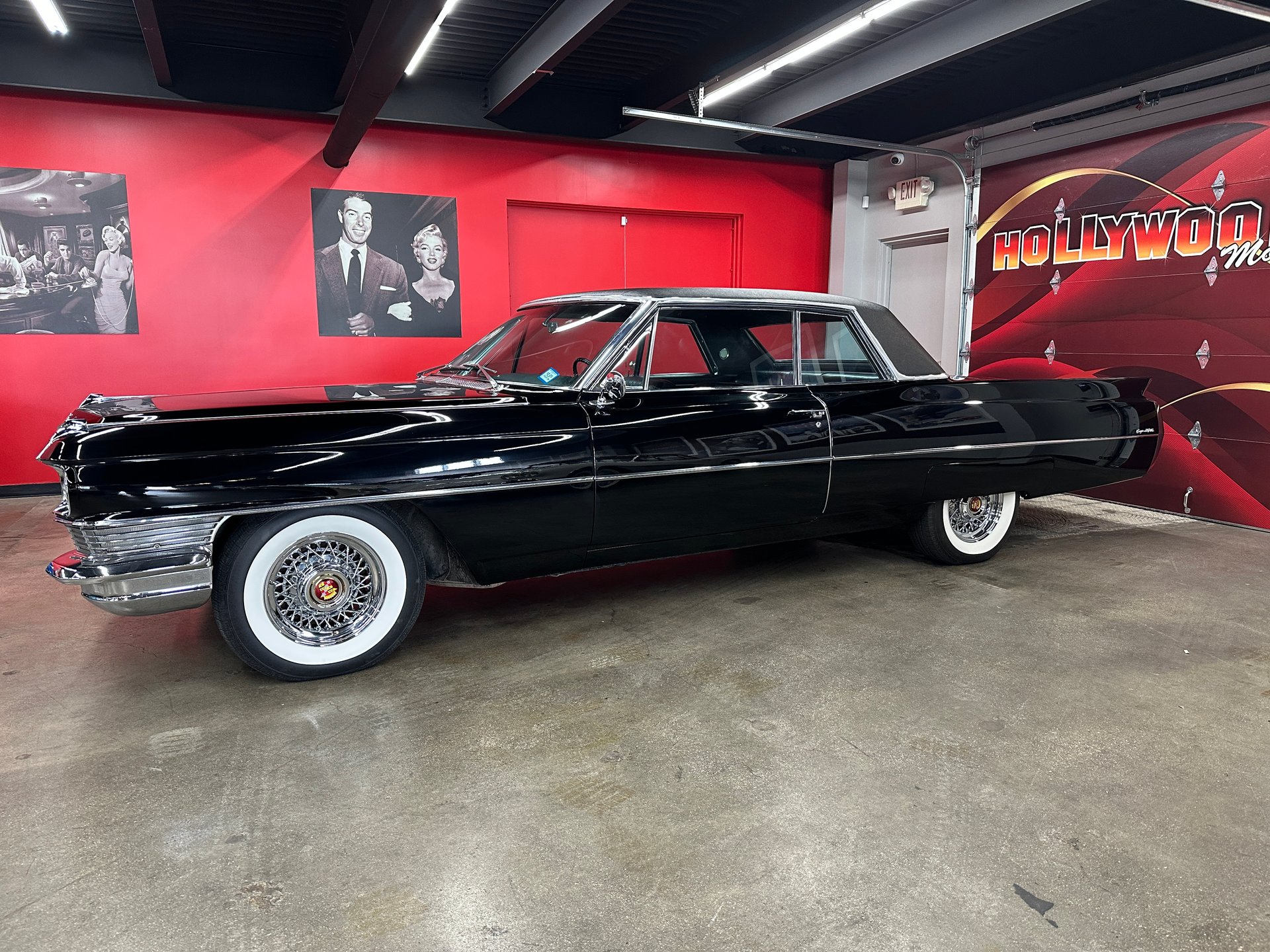
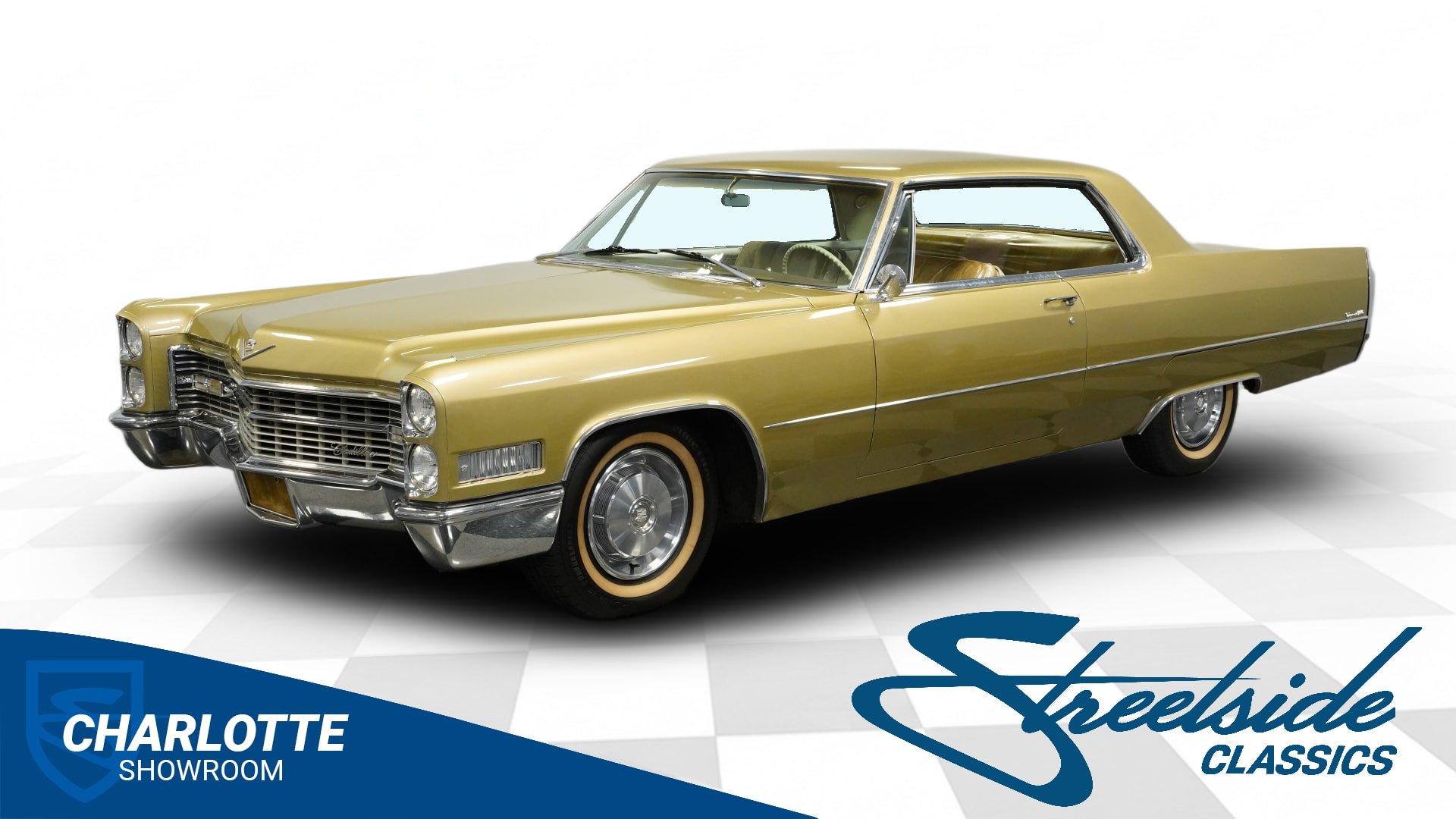
Our own listings pool shows exactly where today's market sits. We track 144 DeVilles, spanning 1953 to 2002, and the weight of the pool is in the classic rear-drive years: 1968 is the single most common year, with strong showings for 1970, 1978, 1972, the mid-1960s cars and 1959.
What unites every DeVille, and what you are really buying, is a particular set of priorities: silence, ride comfort, torque delivered without effort, and equipment — power everything, automatic climate control, six-way seats — that was standard on a Cadillac years before it filtered down to ordinary cars. No DeVille was ever a sports car, and the ones that try to feel like one have usually been ruined by their owners. Judge every car in this guide against its own brief: does it still waft? Does everything work? Is the body honest? A DeVille that answers yes to those three questions is a good DeVille, whatever year is on the title.
The models
Because DeVille is a series rather than a single model, the table below is organised by generation and body rather than by badge variant. Within each generation Cadillac typically offered a Coupe DeVille two-door hardtop (a true coupe with a shorter roofline in later years), a Sedan DeVille four-door — in hardtop form through 1976 and as a pillared sedan after the 1977 downsizing — and, for 1964–70, a convertible. Trim differences between a DeVille and the cheaper Calais or the plusher Fleetwood are real but secondary; the buying decisions that matter are generation, body style and engine, in that order. Production figures are given only where Cadillac's series-level reporting is genuinely reliable; for several generations the factory published combined figures across the full-size range, and the table says so rather than inventing a split.
| Model | Years | Engine | Output | Built | Character |
|---|---|---|---|---|---|
| Coupe / Sedan DeVille (Series 62 trim) | 1949–1958 | 331, then 365 V8 | 160–335 hp | Not separated in period reporting | The original hardtops; fins grow year by year |
| DeVille (Series 6300), fin cars | 1959–1960 | 390 V8 | 325 hp | Series figures combined with Series 62 | The iconic fin cars; drama first, subtlety never |
| DeVille, second generation | 1961–1964 | 390, then 429 V8 | 325–340 hp | Not reliably separated | Cleaner styling, Turbo Hydra-Matic from 1964 |
| DeVille, stacked-headlight cars | 1965–1970 | 429, then 472 V8 | 340–375 hp | The volume heart of the classic market | Big, torquey, best-supported classic DeVilles |
| DeVille, the giants | 1971–1976 | 472, then 500 V8 | 375 hp gross falling to 190 hp net | Not reliably separated | The biggest DeVilles ever; 500 is the largest production V8 |
| DeVille, downsized rear-drive | 1977–1984 | 425, 368, HT4100, diesel | 135–195 hp | Not reliably separated | Lighter and nimbler; engine choice is everything |
| DeVille, front-drive C-body | 1985–1993 | HT4100, 4.5, 4.9 V8 | 125–200 hp | Not reliably separated | Compact, efficient, engine-history dependent |
| DeVille, Northstar cars | 1994–1999 | 4.9, then Northstar 4.6 | 200–300 hp | Not reliably separated | Performance returns; head-bolt history is the question |
| DeVille, final generation | 2000–2005 | Northstar 4.6 | 275–300 hp | Not reliably separated | The refined end of the line; DTS replaced it for 2006 |
(Outputs are period SAE gross figures before 1972 and net figures after, which is why the 1971–76 line appears to collapse: the 1972 472 was rated 220 hp net against the same basic engine's 375 hp gross rating a few years earlier. The car did not lose a third of its performance; the ruler changed.)
The early hardtops (1949–58). The cars in our pool from this era — 1953 and 1956 among them — are Series 62 cars with DeVille trim, and that is correct, not a discrepancy. What you are buying is 1950s Cadillac in its formative decade: the pioneering overhead-valve V8, Hydra-Matic automatic drive, and styling that adds chrome and fin height almost yearly, peaking with the ornate 1957–58 cars. These are collector cars in the traditional sense — bought for shows, tours and presence — and they are judged on originality, chrome condition and the state of expensive-to-replicate trim.
The fin cars and the clean cars (1959–64). The 1959 is the poster car, twin bullet tail lamps in towering fins, and it drives better than its looks suggest because the 390 is a strong engine and the chassis is fundamentally the same honest hardware as the calmer 1961–64 cars. The 1963–64 cars are the connoisseur's end of this era: restrained styling, the excellent 429 from 1964, and the first Turbo Hydra-Matic. In our pool the 1964 and 1965 cars bracket the change, and the difference in character across that one model year is larger than the badge suggests.
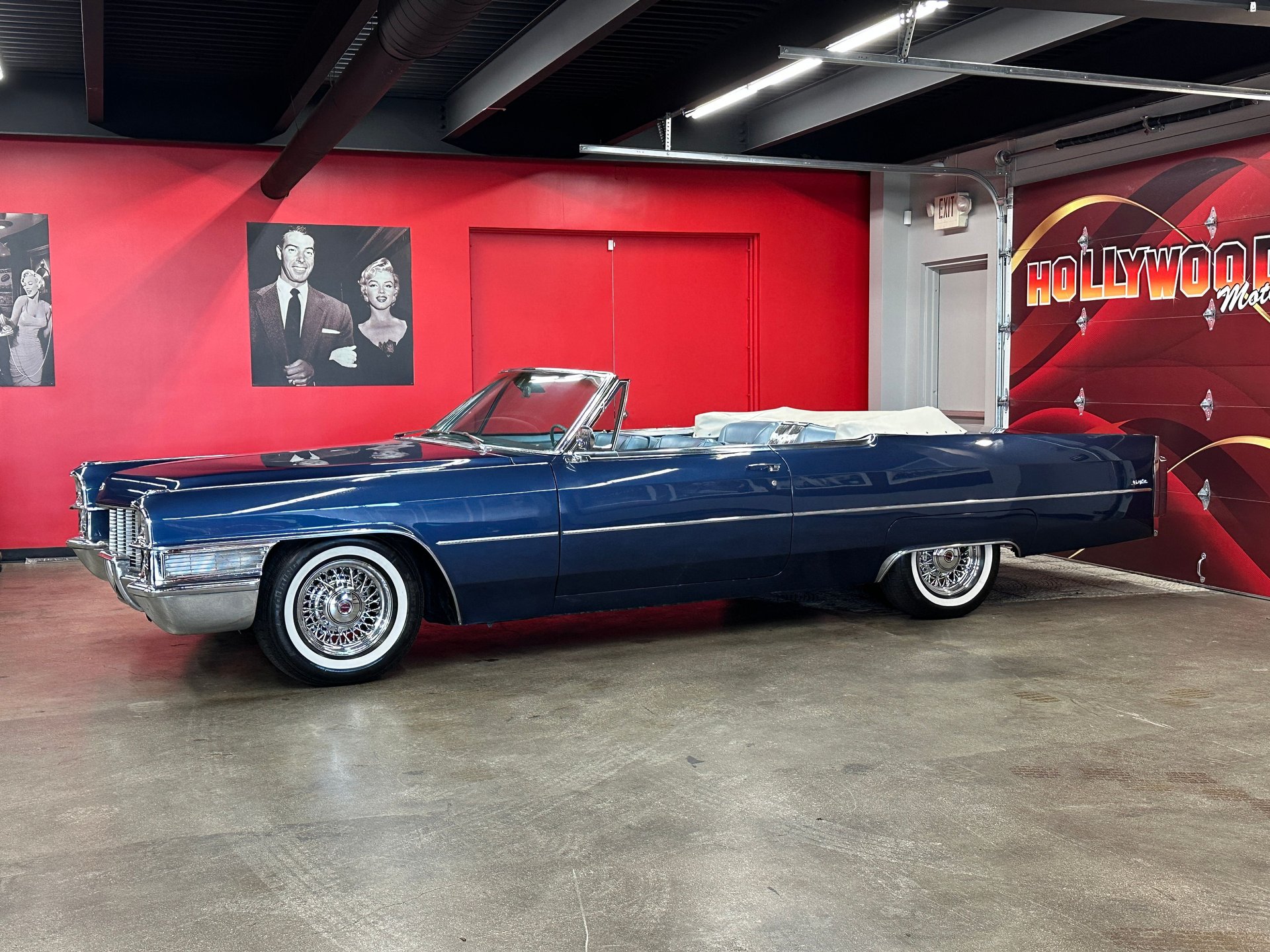
The stacked-headlight cars (1965–70). This is the core of the classic DeVille market and, for most buyers, the sweet spot of the whole nameplate. The 1965 restyle is one of the cleanest big-car designs of the decade; the 1968–70 cars add the 472 and, in the convertible, the last Cadillac open cars until the Eldorado's brief return. Sedans and coupes are plentiful, parts support is the best of any DeVille generation, and the cars are simple enough that a competent home mechanic can do nearly everything except automatic gearbox internals and air-conditioning evacuation.
The giants (1971–76). Bigger in every dimension, with the 1971–74 472 giving way to the 500 for 1975–76. These cars are magnificent road furniture and genuinely cheap to buy relative to their presence, but they are 1970s GM products: expect emissions-era carburation, vacuum plumbing everywhere, and trim and switchgear quality a step below the 1960s cars. The pillared sedan and the big coupe (the last of the truly huge American coupes) are the bodies to have; the 1975–76 cars' 500 engine is a torque monument that responds well to sympathetic recommissioning.
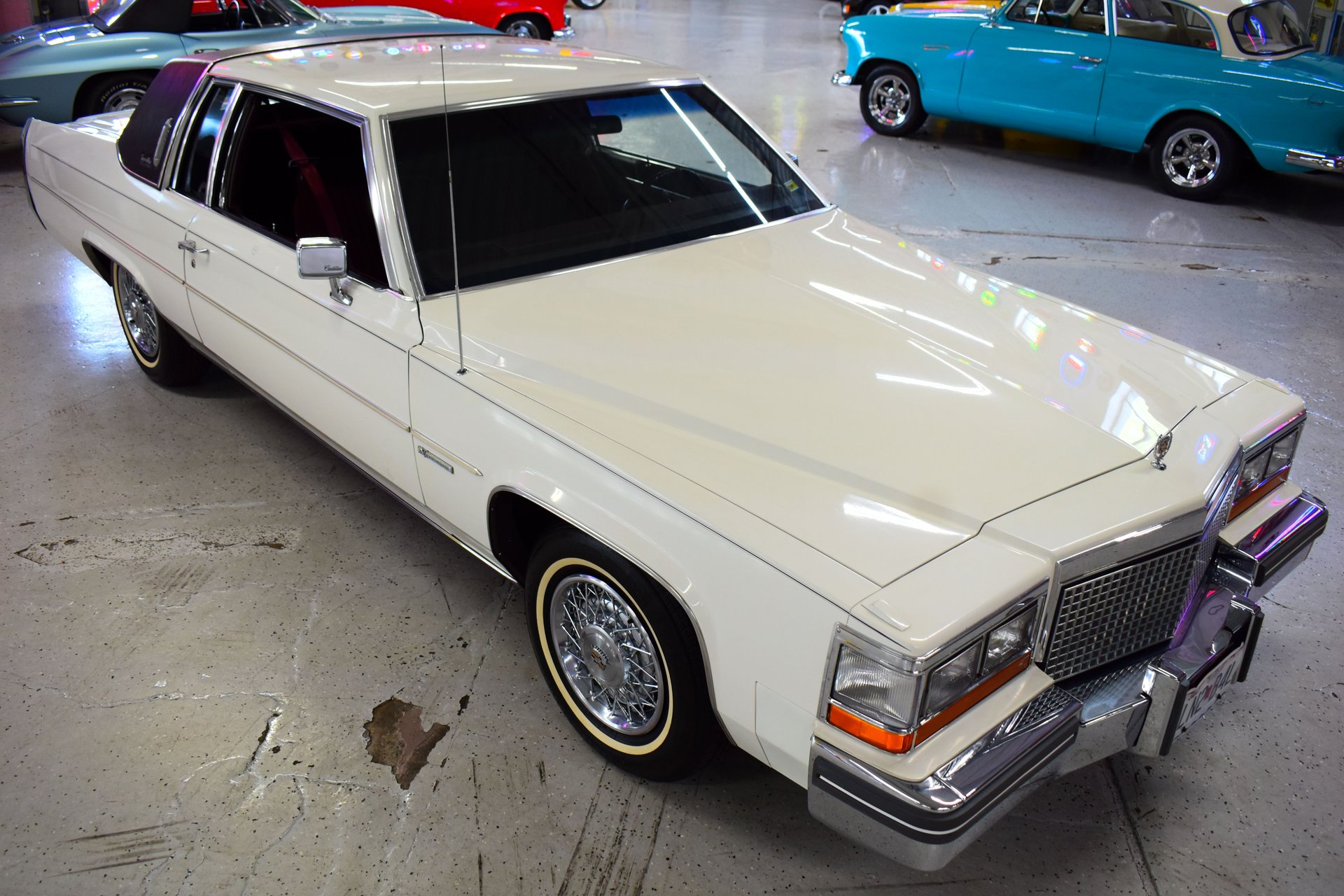
The downsized rear-drivers (1977–84). The 1977 car was a revelation in period — lighter, roomier inside than the 1976 despite being smaller outside, and better to drive in every way. The tragedy of the generation is its later engines, covered in detail below: a 1977–79 car on the 425 is a genuinely good classic; a 1981 car with the V8-6-4 or a 1982–84 car with an undocumented HT4100 is a research project. The generation also includes the last Coupe DeVille of the classic mould and the handsome 1980 restyle with its more formal roofline.
The front-drivers (1985–2005). Three generations share the front-drive layout: the 1985–93 C-body cars, the 1994–99 cars that introduced the Northstar to the DeVille, and the 2000–05 final cars. Buy these on documented engine history above all else — the HT4100's reputation was earned, the 4.9 that followed it is the reliable one of the transverse V8s, and the Northstar is a superb engine with one famous structural weakness. The 2002 car in our pool is representative of where these cars sit today: modern enough to use daily, old enough that deferred electronic and suspension work decides whether a cheap one is cheap.
Engines and gearboxes
Fifty-six years of production means the DeVille was powered by one of the widest engine ranges of any single nameplate: Cadillac's own overhead-valve V8 in displacements from 331 to 500 cubic inches, a bought-in Oldsmobile diesel, the troubled HT4100 family, and finally the quad-cam Northstar. The gearboxes are simpler to summarise — some form of GM automatic in effectively every car you will ever see, since manual DeVilles effectively do not exist — but the automatics divide into eras just as sharply. Work through this section with the car's year in mind; almost every expensive DeVille mistake is an engine-era mistake.
The Cadillac V8: 331 to 500
The engine that made Cadillac's postwar reputation debuted in 1949 at 331 cubic inches: overhead valves, a short stroke, high compression for the day, and a willingness to rev that flathead rivals could not match. It grew to 365 cubic inches for 1956 and to 390 for 1959, gaining power steadily — the 390's 325 hp, delivered through a single four-barrel carburettor on DeVilles, is honest muscle. These early engines are tough, understressed and well served by the parts trade, and their failure modes are the generic ones of old V8s: worn timing chains, tired valve guides showing as a puff of blue smoke on start-up, oil leaks from every cork gasket, and cooling systems scaled up after decades on hard water. A healthy early V8 starts on the button, idles with a slight lope through the exhaust, and shows no valvetrain clatter once warm. Budget-wise, a full rebuild of a 331, 365 or 390 is ordinary machine-shop work — plan on $4,500–8,000 for a proper job with the engine out — and almost nothing in these engines is unobtainable.
The 429 (1964–67) was a clean-sheet redesign: lighter, more compact, and rated at 340 hp. It is a fine engine with one era-specific trap — the front-mounted distributor and oil pump drive arrangement makes oil-pressure problems at idle worth taking seriously rather than waving away, and a flickering oil light on a hot 429 at idle is a stop-and-investigate symptom, not a quirk. The 472 that replaced it for 1968 is the high point of the classic line: 472 cubic inches, 375 hp gross and, more to the point, 525 lb-ft of torque, delivered so low in the rev range that a 472 DeVille accelerates like the tide coming in. The 500 (1970 in the Eldorado, 1975–76 in the DeVille) is the same architecture stroked further — 500 cubic inches, the largest displacement of any production car engine of its era — detuned by 1975 emissions calibration to 190 hp net but still making its torque in a way no smaller engine can imitate. The 472 and 500 share the classic Cadillac virtues and vices: immense low-end strength, a timing chain with a nylon-toothed cam gear that is a known age failure (a 472 or 500 that has never had its timing set replaced is living on borrowed time — the job is $600–1,200 in parts and labour and should be treated as scheduled maintenance), exhaust manifolds that crack and whose bolts snap on removal, and a thirst in the low teens of miles per gallon on a good day. Rocker-arm gear on these engines uses pedestal-mounted rockers with no adjustment; worn valve guides and tired lifters announce themselves as top-end ticking that follows engine speed.
The downsized era broke the line. The 425 (1977–79) is a smaller-bore derivative of the 472 architecture and is a good, honest engine — the last of the classic Cadillac V8s in character. The 368 (1980–84, mostly in the commercial chassis and as the basis of the V8-6-4) is the same family strangled. The V8-6-4 of 1981 deserves its own warning: it deactivated two or four cylinders by collapsing their rocker arms via solenoids, controlled by an early engine computer, and in period it confused owners and dealers alike with hesitation, hunting and fault codes nobody could resolve. Most surviving cars have had the system disabled — usually by disconnecting the solenoid harness, which leaves a conventional, if unremarkable, 368 V8. A V8-6-4 car that still cycles is a museum piece; a car with the system disabled is perfectly usable; what you must establish is which of those two cars you are looking at, because a system that half-works is the worst of both. The Oldsmobile 350 diesel, offered from 1979, is covered in Problem areas: the short version is that the early LF9 diesel's head-bolt and injector-pump issues are real, the later engines are better, and a diesel DeVille is a specialist taste bought cheap or not at all.
The HT4100 and the transverse V8s
For 1982 Cadillac introduced the HT4100, a 4.1-litre V8 designed for the transverse front-drive cars that were coming, and fitted to the rear-drive DeVille from 1982 and to the front-drive cars from 1985. It combined an aluminium block with cast-iron cylinder heads — a partnership that expands at different rates, stresses head gaskets and, in the early engines, was compounded by inadequate head-bolt clamping and coolant that attacked the aluminium when owners used the wrong antifreeze or neglected changes. The failure signature is coolant disappearing without an external leak, coolant in the oil, overheating that no thermostat change cures, and in advanced cases main-bearing distress from coolant-contaminated oil. The HT4100's reputation was earned in 1982–84; the engines improved steadily, and a later HT4100 with a documented life of correct coolant (with the factory sealant tablets Cadillac specified) and regular changes can be a perfectly serviceable engine — but the burden of proof sits with the seller's paperwork, and an HT4100 car with no coolant history should be priced as if the engine work, realistically $2,500–5,000 for head gaskets done properly with the engine's known weak points addressed, is already scheduled. The enlarged successors are the better engines: the 4.5 (1988–90) added port fuel injection in its later form and meaningful power, and the 4.9 (1991–95) is the pick of the family — 200 hp, conventional throttle-body or port injection depending on year, and a reliability record that finally matched the car's promise. A 4.9 car with clean coolant and no overheating history is the lowest-risk front-drive DeVille you can buy.
The Northstar
The 4.6-litre Northstar, fitted to the DeVille from 1994 in the Concours and across the range from 1996, is a different species: an all-aluminium, double-overhead-cam, 32-valve V8 making 275 hp in the base DeVille tune (LD8, torque-biased) and 300 hp in the higher-output tune (L37) used in the Concours and later the DTS. It is smooth, powerful, efficient by big-car standards and genuinely sophisticated — and it has one defining flaw. The head bolts thread into the aluminium block, and on engines that have overheated, the threads pull and the head gasket seal is lost. The symptom set is classic head-gasket behaviour — coolant loss, overheating under load, combustion gas in the coolant (a chemical block test settles it in minutes) — but the repair is not: helicoil-style thread inserts are the minimum proper fix, with stud kits the preferred permanent repair, and the engine must come out of the car, typically dropped with the front subframe. A Northstar head-gasket repair done properly is a $3,000–5,500 job, which is why the market divides Northstar cars into those with documented thread repair (worth a premium) and those that have never overheated (fine, and should be kept that way with religious cooling-system maintenance). Secondary Northstar issues are oil consumption through the rings on engines run on extended oil intervals, oil leaks from the case-half seal, and crankshaft position sensor failures that present as stalling. None of those should scare you off the engine; the head bolts should make you buy the history, not the hope.
Gearboxes
The earliest cars use the original four-speed Hydra-Matic — a dual-range automatic with no torque converter in the modern sense, firm and occasionally abrupt shifts, and a growing need for the handful of specialists who still set up its throttle linkages correctly. From 1964 the DeVille adopted the three-speed Turbo Hydra-Matic 400, and this is the gearbox behind most classic DeVilles you will drive: one of the strongest automatics ever built, tolerant of the 472's torque, and cheap to rebuild by modern standards — $1,800–3,200 for a full rebuild at a competent shop. Its tells are a delayed or slipping engagement of reverse when cold (worn seals, a rebuild conversation), flaring on the 2–3 shift, and fluid that smells burnt; fluid that is merely old and dark is a service, not a sentence. The downsized rear-drive cars moved through the lighter TH200 family and the TH200-4R overdrive in some applications — adequate behind the smaller engines, less tolerant of neglect. The front-drive cars use the TH440-T4 (later 4T60) four-speed transaxle behind the HT4100 family, and the much stronger 4T80-E behind the Northstar; on both, the inspection is the same — clean, unhurried shifts in every gear, no shudder on light-throttle lock-up, no delay engaging drive from park on a cold morning — and a transaxle rebuild on a front-driver costs meaningfully more in labour than the rear-drive TH400, typically $2,500–4,500 fitted, because access is the job. On any automatic DeVille, a car that has towed, or whose fluid history is unknown, gets a fluid and filter change in its first month with you, and the old fluid read like a dipstick oracle: bright red is a service history, brown is age, and glitter is a rebuild.


Problem areas
Everything in this section follows one rule: on a DeVille, the era decides the problem. Rust is the universal tax on the rear-drive cars, and in our own pool it is not a theoretical risk — of the 44 DeVilles whose sellers' photo sets we have examined in detail, rust was noted on 21 cars, damage of some kind on 8, and leaks on 2. Nearly half the photographed cars showing rust is the honest baseline for this nameplate: assume you will find some, and spend your viewing time establishing where it is and whether it is structural. The front-drive cars rust less dramatically but substitute electronic and engine-history risks the older cars never had. Work through the subsections that match the car in front of you.
Rust: the map, 1949–84
Rust on a classic DeVille follows the water and the road salt, and these are heavy, body-on-frame cars, which cuts both ways: the frame gives you structure a unibody car loses, but the body mounts, the frame rails and the vast flat panels all have their own failure geography.
Frame and body mounts. Start underneath, because everything else is negotiable and this is not. The perimeter frame rails rust from inside out, worst at the kick-up over the rear axle, at the front crossmember and wherever the factory drainage was marginal. Prod the rails with a screwdriver along their full length; surface scale is cosmetic, perforation at a body mount or suspension pick-up is fabrication work priced per car and quickly beyond a cheap car's value. Body-mount cushions perish and collapse with age, which is why so many old DeVilles sit subtly uneven or creak over driveways; a mount set is cheap parts and a long day's labour, but mounts cannot be assessed honestly on a car whose rails are soft — one diagnosis hides the other.
Floors, trunk and the vinyl-top trap. Windshield and rear-window seals shrink and leak, water runs into the footwells and sits under the thick factory sound-deadening, and floors perforate from the top down — lift the carpets, all four footwells, and prod around the seat mounts and the toe boards. The trunk floor and spare-wheel well collect rear-window leaks the same way; lift the spare and look at the well corners. The single most DeVille-specific rust trap, though, is the padded vinyl roof fitted to a huge proportion of 1970s and early-1980s cars: the vinyl and its foam backing trap moisture against the roof skin and the C-pillars, and the metal dissolves underneath a roof covering that can still look presentable. Bubbling, crunchiness when you press the vinyl, or staining at the rear window corners means the roof skin is going; repairing it properly means stripping the vinyl, welding, and deciding whether to re-cover or paint the roof — $1,500–4,000 depending on how far the rot has walked. A vinyl-roof car from a salt state is guilty until the C-pillars prove it innocent.
Panels and brightwork. Door bottoms fill with water when their drains block — run a fingertip along every door's lower edge and feel for bubbling under the paint. Rear quarters rust behind the wheel openings and, on 1971–76 cars, around the fender skirts and their mounting edges; front fenders go at the lower rear corner behind the wheel. The vast chrome bumpers of the 1950s and 1970s cars pit and peel, and re-chroming a pair of 1970s bumpers is a four-figure conversation; count the brightwork honestly, because on a DeVille there is a great deal of it and it is all visible. Fresh, uniform underseal blown over everything the week before a sale is a question, not an answer — factory coatings are patchy and honest after fifty years, and nobody re-seals a sound underside for your benefit.
Suspension, steering and brakes
Classic DeVilles use coil springs and unequal-length control arms at the front, a live axle on coils (with air-assisted or automatic level control on many cars) at the rear, recirculating-ball power steering with a famously light, remote feel, and — from the mid-1960s — front disc brakes, with four-wheel discs never really a DeVille theme. The wear pattern is consistent: front-end components (ball joints, control-arm bushings, idler and centre-link wear) tire together and present as vagueness, wander and a knock over broken surfaces; a full front-end refresh with quality parts is $1,200–2,500 fitted and transforms the car. Judge the steering box for play at the straight-ahead and for leaks at the pitman seal, and read the power-steering fluid as you would gearbox fluid. The level-control systems deserve specific attention: the early vacuum-and-air arrangements and the later electric-compressor Electronic Level Control both exist to keep the rear at ride height under load, and both fail in the direction of a car that sits down at the back or a compressor that runs constantly chasing a leaking air shock. Air shocks and lines are available and not expensive; a car sitting tail-down with normal rear wheel alignment is usually tired springs or dead air assistance, and the distinction is a hundred-dollar diagnosis before it becomes a thousand-dollar guess. On the front-drive cars the equivalents are struts all round, air-assisted rear struts on many trims, and — on 1990s cars — electronically controlled dampers whose warning lights and replacement costs ($600–1,200 a corner for the correct active units, against much cheaper passive conversions) should be priced into any car showing a suspension fault message. Brakes on all eras are conventional and cheap in parts; what is not cheap is undoing thirty years of sitting — seized calipers, perished flex hoses and a master cylinder full of varnish are the standard recommissioning list, $800–1,800 for a full hydraulic refresh with labour.
The era engines' specific failures
The classic 331–500 V8s' problems are covered in the Engines section — timing sets on the 472 and 500, exhaust manifolds, cooling systems that have scaled and radiators that have been repaired once too often. Add two era traps. First, 1970s emissions equipment: air pumps, EGR valves, thermal vacuum switches and miles of perished vacuum hose conspire to make a sound 1975 engine idle like a sick one; most running faults on a 1971–76 car are vacuum leaks and a carburettor (Rochester Quadrajet on later cars) worn at its throttle shafts, and a Quadrajet rebuilt by someone who actually knows them — $400–800 — cures cars that have been through three parts-store carburettors. Second, the diesel: the Oldsmobile LF9 350 diesel in 1979–84 cars was a petrol-block conversion with head bolts that stretched and head gaskets that failed, injector pumps that wore, and a reputation that killed the American diesel car for a generation. The 1982-on engines with revised bolts are materially better, a diesel that starts cleanly hot and cold on its glow plugs and shows no coolant distress may be a sound curiosity, but any diesel with a hard-start story, coolant loss or bubbles in the radiator is an engine-out job wearing a cheap price tag. The V8-6-4's failure mode is behavioural rather than mechanical — hunting, surging and cylinder-deactivation solenoids that stick — and the test is a long drive in varied traffic, not a blip of the throttle in the driveway.
The HT4100 family's defining failure — coolant meeting oil through head-gasket and casting distress — is described above; in Problem areas terms the practical point is that the damage is cumulative and invisible from the driver's seat until it is expensive. Pull the oil filler cap and look for emulsion, check the coolant for oil film and the oil for a rising, coolant-thinned level, and treat any overheating episode in the car's history as a head-gasket event until proven otherwise. The Northstar's head-bolt thread failure presents identically — which is why the chemical combustion-gas test in the inspection section is mandatory on both engines — while its case-half oil leak is a slower, cheaper-grade nuisance that drips onto the exhaust and is often misdiagnosed as a rear main seal. On all the front-drive cars, also budget for the unglamorous: engine mounts that collapse and let the powertrain rock, drive-axle boots, and air-conditioning compressors that have been run low on refrigerant.
Interior, electrics and the equipment audit
A DeVille's interior is its party piece and its cost centre. Leather splits at the driver's bolster and the seat crowns; the loose-pillow velour of the 1970s and 1980s cars wears better but flattens; seat foams collapse until you sit on the frame, and a professional retrim of a full DeVille interior runs well into five figures, which is why an original, supple, uncracked interior is worth a premium over almost any mechanical virtue. Headliners sag on every era from the 1970s onward — a few hundred dollars to replace properly, and a useful tell: a seller who fixed the headliner usually fixed other things too. Wood on the early cars is real and refinishes; the wood-look trim of later cars is plastic and simply needs to be uncracked, because replacements are junkyard-only.
Electrically, the DeVille's defining feature is the sheer count of systems: power windows, locks, seats (often with memory), power trunk release and pull-down, automatic climate control, cruise control, Twilight Sentinel automatic lamps, automatic dimming, and on later cars digital dashes, electronic climate control and self-diagnosing everything. Age attacks them at the connectors, the vacuum actuators and the brittle plastic gears, not in the middle of the wires. Climate control is the big-ticket system: on 1960s and 1970s cars the Comfort Control and Automatic Climate Control systems blend vacuum, water valves and early electronics, and a system that blows only defrost or only heat is usually an actuator or programmer fault costing $300–900 to put right, while a dead compressor with a contaminated system is $1,000–1,800 done properly with a refrigerant conversion handled legally. Window regulators and their plastic rollers fail one door at a time; power seat transmissions crack their plastic housings; the power antenna stops halfway. None of these is fatal; together they are the difference between a DeVille that feels like a Cadillac and one that feels like a project, and they are all checkable in ten minutes with the checklist below. On 1985-on cars add the electronic layer: digital instruments that flicker or die (rebuildable, $300–700), climate-control heads that lose their displays, and body-computer faults that present as several unrelated electrical gremlins at once — the clue that one module, not five systems, is at fault. A front-drive car with a sheaf of unresolved electrical warnings is not a bargain; it is an hourly-rate subscription.
Convertibles (1964–70) add their own audit: the power top's hydraulic pump, rams and hoses live behind the rear seat, and a top that moves slowly, unevenly or with a groan is leaking or low — ram and hose work runs $500–1,500 — while the top frame's alignment and the condition of the rear window (glass on later cars, plastic earlier) decide whether the car is weather-tight at all. Check the well behind the rear seat for the rust the top's drainage invites, and operate the top twice, fully, in both directions: sellers demonstrate tops once, in the favourable direction.

How to inspect one
Allow at least an hour, bring a torch, a cloth-wrapped magnet, a screwdriver for prodding (with the seller's permission), a tyre-pressure gauge and — for any HT4100 or Northstar car — a chemical combustion-gas test kit, which costs little and settles the single most expensive question on those engines. If the car passes you, pay for a lift inspection before money changes hands; on a car with this much underside, it is the best money in the whole purchase.
- Start with the paperwork and the identity. Match the VIN on the title to the plate on the car — the driver's door jamb or dashboard plate depending on era — and check the body and trim tag under the hood for the original colours and trim. On the early cars, remember that DeVille was a Series 62 trim until 1959, so paperwork that says Series 62 under a DeVille script is correct for those years, not a discrepancy. A thick history file is worth real money on any DeVille, and on an HT4100 or Northstar car it is worth more than the paint.
- Cold start. Insist the engine is stone cold when you arrive — a warmed-up car is a seller hiding a cold-start fault. The engine should fire promptly, settle to a smooth idle, and show no blue smoke beyond a faint puff (valve guides) and no valvetrain clatter that persists. On a diesel, watch the glow-plug cycle and demand a clean, even start; on a V8-6-4, listen for hunting as it warms.
- The coolant and oil cross-check. With the engine cold, open the coolant reservoir and the oil filler cap. Emulsion under the cap, oil film in the coolant, or a dipstick level that reads high and thin are the HT4100 and Northstar failure signatures from the problem areas section. On a Northstar or HT4100 car, run the combustion-gas test on the coolant now; a colour change ends the viewing or reprices the car by the cost of the engine job.
- Under the car. Torch along both frame rails, prod the kick-up over the rear axle, the front crossmember and every body mount. Perforation at a mount or suspension pick-up is structural and decides the purchase on a classic car. Check the floor seams, the brake and fuel lines, and read the underseal as you go: patchy and honest is factory, a fresh uniform black coat over everything is a question, not an answer.
- The vinyl-roof and rust circuit. On any vinyl-roof car, press the C-pillars and roof edges firmly through the vinyl — crunch or give means the skin is going underneath, per the rust section. Then the standing circuit: door bottoms with a fingertip, rear quarters behind the wheels, fender-skirt edges on 1971–76 cars, trunk floor with the spare lifted out, and all four footwells with the carpets lifted.
- Body and gaps. Run the magnet over the quarters, door bottoms and fender corners — filler announces itself. Check panel gaps for accident history, sight down each flank for ripples, and count the pitted or peeling chrome pieces and price them honestly; on a 1950s or 1970s car the brightwork bill can rival the mechanical one.
- The equipment audit. Sit in the car and work everything, because a DeVille's value is in its equipment: every window from every switch, locks, both front seats in every direction, trunk release and pull-down, cruise, washers, lamps including the automatic functions, and the climate control through its full range — heat, cold, defrost, every vent position — even in July. Ten minutes here prices the interior section's entire fault list.
- Suspension and steering. Bounce each corner and watch it settle in one movement. Rock the steering at the straight-ahead for free play, then on the drive feel for wander, knock over broken surfaces and a wheel that will not self-centre — the front-end wear pattern described above. Check the stance from behind: level is correct, tail-down means springs or level control, and on a level-control car a compressor that runs constantly is a leak being chased.
- The test drive. Twenty minutes minimum, including a highway stretch and some broken pavement. The automatic should engage drive and reverse without a long pause, shift cleanly without flaring, and on a Turbo Hydra-Matic car pull away with that characteristic seamless surge. A classic V8 should pull without hesitation to speed — flat spots are carburation or vacuum leaks on the old cars; on a V8-6-4, drive in varied traffic long enough for the cylinder deactivation to cycle, and feel for the hunting that betrays it. Brake hard from speed twice: straight, no judder, no pull.
- Heat and idle. After the drive, let it idle for five minutes and watch the temperature gauge as if it were the price tag — on an HT4100 or Northstar car, an engine that creeps hot at idle after behaving at speed is showing you the early head-gasket pattern. Recheck the coolant level and look again for emulsion. Check the air conditioning's output temperature while you wait.
- Convertible extras, where fitted. Operate the top twice, fully, both directions; inspect the rams and hoses behind the rear seat for weeping, the well for rust, and the frame for even folding. A top that hesitates, groans or lands unevenly is the hydraulic work priced in the problem areas section.
- Interior last. Sit in every seat, feel for collapsed foam and frame, check the driver's bolster and seat crown against the passenger side, test the headliner's adhesion with a fingertip along the edges, and smell the car: mildew means water has been living in it, which sends you back to step 5 with fresh suspicion. A sound, original interior is the hardest thing on a DeVille to recreate, so weight it heavily.
Values
The build's computed market block beneath this guide carries the live numbers — what is listed now, and what recorded sales have achieved — so this section teaches you how to read them rather than repeating figures that would date. Read the DeVille market as several separate markets sharing a nameplate, because a single median across 1953 to 2002 mixes poster cars with project cars and tells you almost nothing.
The first driver is generation, and the spread is wide. The 1959–60 fin cars sit at the top of the classic range on pure iconography, with convertibles of any classic year above coupes, coupes above sedans, and the 1965–70 cars forming the deepest, most liquid market in the middle — enough cars change hands that condition, not rarity, sets the price. The 1971–76 giants are the value end of the classic era: enormous presence per pound of purchase price, held down by fuel thirst, 1970s build quality and the simple fact that they need a large garage. The downsized 1977–79 cars on the 425 have been quietly re-rated upward by buyers who have done the engine research this guide exists to spread, while the same body with an undocumented HT4100 or a live V8-6-4 trades at a discount that reflects the risk rather than the car. The front-drive cars are the youngest end of the market: the 4.9-powered cars and documented Northstar cars are bought as usable modern classics, and the cheapest front-drivers are cheap for the same reason the cheapest anything is cheap — an engine history nobody can prove.
The second driver is condition, and on a DeVille the condition spread within a single year and body style is wider than the spread between adjacent years. The gap between a project car and a sorted driver is not a percentage; it is a multiple, because the expensive items — structural rust repair, a vinyl-roof skin, a retrim, a Northstar thread repair — each cost a substantial fraction of a good car's whole value. Read asking prices against that reality: sellers of classic DeVilles routinely ask driver money for project cars on the strength of shiny paint in photographs, and achieved prices, visible in the recorded-sales block, are the corrective. The asking-versus-achieved gap is at its widest on the 1970s cars and the fin cars, where emotion does the pricing, and narrowest on the front-drive cars, which trade closer to used-car logic.
The third driver is proof. A documented cooling-system life on an HT4100 or Northstar car, a timing set on a 472, a front-end refresh on a 1960s car — paperwork moves a DeVille's price in a way it simply does not for simpler classics, because every experienced buyer is pricing the same known jobs. Originality carries a premium on the 1950s cars and the convertibles; on the sedans of the 1970s and 1980s, honest condition beats originality, and a sympathetically maintained car in the wrong colour will sell before a correct-colour car with a soft C-pillar. Negotiation reality: the DeVille market is patient. Good cars at fair prices sell; overpriced cars sit for seasons, and the listing age is information — a car that has been offered for a year at one price is a car the market has already inspected and declined, so either find the fault they found or make the offer the fault justifies.
Parts and ownership
The DeVille's great ownership advantage is scale: Cadillac built these cars in the hundreds of thousands, GM shared hardware across divisions, and the American classic trade is organised around exactly this kind of car. For the rear-drive classics, mechanical parts are easy — engine internals for the 331 through 500 V8s, Turbo Hydra-Matic rebuild kits, brake and suspension wear parts, water pumps, radiators and electrical service items are all order-today parts at prices close to modern-car money, and a good generalist classic shop can maintain a classic DeVille without marque-specialist drama. The Turbo Hydra-Matic 400 in particular is supported by every transmission shop in America.
Easy: service items, filters, belts and hoses, brake hydraulics and friction parts, suspension wear items, exhaust systems in standard form, glass and window seals for the popular years, carburettor rebuild kits, and the HT4100 family's and 4.9's routine service parts. Harder and dearer: year-specific chrome and brightwork (re-plating is the cost, not availability), 1959–60 body and trim pieces, vinyl-roof mouldings, climate-control programmers and vacuum actuators, electronic level-control components, digital instruments and body computers for the 1985-on cars, active suspension dampers for the 1990s cars, and convertible top hydraulics in matched, leak-free sets. Specialist territory: Hydra-Matic (pre-1964) setup, Northstar thread repair, diesel injection equipment, and any structural welding around body mounts.
Running costs. A sorted classic DeVille is a realistic regular-use classic with two honest caveats: fuel and size. Expect fuel consumption in the low-to-mid teens for the big V8s, worse for a 500 in town, and better — high teens — for the front-drive cars. Servicing is conventional: oil and filters on a mileage-or-annual rhythm, coolant discipline that is a courtesy on a 472 and a survival requirement on an HT4100 or Northstar, and brake fluid that owners of stored cars forget until the hydraulics remind them. The budget line that catches new owners is the first year: catching up deferred maintenance on a running car honestly costs a few thousand before you improve anything, and recommissioning a car that has sat for years — fuel system cleaned end to end, every brake component inspected, all fluids, belts, hoses and tyres renewed — is a larger bill again. Buy a car in regular use over a sleeping beauty at the same price, every time; a DeVille that is driven monthly stays a DeVille, and one that sits becomes a recommissioning project on a timer. Storage is the other practical cost: a 1971–76 car is over eighteen feet long, and it will not fit in a standard modern garage bay with room to walk around it — measure before you buy, not after.
Insurance and club support are straightforward: agreed-value policies are widely available, and the Cadillac & LaSalle Club's technical resources are deep.
Which one to buy
- The all-rounder: a 1968–70 car on the 472. The strongest classic engine in the best-supported generation, in coupe, sedan or convertible form. If you want one classic DeVille to drive and enjoy for years, this is it.
- The value buy: a 1977–79 downsized car on the 425. The last of the classic Cadillac V8s in a lighter, better-driving car, still priced below the 1960s cars it matches for usability. Verify the engine is the 425 and not a later substitution story.
- The icon: a 1959–60 fin car. Bought with the heart, priced by the chrome and the body. Buy the best shell you can find and let the mechanicals be the fixable part, because on these cars they are.
- The thinking buyer's fin-era car: a 1964 coupe or sedan. The 429 and Turbo Hydra-Matic under the cleanest of the early-1960s styling — nearly all of the presence of a 1959 with a better drivetrain and a calmer ownership experience.
- The giant: a 1975–76 car on the 500. The largest production V8 ever fitted to an American car, in the biggest DeVille ever built, for project-adjacent money. Measure your garage first, buy on body and vinyl-roof condition, and enjoy the most excessive sensible purchase in the classic market.
- The modern classic: a 1991–93 car on the 4.9, or a documented 1996-on Northstar car. The front-drive picks divide by taste — the 4.9 for simplicity, the Northstar for performance with a paper trail. In both cases the service history is the car.
- The one to buy carefully: any HT4100, V8-6-4 or diesel car. Each can be the right purchase at the right price with the right evidence — documented coolant life, a disabled or demonstrably healthy deactivation system, a diesel that starts clean hot and cold. Without that evidence, the discount has to pay for the worst case, not the likely case.
And the rule that overrides all of the above: buy the car with the honest body and the documented engine, in the generation you can live with. On a DeVille, paint can be polished, chrome can be plated and gearboxes can be rebuilt at prices you can plan for — but a rotten frame, a dissolved vinyl-roof skin or an overheated aluminium engine is a bill that arrives before the enjoyment does, and it is the one thing about the car that no amount of money makes original again.