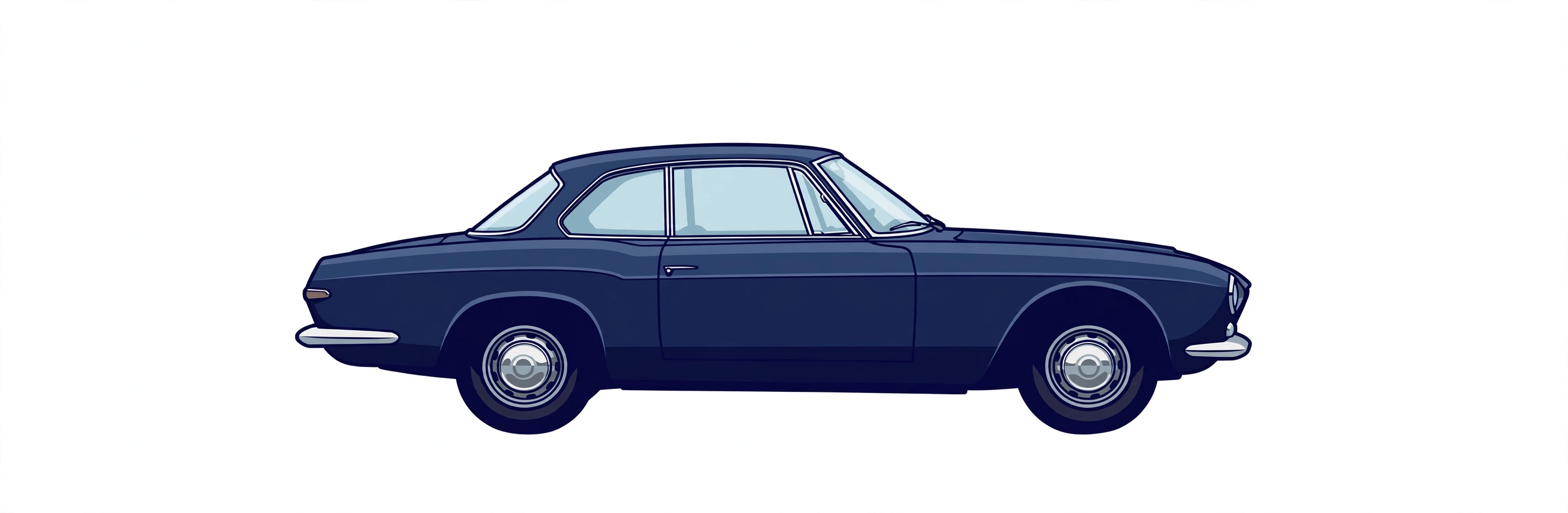
Cadillac Allante Convertible Coupe 2D buyer's guide
Cadillac Allante Convertible Coupe 2D -- the model's own buyer's guide: variants, values and what to check.
Years listed: 1988-1993 · Series: Allante
Overview and history
The Cadillac Allante is the most improbable car General Motors built in the 1980s: a two-seat, front-wheel-drive luxury roadster with a body designed and built by Pininfarina in Turin, Italy, flown across the Atlantic in a dedicated Boeing 747, and finished on a shortened Cadillac Eldorado line in Detroit. It was built from model year 1987 to model year 1993, and it exists for one reason — Cadillac wanted a direct answer to the Mercedes-Benz SL and the Jaguar XJ-S, and it wanted the Italian name on the flank to prove it was serious.
Understand what it is and what it is not. It is not a sports car. The Allante rides on the front-drive E-body architecture shared with the Eldorado, the Buick Riviera and the Oldsmobile Toronado, cut down to a 99.4-inch wheelbase, and every car drives its front wheels through a four-speed automatic transaxle. There was never a manual, never a rear-drive version and never a coupe. It is a personal luxury convertible in the American tradition that happens to have been tailored in Italy. Judged as a boulevard roadster with genuine presence, it makes sense; judged as an SL rival on a back road, it never quite did, and the market has priced it accordingly ever since.
The famous part of the story is the logistics, and it matters because it explains the car. Pininfarina built the bodies in Turin — steel unibodies, painted and trimmed in Italy — and Cadillac flew them to Detroit-Hamtramck in specially fitted 747s, 56 bodies at a time, where the powertrain and final systems were installed. The press called it the Allante Air Bridge, then the longest production line in the world. It was ruinously expensive, and it means panel fit, paint and trim come from two factories on two continents. A car whose two halves still agree — even gaps, matching paint tone, a top that meets the header rail squarely — has lived a careful life. A car where they visibly disagree has usually been repaired, stored badly, or both.
Cadillac improved the car almost every year, which is why the year matters more on an Allante than on most classics. The 1987 car arrived with the 4.1-litre HT4100 V8, Recaro seats, a digital instrument cluster and a long standard-equipment list, at a price that put it straight against the Mercedes 560SL. For 1989 the engine grew to 4.5 litres with a useful step in torque, the seats changed, and the car got steadily more sorted through 1990, 1991 and 1992. Then, for the final year only, Cadillac fitted the new 4.6-litre Northstar V8 — a double-overhead-cam, 32-valve engine that transformed the performance — along with a new electronically controlled transaxle, revised road-sensing suspension and a deeper front air dam. The 1993 car is a materially different machine from the 1987 car wearing the same body, and this guide treats them that way throughout.
Total production was about 21,430 cars across the seven model years — small numbers by Cadillac standards, large enough that you have a real choice of cars today, and small enough that the best examples are genuinely scarce. In our own Classic Listings pool we currently track 19 Allantes, 15 of them offered for sale and 4 recorded as sold, spanning the full 1987 to 1993 run and weighted heavily to the final year: 8 of the 19 are 1993 Northstar cars. That weighting mirrors the wider market. Buyers want the Northstar car, sellers know it, and the early cars survive in smaller numbers than their production figures would suggest because for years they were worth too little to justify their repair bills.
That is the whole ownership proposition. These were expensive, complicated cars that became cheap, complicated cars. The ones maintained through the cheap years — brakes, coolant, top, electrics — are delightful. The ones parked when the first four-figure bill arrived are still parked, or have been woken up just enough to sell. Your job is to tell those two populations apart, and almost everything in this guide is a tool for doing exactly that.
The models
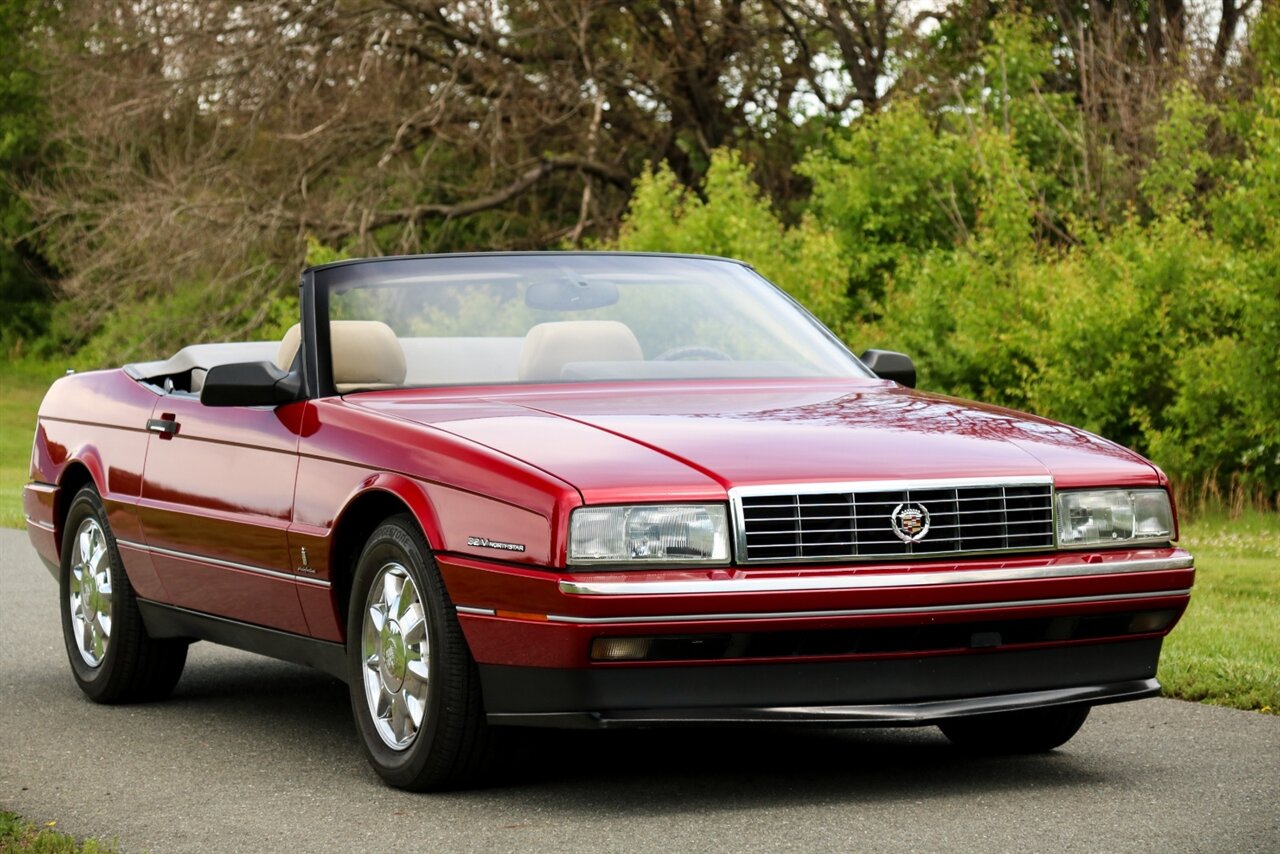
There is only one Allante body, one trim line and one badge — which makes the range simple to tabulate and deceptive to buy, because the differences that matter are hidden in the model year, the engine, the seats, the brakes and the top hardware rather than in a badge on the boot lid. Every car is a two-seat convertible. Every car was supplied with a removable aluminium hardtop in the early years — it became an option later, so never assume a car still has its hardtop, its hardtop stand, or its hardtop headliner in good order until you have seen them — and every car has a manually operated soft top whose mechanism changed in detail over the run. The table below is the buying map.
| Model | Years | Engine | Output | Built | Character |
|---|---|---|---|---|---|
| Allante 4.1 | 1987–1988 | 4.1 V8 HT4100, throttle-body injection | 170 hp | 5,932 | The original; Recaro seats, digital dash, the coolant-sensitive engine |
| Allante 4.5 | 1989–1992 | 4.5 V8, port fuel injection | 200 hp | 10,828 | The sorted middle car; more torque, fewer vices, the value years |
| Allante Northstar | 1993 | 4.6 V8 Northstar L37, 32-valve | 295 hp | 4,670 | The flagship; one year only, a different performance class entirely |
(Outputs are the period SAE net figures as Cadillac quoted them. Production splits follow from the accepted total of about 21,430 cars: 3,363 in 1987 and 2,569 in 1988 for the 4.1 cars; 3,296 in 1989, 3,101 in 1990, 2,500 in 1991 and 1,931 in 1992 for the 4.5 cars; and 4,670 in the single Northstar year, 1993 — the biggest single year of the run, because Cadillac and its dealers knew it was the last and the best.)
The 4.1 cars, 1987–1988. The launch specification is the most distinctive and the most fragile. The seats are Recaros with a forest of power adjustments, the instrument cluster is digital, the audio is a Cadillac-specific Bose system, and the standard equipment list runs to anti-lock brakes, traction control in the later of the two years, and a cellular-phone-era options list that dates the car wonderfully. The engine is the problem, and the engines section gives it the space it deserves: the HT4100 family has a known sensitivity to coolant maintenance and head-gasket and intake-gasket sealing that makes a documented coolant history worth more than low mileage. Buy a 4.1 car for its originality and its launch-year character, and buy it only with paperwork.
The 4.5 cars, 1989–1992. This is the heart of the range and the sensible buy. The larger engine answers the original criticism — the 4.1 was smooth but slow against a 560SL — with torque you can feel from low revs, and Cadillac used these years to fix the car in detail: revised seats in place of the Recaros, improved top operation, better insulation, and small revisions that add up to a car that feels finished. Later is generally better, and a well-kept 1991 or 1992 car is the sweet spot most owners describe: quick enough, simpler than a 1993, with the full Pininfarina presence.
The Northstar car, 1993. One year, one engine, and a premium that has held since the cars were new. The L37 Northstar gives the Allante the performance the body always promised, the 4T80-E electronically controlled transaxle is a stronger and smarter gearbox than the earlier 4T60, and the continuously variable road-sensing suspension fitted for 1993 is the best-riding and best-controlled setup of the run — when it works. The 1993 also brought a revised interior with analogue instruments in place of the earlier digital cluster, which many buyers prefer both to look at and to repair. The traps are equally specific: early Northstar oil consumption and oil leaks, the head-bolt thread issue described below, and a one-year-only parts and diagnostics ecosystem. A 1993 with a full, recent, specialist history is the collector car. A 1993 with warning lights and deferred coolant work is the most expensive Allante you can buy, whatever the asking price.
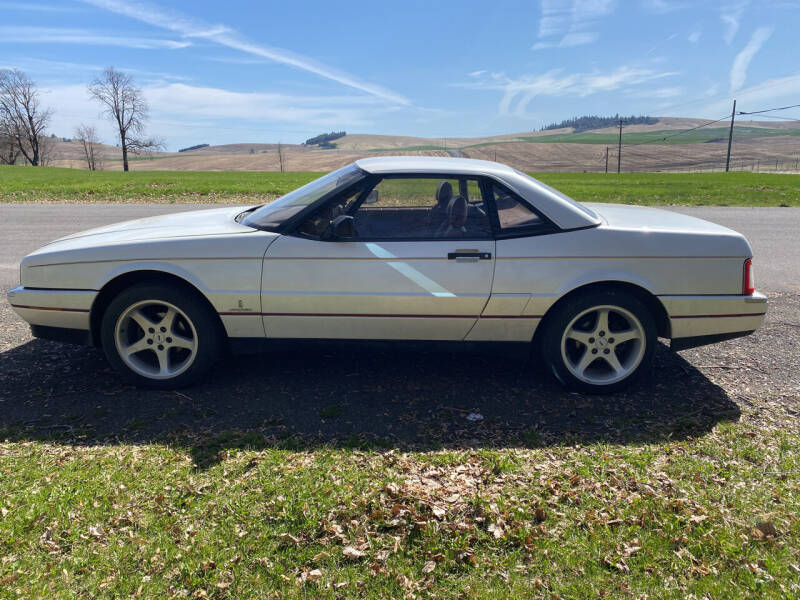
Hardtop and soft top. Every Allante story involves two roofs. The aluminium hardtop gives the car a coupe silhouette and a quieter cabin in winter; it is light but awkward, a two-person lift, and easily damaged at its edges and headliner. Cars are routinely separated from their hardtops — a negotiating fact rather than a catastrophe, but price it, because sourcing, shipping and painting one is real money. The soft top is manually folded, covered fully in the problem areas. On any car, operate both roofs yourself, in full, before you discuss price.
Colours and trim. Period colours were conservative luxury shades, and our tracked pool reflects that: white and red are the most common colours among the cars we list, with green, silver and black behind them. Interior leather condition, not exterior colour, is what separates cars in practice — the leather was soft, the bolsters wear, and light colours show every year. Originality matters less than completeness: Pininfarina badges, correct wheels by year, hardtop, tonneau and boot covers, and the small trim pieces that are no longer made.

Engines and gearboxes
The 4.1 and 4.5 pushrod V8s: HT4100 family grown up
The 1987 and 1988 cars use the HT4100, a 4.1-litre (249 cubic inch) overhead-valve V8 with an aluminium block, cast-iron cylinder heads and throttle-body fuel injection, rated at 170 hp. The 1989 to 1992 cars use its enlarged descendant, a 4.5-litre (273 cubic inch) version with port fuel injection, rated at 200 hp with a broad, low-rev torque delivery that suits the car far better. They are related engines with related architecture and very different reputations, and a buyer needs to understand both the shared design and why one is feared and the other is broadly trusted.
The design idea was sound: a light aluminium block with cast-iron heads, a compact pushrod layout, and electronic engine management that was advanced for Cadillac in the mid-1980s. The execution left two weak points that dominate ownership. The first is sealing between dissimilar metals. Aluminium and iron expand at different rates, and the head gaskets and intake manifold gaskets live exactly on that boundary. When the coolant is fresh, correctly specified and changed on schedule, the system copes. When the coolant is old, depleted or topped up carelessly for years, corrosion attacks the sealing surfaces and the coolant passages, gaskets lose their grip, and the classic HT4100 failure arrives: coolant in the oil, oil in the coolant, overheating that comes and goes, or a slow external leak that owners chase from hose to hose while the real path is a gasket face. General Motors specified coolant supplement — sealing tablets — as part of the service routine for this engine family, and the presence or absence of that routine in the history file is a genuine buying signal, not trivia.
The second weak point is that the symptoms overlap with cheaper faults, so diagnosis matters more than parts swapping. A 4.1 or 4.5 car that runs hot can have a failing water pump, a clogged radiator, a weak fan or fan clutch arrangement, a thermostat fault, an air lock after careless filling, or the beginning of gasket failure. The tests that separate them are old-fashioned and decisive: a cold-start pressure test of the cooling system, a chemical block test for combustion gas in the coolant, an inspection of the oil on the dipstick and under the filler cap for emulsion, and a look at the spark plugs for one cylinder that has been steam-cleaned by coolant. Any seller who will not allow those tests on a 4.1 car has priced the answer into the conversation for you. Walk away from a 4.1 with milky oil, a pressurised top hose within seconds of a cold start, or a history file with a blank where the coolant changes should be.
The 4.5 is not immune — it shares the block architecture and wants the same coolant discipline — but its record is markedly better, and its port injection gives cleaner starting, a steadier idle and better throttle response than the throttle-body 4.1. On the road a healthy example of either engine should start promptly hot or cold, idle without hunting, pull without hesitation and show no smoke. Blue smoke at start-up after sitting points to valve stem seals, a known and budgetable job. Continuous blue smoke under load is rings and bore wear and an engine-out conversation. Grey-white vapour that does not clear as the engine warms, with a sweet smell at the exhaust, is coolant until proven otherwise.
Oil leaks deserve a calibrated eye. These engines weep with age from rocker covers, the intake valley and the rear main area, and a light misting that never drips is normal classic-car behaviour. Fresh oil on the ground, a wet sump and a seller who has just pressure-washed the engine bay are different: the wash is there to remove the evidence, so insist on seeing the car again after a drive, or price a reseal. A full reseal with the engine in the car is fiddly rather than catastrophic, realistically in the region of 900 to 1,800 dollars in parts and labour depending on how much ancillary work is disturbed; an engine-out head-gasket repair on a 4.1, done properly with machined faces and new fasteners, runs roughly 2,500 to 4,500 dollars, which is why the tests above are worth more than any warranty promise on a car this age.
The Northstar: L37 4.6, 1993 only
The 1993 engine is a clean-sheet contrast: the Northstar L37, a 4.6-litre (279 cubic inch) all-aluminium V8 with double overhead camshafts, four valves per cylinder, sequential port fuel injection and a rated 295 hp. It revs where the pushrod engines will not, it pulls hard well past the point where a 4.5 is finished, and it gives the Allante a genuine 140 mph class of performance with the refinement to match. It is also the engine that demands the most informed buying, because its known issues are specific, well documented and expensive when ignored.
Start with oil. Early Northstars can consume oil at a rate that shocks owners used to pushrod Cadillacs — a quart in 1,000 to 1,500 miles can occur on a healthy engine, driven by the aggressive piston-ring and cylinder-bore finish chosen for low friction, aggravated by gentle driving that never loads the rings. The recognised remedy in service is a proper wide-open-throttle exercise routine and, where consumption is severe, a top-engine carbon clean; the buying test is simpler: ask the owner directly how much oil the car uses between changes, check the level yourself, and treat a vague answer plus a low dipstick as a finding. Oil leaks are the companion issue: the crankcase is a two-piece design with a case-half seal, and the cam covers and oil pan also weep with age. A Northstar that leaves a clean driveway after an overnight park is the exception; a Northstar that leaves a spreading pool is a reseal bill, and a case-half reseal is engine-out work realistically in the 2,000 to 3,500 dollar range at a specialist.
The head-gasket question needs precision, because the internet version is louder than the 1993 reality. On Northstar engines the failure mechanism, when it occurs, is usually the steel head-bolt threads pulling in the aluminium block rather than a simple gasket failure: the bolts lose clamp load, the gasket then leaks combustion gas into the coolant, and the car overheats under load while behaving at idle. The incidence on the earliest Northstar years, including the 1993 Allante application, is lower than on the high-volume late-1990s cars that built the reputation — but lower is not zero, and a 30-year-old engine of any incidence deserves the tests. The same block test for combustion gas in the coolant, a cooling-system pressure test, and a long test drive that includes a sustained hill or freeway load followed by an idle in traffic will expose a marginal car: a Northstar with failing clamp load pushes coolant out of the expansion tank and spikes its temperature under exactly that pattern. A proper repair means thread inserts in the block with the engine out — a 3,500 to 5,500 dollar job done right — so a car that fails the test is a car to decline, not a car to discount by a few hundred dollars.
Everything else about the Northstar is good news. The timing chains are long-lived, the ignition is distributorless with coil packs that fail individually and cheaply, and the engine management is diagnosable through the car's own onboard diagnostics, covered in the inspection section. A healthy Northstar starts instantly, idles almost silently, and shows no valvetrain clatter beyond a brief cold-start moment. Persistent top-end rattle or a wandering misfire are faults to price, not character.
Gearboxes: 4T60 and 4T80-E transaxles
Every Allante is an automatic, and there are two transaxles. The 1987 to 1992 cars use the Turbo-Hydramatic 440-T4 family, better known in its later electronic form as the 4T60 and 4T60-E four-speed automatic transaxle — a front-drive unit with a torque converter, overdrive top gear and, on later cars, electronic shift control. The 1993 car uses the 4T80-E, a heavier-duty electronically controlled transaxle developed for Northstar torque. Neither is a weak point by design, and both are ruined the same way: by 30 years of fluid that was declared filled for life and never changed.
Judge a gearbox on a long drive, not a circuit of the block. Engagement of Drive and Reverse should be prompt and without a thump, upshifts clean, overdrive holding on a steady cruise without hunting, and kickdown arriving without a flare of revs. The classic wear signs are a flare on the two-to-three shift, a shudder as the converter clutch locks up — which can also be an engine misfire, so note whether it follows road speed or engine load — and delayed engagement after sitting. Fluid tells the rest: it should still be red and smell neutral. Dark, burnt-smelling fluid on a car that shifts well is a service overdue; on a car that flares, it is a rebuild being announced.
A fluid and filter service on these transaxles is ordinary money, roughly 250 to 450 dollars. A full rebuild of a 4T60 by a shop that knows front-drive GM units runs roughly 2,200 to 3,800 dollars; a 4T80-E rebuild, a rarer and heavier job, runs roughly 3,000 to 4,500 dollars, and 1993 owners should confirm a local shop will take the unit on before they need one. The good news is that outright sudden failure is uncommon: these boxes usually decline gradually and audibly, which means the test drive genuinely protects you. The final drive and driveshafts are part of the same check — clicking from a front corner on full lock is a worn constant-velocity joint, a budgetable wear item, while a clunk on taking up drive that is not the gearbox mounts is worth a lift inspection before you commit.

Problem areas
An Allante rarely fails in one place. It fails as a system of expensive 1980s and early-1990s technologies that were all fitted at once — a high-pressure anti-lock brake system, electronic suspension, a digital or semi-digital cockpit, a two-roof body built on two continents — and then, in most cases, maintained to a falling budget for two decades. Work through the systems in this order, because the order is the order of the bills. In our own photo-checked sample the base is small and we say so plainly: only 3 of the 19 cars we track have detailed photo notes on file, and in those 3, rust, smoke, leaks and visible damage were each mentioned in none — a clean but tiny sample that tells you more about how these cars are photographed for sale than about the fleet. Trust the in-person tests below, not listing photography, on this model more than most.
Brakes: the Bosch anti-lock system and the accumulator test
This is the section that prices Allantes, and it is the one most generalist guides skip. The Allante uses a Bosch anti-lock braking system with an integral hydraulic power booster: instead of a vacuum servo, brake assistance comes from hydraulic pressure stored in a nitrogen-charged accumulator, supplied by an electric pump. When the system is healthy, the pedal is firm and high, the pump runs briefly at start-up and occasionally in traffic, and the anti-lock and brake warning lamps light at key-on and go out. When it ages, it fails in a recognisable sequence, and every stage costs more than the last.
The accumulator is a sealed sphere whose nitrogen charge bleeds away over decades. As it falls, the pump runs more often to hold pressure, assistance becomes inconsistent, and the pump wears itself out doing a job the accumulator used to share. The test takes two minutes and no tools. With the engine off, pump the pedal to exhaust stored pressure, then turn the ignition on: the pump should run and cut out within roughly 30 to 40 seconds. Then count how many firm assisted presses you get before the pedal goes hard. A healthy system gives several; a system needing the pump after one or two presses, or where the pump runs almost continuously at idle, has a tired accumulator, a tired pump, or both. A hard pedal with poor stopping power on the drive is not a pad problem — it is a pressure problem, and a safety fault, not a negotiating chip.
Costs are why this matters. An accumulator is a specialist part, realistically 350 to 700 dollars where available; a pump and motor assembly, rebuilt or new-old-stock, runs 800 to 1,800 dollars; and a full system overhaul with labour at a shop that understands the Bosch unit can reach 2,500 to 4,000 dollars. Shops that do not understand it will quote to replace everything, or worse, will bleed the system incorrectly — the high-pressure circuit has a specific depressurisation procedure, and working on it charged is genuinely dangerous. Ask any seller of a car with a brake warning lamp who diagnosed it and what exactly they replaced. A documented accumulator or pump replacement in the last decade is one of the most valuable lines in an Allante history file. A brake lamp explained as probably a sensor is an undiagnosed four-figure system.
The conventional hardware underneath is ordinary by comparison: discs, pads, hoses and rear calipers with integral parking-brake mechanisms that seize when the car sits. A car that has stood will need a hydraulic refresh, realistically 700 to 1,500 dollars with labour. Judge the discs for rust bands and lips, and test the parking brake on a slope — a car that will not hold is telling you the rear calipers have not been touched in years.
The convertible top, the hardtop and water
The Allante soft top is a manually folded roof with latching and pull-down details that changed across the run, including the Phase I, Phase II and Phase III header and latch revisions owners refer to by those names. What did not change is the principle: the roof seals only as well as its latches pull it down, its frame pivots move freely, and its rubber seals still have shape. A top that needs two people, a shoulder and optimism to latch is a top whose frame, latches or seals need work, and the bill follows the cause. Header latch and pull-down motor attention runs roughly 300 to 900 dollars; a full set of weatherstrips, where available, is 600 to 1,200 dollars in parts before fitting; and a new soft-top covering fitted properly, with the headliner and pads, runs 1,500 to 2,800 dollars.
Operate the whole cycle yourself, twice. Release the latches, fold the roof, stow it, raise it, latch it, and then look at the result from outside: the header should meet the windscreen frame evenly across its width, the rear of the top should pull down flush, and the side glass should meet the seals without a visible gap at the top rear corner, the classic leak and wind-noise point. Run a hose over the closed roof, or view the car after rain, and check the footwells, the boot and the stowage well behind the seats for water. Water in the stowage well is the signature Allante leak, and it matters beyond wet carpet: the well and boot house electrical components on these cars, and chronic leaks corrode connectors that later present as haunted electrics. A musty smell with the roof up is not character; it is a leak with a history.
The aluminium hardtop has its own checklist. Its latches and locating pins wear, its headliner sags and detaches exactly as 1980s foam-backed headliners do, and its rear window seal perishes. Fit the hardtop during your inspection even if the car is presented with the soft top up — a hardtop that will not latch squarely, or whose pins are bent, has usually been stored badly or forced. A headliner refit is 250 to 500 dollars; hardtop seals and latch work are priced per fault; a missing hardtop altogether is a four-figure replacement exercise once purchase, shipping and paint are counted, which is why the models section tells you to price its absence rather than shrug at it.
Body rust is a secondary issue on an Allante — rarely the structural story it is on older steel classics. The steel body rusts where water sits: door bottoms, sills, wheel-arch lips, boot floor, stowage well, and around the windscreen frame where the top seals fret the paint. Check those places with a magnet wrapped in cloth and a torch, and treat perforation in the sills or screen frame as serious fabrication. Surface bubbling is budgetable panel work, roughly 400 to 1,000 dollars a panel painted properly. The more common body costs are cosmetic — sunburnt clear coat, tired trim, faded badges — and a quality repaint starts around 8,000 dollars, which is why honest original paint beats a shiny respray of unknown preparation.
Suspension, steering and the electronic dampers
The Allante rides on MacPherson struts at the front and an independent rear arrangement with a transverse composite leaf spring in the Corvette manner, tuned soft and getting softer as the dampers age. Two electronic layers complicate the picture. Cars through the early 1990s use speed-sensitive suspension with electronically controlled struts and shocks that adjust damping with road speed; the 1993 car uses the continuously variable road-sensing system, which reacts to road inputs as well as speed. In both cases the dampers are specific, expensive and increasingly hard to source in original form, and the failure mode is rarely a dramatic collapse: it is a car that floats, pitches and crashes over sharp edges all at once, with a suspension warning message or lamp that the seller describes as having always been on.
The test is a drive over a road you know has mixed surfaces, at mixed speeds, listening for knocks from worn strut mounts and links, feeling for the float that means the dampers are done, and watching for the system message. Then ask the direct question: are the original electronic dampers still fitted and working, or has the car been converted to conventional passive struts and shocks? A conversion, done with a proper kit and the warning system correctly dealt with, is a legitimate and common solution that many owners prefer for cost and simplicity — a quality passive conversion fitted runs roughly 1,200 to 2,200 dollars against 2,500 to 4,500 dollars to renew the electronic system with new-old-stock or rebuilt units where they can be found. What is not legitimate is a conversion the seller does not mention, with a warning lamp disabled. Check that the suspension lamp, where fitted, lights at key-on for its bulb check. A lamp that never lights at all has usually been removed from the conversation by removing the bulb.
Steering should be light at parking speeds, free of groans — old fluid and a tired pump groan first on full lock — and accurate at speed. Wander is more often tyre and alignment than rack: these cars are sensitive to old or mismatched tyres, and a car on ancient rubber gives you no handling evidence at all. Price a set of correct tyres in, roughly 700 to 1,200 dollars fitted, and treat cracked sidewalls as a drive-home risk.
Electrics, instruments and the onboard diagnostics
No section of an Allante ages quite like its electrics, because no comparable car of the era packed in so much of it. The body computer, the engine computer, the instrument cluster, the climate control, the Bose audio system with its amplified speaker units, the power seats — Recaros with multiple motors and memory on early cars, Cadillac seats later — the twilight sentinel lighting, the theft deterrent and the driver information centre all talk to each other over wiring that is now more than three decades old, through connectors that have lived behind a sometimes-leaking convertible top. The failure pattern is therefore connectors, grounds and individual modules, in that order — not wholesale loom failure — and the diagnostic pattern is to work the systems one by one and write down what actually fails.
The instrument clusters deserve their own paragraph. The early digital cluster is distinctive and fragile with age: fading or dead display segments, intermittent total blackouts that return with a tap, and speedometer and fuel readings that wander. Specialist repair of a digital cluster runs roughly 400 to 900 dollars depending on the fault. The 1993 analogue cluster is simpler and cheaper to live with, one of the quiet reasons the final-year car costs less to keep. On any car, the key-on bulb and display check is your friend: every warning lamp should light, every display segment should show, and anything that stays dark at key-on but is blamed later on a sensor should be assumed to have been silenced.
The Bose system fails by the speaker amplifier: each speaker unit carries its own amplifier, the capacitors age, and the symptoms are a channel that pops, whistles, drops out or falls silent. A full set of rebuilt amplifiers runs roughly 400 to 800 dollars in parts with fitting on top. The power seats fail by motor, switch and mechanism: test every direction of every adjustment, including the Recaro functions on early cars, because a stuck seat is a 300 to 800 dollar repair per fault. Windows should run evenly without tipping; a slow window is usually a tired motor and dry channels.
The saving grace of the whole electrical story is the onboard diagnostics. Cadillacs of this era let you enter diagnostic mode through the climate-control panel — holding the Off and Warmer buttons together on most Allante years — and read stored engine and body codes on the instrument display, cycle the outputs, and clear codes after repair. You do not need to master the code list at a viewing, but you should enter the mode, note any stored codes, and write them down verbatim for later decoding. A seller who knows the codes and can explain them owns the car properly. A cluster of stored body and brake codes on a car described as fault-free reprices the car on the spot. The inspection section turns this into a step; here, simply register that on an Allante the car itself keeps a diary, and you are entitled to read it.
Heating and air conditioning close the section. The automatic climate control should hold its set temperature, move its air distribution correctly and run its blower on all speeds quietly. Mode-door actuators fail with age, giving air only at the screen or only at the feet; actuator work ranges from an easy cheap part to a dashboard-out job at 1,000 to 2,000 dollars with labour, so test every mode at both temperature extremes at the viewing. A heater that will not get hot on a pushrod car loops back to the engine story — coolant level, thermostat, air locks — and should be investigated as an engine symptom too.
How to inspect one
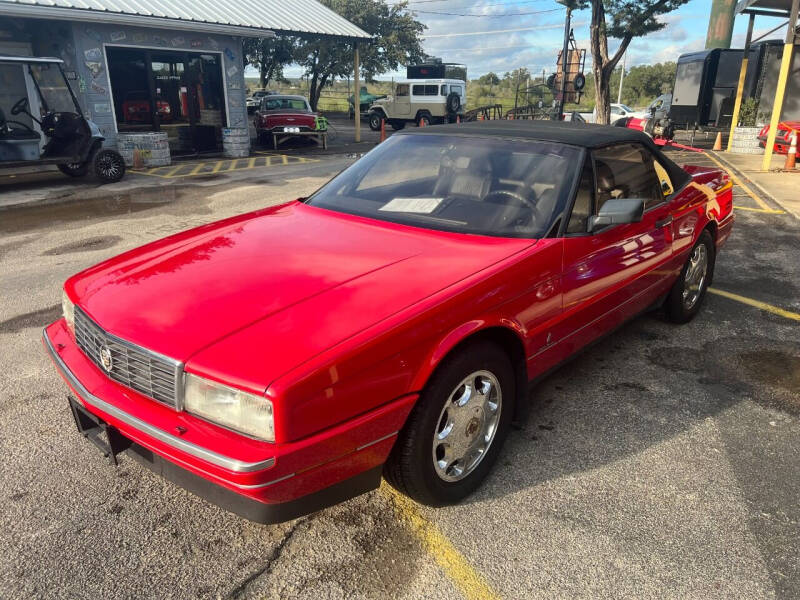
Allow ninety minutes — an Allante has two roofs, a diagnostic mode and a brake system that all need time — and bring a torch, a magnet wrapped in cloth and a notebook. Insist on a cold car and a dry day if you can. If the car passes you, pay for a lift inspection and a block test before money changes hands; on this model they are the cheapest insurance in the classic market.
- Start with the paperwork and the identity. Match the vehicle identification number on the title to the plate at the base of the windscreen and the labels on the doors and boot lid. Confirm the year from the plate, not the listing: the difference between a 1992 and a 1993 car is an engine, a gearbox and a suspension system. Ask for the history file and read it in a specific order — coolant services first on a 4.1 or 4.5 car, brake accumulator or pump invoices on any car, top and seal work, damper replacements or conversion, and the most recent transaxle fluid service. A thick file in the right places is worth thousands on this model.
- Cold start. The engine should be stone cold when you arrive. A pushrod car should catch promptly and settle to a clean idle; a Northstar should start almost silently and stay that way. Watch the exhaust for the first minute: brief vapour on a cold morning is normal, persistent white smoke with a sweet smell is coolant, and blue smoke that clears points to valve stem seals while blue smoke that stays is deeper wear. Listen for top-end rattle that outlasts the first seconds.
- The coolant tests. With the engine cold, check the expansion tank level and the colour of the coolant — rusty brown coolant on a 4.1 car is a maintenance confession. Squeeze the top hose, start the engine, and feel whether the hose pressurises within seconds, which suggests combustion gas entering the system. Smell the oil on the dipstick and look under the filler cap for emulsion. If the car is otherwise a candidate, have the chemical block test and a cooling-system pressure test done professionally before purchase, exactly as the engines section describes. These tests settle the single most expensive question on the pushrod cars and a major one on the Northstar.
- Read the car's own diary. Turn the ignition on and watch the full bulb and display check: every warning lamp should light, including brake, anti-lock and suspension, and every digital display segment should show on an early car. Then enter the onboard diagnostic mode through the climate-control panel — hold Off and Warmer together on most years — and write down every stored code, engine and body, verbatim. Codes are not a verdict by themselves; unexplained codes on a car described as fault-free are a repricing event.
- The brake accumulator test. Do the test from the problem areas, in full: exhaust the stored pressure with the engine off by pumping the pedal, turn the ignition on, time the pump run, and count the assisted pedal applications before the pedal hardens. Brake firmly from speed on the test drive and confirm the pedal stays firm and high. Any car that fails this test needs the system priced as a system — accumulator, pump or overhaul — before you negotiate anything else.
- Both roofs, operated by you. Raise and lower the soft top twice, latching and unlatching every point yourself, then fit the hardtop if the car has one. Check the header fit across its full width, the pull-down at the rear, the side-glass seal at the top rear corner, and the stowage well, boot and footwells for water staining or a musty smell. A roof the seller operates for you, quickly, from the driver's seat, has not been demonstrated — it has been performed.
- Under the car. On the lift, work the water path: sills, door bottoms from below, wheel-arch lips, boot floor, stowage well seams and the windscreen frame from inside where visible. Prod suspect seams with permission. Check the transaxle and engine undersides for fresh oil, the constant-velocity joint boots for splits, the exhaust for blows, and the brake pipes and flexible hoses for corrosion and perishing. Read the underside honestly: aged factory protection looks patchy; a fresh uniform black coat over everything, applied for the sale, is a question.
- Suspension and steering. Rock each front wheel for bearing and joint play, bounce each corner and watch whether it settles in one movement, and look for the suspension warning lamp doing its bulb check at key-on. Ask directly whether the electronic dampers are original and working or converted to passive units, and look for the hardware that answers the question. On the drive, judge float, pitch and crash over sharp edges, and steering groan on full lock.
- The test drive. Twenty minutes minimum, including a freeway stretch and, for a Northstar, a sustained load — a long hill or a firm freeway pull — followed by a hot idle in traffic while you watch the temperature gauge for the spike that exposes a cooling or head-bolt problem. The transaxle should engage promptly, shift cleanly without flare, hold overdrive without hunting and kick down without drama. Brake firmly twice. Note whether any shudder follows road speed or engine load.
- Electrics, every switch. Work everything, in writing: windows, mirrors, every seat adjustment and the memory where fitted, all four Bose channels at volume, climate control in every mode at both temperature extremes with the blower on all speeds, lights including the twilight sentinel, washers, horn and the driver information centre. On an Allante the electrics list is the deferred-maintenance list, and each dead item is a priced repair, not a quirk.
- Heat, idle and oil, hot. At the end of the drive, let the car idle hot for five minutes. Check the temperature stability, the oil pressure behaviour, the transaxle fluid colour and smell where a dipstick is fitted, and the engine oil level — and on a Northstar, ask the owner, with the dipstick in your hand, how much oil it uses between changes. Look underneath again now that the car is hot and has been driven: fresh drips after a drive are evidence a cold, washed engine bay was hiding.
- Interior and completeness last. Sit in both seats and operate them from the seated position. Check the leather for bolster wear and splits, the headliner in both roofs for sagging, and the carpets for the damp that loops back to step 6. Inventory the completeness items: hardtop and stand, tonneau and boot covers, spare and tools, correct wheels for the year, badges, books and keys. A complete car with honest wear beats an incomplete car with shiny paint, on this model, every time.
Values
The build appends the current market figures beneath this guide — the cars listed now and the recorded sales — and those numbers, refreshed at every build, are the ones to negotiate from. This section teaches you how to read them, because the Allante market is one of the easiest classic markets to misread from a single listing.
The first thing to understand is the condition spread, which on an Allante is driven less by mileage and paint than by systems. Two cars of the same year, in the same colour, with similar mileage, can sit a full condition class apart because one has a documented brake overhaul, fresh coolant history, working electronic dampers and a dry, latching roof, and the other has a warning lamp, a hard pedal, a tired accumulator and a top that leaks into the stowage well. When you compare a listing against the recorded sales, compare the systems evidence first and the odometer second. A low-mileage car that has sat for a decade will need the brake hydraulics, the tyres, the seals and the coolant recommissioned before it needs anything else, and its true price is its asking price plus that recommissioning.
The second driver is the year split, and it is real. The 1993 Northstar car carries a durable premium over the 4.5 cars, and the 4.5 cars over the 4.1 cars, for mechanical reasons laid out in this guide rather than fashion. Within a year, originality and completeness move the number — both roofs, covers, books and correct wheels — while modifications move it the other way. A passive suspension conversion, honestly declared, is broadly value-neutral for drivers and negative for collectors; undocumented electrical modifications are negative everywhere.
Asking and achieved prices part company predictably. Sellers of Northstar cars and genuinely sorted, documented examples ask firmly and achieve close to it. Sellers of undiagnosed cars — warning lamps, years parked, tops demonstrated rather than operated — ask driver money for project systems, and the recorded sales show the correction. The project-versus-driver gap is the widest in the market: a project Allante is a driver-priced restoration of brakes, coolant, roof and electrics waiting to be added up, and the arithmetic in the problem areas usually shows the sorted car at the higher price was the cheaper purchase.
Negotiate from evidence, in the order of the bills. A failed accumulator test, a missing block test on a pushrod car, dead dampers, a leaking roof and four aged tyres are each priced repairs with ranges given in this guide; present them as a list, not as a general complaint about age. Conversely, if you find a car with invoices for exactly those systems, pay for them without embarrassment. On an Allante, documentation is the difference between the two populations in the overview, and the market figures beneath this guide reward it accordingly.
Parts and ownership
The Allante ownership equation is unusual: the mechanical core is General Motors and broadly supported, while the body, trim and model-specific systems are low-volume Italian-American and require patience, clubs and specialists. Plan for both halves and the car is a pleasure to keep. Assume it is all ordinary Cadillac and the first specific part you need will correct you.
Easy: engine service items for all three engines — filters, plugs, belts, hoses — brake pads and discs, alternator and starter motors, air-conditioning service parts, tyres in the original sizes, batteries, and most pushrod V8 gaskets and seals. The 4.5 in particular shares its service world with high-volume Cadillacs of its era, and a good independent GM specialist can maintain the pushrod cars without drama. Order today, fit this weekend, at prices close to modern-car money.
Harder and dearer: the Bosch brake accumulator and pump assemblies, original electronic struts and shocks and the Northstar-specific suspension components, digital instrument clusters, Bose speaker amplifiers — rebuilt units are the normal route — Recaro seat mechanisms and switches for the early cars, convertible top weatherstrips, latches and pull-down motors, hardtops and hardtop trim, Pininfarina badges and Allante-specific exterior trim, and Northstar engine-out reseal work, which is a labour problem more than a parts problem. None of it is unobtainable; almost all of it is a search, a specialist or a rebuild rather than a next-day order, and the prices in the problem areas reflect that reality.
The specialist and club scene is the owner's real parts department. The Allante has an unusually loyal following, with active clubs, specialists who rebuild the brake components, clusters and amplifiers, and a used-parts trade fed by cars retired for one major failure while the rest was sound. Join the club before you buy, not after. When you view a car, ask which specialists the seller has used — an owner who can name the brake rebuilder and the cluster repairer has been maintaining the systems that matter.
Running costs. A sorted Allante is a realistic regular-use classic: fuel consumption in the high teens to low twenties on a run for the pushrod cars, a little heavier for a Northstar driven as it invites, servicing any good independent can handle on the pushrod cars, and insurance in line with other classics of its value. The line that catches new owners is the first year. Catching up deferred maintenance honestly costs 2,000 to 5,000 dollars before you improve anything, and recommissioning a car that has sat for years runs 4,000 to 8,000 dollars at a shop. Buy a car in regular use, with its systems exercised, over a lower-mileage car that has been asleep. On an Allante, use is maintenance.
Which one to buy
- The all-rounder: a 1991 or 1992 4.5. The full run of improvements, the torquey and broadly trusted engine, no Northstar complexity, and the deepest choice of cars. If you want one Allante to drive and enjoy, this is it.
- The value buy: a 1989 or 1990 4.5 with paperwork. Mechanically the same proposition as the later cars, bought for less because the market chases the final years. Make sure the coolant history and the brake invoices are in the file, and it is the cheapest route into a good Allante.
- The collector car: a 1993 Northstar. One year, 295 hp, the analogue dash and the best suspension of the run. Verify it ruthlessly — block test, oil consumption answer, damper evidence, diagnostic codes — because a wrong 1993 is the most expensive Allante of all, and a right one is the only Allante that is genuinely quick.
- The original: a 1987 or 1988 4.1. The launch car, with the Recaros and the digital dash and the full Air Bridge story. Buy it for character and originality, buy it only with a coolant history you have read, and never buy one that fails the coolant tests at any price that assumes it passed.
- The cruiser: any sorted year, with both roofs. If your driving is distance, weather and arrival, the year matters less than the roofs, the air conditioning and the seats. A complete, dry, cold-air car in the year you can afford beats a needier car in the year you wanted.
And the rule that overrides all of the above: buy the car whose expensive systems have already been fixed, with the invoices to prove it. Brakes, coolant, dampers, roof and electrics are the Allante, and each is fixable at a plannable price — but only one owner has to pay it. Make sure it was the previous one.
See the 7 Allante Convertible Coupe 2D cars currently listed.