
Buick Roadmaster Sedan 4D buyer's guide
Buick Roadmaster Sedan 4D -- the model's own buyer's guide: variants, values and what to check.
Years listed: 1937-1996 · Series: Full Size
Overview and history
The Buick Roadmaster is not one car. It is two very different flagship Buicks, separated by more than three decades, that happen to share a name, a position at the top of the range, and a basic promise: the biggest, softest, best-equipped Buick you could buy, built for long American distances at a relaxed pace. The first Roadmaster ran, with one wartime break, from 1936 to 1958. The second ran from 1991 to 1996. Everything in between — the Electra, Electra 225 and Park Avenue years — belongs to other guides. If you are shopping under this name, your first job is to decide which Roadmaster you actually mean, because almost nothing except the badge, the size and the intent carries across the gap.
The original car arrived for 1936 as the Series 80, Buick's answer to a market that was recovering from the Depression and rewarding size again. Buick, General Motors' near-luxury division sitting above Oldsmobile and below Cadillac, needed a car that could take on Packard and the junior Cadillacs without costing Cadillac money. The Roadmaster was that car: a long-wheelbase sedan (and, in various years, convertible, coupe and estate wagon) built around Buick's big 320-cubic-inch overhead-valve straight eight, the engine Buick insiders called the Fireball Eight and the brochures called Dynaflash. Where the smaller Special and Century used the 248-cubic-inch eight, the Roadmaster always had the big block of its day. That rule never changed in the first life of the name: biggest Buick engine, longest Buick wheelbase, most Buick chrome.
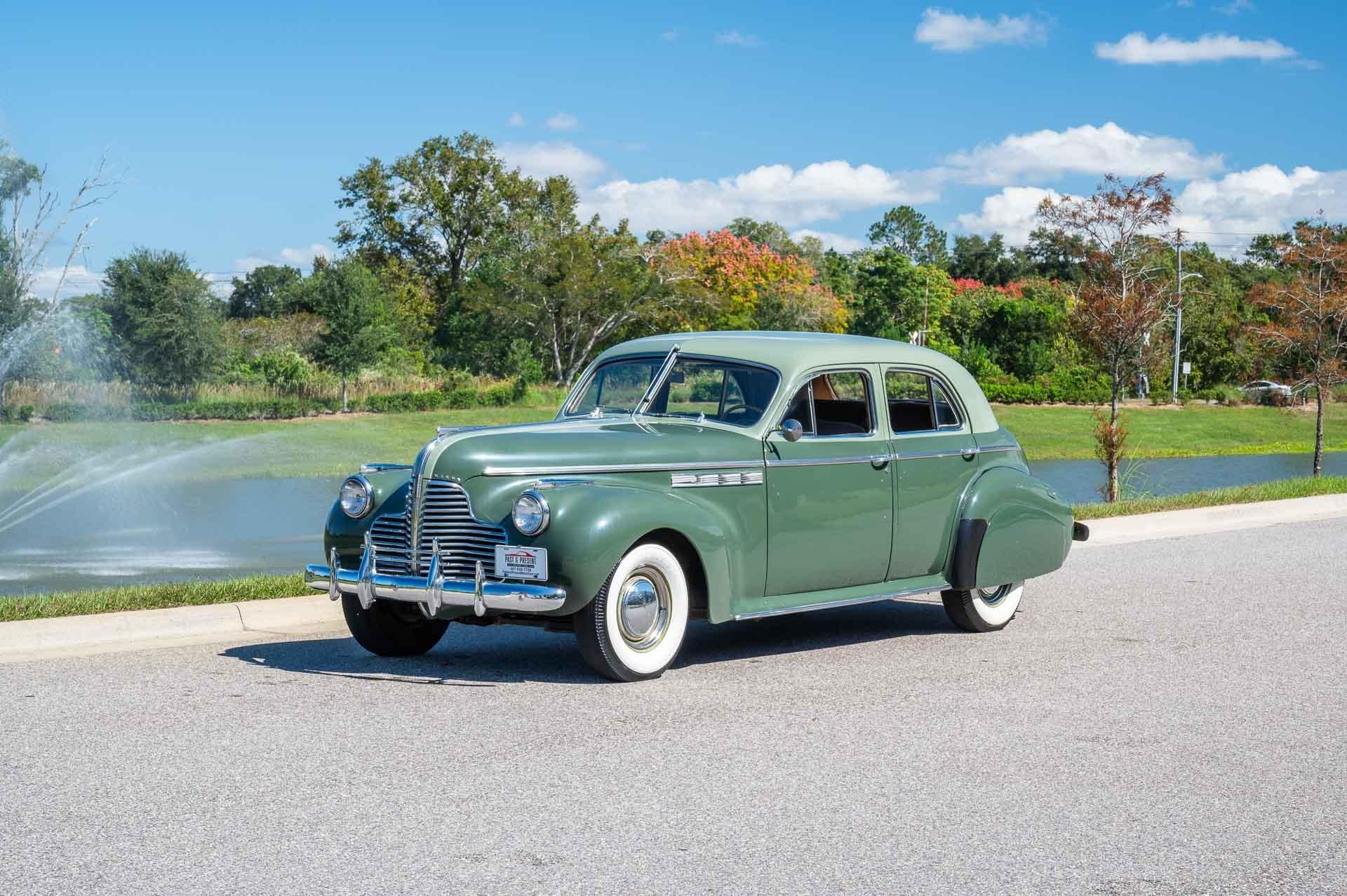
For 1940 the Roadmaster became the Series 70, a designation it kept, with variations, into the early 1950s. The pre-war cars peaked in 1941 and the shortened 1942 year, with clean styling, an optional dual-carburettor set-up Buick called Compound Carburetion, and a reputation for quiet, unstressed speed. Production stopped for the war in early 1942 and resumed for 1946 with warmed-over pre-war bodies — and, like every maker, Buick sold everything it could build.
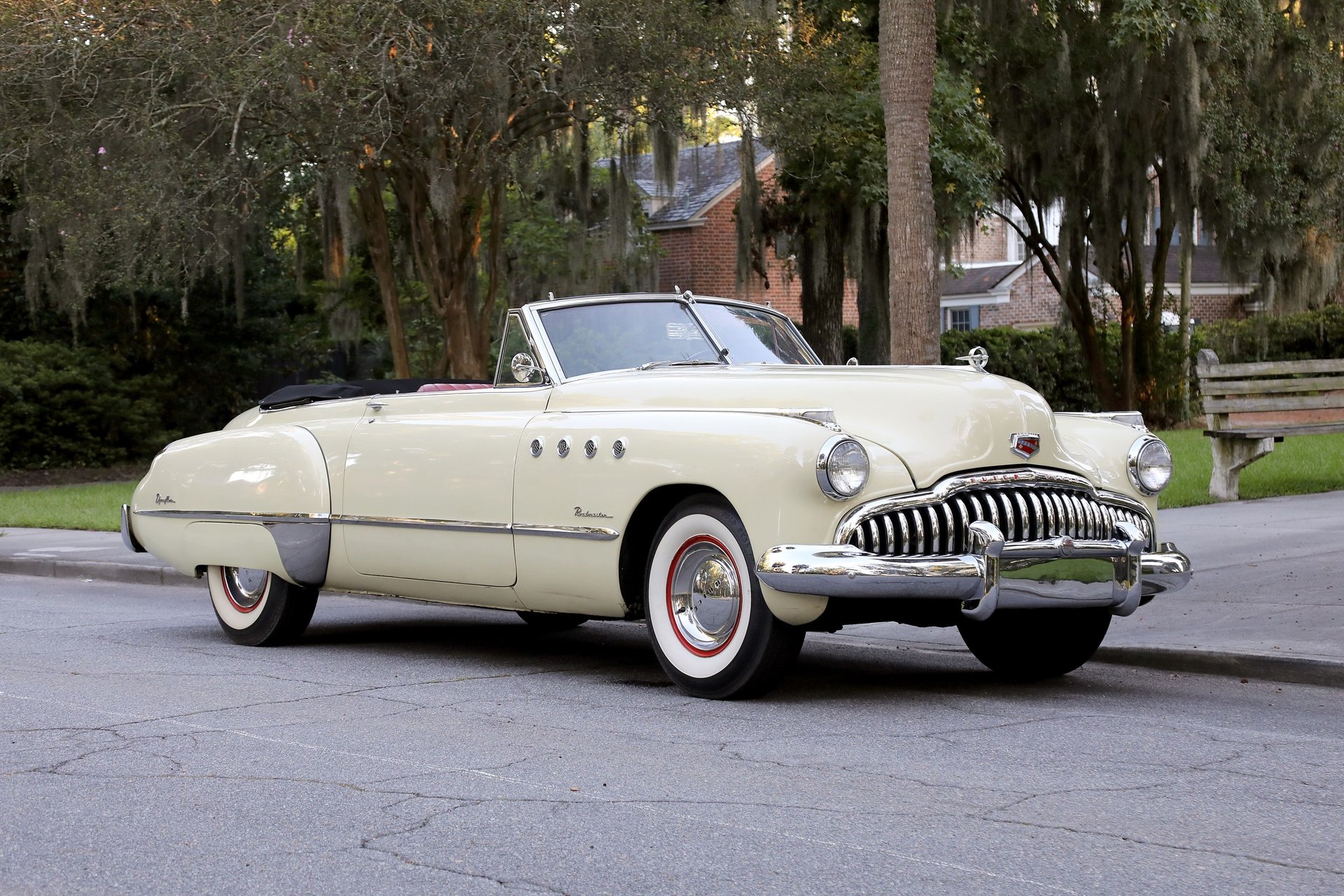
The true post-war Roadmaster arrived in 1949, on GM's new C-body, and it brought with it the two signatures most people still associate with the name. The first was the row of portholes — Buick called them VentiPorts — punched into the front wings: four per side on a Roadmaster, three on lesser Buicks, a piece of pure theatre that began as a stylist's flourish and became the marque's most recognisable detail for a decade. The second had arrived a year earlier, in 1948: Dynaflow, Buick's turbine-smooth automatic transmission, offered first on the Roadmaster alone. It had no gears to change in the conventional sense and no shift shock at all, and it defined how a big Buick was supposed to feel — one long, seamless surge. From then on, a Roadmaster was almost by definition an automatic car.
Two changes frame the 1950s cars. For 1953 Buick replaced the straight eight with a compact overhead-valve V8 — the famous Nailhead, named for its small, upright valves — in 322-cubic-inch form, launched alongside the limited-production Skylark convertible. Styling grew with the decade: longer, lower 1954 cars, a handsome 1957 facelift around a larger 364 Nailhead, and 1958 cars — sold as the Roadmaster 75 alongside the even plusher Limited — carrying more chrome than almost anything else on the road, in the year the market turned against exactly that. Sales fell, and for 1959 Buick renamed its range: the big car became the Electra, and the Roadmaster name went into a drawer.
It stayed there until 1991, when Buick revived it for a deliberate throwback: a full-size, body-on-frame, rear-wheel-drive wagon on GM's B-body platform, powered by a Chevrolet small-block V8 and trimmed to be the most luxurious wagon GM sold. The Estate came first, for 1991; a sedan joined it for 1992. These were the last of a species — rear-facing third seat, two-way tailgate, fake wood panelling (a delete option existed, and cars without it look strikingly different). For 1994 the range received the LT1 5.7-litre V8, a detuned iron-head version of the Corvette engine, and the Roadmaster quietly became one of the quickest big wagons ever sold in America. Production ended after 1996, when GM converted the Arlington, Texas B-body plant to trucks. The 1996 cars were badged Collector's Edition — a knowing farewell, because everyone involved understood this kind of car was not coming back.
Our own listings show that split personality. We currently track 34 Roadmasters, 27 for sale and 7 sold, spanning 1937 to 1996 — but they cluster at the two ends: a scatter of pre-war and 1950s cars, with 1958 the best-represented early year, and a solid block of 1991–96 cars, with 1994 the most common year of all. There is no middle. And one truth applies to every Roadmaster ever built: these were heavy, complex, well-trimmed cars that reward maintenance and punish neglect, and the difference between a delight and a liability is almost never the mileage — it is how the car has been kept for the last twenty years.

The models
Read this section as a map, not a menu. Roadmaster body styles changed almost yearly in the early years — sedans, touring sedans, coupes, convertibles, and estate wagons built in tiny numbers — and settled after the war into a predictable pattern of two- and four-door hardtops, a sedan, a convertible and, in the 1950s, an estate wagon. The revival cars are simpler: wagon first, then wagon and sedan. The table below gives the eras that matter to a buyer, with period outputs where they are genuinely documented. Production figures are given only where the record is solid; for several pre-war and early post-war variants, honest surviving figures are by body style and year in factory records rather than a single trustworthy total, so the table says so instead of inventing one.
| Model | Years | Engine | Output | Built | Character |
|---|---|---|---|---|---|
| Series 80 | 1936–1939 | 320 cu in straight eight | 120 hp, later 141 hp | By year and body style; no single reliable total | The original: formal, upright, pre-war in feel |
| Series 70, pre-war | 1940–1942 | 320 cu in straight eight | 141 hp; 165 hp with Compound Carburetion (1941–42) | By year and body style; no single reliable total | The pre-war peak — smooth, fast, collectible |
| Series 70, post-war | 1946–1948 | 320 cu in straight eight | 144 hp | By year and body style; no single reliable total | Warmed-over pre-war design; honest and simple |
| Series 70 / 72 / 76 | 1949–1952 | 320 cu in straight eight | 150 hp | By year and body style; no single reliable total | New C-body, VentiPorts, Dynaflow era begins |
| Roadmaster V8 | 1953–1956 | 322 cu in Nailhead V8 | 188 hp (1953) to 255 hp (1956) | By year and body style; no single reliable total | The Nailhead arrives; 1955–56 the sweet spot |
| Roadmaster / 75 | 1957–1958 | 364 cu in Nailhead V8 | 300 hp | By year and body style; no single reliable total | Biggest, plushest, most chrome; 1958 is love-it-or-leave-it |
| Estate Wagon | 1991 | 5.0 V8 (L03) | 170 hp | Part of about 200,000 revival cars, 1991–96 | The revival begins; the slowest of the late cars |
| Sedan and Estate | 1992–1993 | 5.7 V8 (L05) | 180 hp | Part of about 200,000 revival cars, 1991–96 | More torque, same character; the value years |
| Sedan and Estate, LT1 | 1994–1996 | 5.7 V8 (LT1) | 260 hp | Part of about 200,000 revival cars, 1991–96 | The performance pick; 1996 is Collector's Edition |
The pre-war cars (1936–42). Buy these as pre-war cars, with everything that implies: mechanical brakes gave way to hydraulics at Buick before this period, but you still get a crash gearbox experience in the earliest cars, 6-volt electrics, babbit-and-shim thinking in the engine room and a parts hunt measured in months, not days. The 1941–42 cars are the connoisseur's pre-war Roadmasters — the Compound Carburetion twin-carburettor set-up, with a small primary carburettor for cruising and a second that cut in under load, made them genuinely fast by the standards of the day and is the detail collectors pay for, which is exactly why you verify it is present and complete rather than removed decades ago and replaced with a single carburettor. Estate wagons of this era, with real wood structure, are coachbuilt rarities and a specialist subject of their own.
The immediate post-war cars (1946–48). Mechanically and visually these are 1942 cars carried forward, which is a virtue for an owner: the engineering was mature, the straight eight was fully developed, and the cars are simpler than anything that followed. Dynaflow was not yet available in 1946–47 and arrived during 1948 on the Roadmaster — a manual 1946 car and a Dynaflow 1948 car are different ownership propositions, so establish which you are looking at before you value it.
The C-body straight-eights (1949–52). The 1949 redesign looks like the Roadmaster of popular memory: rounded styling, VentiPorts, an enormous grille, Dynaflow increasingly the default. Body styles included the fastback Sedanet early in the run, the Riviera hardtop from 1949 — the Riviera name began here, as a Roadmaster hardtop — plus sedan, convertible and a rare estate wagon. These are the last straight-eights and the purest expression of the Dynaflow idea: performance is a stately surge, and judging one by modern acceleration standards misses the point.
The Nailhead cars (1953–58). The 1953 V8 transformed the car's performance and its engine bay, and the range settled into Riviera hardtops (two- and four-door), sedan, convertible and estate wagon. The 1954–56 cars are the core of the 1950s market: modern enough to use, classic enough to feel special, and supported by the strongest parts network of any early Roadmaster era. The 1957 car is arguably the best-looking of all — a one-year body with a three-piece rear window on some hardtops that collectors prize — while the 1958 Roadmaster 75 is the maximalist statement: a chromed grille of individual squares, quad headlamps, a longer options list and, optionally, an air suspension system that troubled the car then and troubles it now. Buy a 1958 because you love a 1958, not because it is the sensible choice, because it is not.
The revival cars (1991–96). One platform, two bodies, three engines. The Estate wagon is the icon — woodgrain sides, Vista Roof fixed glass panel over the second row, rear-facing third seat taking capacity to eight, and a tailgate that both drops and swings. The sedan is the same car underneath with a large trunk, softer trim and a lower profile in the market, which makes it the value buy of the late cars. Trim was generous as standard and the options that matter are the towing package (heavier cooling, revised gearing and, on LT1 cars, a mechanical fan arrangement in place of the standard electric fans — check what is actually fitted, because it changes the cooling-system conversation), the Gran Touring suspension on sedans, and limited-slip differential. A 1996 Collector's Edition badge adds sentiment, not substance; pay for condition, not for the hood ornament.


Engines and gearboxes
The Fireball straight eight: 320 cubic inches, 1936–1952
Every Roadmaster from 1936 to 1952 carries the same basic engine: a 320.2-cubic-inch (5.25-litre) overhead-valve straight eight, with a five-main-bearing crankshaft in its early form and the kind of low-speed torque that made a two-ton car feel effortless at 40 mph and unstressed at 70. Output started at 120 hp in 1936, rose to 141 hp by the end of the decade, sat at 144 hp in the immediate post-war cars and finished at 150 hp from 1949 to 1952. Those numbers undersell it. What the engine does is pull, quietly, from almost no revs, with a smoothness no V8 of the period quite matched — the long crank and even firing order see to that. A healthy one starts readily, idles at a murmur and shows no blue smoke beyond, at most, a brief puff after standing.
The overhead-valve layout matters: Buick stuck with it when much of the industry still used side-valves, so the engine breathes better and rewards correct valve adjustment — valve noise on a car sold as recently serviced is a question, not a characteristic. Oil pressure is the other gauge to learn: these are low-pressure engines by modern standards, and what you want is a stable reading that rises with revs. Sludge is the long-term enemy, accumulated on short trips with infrequent changes; the first service on any purchase should be treated as an excavation, not a formality.
The headline variant is Compound Carburetion, offered on the 1941 and 1942 cars (and shared with the Century and Special lines in smaller-engine form). Two two-barrel carburettors sit on a special manifold: the front carburettor does the everyday work, the rear one is progressive and opens as demand rises, with an accelerator-pump arrangement to cover the transition. Properly set up, it is a clever, economical, powerful system — period output was quoted at 165 hp on the Roadmaster — and a genuine performance feature. Neglected, it is two carburettors' worth of wear, linkage slop and vacuum leaks, and a car that hesitates exactly where the second carburettor should arrive. Many cars lost the set-up over the decades to a single-carburettor conversion that made them simpler and slower. Neither state is automatically right or wrong, but they are different cars at different values, and the manifold and carburettors are specific parts, not generic Strombergs off a shelf: price their absence honestly. A correct rebuild of the pair, with linkage, by a specialist who knows the system is realistically a four-figure job in the region of $900–1,800, and it transforms a car that has been running on half its intended breathing.
Single-carburettor cars use a Stromberg or Carter two-barrel depending on year, with the familiar failure modes of the era — worn throttle shafts drawing air, tired accelerator pumps, sticking automatic chokes. None of it should be accepted as "they all do that": a straight-eight that stumbles or needs choke to run warm has a fault with a name, and you find the name before you agree a price. Cooling matters on an engine this long: a gauge that climbs only in traffic points to airflow and fan, one that runs hot everywhere points to a silted radiator and block. Budget a recore in the region of $600–1,200 on any car whose cooling history is unknown.
The Nailhead V8: 322 and 364, 1953–1958
Buick's first V8 was a short, stiff, compact overhead-valve design of 322 cubic inches for the 1953 Roadmaster (the smaller 264 was reserved for the Special a year later), with its valves arranged vertically in a pent-roof head — the layout that produced the small, upright valve stems and the nickname Nailhead. It made 188 hp in its first Roadmaster form, rose through the 1954–55 cars to 236 hp, and reached 255 hp for 1956, typically with a four-barrel Carter or Rochester carburettor on the stronger versions. For 1957 the engine grew to 364 cubic inches and a round 300 hp, which it kept for 1958. Torque was the point throughout: 300 lb-ft and more, delivered low, in an engine physically smaller than the straight eight it replaced, which is why the 1953 engine bay looks half empty in photographs.
Nailheads are tough, understressed engines with two well-known habits. The first is oil leaks — rope rear-main seals and ageing gaskets weep, and an honest Nailhead is usually damp somewhere; what you are judging is degree, from damp (normal, live with it) to dripping onto the exhaust (a fire risk and a repair bill, with a full reseal an engine-out job in the region of $1,500–3,000 in labour and parts at a specialist). The second is that the design runs its camshaft high and its pushrods at angles that make correct valve-train geometry and good oil supply to the rocker shafts essential; a top-end rattle that does not fade as the engine warms is rocker-shaft wear until proven otherwise, and it is a known, priceable job rather than a death sentence. Hydraulic lifters that clatter for a few seconds from cold and then quieten are describing old oil or a lazy lifter, not a rebuild. As with the straight eight, smoke tells the truth in two colours: blue on start-up after standing points to valve guides and seals, blue under sustained load points to rings, and white that does not clear is coolant until proven otherwise — head-gasket and, on a neglected car, head or block cracking are the conversations nobody wants, so have them on the test drive, not after the wire transfer.
Carburetion is conventional four-barrel practice — Carter WCFB and later Rochester 4GC units any competent shop understands, with rebuilds in the region of $500–1,000 — but a car that has sat on modern ethanol fuel needs the whole fuel path cleaned, tank to carburettor, before tuning means anything. Ignition is points and coil throughout; a dwell meter and timing light tell you more in ten minutes than an hour of road impressions. The 1957–58 364, the strongest Nailhead fitted to a Roadmaster, should feel genuinely quick by 1950s standards: if a 364 feels no faster than a 322, suspect retarded timing, a carburettor secondary fault or a Dynaflow no longer coupling properly — none of which is a reason to pay strong-engine money for a weak-engine car.
The revival engines: L03, L05 and LT1, 1991–1996
The late cars use Chevrolet small-block V8s with throttle-body injection on the early cars and proper multi-point sequential injection on the last ones, and the three engines define the three tiers of the revival market.
The 1991 Estate's L03 is a 5.0-litre (305 cu in) unit making 170 hp. It is smooth, simple, durable and slow in a car of this weight — adequate is the honest word, and owners who tow or carry eight people notice. The L05 that followed for 1992–93 is the 5.7-litre (350 cu in) throttle-body engine at 180 hp: barely more power on paper, usefully more torque in the real world. Both throttle-body engines are long-lived if the oil was changed, and their failure modes are the wider GM fleet's: tired injector seals and fuel-pressure regulators giving rich running and poor hot starts, ignition-module faults giving intermittent cut-outs, and cooling systems that silt if the coolant was never changed. Parts are cheap and everywhere; a full ignition and fuel-system refresh is a few hundred dollars in parts, not thousands.
The LT1 cars of 1994–96 are a different proposition. The LT1 is a 5.7-litre engine with reverse-flow cooling, aluminium heads in the Corvette — but iron heads here, which is the Roadmaster's friend, because the iron-head version is less prone to the warping dramas and gives its 260 hp and 330 lb-ft with a flatter, lazier torque curve tuned for a heavy car. Fitted to a Roadmaster it makes a two-and-a-quarter-ton wagon accelerate like a period muscle car, tow properly, and cruise at modern freeway speeds without trying. It also brings two specific systems a buyer must understand. The first is the OptiSpark distributor, mounted on the front of the engine behind the water pump and driven off the camshaft: when it works, which is most of the time, ignition is precise and maintenance-free; when its optical sensor or cap deteriorates — hastened by coolant or oil reaching it, classically from a weeping water-pump seal directly above it — the symptoms are misfires under load, hard starting and sudden stalling, and the cure is a quality replacement unit fitted with the pump inspected at the same time, a combined job in the region of $700–1,400 in parts and labour. Cheap no-name OptiSpark units are a false economy the whole LT1 world will warn you about; ask which unit is fitted and when. The second is reverse-flow cooling itself, which demands correct bleeding after any cooling-system work: an air-locked LT1 overheats with a full radiator and a clear conscience, and a car with a recent water pump and a temperature problem is usually a car that was not bled, not a car with a blown head gasket — though you establish that with a test, not with optimism.
On all three revival engines, the test is the same: cold start without prolonged cranking, a steady idle that does not hunt, clean pull to freeway speed without hesitation or misfire, stable temperature, and oil that looks and smells like oil. The small-blocks will do very high mileages; what kills them in Roadmasters is almost always the car around them — cooling neglect, transmission neglect and deferred everything — not the engine itself.

Gearboxes: manual, Dynaflow and the modern automatics
Early Roadmasters were three-speed manual cars, with synchromesh on the upper gears and a column change, and a manual is what a 1936–47 Roadmaster usually is. Judge it as you would any pre-war box: second-gear synchromesh wear shows as a crunch on hurried changes, clutch judder on take-up points to oil contamination or a tired driven plate, and a noisy first gear is character while a noisy top gear is wear. Manuals survived as the standard fitment into the early 1950s, but by then almost every Roadmaster buyer paid for the automatic, and a manual 1950s car is now a rarity to verify rather than assume.
Dynaflow, introduced on the 1948 Roadmaster and progressively improved — Twin Turbine from 1953, Variable Pitch from 1955 on the stronger cars — is a torque-converter transmission that, in its original form, effectively drives in a single high range unless the driver selects Low manually. There is no shift to feel, and a buyer raised on modern automatics must recalibrate: pull-away is gentle and seamless, acceleration is a continuous swelling rather than a series of steps, and kickdown as you know it does not exist — the variable-pitch stator in later cars, controlled by the throttle, is what gives extra urge for overtaking. What Dynaflow should never do is shudder, slip with rising revs and no corresponding speed, produce dark burnt-smelling fluid, or take a long time to engage Drive or Reverse from cold. Converter and transmission faults are specialist work — a proper Dynaflow rebuild is a $2,500–4,500 conversation depending on year and parts — and the pool of people who truly know them is smaller than the pool who will take your money, so a documented rebuild by a named Buick specialist is worth a real premium and an undocumented "rebuilt transmission" claim is worth nothing until the car proves it on a long drive, hot, in traffic.
The revival cars use GM's four-speed automatic with overdrive: the hydraulically controlled 4L60 in the earliest cars and the electronically controlled 4L60-E from 1994. Judge them conventionally — red rather than brown fluid, firm shifts, clean converter lock-up at cruise, no delay engaging Drive cold. Neglected fluid kills them slowly and then suddenly; a full rebuild is in the region of $1,800–3,000 fitted, real money but known money. On the electronic box, shift faults can be sensor and wiring faults too: a car in limp mode may have a fault worth hundreds, not a dead box worth thousands — get the codes read before you negotiate, not after.
Problem areas
Everything in this section applies the same logic to both Roadmaster eras: the mechanicals are fundamentally strong, the bodies and the trim are where money goes to die, and neglect compounds. Our own photo examination makes the point in miniature. For 9 of the Roadmasters in our listings we have gone through the sellers' photo sets in detail; rust was noted in 3 of those 9 cars and visible damage in 3 of the 9. That is a small sample and we present it as one — it does not prove two-thirds of all Roadmasters are sound, because sellers photograph strengths, not weaknesses. It proves the opposite habit is the right one: on the cars we could examine closely, body condition, not mechanical reputation, was the thing that varied. Inspect accordingly.
Rust and structure: two different cars, the same discipline
On the pre-war and 1950s cars the structure is a separate chassis with a steel body on top, which changes the meaning of rust without reducing its importance. A rotten body on a sound chassis is repairable in a way a rotten monocoque is not — but the repair bill for floors, sills, lower wings, door bottoms, wheel-arch lips and trunk floor on a big 1950s Buick is large precisely because the car is large: more panels, more chrome to remove and refit, more paint. Work the car in a fixed order. Start with the floor pans and the trunk floor, lifting carpets and the trunk mat and spare wheel, because water that enters at the windshield, the cowl vents and the rear window collects there and works unseen. Move to the sills and rocker panels, pressing hard along their length and looking behind them where mud traps against the body mounts. Then the bottoms of the doors (blocked drain holes fill doors with water; bubbling along the lower edge is the outside of a problem that started inside), the lower front wings behind the wheels, the headlamp surrounds, and the rear wheel arches and the valance below the trunk. Body mounts deserve a specific look on a chassis car: perished or collapsed mounts let the body sit low and crooked, misalign doors and bonnet, and crack paint at the seams — a car whose doors have started to drop and whose panel gaps wander is often a mount and hinge story before it is a chassis story, and mounts are a body-off-ideal job that in practice runs into four figures once labour and the seized bolts of seventy years are counted.
Convertibles and hardtops add their own traps. Convertible top wells and the floor beneath them rot where water sits after every rain with the top up; hardtop cars leak at the pillarless window seals and wet their rear footwells. The 1957 three-piece rear window and the big wrap-around screens of the mid-1950s cars are expensive glass set in rubber that perishes: a screen surround showing bubbles is a screen-out repair, because the rust is under the rubber where you cannot treat it in place. Fresh underseal or fresh paint on a car with no photographic record of the work is a question, exactly as on any classic — nobody restores the underside of a sound car the month before selling it without keeping the pictures.
On the revival cars the architecture is also body-on-frame — one of the last — and the frame itself is durable; what rots is the body hung on it, in predictable B-body places. The wagon is the more vulnerable of the two. Check the rear wheel arches and the lower rear quarters behind them, the spare-wheel well and the floor under the third-row seat, the tailgate aperture and the bottom of the tailgate itself, the roof around the Vista Roof glass and along the drip rails, and the sills and floor pans under the front footwells where road salt lives. Sedans share the arch, sill and floor checks and add the trunk floor and the lower rear window surround. Cars from the salt belt need a genuinely sceptical half hour underneath; cars from the dry south-west and south — a good proportion of our listings are Florida, Georgia, Texas and Colorado cars — can be startlingly sound underneath while their interiors have cooked, which is a much better problem to have. Rust repair on a revival car is conventional panel work, in the region of $800–2,000 per side for sill and arch work done and painted properly, but the wagon's rear quarters and roof are where a cheap car stops being cheap: price the specific panel, not the idea of the panel.
A word on chrome, because on a 1950s Roadmaster it is a structural part of the budget. The 1957 and especially 1958 cars carry enormous quantities of brightwork, much of it die-cast and prone to pitting that rechroming cannot fully erase; re-plating a full set of 1958 brightwork to show standard is a five-figure undertaking, and even a driver-quality refresh runs into thousands. Count the chrome piece by piece, and never let a seller fold it into "cosmetics" — on a 1958 it can be the largest cost centre on the car.
Suspension, steering and brakes
The early cars ride on independent front suspension with coil springs and a live rear axle on coils from 1936 onward in place of the cart springs of lesser contemporaries — Buick was proud of that, and rightly — with lever-arm or telescopic dampers depending on year. Wear shows as sagging springs (measure arch heights side to side; a car sitting visibly low at one corner is telling you which spring or mount has gone), tired dampers that let the big body float and wallow a beat too long after a bump, and kingpin and bush wear that makes the steering wander and the front tyres wear on their edges. None of it is exotic, all of it is available, and a full front-end refresh with kingpins, bushes and alignment is a $1,200–2,500 job at a specialist — which is why a car that drives straight and sits level is worth more than its photographs suggest, and a car that does neither needs the money held back.
Power steering, increasingly standard through the 1950s, is by Saginaw and generally reliable; leaks from the pump and hoses and a groan at full lock on a cold morning are the usual faults, and they are cheap until the steering box itself is worn, at which point expect a rebuild in the region of $600–1,100. Brakes on the early cars are drums all round, generous in size and adequate when in perfect order, marginal when merely average: a Roadmaster is a heavy car, and a single-circuit system on the earliest post-war cars leaves no margin for a failed hose. Budget a full hydraulic overhaul — cylinders, hoses, shoes, drums skimmed or replaced — at $900–1,800 on any car whose brake history is a shrug, and treat a hard pedal, a pulling stop or a pedal that sinks at a standstill as stop-and-fix faults, not test-drive footnotes. Disc conversions exist and divide opinion; a converted car is not worth less as a driver, but the conversion must be documented and properly engineered, proportioning valve and all.
The 1958 optional air suspension was troublesome when new — leaks, compressor faults, a car sitting down on one corner overnight — and many cars were converted back to coil springs, which is the pragmatic answer. If a car still rides on air, establish that it rises, levels and holds overnight, and accept a thin support network; if converted, judge the work by its stance.
The revival cars use conventional B-body hardware: double-wishbone front suspension, a live rear axle on coils (with load-levelling air assistance on many wagons), front disc and rear drum brakes, and light, remote recirculating-ball steering that is a characteristic, not a fault. Wear items are cheap and shared with a vast fleet, and a sloppy front end is usually an idler arm and alignment away from right. The wagon load-levelling fails at the rear air shocks and compressor, leaving the car tail-down under load; replacement air shocks or a conversion to heavy-duty springs both work, in the region of $400–900 fitted. Brakes are adequate rather than generous on LT1 cars, whose performance can outrun their stopping power on a long descent, so fresh fluid, quality pads and honest discs are not optional. A lit anti-lock warning lamp usually means a sensor fault — hundreds, not thousands — but it is a fault to price, not to wave through.
Interiors, electrics and the equipment that sells the car
Roadmasters sold on equipment: power windows, power seats, power tops on convertibles, heaters and radios that were options elsewhere, air conditioning from the mid-1950s onward and increasingly elaborate instrumentation. Every one of those systems is now seventy years old or, on the revival cars, thirty years old, and the rule is identical in both eras — test everything, twice, because the bill for "a few electrical niggles" on a flagship is never a few.
On the early cars, the 6-volt systems of the pre-war and earliest post-war years (Buick moved to 12 volts for 1953) start reluctantly when connections corrode; slow cranking with clean, heavy cables and a good battery is normal, slow cranking with thin modern cables is a fault somebody created. Period wiring insulation crumbles, so a documented rewire is worth a premium. Power windows and seats are hydraulic on the earliest post-war cars, and hydraulic systems leak into doors and sills — a sticky window on a late-1940s car is a system overhaul conversation, not a switch. Heater cores leak into footwells and masquerade as rain leaks (sweet smell, misting screen, damp passenger carpet), and the core is a dashboard-deep job, $800–1,500 in labour-heavy money. Mid-1950s air conditioning is a large Frigidaire system few sellers will demonstrate working; assume $1,200–2,500 to convert, seal and charge a complete one.
Interiors are the second great cost centre: a full retrim of a 1950s sedan in correct materials is a $6,000–12,000 undertaking, and a convertible's interior plus top is more. Headlinings sag, seat springs tire, door cards warp where the door held water. Judge the interior as a single written number before you fall for the paint.
On the revival cars the interior story is different: hard-wearing velour and leather, vast amounts of plastic that ages better than its reputation, and two specific weak points. The first is sun and heat damage on southern cars — cracked dash tops, split seat seams, faded and brittle door trim — which is cosmetic but pervasive, and a full interior refresh in used and reproduction parts is a patience game in the hundreds-to-low-thousands. The second is the wagon's working gear: the tailgate's two-way hinges and latches, the rear window wiper and washer, the power window in the tailgate on some configurations, the third-row seat mechanism and the Vista Roof's interior shade. Test the tailgate in both modes, opening and closing, because hinge and latch wear is the difference between a wagon you use daily and a wagon you curse weekly. Electrically, the late cars suffer the period GM catalogue: power window regulators and motors (budget $250–450 per door fitted), climate-control head units and blend-door actuators that leave you with heat in July, and instrument clusters with failing solder joints. None of it is fatal; all of it belongs in the negotiation, itemised.


Cooling, fuel and the standing-car syndrome
Both eras share one final problem area, and it accounts for more disappointing purchases than any single component: these are cars that sit. Fuel, coolant, brake fluid and rubber age by the calendar while the odometer barely moves, and modern ethanol fuel perishes old lines and leaves varnish in tanks and float bowls over a single winter. A car that "ran fine when parked" needs the tank inspected, lines replaced with ethanol-rated hose, the carburettor or throttle body cleaned and the filter changed before any tuning verdict means anything — a few hundred dollars in parts, and the best money a new owner spends. Standing also flattens tyres, seizes brake cylinders and rots exhausts from inside: a full exhaust for a 1950s car runs in the region of $700–1,400 fitted. None of this is a reason not to buy a standing car — it is a reason to buy it at a standing-car price, with the recommissioning costed in writing before you shake hands.
How to inspect one
Allow two hours for an early car and ninety minutes for a revival car, and bring a torch, a magnet wrapped in cloth, a tyre pressure gauge, a notebook and — for a late car — a code reader if you have one. Insist on seeing the car cold, outdoors, in daylight. A Roadmaster is a big car that hides its faults in its size: the inspection below is ordered so that the walk-away questions come first and the haggling questions come last.
- Start with identity and paperwork. Match the title to the serial plate — on early cars the plate locations move by year, so know where yours should be before you arrive — and read the Fisher Body plate on the cowl of a post-war car for the original trim and paint codes: a car whose codes contradict its colours has been restored or repainted, which is fine, but it should be priced as what it is. On revival cars, decode the VIN and the service-parts label for the engine code — L03, L05 or LT1 — because the badge does not tell you and sellers genuinely confuse the L05 and LT1 years; a 1993 car cannot be an LT1, whatever the listing says. A thick history file, with transmission and cooling work documented, is worth real money on either era.
- Cold start, bonnet up, listen first. The straight eight should settle to a near-silent idle; the Nailhead to a soft, even burble; the small-blocks to a clean, hunting-free idle. Note cranking speed on a 6-volt car, smoke colour and how long it lasts, any top-end rattle and whether it fades, and — on an LT1 — any misfire or stumble in the first minute, which is the OptiSpark conversation from the engines section starting early. Leave the engine running for the rest of the inspection and watch the temperature gauge's whole story.
- Underneath before underneath is warm. Torch along the sills, floor pans, body mounts and, on a wagon, the rear quarters, spare-wheel well and floor under the third seat. Prod suspect metal with a screwdriver, with the seller's permission. Perforation in floors, sills or around body mounts is structural money, priced from the problem-areas section, and fresh underseal over everything is a question, not an answer. If the car otherwise stacks up, pay for a lift inspection before money moves — on a car this size it is the best money in the whole purchase.
- Body and chrome, panel by panel. Run the magnet over sills, arch lips, lower wings and door bottoms. Check door bottoms with a fingertip for bubbling, open every door and note whether it drops on its hinges, and on a 1950s car count the pitted chrome pieces and write the number down — that number is a budget line, not an impression. On a wagon, check the woodgrain panels for lifting, cracking and mismatched replacement sections, and remember that a woodgrain-delete car is original too, not a car with its wood removed.
- Trunk, tailgate and water paths. Lift the trunk mat and the spare wheel on a sedan; on a wagon, fold the third seat, lift the floor and work the tailgate in both modes — down as a gate, swung as a door — and test its window and wiper. Look for water staining, rust in the well corners and a damp smell, then trace upward: rear window seal on an early car, Vista Roof surround and drip rails on a wagon. Water in the back of a Roadmaster has always come from above, and the seal is cheaper than the floor it destroys.
- Interior and equipment, everything twice. Sit in every seat, including the wagon's third row, and feel for tired springs and collapsed foam. Then work every powered item twice — windows, seats, top on a convertible, locks, aerial — plus heater and blower on every speed, wipers and washers, every light and the horn. On an early car with hydraulic windows, watch for slow operation and fluid evidence in the doors. On a late car, cycle the climate control from full cold to full hot and listen for blend-door complaints. Write down every failure; the list is your negotiation, priced from the problem-areas section.
- Fluids and the engine bay, honestly read. Engine oil: level, colour, smell. Transmission fluid on the automatics: red and sweet is healthy, brown and burnt is a rebuild being announced — on a Dynaflow car this check matters more than any other single dipstick. Coolant: rusty water in a car sold as maintained is a lie detector. Look for the standing-car syndrome — perished hoses, cracked belts, a battery of unknown age, fuel lines that are not ethanol-rated on an early car — and price the recommissioning as one sum.
- Steering and suspension at a standstill. Rock the steering wheel and watch for lost motion before the road wheels answer. Push each corner down hard and release: one clean return and a settle is right; continued bouncing is dampers. Measure or eyeball arch heights side to side for the sag described in the problem areas. On a 1958 car on air suspension, walk away and come back in twenty minutes to see whether it has sat down — and if it has, price the car as a conversion project.
- The test drive: long, varied, hot. Fifteen miles minimum, including a freeway stretch, a rough road and a spell in traffic. A Dynaflow car should surge seamlessly with no shudder or slip; a 4L60-E car should shift cleanly and lock its converter without a shudder at cruise. A straight eight should pull from low revs without pinking under load; a Nailhead should feel torquey everywhere; an LT1 should feel unmistakably strong — a flat LT1 is a fault, not a personality. Note steering wander, brake pull and any vibration that arrives at a specific speed and leaves at another, which is wheels and tyres before it is anything grander.
- Brakes, properly tested. From freeway speed, brake firmly in a straight line, hands light on the wheel: the car should stop straight, without judder, pull or a pedal that changes its mind. Repeat once. On a drum-braked early car, judge stopping power against period standards but judge straightness and pedal feel against absolute ones — a heavy car that pulls under braking is a car with a hydraulic fault, and the full overhaul cost from the problem-areas section goes into the offer. Check the handbrake holds on a slope.
- Heat soak and hot restart. After the drive, idle for ten minutes in the sun. Watch the temperature, listen for fans on a late car — and on an LT1 towing-package car, know which fan arrangement it should have before you judge what it does — then switch off, wait five minutes and restart. Hard hot starting points to fuel vaporisation or a tired starter on an early car, and to fuel-pressure and ignition-module faults on a throttle-body late car. An engine that restarts cleanly, hot, after a long drive has passed the test most old flagship Buicks fail.
- Price the car you actually inspected. Sit down with your lists — rust, chrome, interior, equipment failures, recommissioning — and total them in writing against the asking figure. On an early car the order of the sums is body, chrome, interior, mechanics. On a late car it is body, transmission and cooling history, equipment, cosmetics. If the total only works at a lower price, say so with the list in your hand. Roadmasters reward buyers who negotiate from evidence and punish buyers who negotiate from enthusiasm, because enthusiasm is what the car was designed to produce.
Values
The market content beneath this guide — the cars listed now and the recorded sales — carries every current number, refreshed at each build, and this section deliberately carries none. What follows is how to read those numbers like someone who has bought one of these cars before, because with Roadmasters the spread within a single model year is wider than the spread between model years, and a buyer who shops by year alone will misprice almost every car they look at.
Start with the two markets, because they behave differently. The early cars trade in the classic market: values move slowly, exceptional cars — a correct 1941 with its Compound Carburetion intact, a 1949 Riviera hardtop in superb order, a 1957 hardtop with the right colours — attract a following that pays for originality and documentation, while ordinary sedans in ordinary condition are soft, because supply of projects and tired cars is steady and the cost of making one superb exceeds what superb ones fetch. The revival cars trade in the modern-classic and enthusiast-driver market: values are driven by usability, the wagon is the centre of gravity, LT1 cars carry a clear premium over the throttle-body years for the simple reason that they are much faster, and the sedan sits at a discount to an equivalent wagon that has more to do with fashion than with merit — underneath, it is the same car, which is precisely why it is the thinking buyer's route in.
Condition drives everything, and on a Roadmaster condition has a specific meaning: body first, then interior and chrome on an early car, then mechanical documentation. A cheap early Roadmaster is almost never cheap for long, because the expensive systems — bodywork, brightwork, trim — are the ones that deteriorate visibly and cost most to restore, while the engines, the part buyers worry about, are the toughest components on the car. The project-versus-driver gap is therefore at its widest on the 1950s cars: a running, presentable driver is worth a large multiple of a non-running project in the same specification, and the gap is honest, because it approximates the cost of the journey between the two states, which the buyer of the project will pay anyway, with interest, in time. On the revival cars the gap is narrower but the logic is the same: a documented, maintained LT1 wagon with a sound body is a car you can use the day you buy it, and that readiness is what the premium buys; a neglected example at a tempting figure is a transmission, a cooling system and a set of window regulators away from costing the same.
Asking prices and achieved prices part company in predictable places. Sellers of early cars price from the best car they have seen advertised; buyers pay for the car in front of them, and long-listed cars at ambitious figures are usually telling you the market has already voted. Auction results, where a model has them, are the cleanest evidence of the achieved level for driver-quality cars, and they typically sit below the asking medians for exactly that reason. On the late cars, low mileage is the most overpriced attribute in the market: a very-low-mileage car that has sat for a decade needs the same recommissioning as a higher-mileage car that has been driven and serviced, and the driven car usually drives better. Pay for maintenance records and recent use; treat mileage as a tie-breaker, not a headline.
Premiums that are real: correct and complete Compound Carburetion on a 1941–42; a documented Dynaflow rebuild by a named specialist; original, unrestored interiors in good order on any early car; the towing package and limited-slip on a revival wagon that will actually tow; and a 1996 Collector's Edition premium that exists but is modest — pay it only on a car that is already right. Premiums that are not real: fresh paint over unphotographed metal, a rebuilt anything without an invoice, and rarity claims for body styles whose rarity comes from nobody having wanted them when new. Negotiate from your inspection list, in writing, item by item. Roadmaster sellers respond to evidence, because most of them have their own list, and they know what is on it.
Parts and ownership
Roadmaster ownership divides cleanly by era, and the dividing line is not age — it is whether the wider GM world shares your car's parts. The revival cars sit at the easy end of classic ownership: the B-body platform was built in the millions, the small-block Chevrolet engines are among the best-supported power units on earth, and mechanical parts — suspension, brakes, steering, transmission internals, cooling, ignition — are available new, off the shelf, at ordinary prices, often the same week. Body and trim are the constraint: wagon-specific panels, tailgate hardware, Vista Roof seals, woodgrain appliqué and interior plastics are increasingly a used-parts and specialist-reproduction game, and the correct approach is to buy the straightest body you can find and treat its panels as assets. Clubs and forums for the B-body are active and knowledgeable, and an LT1 Roadmaster can be maintained by any competent GM independent — ownership costs, once a car is sorted, are close to those of a modern car of similar size, with fuel consumption in the mid-teens around town and around twenty on a freeway run as the standing reminder that it is a large V8 wagon from another century.
The early cars demand more of an owner and give more back. The support structure is the Buick Club of America and the wider pre-war and 1950s Buick community, plus a specialist trade that reproduces far more than outsiders expect: engine internals for the straight eight and the Nailhead, Dynaflow overhaul parts, brake and suspension components, rubber seals and weatherstripping, and a growing list of trim reproductions. What is not reproduced is where the money is — die-cast chrome, year-specific grilles and ornaments, correct interior materials in the right patterns, and glass for the one-year bodies — so the ownership rule for an early Roadmaster is the same as the buying rule: acquire completeness, because a missing piece of 1958 brightwork can take a year to find at any price. Mechanical work needs a shop that knows the period; Dynaflow in particular should only be entrusted to a demonstrable specialist, and the community will name the same handful of people, which is its own quality control.
Running an early car also means running its calendar, not its odometer: annual brake-fluid and coolant attention, oil changes by time as much as by miles, grease points attended to on schedule, carburettor and fuel system kept fresh with regular use, and a trickle charger and a dry building doing more for the car's value than any product you can buy. Budget honestly for the first year — catching up deferred maintenance on a running early car, with brakes, cooling, fuel system and a full service done properly, is a four-figure commitment before any improvement begins, and recommissioning a long-standing car costs more again; the revival cars ask less, but the same first-year logic applies at a lower level. Insurance through a classic policy, agreed value, is cheap for both eras relative to the cars' size and presence. In return, both eras give you the thing modern cars no longer sell: sheer, quiet, spacious presence, and a driving experience built around torque and calm. Owners do not keep Roadmasters despite their size. They keep them because of it.
Which one to buy
- The all-rounder: a 1955 or 1956 Roadmaster. Nailhead power, the best parts support of any early era, styling that has aged beautifully and a driving experience modern enough to use and old enough to feel special. A Riviera hardtop if you want the looks, a sedan if you want the value.
- The pre-war pick: a 1941 with Compound Carburetion. The fastest, most developed pre-war car, with the twin-carburettor system verified present and working. Buy it as a pre-war car, with pre-war running costs and pre-war pleasures, both of which are real.
- The statement: a 1957 hardtop, or a 1958 if your heart insists. The 1957 is the better car and the better buy; the 1958 Roadmaster 75 is the bigger spectacle and the bigger bills, chrome first among them. Choose with your eyes open and your trim budget written down.
- The daily classic: a 1994–96 Estate wagon. LT1 power, modern manners, eight seats, a tow rating that embarrasses modern crossovers and parts from any GM counter. The most usable Roadmaster ever built, and the one most buyers asking this question actually want.
- The value buy: a 1992–93 sedan. The same B-body virtues as the wagon with the stronger L05 engine, at the discount the sedan body always carries. If you do not need the load bay, this is the most Roadmaster per unit of money in the whole guide.
- The project to avoid at any price: a rusty 1958 convertible with tired chrome. The single most expensive combination of body, trim and top work in the range. Projects should be chosen where the restoration arithmetic can work, and on that car, for almost everyone, it cannot.
And the rule that overrides all of the above: buy the most complete, least rusty Roadmaster you can find, in the era you actually want — and never let a car from the other era, however cheap, talk you out of it. Engines, gearboxes, brakes and electrics are all fixable at prices you can plan for, in both lives of this name. A rotten body, a missing set of one-year chrome, or a car bought as a substitute for the one you wanted are the three purchases that stay expensive forever.