
Buick Riviera Coupe 2D buyer's guide
Buick Riviera Coupe 2D -- the model's own buyer's guide: variants, values and what to check.
Years listed: 1963-1995 · Series: Riviera
Overview and history
The Buick Riviera is not one car. It is a name Buick kept for thirty-six years, across eight generations, two drive layouts and three different ideas of what a personal luxury coupe should be — and the first job of this guide is to stop you buying the wrong one by badge alone. A 1965 Riviera and a 1995 Riviera share a nameplate, a division and almost nothing else: different structure, different engines, different faults, different parts trade, different buyer. Read this guide as a map of the whole run, then narrow hard onto the generation you actually want before you start judging individual cars.
The name began as a trim word — Buick used Riviera for hardtop bodies from 1949 onward. What changed everything was the car launched for 1963: a standalone personal coupe, styled under Bill Mitchell, with knife-edged fenders, a formal grille, frameless door glass and a cabin trimmed like a European grand tourer built in Michigan. General Motors had originally offered the project — internally the XP-715 — to Cadillac, which declined it; Buick took it, and got the defining American personal coupe of the 1960s. The 1963 Riviera was rear-wheel drive, V8-powered and deliberately restrained: no fins, no excess chrome, no convertible. It sold on proportion.
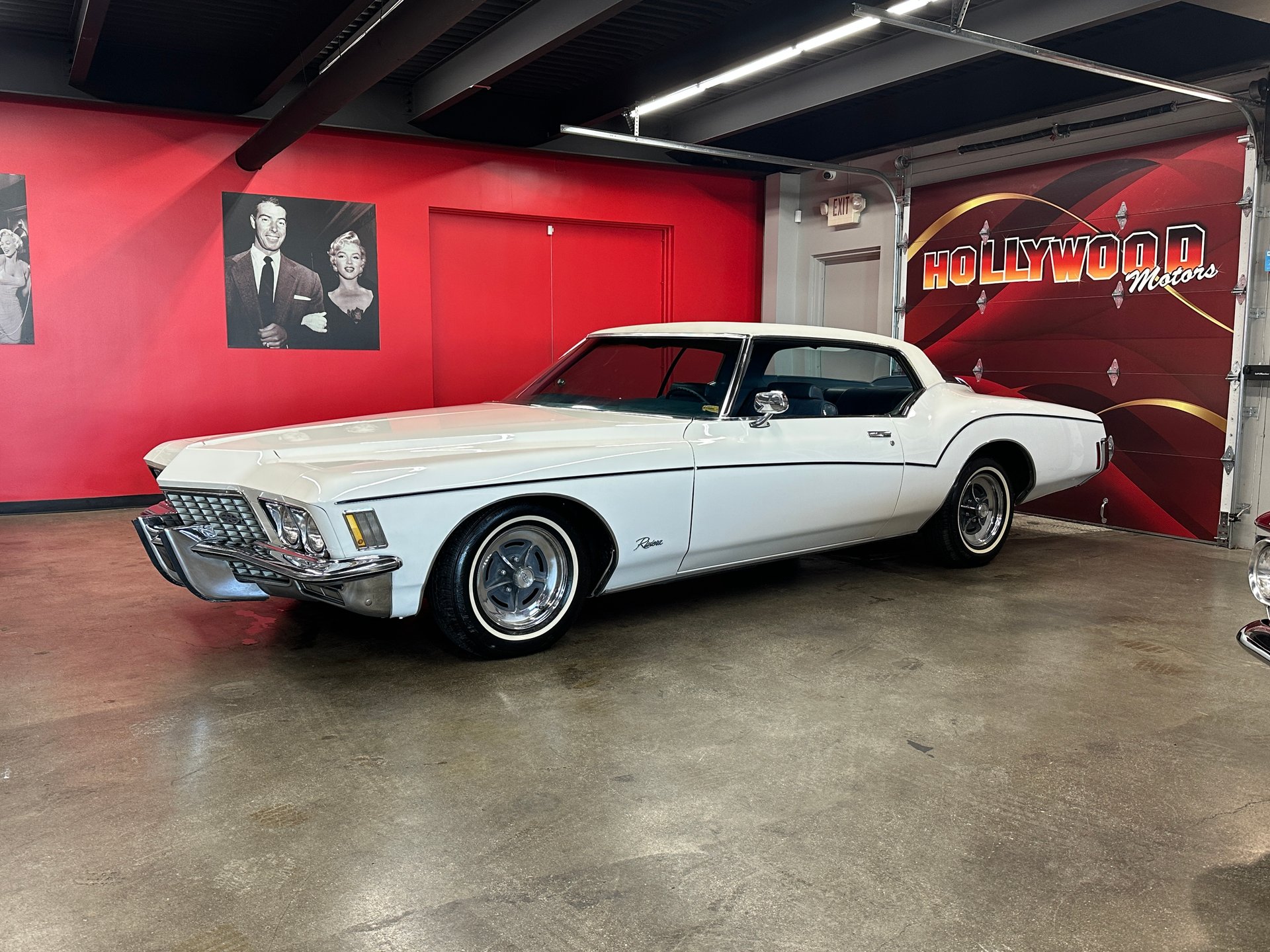
That first generation, 1963 to 1965, is the collector core of the name. The second generation, 1966 to 1970, went larger and curvier, shared its E-body architecture with the front-wheel-drive Oldsmobile Toronado and Cadillac Eldorado while keeping rear-wheel drive for itself, and grew the GS into a genuine big-block coupe. The third generation, 1971 to 1973, is the famous boat-tail: designer Jerry Hirshberg, working under Mitchell, drew a tapered, Sting Ray-inspired rear that still divides opinion and still turns heads at fifty paces. After that the 1970s did to the Riviera what they did to every big American coupe — the 1974 to 1976 cars kept the size and lost the edge, and the 1977 to 1978 cars were downsized onto the rear-wheel-drive B-body.
The second life began in 1979, when the Riviera moved to front-wheel drive on the revised E-body it again shared with the Toronado and Eldorado. This sixth generation, 1979 to 1985, matters more than snobs allow: it brought the turbocharged V6 S-Type and T-Type cars, an available convertible for 1982 to 1985 — the first factory Buick convertible since the 1970s — and sales the early cars never approached. The seventh generation, 1986 to 1993, shrank again, went all-V6, and experimented with a touchscreen Graphic Control Center that was science fiction in 1986 and is a repair question today. The eighth and last generation, 1995 to 1999 after a one-year pause in 1994, rounded the car off into a smooth, supercharged front-drive coupe that was quietly one of the best long-distance cars General Motors built in the 1990s. Production ended in 1999, and the name has not returned.
Our own listings show you the shape of the surviving market. We currently track 104 Rivieras in the Classic Listings store, 77 of them for sale and 27 recorded sold, spanning 1963 to 1998 — and the year distribution tells the story at a glance: the 1963 and 1964 cars are the single biggest cluster, the 1966 to 1973 big-block cars form the next band, and the 1983 to 1985 front-drive cars are surprisingly strong, because they were built in numbers and kept as second cars. The middle 1970s and the 1986 to 1993 cars are the thin years in the listings — a survival pattern, not a production one. The tracked cars cluster in Pennsylvania, Ohio, Michigan, Florida and Minnesota: Great Lakes and Northeast cars, which is why the rust sections of this guide are written the way they are.
Hold one principle through everything that follows. With a Riviera, generation is destiny: parts support, rust behaviour, engine character and resale audience all change completely at each generation break, and a technique learned on a Nailhead car tells you nothing useful about a supercharged 3800 car. Buy the generation, then buy the individual car — in that order.


The models
Because this is a model guide rather than a single-series guide, the table below is organised by generation — that is the Riviera equivalent of a model line, and it is the level at which engines, gearboxes, faults and values actually separate. Outputs are period factory ratings: gross figures for the 1960s cars, net figures from 1972 onward, which is why the numbers fall off a cliff on paper in 1972 without the cars getting anything like as much slower as the table suggests. Production is given only where the figure is genuinely established; a dash means judge the car, not a number nobody can stand over.
| Model | Years | Engine | Output | Built | Character |
|---|---|---|---|---|---|
| First generation | 1963–1965 | 401 / 425 Nailhead V8 | 325 / 340 hp, 360 hp dual-quad | 112,244 | The design icon; sharp, formal, collector core |
| Second generation | 1966–1970 | 425 / 430 / 455 V8 | 340–370 hp | — | Coke-bottle fastback; GS is a real big-block coupe |
| Third generation (boat-tail) | 1971–1973 | 455 V8 | 315 hp gross, then 250–260 hp net | about 101,600 | The styling statement; huge, dramatic, divisive |
| Fourth generation | 1974–1976 | 455 V8 | 205–245 hp net | — | Colonnade-era comfort barge; cheapest big Riviera |
| Fifth generation | 1977–1978 | 350 Buick / 403 Olds V8 | 155–185 hp net | — | Downsized, honest, largely overlooked |
| Sixth generation | 1979–1985 | 231 turbo V6 / 307 / 350 V8 | 125–185 hp net | — | Front drive arrives; T-Type turbo and convertible |
| Seventh generation | 1986–1993 | 3800 V6 | 150–170 hp net | — | Small, neat, touchscreen era; Reatta's bigger sister |
| Eighth generation | 1995–1999 | 3800 V6 / supercharged 3800 | 205 / 240 hp net | — | The quiet grand tourer; supercharged car is the pick |
The first generation (1963–65). Every car is a two-door hardtop coupe on a shortened, cruciform-braced version of Buick's full-size frame, wheelbase 117 inches. The standard engine is the 401-cubic-inch Nailhead; the 425 was optional and is the one enthusiasts hunt. For 1965 Buick offered the Gran Sport package — note the spelling, Gran not Grand — bringing the 425, a dual-exhaust system, a stiffer suspension, faster steering and, on the desirable cars, the dual four-barrel Super Wildcat version of the 425 rated at 360 hp. The 1965 car is also the styling pick of the three years, because its headlamps hide behind clamshell doors at the fender edges instead of sitting exposed in the grille as on 1963 and 1964 cars. Identity matters enormously here and is covered in the inspection: a cloned GS is worth standard-car money, whatever the badges say.
The second generation (1966–70). Longer, wider and curvier, with a fastback roofline, hidden headlamps as standard and ventless side glass from 1968. The GS returned as the GS 455 by 1970, and the Stage 1 engine option that made Buick famous in the GSX muscle car also reached the Riviera — a 1970 GS with a genuine Stage 1 455 is a serious, scarce car. The 1966 car still uses the 425 Nailhead; 1967 brought the new-generation 430, and 1970 the 455. These are the best-driving of the big Rivieras: still agile enough to enjoy, with torque the first-generation cars cannot match.
The boat-tail (1971–73). The third generation grew again — wheelbase 122 inches — and wrapped it in the most argued-about rear end in Buick history: a tapering boat-tail deck inspired by the split-window Sting Ray, with a large, steeply raked rear window. Every car has the 455; the GS package continued with handling equipment and, for 1973, the Stage 1 engine. Max Trac traction control was a period option — fascinating, rare, and a diagnostic cul-de-sac today. Buy these cars on body condition above all: the styling panels are the value, and several are effectively irreplaceable.
The middle years (1974–78). The 1974 car kept the size, gained the federally mandated bumpers and lost the boat-tail to a conventional notchback with an opera-window Landau roof option; an Air Cushion Restraint System — early airbags — was a rare option worth knowing about mainly so you recognise it. The 1977 downsizing put the Riviera on the B-body platform under a squarer, lighter shell, with the Buick 350 or Oldsmobile 403 up front. Neither sub-generation has a performance variant worth the name, and both are bought as cruisers — priced as cruisers, not as collectibles, they make real sense.
The front-drive generations (1979–99). The 1979 car was a revolution Buick buyers accepted instantly: front-wheel drive, four-wheel independent suspension, four-wheel disc brakes and a turbocharged 3.8-litre V6 in the S-Type, renamed T-Type for 1983. The convertible of 1982 to 1985, converted by ASC from coupes, is the rarity of the generation — built in very low annual numbers, so verify any convertible's paperwork carefully. The 1986 car shrank to a 108-inch wheelbase, standardised the 3800 V6 and offered the touchscreen Graphic Control Center on 1986 to 1989 cars; the 1990 facelift dropped the touchscreen. After a gap year in 1994, the final car arrived for 1995: longer, rounder, and offered with the supercharged 3800 that became standard on later cars. A well-kept supercharged 1995 to 1999 Riviera is the most usable car in this entire guide.

Engines and gearboxes
The Nailhead: 401 and 425 (1963–1966)
The engine that launched the Riviera is the most characterful Buick ever fitted to it, and the easiest to identify: the Nailhead carries its valve covers upright, bolted vertically like the lids of two shoeboxes, because the valves themselves stand near-vertical in the head — small valves, arranged in a row, which is where the name comes from. The distributor sits at the back of the engine, the spark plug leads dive through the covers, and the whole engine sits noticeably high and narrow in the bay. The 401 displaces 401 cubic inches and was rated at 325 hp; the 425 — actually a bored 401 — made 340 hp with a single four-barrel Rochester or Carter carburettor, and 360 hp in Super Wildcat form with two four-barrels on an aluminium intake manifold. Both make their torque low and in quantity: around 445 lb-ft for the 401 and 465 lb-ft for the 425. These are not revving engines. They pull from idle, go quiet and strong in the midrange, and are done by about 5,000 rpm — exactly right for the car.
Judge a Nailhead on oil pressure, temperature behaviour and noise, in that order. The oiling system is the known weakness: the oil pump lives in the front timing cover, driven off the camshaft, and as the cover and pump gears wear, hot idle oil pressure falls. A gauge that sits worryingly low at a hot idle but recovers cleanly with revs is describing pump and cover wear, not necessarily a worn bottom end — but the two are priced very differently, so a mechanical gauge test on a warm engine is money well spent before purchase. Rocker gear is the other wear point: the Nailhead uses shaft-mounted rockers, the shafts wear, and a top-end clatter that does not fade as the engine warms is usually rocker shaft and rocker wear rather than lifters. Budget roughly $600–1,200 in parts and machine work to put a tired rocker assembly right, against several thousand for a full rebuild. Full Nailhead rebuilds, done properly with the scarce correct pistons and a rebuilt oil pump and cover, run roughly $5,000–8,000 at a specialist who knows the engine — the specialism matters, because Nailhead clearances, the odd valve geometry and the rear-main rope seal all punish a generalist who treats it like a small-block Chevrolet.
Carburetion splits the faults neatly. Single-carburettor cars use a Rochester 4GC or Carter AFB depending on year and engine; both are well understood and rebuildable for roughly $400–700. The dual-quad Super Wildcat setup runs on the rear carburettor alone at cruise through a progressive linkage — flat spots and bogging are linkage and secondary adjustment nine times in ten, not two worn-out carburettors. Heat soak is the daily reality on all of them: modern ethanol fuel boils sooner than the fuel these cars were tuned on, and a car that restarts badly when hot but perfectly when cold is showing fuel percolation. An electric helper pump and an insulated carburettor spacer are the accepted owner fixes, not bodges — do not mark a car down for having them.
The big-block Buicks: 430 and 455 (1967–1976)
For 1967 Buick replaced the Nailhead with a wholly new big-block: wider, lighter for its size, with conventional angled valves, big ports and a reputation for torque that the 455 version turned into legend. The 430 (1967 to 1969) was rated at 360 hp; the 455 (1970 to 1976) at 370 hp gross in 1970, then falling net ratings through the emissions years to 205 hp by 1975 and 1976 — the same basic engine strangled by compression, cam timing and calibration, not a different engine. The Stage 1 package, available on the GS, added a hotter camshaft, larger valves, stronger valve springs and revised carburetion and ignition calibration; on the 1970 455 it is the specification that made Buick's muscle reputation, and on a Riviera it transforms a cruiser into a genuinely quick car. Verify it exactly as the inspection section describes: Stage 1 identity lives in stampings and component numbers, not in air-cleaner decals, which are sold by the sheet.
The big-block's defining weakness is again the oiling system, and it is more serious than the Nailhead's. The oil pump is in the aluminium timing cover: the pump gear pocket wears, the cover warps, and hot idle pressure suffers. The accepted fixes are a booster plate, a carefully set-up pump with correct end clearance, and on tired engines a replacement cover; a full timing-cover and pump job runs roughly $700–1,400 in parts and labour. The water pump and timing cover also corrode together in cars run on plain water, so a weeping, crusty front cover on a car with an overheating story is a cover replacement, not a water pump swap. Listen for piston slap when cold on high-mileage 455s — it fades as the engine warms, and while a slapping engine can run for years, it confirms the bore wear a rebuild quote will find. A quality 455 rebuild runs roughly $4,500–7,500, another reason a documented engine is worth a premium over a claimed one.
Carburetion is a Rochester Quadrajet on most cars, and the Quadrajet's reputation problems are almost all age problems: worn throttle-shaft bores leaking air, a warped air horn, and choke pull-offs that have perished. A Quadrajet rebuilt by a specialist who rebushes the shafts — roughly $450–750 — is a superb carburettor; one sprayed with cleaner and fitted with a gasket kit is not. From 1971 the engines were built for unleaded fuel with hardened exhaust seats, and compression fell year by year; 1970 is the high-compression peak and the engine collectors chase, so a 1970 GS commands its premium honestly — provided the engine in the car is the engine the premium is for.
The smaller V8s that fill out the 1970s — the Buick 350 in 1977 and 1978 base cars and the Oldsmobile-built 403 and later 307 — are simpler stories. The Buick 350 shares the family's front-cover oiling layout and its cautions. The Oldsmobile engines, identified by the oil filler tube standing at the front of the engine, are tough, lazy motors whose main enemies are neglect and vacuum leaks in a mile of emissions hose. None justifies a premium; all run for a very long time if the oil has been changed.
The V6 era: turbo 231, the 3800, and the supercharged finale (1979–1999)
The front-drive Rivieras are V6 cars, and the V6 in question — Buick's 3.8 litre, later badged 3800 — is one of the great long-life American engines, with three distinct chapters a buyer must separate. The first is the carburetted and early fuel-injected 231 used from 1979, including the turbocharged version in the S-Type and T-Type: a draw-through Rochester Quadrajet feeding a turbocharger, with no intercooler and period knock control. Turbo cars make their power with boost you can feel arrive; they are also the most tune-sensitive engines in this guide. Detonation under boost is the killer, the knock sensor and electronic spark control must work, and a turbo car that pings under load is an engine spending its head gaskets. Turbocharger rebuilds run roughly $800–1,500; a correct, documented turbo car is scarce precisely because so many were run on cheap fuel with dead knock control.
The second chapter is the 3800 of 1986 onward: fuel injection, balance-shaft smoothness, and a bottom end that routinely outlasts the car. Its signature fault belongs to the Series II version from 1995: the upper intake manifold is plastic, the exhaust-gas recirculation stove pipe passes through it, and heat degrades the plastic until coolant leaks internally — an engine that loses coolant with no puddle is reciting the script. The fix is a revised manifold and improved lower gaskets, roughly $600–1,100 fitted; on any 1995 to 1999 car, ask directly whether it has been done. The third chapter is the supercharged Series II: an Eaton roots-type blower, 240 hp, and a supercharger whose internal coupler wears and rattles at idle — a marbles-in-a-can noise that sounds terminal and is a $300–600 coupler and oil service, not a blower. A blower that has never had its oil changed at 150,000 miles is telling you about the previous owner's whole maintenance philosophy.
Gearboxes
Almost every Riviera is an automatic, and the box changes with the generations. The 1963 car alone uses the Turbine Drive — Buick's development of the Dynaflow, a turbine-based transmission with a variable-pitch stator that feels like a single, seamless surge rather than a series of shifts; it is smooth, inefficient and increasingly a specialist-only rebuild. From 1964 the rear-drive cars use the Super Turbine 400, General Motors' Turbo Hydra-Matic 400 by another badge: a three-speed of legendary strength, still supported by every transmission shop in America, with a full rebuild at roughly $1,800–3,000. Judge it on shift quality and fluid colour, not on age. The downsized 1977 and 1978 cars use the lighter Turbo Hydra-Matic 350 — equally well understood, slightly less tolerant of big-block torque, which they no longer had to face.
The front-drive cars use transaxles, and here the generation split matters again. The 1979 to 1985 cars use the Turbo Hydra-Matic 325 and, from 1982, the four-speed 325-4L overdrive version; the overdrive box's weak point is exactly the overdrive and lockup behaviour, so test it at a steady 50 to 55 mph for hunting and shudder. The 1986 to 1993 cars use the 440-T4, later renamed 4T60, four-speed transaxle — generally durable, with shift solenoids and the vacuum modulator on earlier versions as the service items. The 1995 to 1999 cars use the 4T60-E and, behind the supercharged engine, the heavier-duty 4T65-E HD; the HD suffix is not marketing, it denotes real internal upgrades, and a supercharged car found to be running a standard-duty replacement transaxle has a story you need to hear. Transaxle rebuilds across the front-drive range run roughly $2,200–3,800 fitted — enough that a documented recent rebuild materially changes what a late car is worth. On every automatic in this guide, the test is the same: fluid that is red and sweet-smelling, shifts that are firm without being harsh, no flare between gears, no delay engaging Drive or Reverse from cold, and no shudder at lockup speed. Anything else is a rebuild priced into the offer.

Problem areas
Everything in this section applies across a thirty-six-year production run, so it is organised by system, with the generations named wherever behaviour changes. Our own photo examination underlines why the body comes first: of the 43 Rivieras in our store whose seller photo sets we have examined in detail, 10 showed rust and 11 showed visible damage — roughly one car in four on each count, in a sample skewed toward cars sellers chose to photograph flatteringly. Assume the car in front of you needs the full examination below, and let a genuinely clean car pleasantly surprise you.
Rust and structure: the map by generation
All rear-drive cars, 1963 to 1978: start underneath. These are body-on-frame cars, which changes the rust verdict in your favour — a rotten body panel is not automatically a rotten structure — but the frame itself has known traps. Work in this order. First, the frame rails where they kick up over the rear axle and the rear crossmember area: surface rust is normal, flaking, laminated, perforated metal is a frame repair, and frame welding on a car you intend to keep is fabrication money, priced per car, that can exceed the value of a fourth- or fifth-generation example. Second, the body mounts and the floor pans directly above them: the mounts trap water against the floor, and a floor that is sound in the middle can be perforated in rings around the mounts. Third, the trunk floor, especially the drop-offs at each side and the area under the spare wheel — rear window and trunk seal leaks deliver water here on every generation, and the boat-tail cars, with their enormous rear glass, deliver the most.
First generation, 1963 to 1965. The signature areas are the lower front fenders behind the wheels, the rocker panels, the door bottoms, and the floor pans where the front carpets sit. The frameless door glass also means the doors are long, heavy and hung on hinges that wear — a dropped door rubs its sill, cracks the paint, and starts the rocker rust you are looking at. Check the base of the windshield pillars with the doors open: bubbling at the lower corners of the windshield frame means water has been going into the cowl, and cowl repairs mean windshield-out work. The bright rocker trim hides the panel edge beneath it, so run a fingertip behind the trim line and feel for swelling.
Second generation, 1966 to 1970. Add the rear quarters around the wheel openings — the fastback shape throws road water into the arch lips — and the panel below the rear window, where the window seal perishes and water sits in the channel. The 1968 to 1970 cars have ventless side glass and cleaner flanks, but the same water paths. Vinyl roof cars need a specific check: press along the roof rails and around the rear window under the vinyl. A vinyl top that feels crunchy or uneven is rust working under the covering, and a roof skin repair with the vinyl renewed runs roughly $1,500–3,000 done properly — on a car where the vinyl was a selling feature.
Boat-tail, 1971 to 1973. The rear window is the story. It is large, curved and steeply raked, its seal is a known leak, and the water goes into the trunk and the rear floor. Lift everything out of the trunk and look at the floor and inner quarters before you look at anything else on the car. The tapering rear panels are complex pressings, repair sections are limited, and accident damage back here is body-shop sculpture, not panel swapping. Treat filler in the tail — the magnet test in the inspection — as a major price event.
Front-drive cars, 1979 to 1999. Unibody structure changes the map and raises the stakes: rust in the subframe, the front suspension mounting points, the rear trailing-arm mounts and the rocker structures is structural rust, full stop. The 1979 to 1985 cars rot in the lower doors, the rear quarters behind the wheels and the trunk floor like their ancestors, and additionally at the front subframe and its mounting pads — get any sixth-generation car on a lift and look at the subframe before the shiny parts. The 1986 to 1993 cars were better protected and rot later and less, but the rear wheel arches, the rocker panels and the floor under the rear seat still go on salt-belt cars. The 1995 to 1999 cars are the most rust-resistant Rivieras ever built — galvanised panels and modern coatings — and even they lose front subframes and brake lines in the Northeast and Great Lakes states our listings cluster in. On any front-drive car, a subframe perforated at a mounting point is a walk-away or a four-figure subframe replacement, roughly $1,200–2,500 fitted with a good used frame, and it is the single check that separates a cheap late Riviera from a dear one.
Hidden lamps, glass, trim and the Riviera-specific fittings
The 1965 clamshell headlamps are the most famous mechanism on any Riviera: the lamps hide behind doors that rotate at the outer edges of the front fenders, driven by an electric motor and linkage. When they work, they are theatre. When they do not — doors stuck shut, stuck open, sitting at half-mast, or moving at different speeds — the cause is usually the motor, the relay, worn linkage pivots or seized door pivots from disuse, in roughly that order. A specialist rebuild of the motor and a linkage overhaul runs roughly $400–900; doors forced by hand bend the linkage and double the bill, so never let a seller demonstrate them with a push. The 1966 to 1970 concealed lamps are vacuum-operated from engine vacuum through a reservoir and actuator system, and their faults are vacuum faults: perished hoses, a leaking reservoir or actuator diaphragm, doors that rise slowly, sink at idle, or wink one at a time. A hand vacuum pump settles each component in minutes — test the actuators and reservoir before anyone sells you a headlamp switch.
Power windows and seats fail across all generations in the same ways — motors tire, regulators wear, switches corrode — with one Riviera accent: the doors are enormous, the glass is heavy, and a slow window is often a regulator and motor both at the end of their lives rather than a switch. Budget roughly $250–500 per door to put a dead window right properly. Air conditioning on the 1960s and 1970s cars is the Frigidaire system with the A6 compressor — robust and rebuildable — but a car that blows warm needs a full system assessment, not a top-up: convert-and-recommission work runs roughly $1,200–2,500. The 1986 to 1989 Graphic Control Center touchscreen deserves its own sentence: when the CRT screen fails — dim, unresponsive, or dead — the car loses convenient control of climate and audio, specialist repair at roughly $500–1,200 is the realistic route, and a working screen is a genuine selling point you should test with your own fingers, every menu, before purchase.
Trim is the quiet budget-eater on the early cars. First- and second-generation brightwork, die-cast grille and taillamp pieces and correct wheel covers range from expensive to effectively unavailable; rechroming a pitted die-cast piece runs roughly $200–600 per piece, and a car missing its correct trim carries an open-ended bill. Interiors follow the same pattern: door panels, seat covers and headliners are reproduced in the main colours, a full professional retrim runs into five figures in leather, and the formal 1963 to 1965 cabin is a large part of what you are paying for — price a torn, sun-rotted interior as the major job it is.
Suspension, steering and brakes
The rear-drive cars use unequal-length control arms at the front with coil springs, a live rear axle on coil springs, and recirculating-ball power steering by Saginaw. The wear list is conventional and mercifully cheap: ball joints, control-arm bushings, idler arm, tie-rod ends and centre link, with a full front-end refresh in parts at roughly $600–1,200 and a day of labour. Steering boxes leak at the pitman shaft seal; a rebuilt box runs roughly $350–600 exchanged. What catches buyers is not cost but diagnosis: a big Riviera with worn front-end parts wanders and feels nautical, and sellers describe it as character. It is not character — it is a bill, and it is why the test drive in the inspection includes a rough-road section. The limited-slip differential — a desirable option on GS cars — chatters on tight turns when its additive is exhausted; fresh fluid with the correct additive is a $100 experiment that settles whether you are looking at wear or chemistry.
Brakes divide by era. Cars through 1966 use four-wheel drums as standard, with front discs optional late in the second generation and standard equipment in practice on the big 1970s cars; by the front-drive era, four-wheel discs arrive with the 1979 car. Drum-brake cars stop adequately when everything is new and adjusted, and poorly when any of it is not — budget roughly $800–1,600 to go through a neglected drum system completely, hydraulics included, and treat a front-disc conversion on a drum car as an acceptable, value-neutral owner upgrade rather than an originality crime. On all generations, the standing-car syndrome dominates: callipers and wheel cylinders seize, hoses perish internally and act as one-way valves, and master cylinders bypass. A Riviera that has sat for five years needs the brake system recommissioned end to end before it needs anything else, and the invoice for that work is worth more in negotiation than any cosmetic receipt in the file.
The front-drive cars add their own chassis list: struts, front wheel bearings sold as hub assemblies at roughly $250–450 per side fitted, and on the 1995 to 1999 cars, rear air-assist level control whose failure shows as a car sitting low at the rear or a compressor running constantly. All of it is testable on the drive, and a late car that rides harshly and sits unevenly is usually four tired corners and a level-control fault, priced as such.
Identity traps: GS clones, Stage 1 claims and engine swaps
The Riviera's traps are badge traps, and they concentrate where the money is. The 1965 Gran Sport, the second-generation GS cars and any Stage 1 claim carry premiums that badges and decals alone can fake in an afternoon. The defences are stampings. Buick engines carry the production code and serial stampings on the block — on the Nailhead, look at the machined surfaces at the front of the valley and by the exhaust manifold faces, and learn the two-letter production codes for the year and specification you are buying before you view the car. The vehicle identification number, the body plate on the cowl with its trim and accessory codes, and the engine stampings should tell one consistent story; the Riviera clubs and the Buick Club of America publish the decodings, and an hour with them before a viewing is the cheapest expertise in this guide. A 1965 car claimed as a Gran Sport should show the correct 425 engine code and the package's hardware — dual exhausts, the right suspension and gearing evidence — not merely GS badges on the fenders. A 1970 GS claimed as a Stage 1 needs its engine code, carburettor and distributor numbers to agree; Stage 1 components were also sold over the counter and fitted to ordinary cars for fifty years, which makes a Stage 1-equipped car and a factory Stage 1 car two different values with one honest description each.
Engine swaps are the second trap. Nailheads have been replaced with 430s and 455s, 455s with Chevrolet engines, and tired turbo V6s with naturally aspirated ones. A swapped car is not automatically a bad car, but it must be priced as what it is, and the swap judged on mounts, wiring, cooling and whether the original engine comes with the car. Finally, the convertible trap, sixth generation only: because convertible values lead the coupes, verify the ASC conversion paperwork; top hydraulics and weatherstrip work on a neglected convertible runs roughly $800–2,000 before you touch cosmetics.


How to inspect one
Allow ninety minutes, bring a torch, a cloth-wrapped magnet, and a hand vacuum pump if the car is a 1966 to 1970 model. Decide which generation you are inspecting before you arrive and re-read that generation's paragraphs in the problem areas — a Riviera inspection is eight different inspections sharing one checklist skeleton, and the skeleton is this.

- Paperwork and identity first. Match the vehicle identification number on the title to the plate on the car — door jamb and windshield base on later cars, the maker's plates on the early ones — and read the cowl body plate for trim and paint codes. Then check the engine against the badge and the story: the stampings and production codes described in the identity section settle GS, Gran Sport and Stage 1 claims, and they settle them before emotion gets a vote. A thick history file with engine and transmission invoices is worth real money on every generation.
- Cold start, always. Insist the engine is stone cold. A Nailhead or big-block should fire readily, show oil pressure promptly and settle without top-end clatter that persists. A turbo V6 should idle cleanly; a 3800 should start instantly and idle near-silently; a supercharged car that rattles like a can of marbles at idle is describing its supercharger coupler, which you now price rather than fear. Watch the exhaust: blue smoke at start-up that clears is valve seals, blue smoke under load is rings, white smoke that persists is coolant — and on a Series II 3800, coolant loss with no visible leak is the intake manifold story from the engine section.
- Oil pressure, hot. Drive or idle the car fully warm and read the oil pressure at idle and at cruise revs. On Nailhead and big-block cars this is the timing-cover and pump test from the engine section: low hot idle pressure that recovers with revs is pump and cover wear to be priced; low pressure everywhere is a bottom end, and that is a rebuild conversation or a walk away.
- Underneath before anything shiny. On a lift if you can possibly arrange it. Rear-drive cars: frame kick-ups over the rear axle, body mounts and the floor above them, rockers, trunk floor. Front-drive cars: front subframe and its mounting pads first, then floors, rockers and rear suspension mounts. Perforation at a subframe or frame mounting point ends the inspection for most buyers; everything else is a negotiation. Read fresh underseal the way the market teaches you to: uniform, new and everywhere is a question, not an answer.
- The trunk and the water trail. Empty the trunk completely, lift the spare and every board, and look for staining, perforation and the smell of standing water. On a boat-tail, connect what you find to the rear window seal above it. Inside the cabin, lift the carpets front and rear: water tracks from the windshield base, the cowl and the rear window explain most Riviera floor rust, and damp carpets in a dry-stored car mean the seals have already failed.
- Body, magnet and gaps. Run the cloth-wrapped magnet along the rockers, the lower fenders, the rear quarters and — on a boat-tail — the whole tapering tail. Check door bottoms and door drop on the early cars, press a vinyl roof for crunch, and sight down each flank in raking light. Count the trim: missing or pitted die-cast brightwork on a 1960s car is an open-ended bill, so inventory it piece by piece and price it before you fall for the paint.
- The generation's signature mechanism. Test the thing that generation is famous for. 1965: run the clamshell headlamps through several full cycles and watch both doors move together and seat flush. 1966 to 1970: vacuum lamps up and down, then off — they should stay as commanded, not creep. 1986 to 1989: work the Graphic Control Center through every screen. Convertible: run the top through two full cycles and inspect the hydraulics. A failed mechanism is a priced repair, not a reason to leave — but a seller who will not demonstrate it has answered for it.
- Front end and steering. Rock each front wheel for bearing and joint play, then on the drive judge the steering for wander, knock and dead centre. On a rear-drive car, vagueness is the front-end refresh from the problem areas, priced in. On a front-drive car, add a full-lock slow circle each way: clicking is a constant-velocity joint, and clunks over bumps are strut mounts and links.
- The test drive, twenty minutes minimum. Include a rough road, a steady cruise and one firm stop from speed. The Turbo Hydra-Matic 400 should shift firmly and without flare; the front-drive overdrive transaxles should hold lockup at a steady 50 to 55 mph without hunting or shudder. A turbo car should boost cleanly with no audible pinging under load — pinging under boost stops the drive and reprices the car. Pull to one side under braking is a seized calliper or a perished hose, and on a car that has sat, assume the whole hydraulic system is the job.
- Heat, air and electrics. Run the heater hot and the air conditioning cold, on every fan speed. Work every window, the seat motors, locks, lights, washers and horn. On a climate-control car, cycle the modes and listen for vacuum actuators that hiss and doors that never move. Electrical completeness is the best single proxy for a maintained car on every generation in this guide.
- Stance and ride height. Stand back on level ground. The car should sit level side to side; a rear-drive car down at the rear is springs or mounts, a 1995 to 1999 car down at the rear with a compressor that runs and runs is level-control money, and any car sitting unevenly corner to corner is telling you to go back underneath with the torch.
- Interior last, and honestly. Sit in every seat. Early cars: feel for collapsed seat padding, read the door panels and headliner as the five-figure retrim risk they are, and check the wood and die-cast cabin trim piece by piece. Late cars: check seat leather for the splits that start at the seams, test every switch on the console, and confirm the touchscreen or control head one more time. A sound original interior is the hardest part of any Riviera to recreate, so weight it as heavily as the body.
Values
The market block beneath this guide carries the current numbers — what is listed now, and the recorded sales picture — and it is refreshed as the market moves, so this section deliberately teaches you how to read those figures rather than repeating them. The Riviera market is really eight small markets wearing one badge, and the first discipline is never to average them: a median drawn across 1963 icons and 1993 coupes describes no car that exists. Read the figures for your generation, then read them against condition, because the condition spread within a generation is wider here than in almost any comparable American nameplate.
What drives the spread is, in order, body condition, documented identity and originality of specification. A rust-free, straight 1960s car with its correct engine commands its premium over a cosmetically fresher car with filler in the quarters and a swapped engine, and the gap between the two is not a percentage — it is a multiple. The same logic, softened, runs down the years: the boat-tail premium is a styling premium and evaporates with tail damage or a rotten trunk floor; the turbo premium depends entirely on the turbo system being present, correct and working; the supercharged premium on a final-generation car is real but modest, because the base car is so capable. Project-versus-driver gaps follow the pattern of every car in this programme: the cheap car at the bottom of any generation's range almost always needs the body, the brakes and the interior at once, and doing all three costs more than the good car that needed none of them. There is no cheap Riviera that stays cheap; there are only Rivieras whose bills a previous owner has already paid — which are the ones to buy.
Asking prices and achieved prices diverge in the familiar pattern: sellers anchor on the best car they have seen advertised, auction results cluster below asking medians for ordinary cars and above them for exceptional ones, and the cars that sit unsold are almost always the over-described ones — the clone GS, the Stage 1 claim without stampings, the boat-tail with filler in the tail. Originality paperwork moves money more than options do: a documented, numbers-consistent Gran Sport or GS is a different asset from the same car undocumented, because the supply of provable cars only shrinks. Conversely, the middle generations — the 1974 to 1978 cars and the 1986 to 1993 coupes — trade on condition and usability rather than collectibility, which makes them honest buys at honest prices and poor places to spend restoration money you expect to recover. Buy those cars to drive, and price them as drivers.
Parts and ownership
Parts support splits cleanly at the generation breaks, in a pattern that flatters the oldest cars. The 1963 to 1976 Rivieras share their mechanical world with the full-size Buicks — LeSabre, Wildcat and Electra — so service parts are a solved problem: filters, brake components, suspension wear parts, steering kits, water pumps and gaskets are order-today items at ordinary money. The Buick specialists — and the Riviera Owners Association is the single best address a new owner can join — support the Nailhead and the 455 with reproduction internals, and the Turbo Hydra-Matic 400 behind them is the most widely understood automatic transmission on earth.
Easy: everything in the paragraph above, plus glass rubbers and weatherstrip for the popular years, Quadrajet and AFB rebuild services, A6 air conditioning components, and for the front-drive cars the entire 3800 service catalogue — sensors, ignition modules, water pumps, intake manifold kits in their revised form, supercharger couplers and hub assemblies. The 3800's ubiquity across Buick, Oldsmobile and Pontiac lines makes the late cars the cheapest Rivieras of all to keep in daily health.
Harder and dearer: first-generation trim and die-cast brightwork, correct 1965 clamshell mechanism components, boat-tail rear glass and tail panels, Gran Sport and Stage 1-correct engine components with the right numbers, turbocharger cores and correct turbo carburetion parts for the S-Type and T-Type, Graphic Control Center screens and their repair, convertible top hydraulics and conversion-specific weatherstrip, and any panel unique to a single generation. The rule is the same one this guide opened with: the mechanicals are a shared GM inheritance and mostly easy; the Riviera-specific jewellery is where scarcity lives, so buy it already on the car.
Running costs. A sorted Riviera of any generation is a realistic regular-use classic rather than a trailer piece — that was the design brief from 1963 to 1999. Fuel consumption is period American: low-to-mid teens miles per gallon for the big-block cars, unremarkable figures for the front-drive V6s. The budget line that catches new owners is the first year of deferred maintenance: brakes, hoses, belts, tyres aged out rather than worn out, and the generation's signature mechanism, all arriving together. Recommissioning a car that has sat costs meaningfully more than maintaining one that never stopped, so pay the premium for the car in current use over the bargain that has been asleep, on every generation, without exception.

Which one to buy
- The icon: 1965 Gran Sport. Clamshell lamps, the 425, the dual-quad Super Wildcat if you can find a documented one. The definitive Riviera — bought on stampings and body, never on badges.
- The all-rounder: 1967–1970 GS. The 430 and 455 cars drive better than the first generation, cost less than the icons, and a 1970 GS is a genuine big-block performance coupe in a formal suit.
- The statement: 1971–1973 boat-tail. Buy the best body you can find and let the specification follow; the styling is the asset, the trunk floor is the test, and a GS Stage 1 from 1973 is the connoisseur's version.
- The value cruiser: 1977–1978. Downsized, V8-powered, comfortable and still priced as used cars rather than collectibles. The honest way into a rear-drive Riviera on a budget.
- The interesting modern: 1983–1985 T-Type or convertible. Turbo character or open air, front-drive usability, and genuine scarcity in the convertible's case — verified ASC paperwork is part of the car.
- The daily classic: 1995–1999 supercharged. The most usable Riviera ever built: 240 hp, a vast parts catalogue, and modern manners. Buy on intake-manifold history, coupler noise and subframe condition.
- The first Riviera: 1963–1964 standard car. The original Mitchell design without the Gran Sport premium — the same shape, the same cabin, and a Nailhead that asks only for oil pressure and respect.
And the rule that overrides all of the above: buy the generation first and the individual car second — the least rusty, best-documented example of the generation you actually want, with its signature mechanism working and its identity provable from the stampings. Engines, gearboxes, brakes and blower motors are all fixable at prices you can plan for. A rotten structure, a missing identity and a boat-tail's damaged tail are the three things about a Riviera that money cannot make original again.