
Buick Regal Limited Coupe 2D buyer's guide
Buick Regal Limited Coupe 2D -- the model's own buyer's guide: variants, values and what to check.
Years listed: 1978-1987 · Series: Grand National
Overview and history
The Buick Regal is two cars wearing one name, and a buyer needs to know which one he is looking at. The first is a long line of comfortable, conventional Buicks — personal-luxury coupes, family sedans and wagons sold from 1973 into the 2000s, and revived in the 2010s as a badge-engineered sports sedan. The second, hiding inside the first, is the turbocharged rear-drive coupe of 1978–87: the Regal Turbo, T-Type, Grand National and GNX, the fastest American production cars of their years. Everything in our current Classic Listings pool — 48 cars, every one built between 1978 and 1987, and exactly half of them 1987s — belongs to that second story and the ordinary cars it grew out of.
The Regal began in 1973 as the Century Regal, the top coupe in Buick's intermediate Century line: a Colonnade hardtop in the personal-luxury mould, all long hood, opera windows and plush trim. It sold on comfort, not speed, through the smog-choked mid-1970s. The name was strong enough that when Buick downsized its intermediates for 1978, Regal became a model line in its own right.
The 1978 car is the foundation of everything collectible that followed. It rode the new, much lighter GM A-body platform (renamed G-body for 1982) on a 108.1-inch wheelbase, several hundred pounds lighter than the car it replaced, offered as a coupe and, in some years, a sedan and a wagon. What made it matter was under the hood: Buick had been experimenting with turbocharging its 3.8-litre V6, an engine the division owned outright, and the 1978 Regal Turbo put a turbocharged V6 into a mainstream American coupe years before that was fashionable. The early turbo cars were carburetted and modestly powerful, but the formula was set: a light coupe, a boosted V6, and pace that embarrassed V8s.

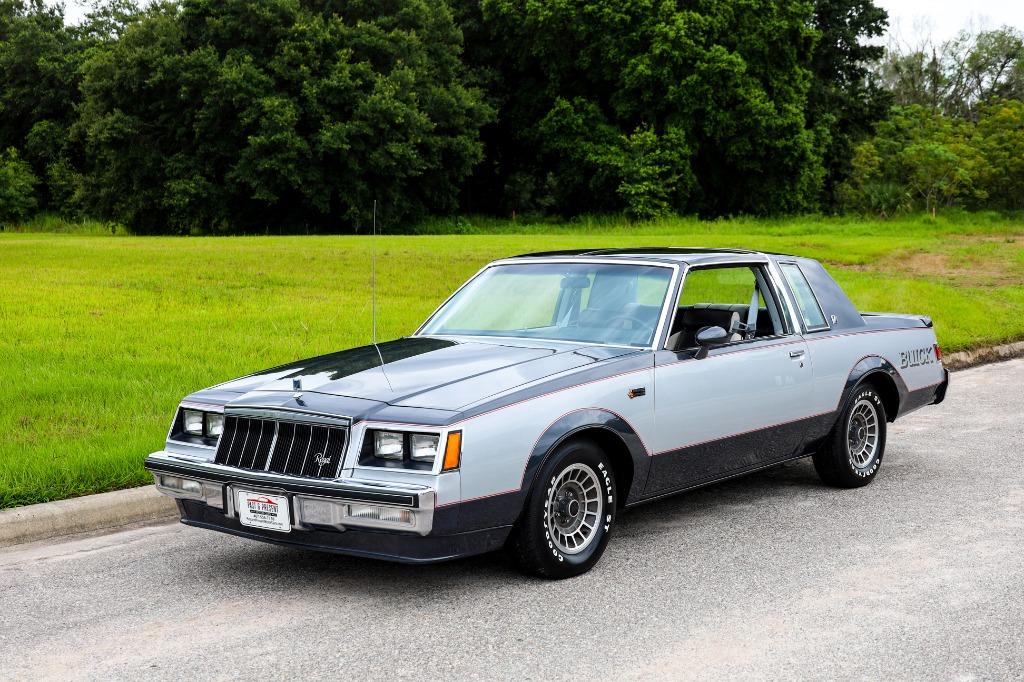
The shape was tidied for 1981 with a more sloped, aerodynamic nose, and in 1982 Buick cashed in on its NASCAR success — Regals had won the manufacturers' championship in 1981 and 1982 — with the first Grand National: a two-tone grey-and-silver coupe built in tiny numbers, most of them without the turbo engine at all. The name went away for 1983, then returned for 1984: all black, with a sequential fuel-injected turbo V6, staying through the end of rear-drive production in 1987, growing an intercooler for 1986 and a final power rise for 1987. The GNX of 1987, built with ASC McLaren in a run of 547 cars, was the farewell — the quickest American production car of its year and the most valuable Regal ever made.
After 1987 the story forks away from the collector car. The 1988 Regal was a front-wheel-drive W-body coupe, later joined by a sedan; through the 1990s it was Buick's mid-size family car again, with the supercharged 3800 V6 GS of 1997–2004 as its one performance footnote. The name returned for 2011 on an Opel Insignia-derived sedan, ending again in 2020. Those later cars share nothing with the 1978–87 cars but the badge. The orientation above exists so a seller's "rare Regal" claim can be placed in the right decade before you spend anything.
The 1978–87 cars divide cleanly in today's market. The ordinary cars — base Regals, Limiteds, the V8 and diesel variants — are honest, affordable period cruisers whose value is in condition and originality. The turbo cars are a performance market with its own rules, specialists and a serious clone problem, because a Grand National is an option package on a Regal coupe rather than a separate model, and badges are cheap. Colour tells the pool's story: of the 35 cars in our listings with a recorded colour, 18 are black — the turbo cars and their imitators dominate what comes to market. Buy the car in front of you, and verify the turbo cars forensically.
The models
Every Regal in the 1978–87 pool is the same basic car: a two-door coupe (sedans and wagons exist in the wider run) on the 108.1-inch-wheelbase G-body, rear-wheel drive, a separate steel frame under a steel body, a live rear axle on coil springs, and an interior trimmed anywhere from taxi-plain to Limited plush. What separates the models is the engine, the trim level and — on the turbo cars — a stack of option codes you must learn to read, because the badge on the fender is the least reliable part of the car.
| Model | Years | Engine | Output | Built | Character |
|---|---|---|---|---|---|
| Regal (base) | 1978–1987 | 3.8 V6, carburetted | about 105–110 hp | Volume production | The standard coupe; the cruiser and the clone donor |
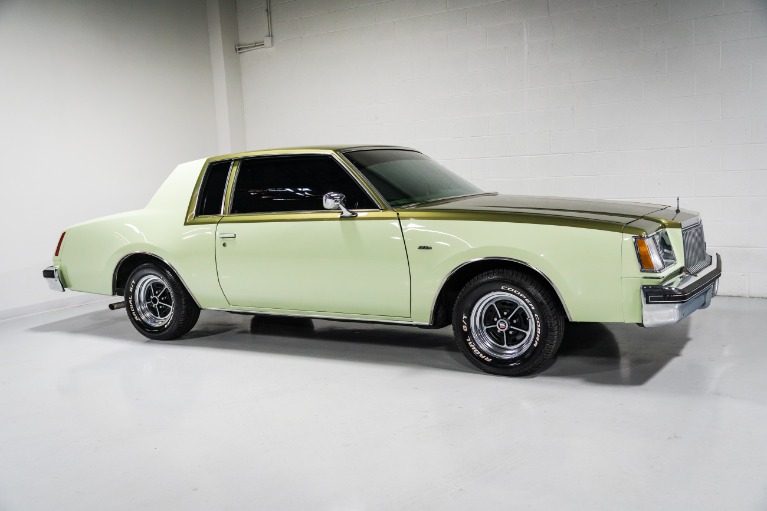
| Regal Limited | 1978–1987 | 3.8 or 4.1 V6, some V8 | 105–125 hp | Volume production | The luxury trim: plush seats, vinyl roof, bright trim |
| Regal V8 coupes | 1978–1987 | 301 Pontiac, 305 Chevy or 307 Olds V8 | about 125–150 hp | Volume production | Smooth and simple; the period-correct cruiser |
| Regal Turbo / Sport Coupe | 1978–1983 | 3.8 V6 turbo, carburetted | 150–175 hp | Low volume | The pioneer turbo car; "hot-air" ancestor of the GN |
| Grand National (first run) | 1982 | 4.1 V6, a few turbo 3.8 | 125 hp (turbo about 175 hp) | 215 | Two-tone NASCAR tribute; most are not turbos |
| T-Type | 1983–1986 | 3.8 V6 turbo, injected from 1984 | 200 hp (1984–86) | Low volume | The turbo car in colours, with chrome; the GN's twin |
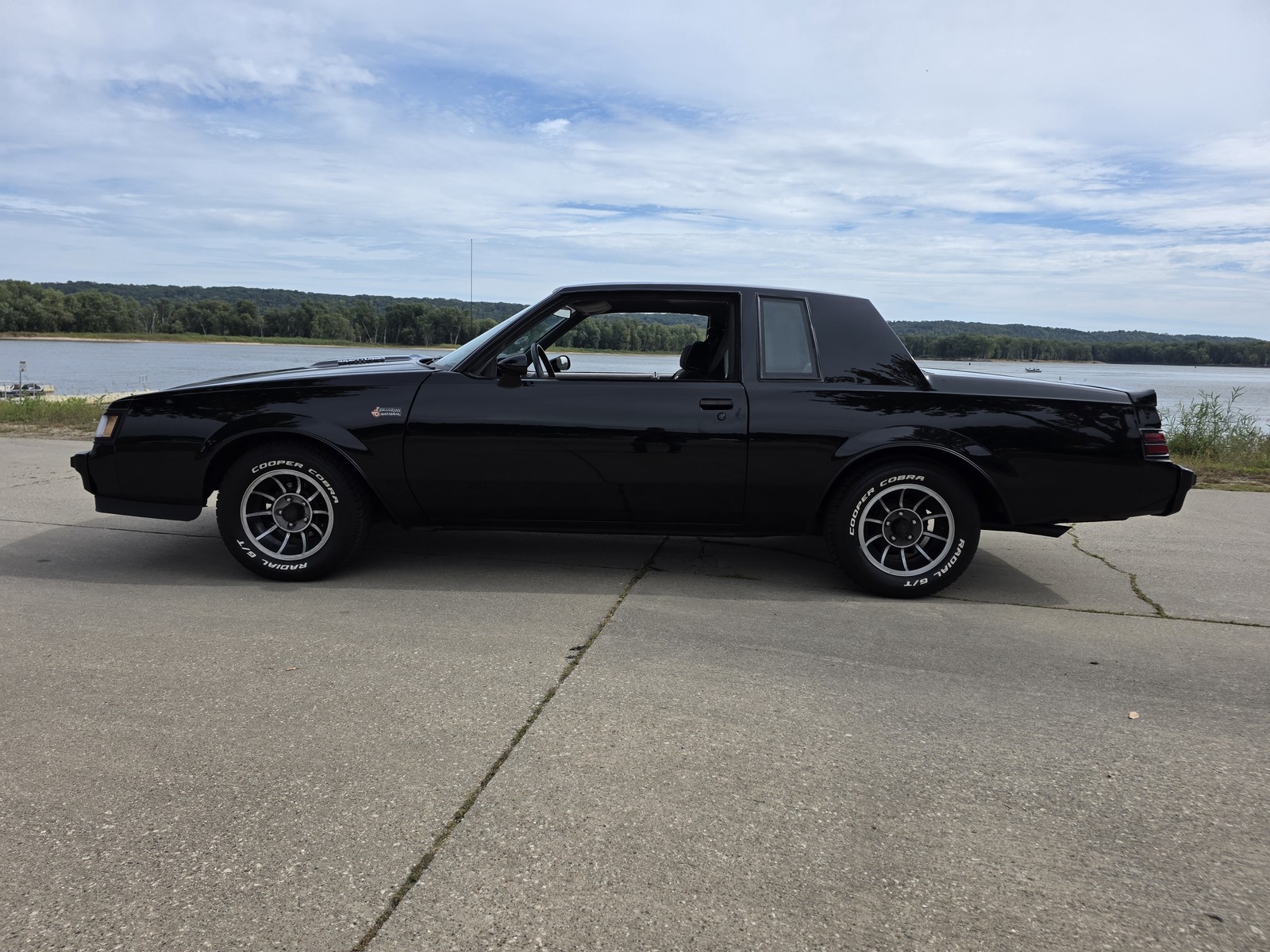
| Grand National | 1984–1987 | 3.8 V6 turbo SFI, intercooled 1986–87 | 200–245 hp | 2,000 (1984); 2,102 (1985); 5,512 (1986); 20,193 (1987) | All black, all business; the core collector car |
| Turbo-T and WE4 | 1987 | 3.8 V6 turbo SFI, intercooled | 245 hp | WE4: 1,547 | The GN drivetrain in a lighter, coloured Regal |
| GNX | 1987 | 3.8 V6 turbo SFI, uprated | 276 hp (rated) | 547 | The numbered flagship; a different market entirely |
(Outputs are period net ratings. Production figures are given only for the limited turbo cars, where they are firmly documented; the base and Limited cars were built in large annual volumes not usefully separated by trim in any source a buyer can check, so no figure is offered rather than an invented one.)
The ordinary cars. The base Regal and the Limited are the volume of the range. The Limited is a trim level, not a different car: pillow-tufted seats, thicker carpet, a vinyl half-roof on many cars, more brightwork and quieter gearing. Mechanically identical to the base car: a Limited is the Regal most likely to have been garaged — and the most likely to be hiding rust under its vinyl roof and extra trim. The V8 cars swap the V6 for a corporate V8 — a Pontiac 301 early, an Oldsmobile 307 in most later cars, a Chevrolet 305 in some — and drive as you would expect: torquey, unstressed, unhurried. There was also a diesel option, an Oldsmobile diesel V8 and later a 4.3 diesel V6; a period economy answer that sold in small numbers and is today a curiosity to walk past unless the car has been converted.
The early turbo cars, 1978–83. The Regal Turbo (also sold as the Sport Coupe) put the carburetted turbo V6 under a bulged hood with a boost gauge in the dash: a Rochester Quadrajet feeding the turbo in a draw-through layout, no intercooler, no electronics to speak of. Power rose through the run from about 150 hp to about 175 hp. They are interesting, increasingly rare and genuinely quick for 1979 — and supported by a fraction of the parts and knowledge base that serves the injected cars. Buy one because you want the pioneer, not because it is a cheap Grand National; it is not, in pace, parts or value.
T-Type and the naming trap. From 1983 Buick sold its turbo package as the T-Type: the same injected turbo drivetrain as the Grand National from 1984, but in a car you could order in colours, with chrome, a bench seat and a column shift. For 1987 the T-Type name was dropped and the car became the Turbo-T — the turbo package on the base Regal — while the T package without the turbo became the Regal T. The WE4 was a 1987 Turbo-T variant: black like a Grand National, but with aluminium bumper supports and other lightening, a grey interior and no GN badges. The mechanical sameness is the point: a T-Type, Turbo-T or WE4 gives you the Grand National's engine, gearbox and axle, usually for less money and often in better, less abused condition, because these cars were bought by older owners and modified less.

The Grand National, 1984–87. The GN is option package WE2 applied to a Regal coupe with the turbo engine: black paint (the only colour), blackout trim, a specific grille, aluminium turbo wheels, a rear spoiler, Lear Siegler bucket seats and a firmer suspension. The 1984 and 1985 cars are the "hot-air" cars — no intercooler, 200 hp, a slightly softer state of tune. The 1986 car added the air-to-air intercooler and jumped to 235 hp; the 1987 car, built in by far the largest numbers because Buick extended production to meet demand, was rated 245 hp and is the most common GN you will meet — half the cars in our pool are 1987s, and most wear this badge. The GNX sits above all of it: 547 cars converted by ASC McLaren with a larger Garrett turbo with a ceramic impeller, a bigger intercooler, a revised rear suspension with a longitudinal torque arm and Panhard rod, flared arches with functional fender vents, Stewart-Warner gauges and a numbered dash plaque.
Reading the car, not the badge. Because the Grand National is a package, identity lives in codes. The Service Parts Identification label — the SPID label, on the underside of the trunk lid — lists the car's option codes as built: WE2 is the Grand National package, WE4 the 1987 black Turbo-T package, LC2 the intercooled turbo engine, G80 the limited-slip differential. The engine character in the VIN decodes to the 3.8 turbo (code 7) on a genuine injected turbo car. A black 1986–87 coupe with GN badges, no WE2 on the SPID label and a naturally aspirated VIN is a painted Regal, worth painted-Regal money whatever the seller calls it. This check takes ninety seconds, is worth more than everything else in this section combined, and step 1 of the inspection walks you through it.
Engines and gearboxes
Three engine families power the pool cars: Buick's own 3.8-litre V6 in naturally aspirated, carburetted-turbo and injected-turbo forms; a 4.1-litre enlargement of the same V6; and a rotation of corporate V8s (plus a diesel footnote) in the ordinary cars. The V6 is the engine that matters. It is a 90-degree, iron-block, overhead-valve design descended from the Buick V8s of the 1960s, with a split-pin crankshaft from 1977 onward that made it an even-fire engine and cured the early cars' rough idle. In every form it is understressed, torquey and long-lived if the oil has been changed; in turbo form it is also one of the great American performance engines, and the differences between its turbo generations are the differences that price these cars.
The naturally aspirated V6s: 231 and 252
The standard engine across the whole run is the 231-cubic-inch (3.8-litre) V6 with a Rochester two-barrel carburettor, rated at roughly 105–110 hp depending on year. It will not excite anyone, but it is the Regal's default for a reason: it starts, it pulls the car around town on its torque, and it tolerates neglect better than anything else in this guide. The optional 252 (4.1-litre) version, offered from 1980 to 1984 with a four-barrel carburettor and about 125 hp, is the same engine with a larger bore — it powered most of the 215 first-run Grand Nationals and is the better cruiser engine, smoother and lazier.
What to expect and what to check. The timing chain set uses a nylon-toothed camshaft sprocket from the factory, and the nylon embrittles with age: the teeth shed, the chain jumps, and the first symptom is a rattling chain case and an engine that suddenly runs badly or not at all. On any high-mileage or unknown-history car, budget for a steel timing set as preventive work — around $150–300 for the parts, $600–1,200 fitted — and treat a seller's invoice for it as a plus. The rear main seal is a rope seal that weeps with age; a light misting at the back of the sump is normal for the breed, a drip that marks its parking spot is a seal job. Valve stem seals harden and give a puff of blue smoke on start-up after sitting, which is a top-end refresh, not a rebuild. The oil pump lives in the aluminium front cover, and a worn cover scores and loses pressure at a hot idle — a cover-and-pump conversation rather than an engine-out one. Any competent shop that remembers carburettors can run one of these engines, and a sorted 231 or 252 in a clean Limited is a pleasant period drive.
The turbo V6: carburetted, hot-air and intercooled
The turbo engine comes in three generations, and you must know which one a car has, because they differ in power, in parts support and in value.
The carburetted turbo, 1978–83. A single turbocharger blows through a draw-through Rochester Quadrajet — fuel and air mix before the turbo, so there is no intercooler, and the system is governed by a wastegate and a knock-sensing spark control box that was advanced for its day. Output ran from about 150 hp in 1978 to about 175 hp in the last cars. The failure modes are those of the layout: turbo seals that smoke when they wear, sluggish response from a carburettor's metering serving a turbo's airflow, and heat — everything under that bulged hood runs hot. Specialist support is thin and lives largely in the Turbo Buick community's carb-turbo corner. A running, original carb-turbo car is a survivor; a non-running one is a research project.
The hot-air cars, 1984–85. For 1984 Buick replaced the carburettor with sequential electronic fuel injection — SFI, one injector per cylinder, fired in sequence — and engine management that put these cars a decade ahead of most of Detroit. The turbo still had no intercooler (hence "hot-air"), and output was 200 hp with 300 lb-ft. These are strong, simple turbo engines with one structural weakness: intake air arrives hot from the turbo, so the engine lives closer to detonation, and the computer's knock sensor pulling timing is part of normal operation. The ignition is distributorless, fired by a coil pack and module, with a cam position sensor in place of the distributor to time the sequence. Coil packs and modules fail with heat and age and give a misfire under boost that vanishes at cruise — carry the diagnosis in that order before condemning anything expensive.
The intercooled cars, 1986–87. The 1986 engine — RPO LC2 — added an air-to-air intercooler behind the grille, a revised turbo and intake, and output rose to 235 hp, then 245 hp with 355 lb-ft for 1987. The supporting systems are where the buying knowledge sits:
- Fuel delivery is marginal from the factory. The in-tank pump was barely adequate when new; a tired pump starves the engine at full boost, and a lean turbo engine melts pistons. The community fix — a higher-output pump with a "hot-wire" relay kit feeding it full voltage, roughly $200–400 in parts — is so universal that its presence marks an informed owner and its absence on a modified car is a question.
- The mass airflow sensor is the scarce part. The 1986–87 cars meter air with an AC Delco MAF sensor long out of production; a failing one gives erratic running, stalling and codes that mimic other faults. Good originals are hunted, and many cars run a later-style sensor with an electronic translator box — a perfectly good solution, but know which setup a car has before you price it.
- Sensors are the service life. The crank sensor's plastic body goes brittle and its failure stops the car dead; the cam sensor's drive wears and its setting drifts, giving hard starting and a check-engine light. Neither is dear — roughly $50–150 each — but both will strand you, and invoices for them are good news, not bad.
- Boost control is simple and often tampered with. A wastegate actuator, a solenoid the computer pulses to bleed boost, and hoses that perish. Cars "turned up" without supporting fuel and octane are the ones with hurt head gaskets and pistons: ask what boost the car runs, and be wary of any answer above the stock 12–15 psi on an otherwise stock engine.
- The turbo itself is a Garrett unit that lasts well on clean oil; worn seals show as blue smoke at idle after a hot run and oil in the intercooler pipes. A rebuild or exchange unit runs roughly $600–1,200 in parts, and it is a driveway-scale job on these cars.
A healthy intercooled engine starts instantly, idles at a slightly lumpy 750 rpm or so, pulls without hesitation as boost builds from around 2,500 rpm, and shows no smoke. Anything else is a diagnosis — usually sensors, fuel or ignition, in that order, before it is ever the engine itself.

The V8s and the diesel
Ordinary Regals could be ordered with V8 power throughout the run, and the engines came from across the GM divisions. The Pontiac 301 (4.9-litre) was the early option, a light, low-deck engine rated around 140 hp. The Oldsmobile 307 (5.0-litre) became the standard V8 for the 1980s cars — about 140 hp in most Regals — and is the V8 you will meet most often. A Chevrolet 305 appears in some years and markets. All three are simple, carburetted, emissions-era V8s: they share the nylon timing-gear warning with the V6, they wear valve seals and smoke on start-up, their carburettors and thickets of vacuum hose are the usual source of poor running, and none of them makes a Regal fast. What they make it is effortless and quiet, which for a Limited cruiser is the point. Identify the engine by its stampings and casting marks, not by the air-cleaner decal — forty years of swaps means the decal is a suggestion.
The diesel cars — an Oldsmobile-built 350 diesel V8 early on, a 4.3 diesel V6 later — were bought for economy in a fuel-scare era and are now the rarest Regals of all, because most were scrapped or converted to petrol power. Value one as a shell and an interior with an unusual engine, and expect to be your own parts department.
Gearboxes
Almost every pool car is an automatic — every transmission recorded in our listings is an automatic — and there are three boxes to know. The early cars use the Turbo Hydra-Matic 350 (TH350), a strong three-speed fitted to many V8 and early turbo cars, and the lighter TH200/TH200C three-speed fitted to many V6 cars, which is the weak link of the range: it has no margin, and slipping, flaring or delayed engagement on a test drive is a rebuild conversation at roughly $1,500–2,500 fitted. The box you want is the TH200-4R, the four-speed overdrive automatic spread across the range from the early 1980s. In the 1984–87 turbo cars it is a specific, strengthened calibration — identified by its BRF code tag on the case — with a higher-stall D5 torque converter, and it is a genuinely good gearbox: firm shifts, a relaxed overdrive cruise, a lock-up converter. A correct BRF box is part of a turbo car's value, because ordinary 200-4Rs from other G-bodies bolt in and drive noticeably softer; the tag is on the right-hand side of the case, and step 2 of the inspection has you look for it. A 200-4R rebuild runs roughly $1,800–3,000 at a specialist, more for a BRF-correct build. On all automatics, judge the fluid as well as the shifts: bright red is serviced, brown and burnt-smelling is a box that has been slipping, and a fluid-and-filter change is cheap insurance at $150–300 in parts and labour. The rear axle matters on turbo cars: standard Regals carry the 7.5-inch 10-bolt, while the 1984–87 turbo cars carry the stronger 8.5-inch 10-bolt — another identity check, and a real durability difference on a car that will be launched hard. The G80 limited-slip was an option even on the Grand National, and plenty of GNs left the factory with an open differential; the SPID label settles it, and an open-diff car spinning one rear wheel on a hard launch is stating its option sheet, not a fault.
Problem areas
The Regal's problems divide by car. The ordinary cars suffer standard G-body old age — rust in the frame and floors, sagging trim, tired vacuum-operated everything. The turbo cars add a second layer: forty-year-old electronics and sensors, a brake system unique to them, and the accumulated consequences of being the most modified American cars of their era. The evidence from our own pool is worth stating plainly: of the 12 cars in our current listings whose photo sets we have examined in detail, rust was noted on 7 and visible damage or accident evidence on 8. That is a small sample, not a census, but it is the right prior for a viewing.
Rust and the body: the map
A G-body is a body on a separate frame, which changes the rust question from the monocoque one. The body can look sound while the frame is rotten, and the frame can be sound under a scruffy body — you have to judge both, and the frame is the one sellers' photographs avoid.
Rear frame rails. The signature G-body failure. The frame rails that run back over and behind the rear axle trap road salt and rot from the inside, worst just behind the rear wheels and at the bumper mounts. A car can present beautifully and have rear rails you can push a screwdriver through. Prod them, with permission, along their full length; rail repair is fabrication and welding, realistically $1,500–4,000 a side done properly with the tank and bumper off. Advanced rail rot on an ordinary car is a walk-away — the repair approaches the car's value; on a turbo car it is a big price argument.
Body mounts and floors. The body sits on rubber cushions bolted through the frame, and the mount pockets in the floor and the frame holes rust, letting the body settle and the doors drop out of alignment — misaligned door gaps on a G-body are as often mount rot as hinge wear. Floor pans rust from inside, fed by leaking windshield and rear-window seals and wet underlay that never dries; lift the carpets in all four footwells and prod the pans, especially at the seat mounts and toe boards. Trunk floors rust under the mat and around the spare well for the same reason. Repair sections are available — $800–2,000 a side fitted for floors is a fair planning figure — but floors, like rails, rarely rot alone.
Doors, quarters and rockers. The coupe's doors are long and heavy, and their bottoms rot where the drain slots block and the door fills with water; run a fingertip along every door bottom and feel for bubbling under the paint. Lower rear quarters, rocker panels under their trim and the wheel-arch lips follow the water and the salt in the usual order. None alone kills a car, but a full set of cosmetic rust repairs plus paint is a five-figure conversation at a quality shop, which is why the rule at the end of this guide is what it is.
The roof traps: T-tops and vinyl. Two factory options concentrate water exactly where you cannot see it. T-top cars leak at the seals, and the water runs into the centre bar and the roof frame; a T-top car with a stained headliner or a musty smell needs the tops out and the roof frame inspected, because roof-frame rust is structural and awkward to repair. Limiteds with vinyl half-roofs trap moisture under the vinyl and rust the roof skin beneath a covering that still looks presentable — bubbling or a crunchy feel under the vinyl is the tell, and the only honest check is to price the car as if the roof needs stripping and welding. A solid-roof, no-vinyl car is the low-risk buy, and the market knows it.
Bumper fillers. The flexible panels filling the gaps between body and bumpers, front and rear, are a urethane that crumbles with age and ultraviolet light — on most cars they have already cracked, sagged or fallen out, leaving gaps that make a good car look derelict. This is cosmetic, universal and fixable: reproduction fillers in fibreglass or ABS run roughly $300–700 for a set in parts, plus paint and fitting. Do not let missing fillers talk you out of a sound car, or fresh fillers talk you into a rotten one; they are the cheapest honesty test on the car, while the rails underneath still need your screwdriver.
The turbo systems and the Powermaster brakes
The Powermaster brake booster (1985–87 turbo cars; the 1984 cars use a hydroboost unit). Instead of a vacuum booster, these cars brake through an electro-hydraulic unit with its own pump and a nitrogen-charged accumulator. Healthy, the pedal is firm and the system is fine. When the accumulator loses its charge — and after forty years, assume any original accumulator is tired — the symptoms are a hard pedal, a brake warning light under repeated stops, and a pump that runs too often or not at all. The accumulator ball alone runs roughly $250–450 in parts when you can find one, a rebuilt Powermaster unit is a $800–1,500 parts conversation, and the scarcity is why many owners convert to a conventional vacuum booster (a kit at roughly $300–600 in parts) or to hydroboost. A converted car is often a more usable car — but on a claimed-original, premium-priced Grand National the conversion deviates from factory specification and should be priced as one. Test the brakes as step 8 of the inspection describes: repeated firm stops expose a dead accumulator in a way one gentle pedal press never will.
Heat, detonation and the modified car. The intercooled engine's enemies are heat and greed. The stock cooling system is adequate for a stock car; a front-mounted intercooler, a tired radiator and summer traffic are not. More serious is the modification history. These were the most chipped, boosted and raced American cars of their era, and the standard period modifications — an adjustable wastegate rod wound up for boost, a performance chip, alcohol injection on the keen cars — are safe only when fuel and octane support them. The evidence of a hard life is readable: head gaskets weep at the back of the heads, pistons suffer when a lean, over-boosted engine detonates, and the 200-4R behind a tuned engine wears faster. A documented build by a known Turbo Buick specialist is a plus — but an undocumented "it has a chip and runs 20 pounds of boost" car on a stock fuel pump is a car whose engine you should price as a future rebuild, at $4,000–8,000 for a quality rebuild with parts and labour if the worst has happened.
The sensors and electrics, again — because they are the ownership. The coil pack and ignition module live in the engine's heat and fail as a pair often enough that specialists replace them together (roughly $200–400 in parts). The cam sensor setting, the crank sensor's brittle bracket, corroded fusible links at the starter and tired engine grounds account for most no-starts and mysterious running faults on the injected cars; the carburetted cars substitute vacuum hoses by the yard and a Quadrajet that needs someone who still knows them. On either, a car where everything electrical works has usually been used and maintained, which remains the best single sign there is.
Chassis, steering and suspension
The G-body chassis is conventional and tough: double-wishbone front suspension with coil springs, a four-link live rear axle, recirculating-ball steering and front disc/rear drum brakes. Wear arrives in a predictable order. The steering box loosens at the centre of its travel and the intermediate shaft and rag joint add play, so most cars wander a little at the straight-ahead; a rebuilt or quick-ratio box (the turbo cars already carry the quicker box) is a $300–600 parts answer and transforms the car. Ball joints, tie-rod ends and control-arm bushings are cheap, available and usually due — a full front-end refresh in parts is roughly $400–900, plus alignment. Body-mount cushions perish and let the body creak and shift on the frame; a mount set is a few hundred dollars in parts and a day of labour, and it tightens the whole car in a way new shocks never will. Rear control-arm bushings wear and let the axle steer the car under power — on a turbo car, axle tramp and a rear end that steps out under boost are bushing problems before they are tyre problems. Springs sag, most visibly at the rear; judge stance as step 11 describes. Brakes on the non-Powermaster cars are ordinary GM: seized rear wheel cylinders, perished hoses and a tired master cylinder are the standing list, and a full hydraulic refresh runs roughly $600–1,500 fitted.
Interior, trim and the clone problem
The Regal's cabin is where ordinary cars hide their costs and turbo cars hide their identity. Headliners sag on every G-body — the foam backing disintegrates and the cloth drops — and a re-trimmed headliner board is a $200–450 job every car needs once. Seat foam and the Limited's plush covers wear at the driver's entry bolster first; the Grand National's Lear Siegler seats are specific, valued and frequently swapped or re-covered in the wrong material, so compare the fabric and turbo logos against known-good photographs. Door panels warp at the top, pull straps break, window regulators slow and the long doors sag on their hinges until the striker needs a lift to close — a hinge pin and bushing kit is roughly $40–80 a side in parts, and the labour is in the door's weight. Weatherstripping on T-top cars is a system, not a seal: a full set runs several hundred dollars in parts and fitting it well is fiddly, so price a leaky T-top car accordingly.
The identity problem deserves its own paragraph because it is the largest financial risk in this market. A Grand National is a Regal coupe plus the WE2 package; everything visible — black paint, wheels, spoiler, badges, seats — bolts or sprays onto a base car, and base cars are cheap. Clones range from honest tributes sold as tributes to deliberate frauds with reproduction SPID labels. The defences are layered, and they are all in the inspection: the VIN's engine character, the SPID label's codes and their consistency with the car's paint and trim codes, the cowl tag, the 8.5-inch rear axle and BRF gearbox tag, and paperwork reaching back before the car was valuable. A car that fails one layer needs the others impeccable; a car that fails two is a clone until proven otherwise, bought, if at all, at clone money. The GNX adds its own layer: the numbered dash plaque, the ASC conversion sticker on the door jamb and the GNX-only hardware (rear suspension, fender vents and flares, gauge faces) must all agree with the car's documentation.
How to inspect one
Allow ninety minutes, bring a torch, a magnet wrapped in cloth, a small screwdriver for prodding (with the seller's permission) and a phone for photographing labels and codes. If the car passes you, pay for a lift inspection before money changes hands — on a G-body the rear frame rails alone justify it.
- Start with the identity, before the car. Photograph the VIN plate, the cowl tag and the SPID label on the underside of the trunk lid. On any car claimed to be a turbo car, decode them on the spot: the VIN's engine character must be the turbo code 7, and the SPID label must carry LC2 for an intercooled car and WE2 for a Grand National (WE4 for a 1987 black Turbo-T). Check the paint and trim codes on the label against the car in front of you. A missing SPID label on a premium-priced GN is not a detail — it removes the car's main proof, and the price must fall to match the risk.
- Check the hardware agrees. On an injected turbo car, look for the 8.5-inch rear axle (the larger housing with its distinctive cover and ears), the BRF tag on the gearbox case, the intercooler and its scoop on a 1986–87 car, and the turbo engine's coil pack and cam sensor where a distributor would be on a V6. On a GNX, add the numbered dash plaque, the ASC door-jamb sticker, the flared arches and vents and the torque-arm rear suspension. Every mismatch is a negotiation point or a walk-away, in proportion to the price being asked.
- Cold start. Insist the engine is cold when you arrive. An injected car should fire at once and settle; a carburetted car should need its choke and then clean up. Watch for a puff of blue smoke on start-up (valve seals — budget it, do not fear it), sustained smoke (rings or turbo seals — fear it), and listen for timing-chain rattle from the front cover and lifter clatter that does not fade.
- The frame first. Torch and screwdriver along both rear frame rails, over the axle and behind the rear wheels to the bumper mounts, then the front rails and the body-mount pockets. Perforation in the rear rails is the structural verdict from the rust section: on an ordinary car it ends the inspection, on a turbo car it reprices it. Prod the trunk floor and look at the tank straps while you are there.
- Floors and mounts inside. Lift all four carpets. Look for water tracks from the windshield base, damp underlay, and prod the pans at the seat mounts. Check door alignment as you open each door — a door that drops as it opens is hinges, mounts or both.
- Body and gaps. Run the magnet over the lower quarters, door bottoms, rockers and arch lips — filler announces itself. Feel every door bottom for bubbling, check the T-top centre bar and roof frame with the tops out on a T-top car, and press gently on a vinyl roof for the crunch of rust beneath. Note the bumper fillers' condition, then deliberately ignore it: it is the cheapest item on the car.
- Under the hood, by system. On a turbo car: oil in the intercooler pipes (turbo seals), the state of the wastegate hoses, the MAF sensor type (original or translator conversion), the fuel pump evidence — listen for the pump prime and ask about a hot-wire kit — and the coil pack and module for heat damage. On any car: coolant condition, oil condition and level, vacuum hose state, and bodged wiring, which predicts electrical faults better than any test.
- The brake test, turbo cars especially. With the engine running, make several firm pedal applications in succession, then hold pressure. On a Powermaster car (1985–87 turbos) a hardening pedal, a warning light or a pump that cycles constantly is the accumulator verdict from the problem areas — price the unit or the conversion before you agree a number. On any car, check the pedal does not sink and the hoses are not perished.
- The test drive. Fifteen minutes minimum, with a freeway stretch. The automatic should shift firmly, find overdrive on a 200-4R car and engage reverse without a long pause. A turbo car should build boost cleanly from about 2,500 rpm with no misfire under load (coil pack and module, in that order), no detonation rattle (fuel, octane or over-boost — all seller problems until priced), and no smoke on the overrun. Brake firmly and repeatedly from speed: straight stops, no judder, no fading pedal.
- Heat and electrics. Let it idle hot after the drive. Temperature should stabilise, the electric fan (where fitted) should cycle, and oil pressure should hold at idle. Then work everything: windows, locks, gauges including the boost gauge on turbo cars, wipers, washers, lights, heater and air conditioning. A row of dead accessories is a row of small bills.
- Stance and steering. Stand back and look. A G-body should sit level; a low rear is springs and mounts, a list to one side is a mount or a spring, and neither is expensive — but both tell you the chassis budget has not been spent. On the road the steering should centre and hold a line; wander at the straight-ahead is the box and shaft wear described above, priced into the offer.
- Interior last. Sit in every seat, feel for collapsed foam, look up at the headliner, and compare the trim against the SPID label's trim code. On a GN, check the Lear Siegler seats and their fabric against reference photographs. A sound, original, correct interior is the hardest thing on these cars to recreate, so weight it heavily — and on a Limited, the plush interior is the car's whole value proposition, so a tired one removes the reason to buy that car at all.

Values
The market figures that matter for a Regal — what is listed now, what has actually sold, and how the two compare — are computed from our own listings and recorded sales and appended beneath this guide at every build, so this section teaches you how to read that block rather than repeating numbers that would date. Read it with three structural facts in mind.
The first is that this is really two markets sharing a badge. The ordinary Regals — base cars, Limiteds, V8 cruisers — trade in the broad, condition-led market for American period coupes, where originality, colour scheme, rust and interior carry the money and the drivetrain barely matters beyond being the one the car was born with. The turbo cars trade in a performance market with its own gravity. Within it the Grand National badge carries a premium over the mechanically identical T-Type and Turbo-T that has nothing to do with pace and everything to do with recognition — the black car is the icon, and icons are what collectors compete for. The GNX sits in a market of its own above both, priced as a numbered, documented, 547-car artefact; treat any GNX valuation not anchored to documented, numbered-car sales as noise.
The second fact is the condition spread, and on these cars it is unusually legible. The gap between a project and a driver is mostly the gap priced in the problem areas above: rear frame rails, floors, a Powermaster unit, a tired turbo engine, a clone question that will not resolve. A project turbo car is not a cheap way into the drivetrain, because the expensive systems are exactly the ones a project needs; the arithmetic that works on a Limited (buy tired, weld, trim, drive) fails on a Grand National, where correct parts, correct codes and documented originality are the value. Conversely, the premium for a sorted, documented car is rational and worth paying: the market rewards paperwork — build documentation, the window sticker, specialist invoices, a SPID label that matches the car — more reliably on a Regal than on almost any other American car of the era, because the clone problem makes proof scarce.
The third fact is the asking-versus-achieved gap. Regals are heavily represented in private and marketplace listings — in our current pool, marketplace sellers account for nearly half the cars — and asking prices there are frequently set by the badge the seller wishes the car had, or by the best result ever achieved for the best example. Auction results and recorded sales, which the computed block below draws on, are the discipline: they show what documented cars in stated condition actually achieved, and they are the only honest anchor for a negotiation. Go in with the comparable sales for the exact variant — hot-air cars, intercooled cars, T-Types and WE4s each comp separately — and with the repair arithmetic from the sections above priced against the specific car. A seller who will not discuss the car against its own variant's recorded sales is telling you which side of the gap his price lives on.
One last orientation: originality appreciates and modification depreciates at the top of this market, while the reverse is often true in the middle, where a well-built, documented, sensibly modified driver is worth more than a tired original.
Parts and ownership
The Regal is one of the best-supported American cars of its era: GM built the G-body in the millions across four divisions, and the turbo cars acquired one of the most organised enthusiast communities in the hobby. Mechanical parts shared with the Monte Carlo, Cutlass and Grand Prix are everywhere; Regal-specific and turbo-specific parts are served by a mature specialist trade; and the knowledge base is deeper than for almost any contemporary.
Easy: service items, filters, plugs and ignition consumables for every engine; brake discs, pads, calipers, hoses and cylinders for the standard cars; suspension and steering wear parts, springs and shocks; timing sets, water pumps, gaskets and seals for the V6 and the V8s; exhaust systems in standard form; glass, weatherstrip and the reproduction bumper fillers (roughly $300–700 a set in parts, as noted above); headliner boards, carpet sets and common interior trim in reproduction. Order today, fit this weekend, at prices close to modern-car money.
Harder and dearer: the turbo-specific layer. The original 1986–87 mass airflow sensor is out of production and good used units are hunted (the translator-and-later-sensor conversion is the practical answer, at roughly $300–500 in parts). Powermaster accumulators and rebuilt units are scarce and priced accordingly. Correct BRF-code 200-4R cores command a premium over ordinary 200-4Rs. Grand National-specific trim — the correct grille, the blackout mouldings in good order, Lear Siegler seat material, the right wheels — is reproduced in part and expensive in original form. GNX parts divide into the merely expensive (turbo and intercooler components) and the effectively unobtainable (numbered and ASC-specific items), which is another reason a GNX's documentation is its value. Carburetted-turbo parts for the 1978–83 cars are the thinnest supply of all: build a relationship with the community's specialists before you need one.
Running costs. A sorted Regal is a realistic regular-use classic. The naturally aspirated cars are simple to service anywhere; budget on the first-year catch-up any forty-year-old car demands — fluids, belts, hoses, brake hydraulics, correct-size tyres and a timing set on an unknown engine — at roughly $1,500–4,000 at a shop before you improve anything, and more on a car that has sat, where the fuel system needs cleaning end to end (modern ethanol fuel attacks period rubber and leaves varnish in tanks and carburettors), every seal has dried, and the tyres are date-expired regardless of tread. Turbo cars add their sensor-and-fuel layer: keep the fuel pump and its wiring, the ignition module and the crank and cam sensors on a preventive replacement cycle rather than a failure cycle, and the car is dependable; neglect them and it will choose its moment. Insurance through a classic policy, with an agreed value supported by the documentation this guide keeps telling you to collect, is straightforward for every variant except the GNX, which wants a specialist valuation. Find your specialist before you buy: a shop that knows Turbo Buicks by name, or a good generalist who remembers G-bodies, is worth more than any single repair.
Which one to buy
- The all-rounder: a 1986–87 Grand National. The intercooled car is the icon in its best form — the pace, the support, the deepest market to buy from and sell into. Buy the most documented, least modified example you can reach, and pay for paperwork without resentment.
- The thinking buy: a 1987 Turbo-T or WE4, or a 1984–86 T-Type. The Grand National's engine, gearbox and axle without the badge premium, often in kinder ownership and colours other than black. If you buy cars to drive rather than to be recognised in, this is the best value in the whole Regal range.
- The value buy: a 1984–85 hot-air Grand National or T-Type. Injected, quick, unmistakably the same car, and priced below the intercooled cars because the market fixates on 1986–87. The performance gap is real but smaller in life than in print, and the support is nearly as good.
- The cruiser: a Limited with the 4.1 V6 or a 307 V8. The Regal as most buyers knew it — quiet, plush, effortless and affordable. Buy on originality and interior condition, avoid vinyl-roof rust, and enjoy the cheapest seat in this guide.
- The pioneer: a 1978–83 carburetted Turbo or Sport Coupe. For the buyer who wants the car that started the turbo story and accepts thin parts support as the price of rarity. Buy the best-running survivor you can find; a non-running pioneer is a research degree, not a project.
- The collector car: the GNX. A numbered artefact that happens to be a car. Buy only with the plaque number, the ASC documentation and the GNX hardware all agreeing — at this level you are buying provenance, and provenance is either complete or it is a story.
- The first-run curiosity: a 1982 Grand National. Two-tone, rare and mostly non-turbo. Buy it as the NASCAR-era styling piece it is, priced as a trim package with a famous name, not as a turbo car.
And the rule that overrides all of the above: buy the least rusty, best documented car you can find, in the specification you can live with — and on a turbo car, buy the codes before you buy the car. Frames, floors, sensors and brake units are all fixable at prices you can plan for. A rotten rear frame on a cheap car, and a Grand National identity that dissolves when you lift the trunk lid and read the label, are the two losses no budget repairs.