
Buick LeSabre Custom Sedan 4D buyer's guide
Buick LeSabre Custom Sedan 4D -- the model's own buyer's guide: variants, values and what to check.
Years listed: 1960-1995 · Series: Full Size
Overview and history
The Buick LeSabre is the longest-running nameplate Buick ever built, and for most of its life it was also the best-selling one. It arrived for 1959 as the lowest-priced full-size Buick, replacing the Special at the bottom of the range, and it stayed in production, through nine distinct generations, until 2005 — forty-six years in which the badge sat on finned rear-drive V8 sedans, on the biggest cars General Motors had ever made, on a downsized family car offered with a diesel, and finally on a front-wheel-drive sedan powered by one of the most durable V6 engines America ever produced. A LeSabre is therefore not one car. It is at least three very different cars wearing the same name, and the first job of any buyer is deciding which of those cars they actually want.
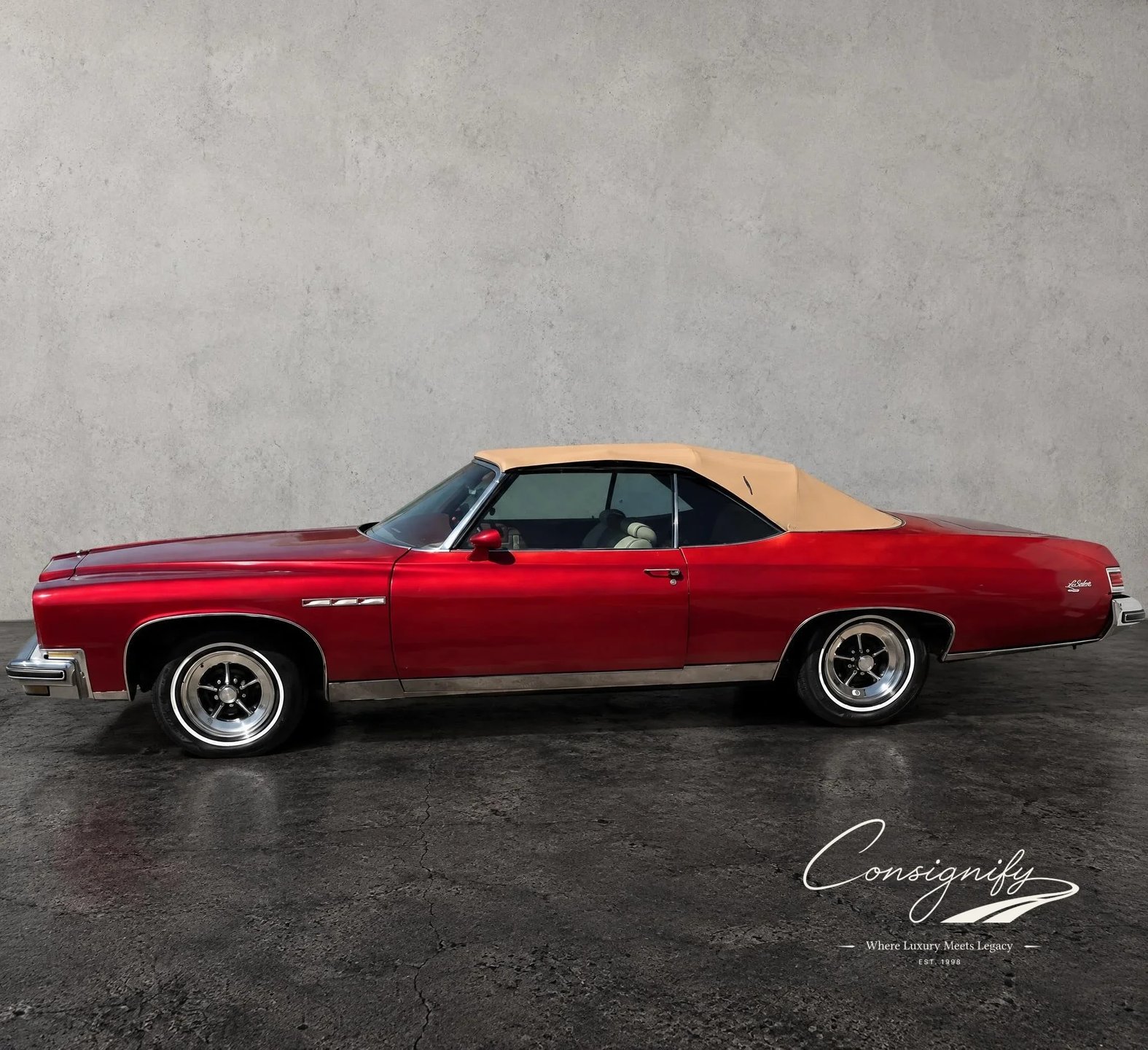
The name itself — French for "the sabre" — had appeared on GM show cars earlier in the 1950s, most famously the 1951 Le Sabre concept, before Buick put it on a production car. The 1959 original was pure late-fifties Detroit: a big B-body sedan, hardtop and convertible with canted fins, acres of chrome and Buick's Nailhead V8 under the hood. Through the 1960s the LeSabre was the volume Buick — the car teachers, sales managers and prosperous tradesmen bought when they wanted comfort and presence without paying Electra money. In the early 1970s it grew into the vast 1971–76 generation, the largest LeSabres ever made, and in 1975 it carried the distinction of being Buick's last full-size convertible of the era. Downsizing in 1977 cut the weight and the length but kept the formula: six seats, a soft ride, a big trunk and uncomplicated mechanicals.
The break came in 1986, when the LeSabre moved to front-wheel drive on GM's H-body platform, sharing its bones with the Oldsmobile Eighty Eight and the Pontiac Bonneville. Purists grumbled; buyers did not care. The 1986–99 cars, and especially the restyled 1992–99 generation with the 3800 V6, became the default comfortable American sedan — the car Buick's famously loyal, older customer base bought again and again, maintained properly and kept for a decade. The final 2000–05 generation polished the same recipe once more before the Lucerne replaced it for 2006.
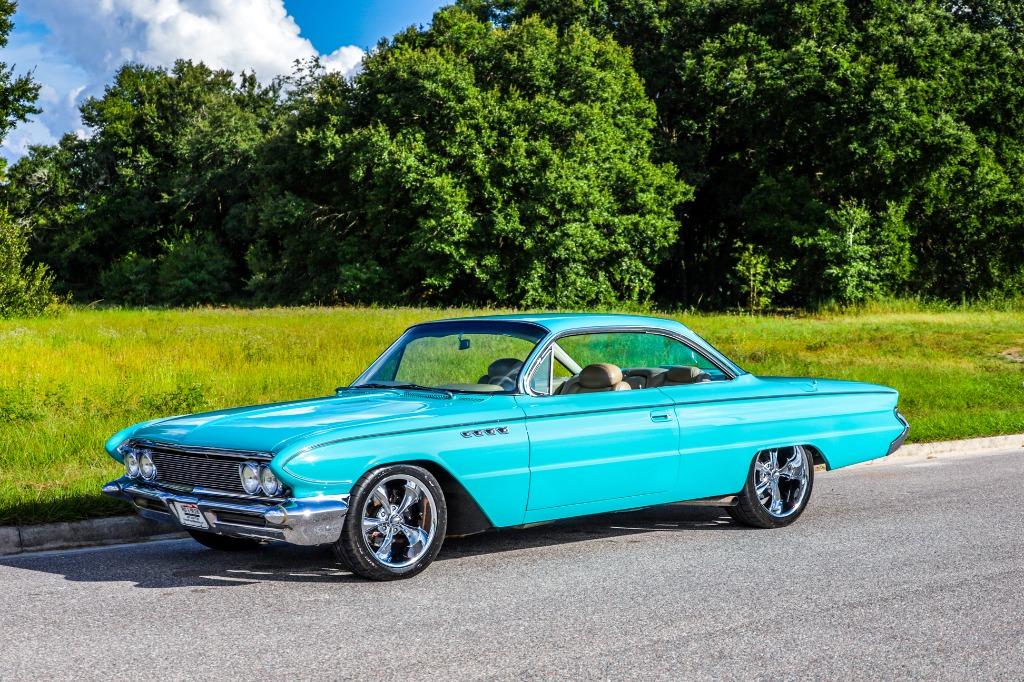
Our own listings show exactly that spread. We currently track 30 LeSabres for sale or recently sold, 23 of them for sale as we write, and the years run from 1960 to 1995 — there is no single "typical" car. The clusters tell the story: four cars from 1964, three each from 1975, 1990 and 1992, pairs from 1970, 1985 and 1995, and singles scattered from 1961 to 1994. Nineteen of the thirty come through Facebook Marketplace sellers and ten through dealers, and the geography is wide — Florida leads with seven cars, Missouri has five, Pennsylvania three, with Alabama, Georgia and Montana among the rest. Every one of the thirty is filed as a full-size car, and effectively every one is an automatic. Colours run the full period palette — red is the commonest in our sample, followed by green, grey and blue, with brown, gold and one Tropical Turquoise 1961 car for period flavour.
That mix defines how you should shop. The early cars are bought as classics: style, chrome, V8 noise, weekend use. The 1970s cars are bought as presence — nothing else on a modern road looks like a 1975 LeSabre. The front-drive cars are bought as usable, comfortable, cheap-to-run near-classics that still work as real transport. Condition, not year, decides which of those experiences you actually get, and the sections that follow take each era on its own terms.

The models
Every LeSabre is a full-size car, but the badge covered sedans, hardtops, coupes, wagons and convertibles across its life, and trim levels multiplied as the years went on. Early cars are simply LeSabres, with the Custom name appearing as the plusher trim; Limited arrived as the top specification in the late 1970s and stayed there, joined in the front-drive era by the Custom and Limited pair that most buyers will meet. Estate wagons existed in several generations — a 1960s and 1970s LeSabre wagon is a genuinely rare sight today — and the convertible, a mainstay of the 1960s range, bowed out after 1975.
| Model | Years | Engine | Output | Built | Character |
|---|---|---|---|---|---|
| LeSabre (first generation) | 1959–1960 | 364 Nailhead V8 | 250 hp | High volume | The finned original; entry Buick, full drama |
| LeSabre (second generation) | 1961–1964 | 364/401 Nailhead V8 | 250–325 hp | High volume | Bubbletops and clean lines; the classic-era sweet spot |
| LeSabre (third generation) | 1965–1970 | 300/340/350 V8, 455 from 1970 | 210–370 hp | High volume | Coke-bottle styling; the 350 and 455 cars are the drivers |
| LeSabre (fourth generation) | 1971–1976 | 350 V8, 455 optional | 150–205 hp net | High volume | The biggest LeSabres ever; 1975 is the last convertible |
| LeSabre (fifth generation) | 1977–1985 | 231 V6, 301/305/307/350 V8, diesel V8 | 110–160 hp | High volume | Downsized and sensible; 1985 Collector's Edition ends rear drive |
| LeSabre (sixth generation) | 1986–1991 | 3.0/3.8 V6 | 125–165 hp | High volume | The front-drive break; plain, tough, roomy |
| LeSabre (seventh generation) | 1992–1999 | 3800 V6, Series II from 1995 | 170–205 hp | High volume | The modern classic of the range; the one to use daily |
| LeSabre (eighth generation) | 2000–2005 | 3800 Series II V6 | 205 hp | High volume | The final car; refined, quiet, still uncomplicated |
(Outputs are period figures: gross ratings for the early cars, net ratings from 1972 onward, which is why the big-block numbers fall on paper even where the cars feel no slower in normal use. Production was high in every generation — the LeSabre was Buick's volume line — so survival, not original scarcity, is what makes an individual car rare today.)
The 1960s cars. The 1959–60 originals are the most flamboyant and the most demanding to restore: fins, two years only of body panels, and trim that is reproduced patchily at best. The 1961–64 generation is the connoisseur's early car — the 1961 bubbletop hardtop in particular has a following out of proportion to its original status — and the 1964 cars in our listings, four of them, sit in the heart of that run. The 1965 restyle brought the sweeping Coke-bottle profile and the last of the innocence: these are big, simple, handsome cars, and the 1965–70 generation is where most classic-era buyers land.
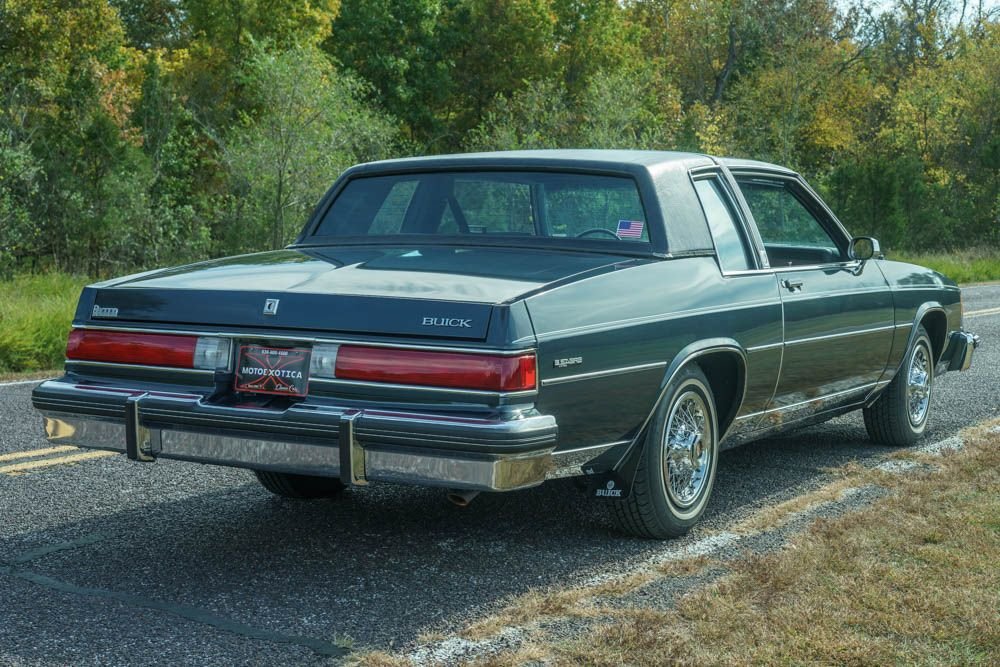
The 1970s cars. The 1971–76 generation is the LeSabre as land yacht: the longest, widest and heaviest of the line, with the 350 V8 standard and the 455 available. Emissions-era tuning softened them year by year, and from 1975 a catalytic converter and unleaded fuel arrived. The 1975 convertible — three 1975 cars sit in our listings, the joint-second commonest year — is the last of the big Buick ragtops and carries a premium for it. The downsized 1977–85 cars that followed are the most underrated LeSabres: still rear-drive, still V8-available, but a foot shorter and several hundred pounds lighter, and the 1985 Collector's Edition was built to mark the end of the rear-drive line — both Collector's Edition coupes in our photo pool wear that badge.
The front-drive cars. The 1986–91 H-body cars are honest, boxy and almost wilfully plain; the 1992–99 restyle rounded them off, added the equipment buyers expected and, from 1995, the Series II 3800. The 2000–05 final generation is the most refined LeSabre of all and the least "classic" in feel — which is precisely why it works so well as an everyday car. Our listings' clusters at 1990, 1992 and 1995 show where the surviving front-drive stock concentrates: these are the cars that were bought new by careful owners, garaged, and are now surfacing as one- and two-owner estates and trade-ins.
Engines and gearboxes
Four engine families carry the whole forty-six years, and each has its own character and its own failure language. Learn which family a car belongs to and you know most of what its engine bay will ask of you.
The Nailhead: 364 and 401 (1959–1966)
The early LeSabre's engine is Buick's famous Nailhead V8, named for its small, upright valves — the valve covers stand tall and narrow, with the spark plugs hidden under covers along their tops, so a Nailhead is recognisable in a photograph before you read a word of the listing. The LeSabre's standard engine was the 364 cubic inch version, rated at 250 hp with a two-barrel carburettor in most years; the 401, the engine of the senior Buicks, was the option and the one to have, with up to 325 hp in period gross terms. These are torque engines: they pull a two-ton car around with an ease that makes the horsepower figures look modest, and they do it quietly.
The Nailhead's virtues are durability and smoothness; its costs are age and thirst. The newest Nailhead LeSabre is now sixty years old, so judge the individual engine, not the design. A healthy one starts readily, idles with a soft lope and shows good oil pressure hot. The known work list is honest and finite: the rear main seal weeps (a rope seal originally, and a drip under the back of the engine is normal enough that you budget for it rather than walk away), the exhaust manifolds crack and their studs snap on removal, the mechanical fuel pump and the carburettor — Rochester or Carter two- and four-barrels depending on year — suffer with modern ethanol fuel if the car has sat, and the Dynaflow-era cars need their own transmission conversation, covered below. Valve gear is shaft-mounted and sturdy; a top-end tick that fades as the engine warms is usually a lazy lifter or thin oil, while a tick that stays wants investigation. Parts support is good by the standards of orphaned engines — the Nailhead has a devoted following — but it is specialist support, at specialist prices: a full rebuild by someone who knows the engine is a serious four-figure job, and core parts such as good blocks and heads are no longer getting easier to find.
One trap: the 1964 model year straddles two worlds. The new small-block 300 became the LeSabre's standard engine partway through the era, with the 401 Nailhead as the option, so a 1964 car — remember, the commonest year in our listings — can carry either engine. They look nothing alike. Verify from the engine bay photograph and the engine number, never from the badge or the seller's description alone.
The Buick small-block and big-block: 300, 340, 350 and 455 (1964–1985)
From 1964 the LeSabre moved to Buick's own modern V8s. The 300 and its stroked 340 sister are the mid-sixties standard engines — smooth, willing, and overshadowed then and now by what came next. In 1968 Buick's 350 replaced them, and the 350 is the workhorse of the classic LeSabre world: an all-iron, deep-skirt-block V8 with a reputation for shrugging off indifferent maintenance better than almost anything else GM built. In 1970 the 455 big-block arrived as the LeSabre option — 370 hp in gross terms in its first year, with a torque figure that turned the big sedan into a genuinely quick car — and it remained the flagship option through the 1970s, softening as emissions rules bit.
The 350's failure modes are few and mostly cheap. Oil pressure is the number to watch: Buick ran the oil pump in the aluminium front cover, driven off the camshaft, and as the cover and pump gears wear, hot idle oil pressure falls. A gauge that sits worryingly low at a hot idle but recovers with revs is describing pump and cover wear, not necessarily a worn bottom end — the distinction matters, because a pump and cover service is a few hundred dollars in parts while a rebuild is not. Timing chains stretch and the original nylon-toothed cam sprockets shed teeth with age, so a car with no record of a chain set is a car that needs one on principle. The Quadrajet carburettor fitted to most of these engines is a superb instrument when rebuilt by someone who understands it and a misery when adjusted by folklore; budget for a proper rebuild rather than a swap. The 455 shares the family's habits and adds its own appetite: it is a thin-wall casting that does not forgive overheating, so a 455 car with a marginal radiator, a slipping fan clutch or a history of running hot is a car to price very carefully.
The downsized 1977–85 cars widened the menu: Buick's 231 V6 as the economy choice, Pontiac's 301 and Oldsmobile's 307 and Chevrolet's 305 V8s appearing under GM's engine-sharing programme, the Buick 350 in early years — and the Oldsmobile-built 350 diesel V8, offered into the mid-eighties. The diesel deserves a plain warning: it was converted from a petrol design, its head bolts and injection equipment were marginal when new, and survivors are curiosities rather than transport. Buy one knowingly, as a novelty with a devoted niche following, or not at all. The V6 and small V8 cars are the opposite — unglamorous, adequate and cheap to keep — and the 307 Oldsmobile engine in particular is a byword for unhurried durability, provided its computer-controlled carburettor's electronics still work as designed.
The 3800 V6: the front-drive era (1986–2005)
The front-drive LeSabre's engine is the 3800 — Buick's 3.8-litre V6, developed from the 231 that had served since the seventies, given a balance shaft for smoothness and, across the H-body years, a steady climb in output: around 165 hp in the later first-generation front-drive cars, 170 hp as the tuned-port 3800 in the 1992–94 cars, and 205 hp as the Series II from 1995 to the end of production in 2005. It is, by broad agreement among the people who maintain them, one of the most durable engines ever put in an American sedan. Bottom ends routinely outlast the cars around them; a 3800 with clean oil and a working cooling system is a 250,000-mile engine.
Its known faults are concentrated, well understood and mostly plastic. The Series II engine's upper intake manifold is a composite plenum, and the exhaust-gas recirculation passage runs through it beside a coolant passage: heat degrades the plastic around the EGR stovepipe, coolant begins to seep into the intake, and the endgame — if the seep is ignored — is a cylinder full of coolant and a hydrolocked engine. The lower intake gaskets of both Series I and Series II engines weep coolant for the same family of reasons. The fixes are established and not ruinous — a revised manifold and quality gasket set, fitted, is typically a mid-three-figure to low-four-figure job depending on labour rates — and a car with documented intake work is worth more than a car without it, a point the inspection section returns to. Coolant elbows — small plastic fittings in the heater circuit — go brittle and crack on the same schedule; they are pocket-money parts that can strand a car, and replacing them pre-emptively is one of the cheapest insurance policies in this whole guide. Beyond that: coil packs and ignition modules fail with heat and age and cause a misfire that owners misdiagnose as a gearbox fault, crankshaft position sensors die intermittently and stop a hot engine dead until it cools, and the engine's accessory drive and water pump are ordinary wear items. None of it is exotic. All of it is documented, stocked and understood by any competent independent shop in America.
Gearboxes
Almost every LeSabre ever sold is an automatic, and our listings agree — every recorded car in the sample is automatic. The earliest cars used Buick's Dynaflow in its final Twin Turbine form and then the Super Turbine 300 two-speed before the three-speed Turbo Hydra-Matic 400 became the standard through the classic era. The TH400 is one of the strongest gearboxes ever built; it fails slowly, through tired seals, a worn vacuum modulator (which also causes it to drink its own fluid through the vacuum line — white smoke and a falling fluid level with no leak underneath is the tell) and eventually slipping changes. A rebuild is a known quantity at any transmission shop in the country, realistically a low-four-figure job fitted. The downsized cars moved to the lighter TH350 and TH200 families and the overdrive TH200-4R and TH700-R4 in various years; the overdrive boxes are the ones to test hardest, because their lock-up converters and extra ratios give them more ways to misbehave, and a shuddering lock-up at cruising speed is their signature complaint.
The front-drive cars use the 4T60 four-speed automatic, later in electronically controlled 4T60-E form. It is a good gearbox with one famous characteristic: failures are more often electronic or hydraulic-control faults than mechanical breakage. A car that loses a gear, shifts late or drops into a limp mode may need a solenoid, a sensor or a fluid and filter service rather than a rebuild — but it may also genuinely be worn out, and the only way to know is a proper diagnosis, not a guess priced into an offer. Fluid condition is your first evidence: pink and sweet-smelling is fine, brown and burnt is a negotiation. Manual LeSabres exist in the earliest years in tiny numbers; if one surfaces, judge it as you would any sixties manual — synchromesh on second gear first — and value the curiosity, not the usability.
Problem areas
A LeSabre's problems split cleanly by era, and it helps to say so plainly before the detail. The rear-drive cars are old cars: their enemy is rust, perished rubber and sixty years of deferred maintenance, and almost nothing about them is electronic. The front-drive cars are modern cars: their bodies resist rust far better, their engines are famously tough, and their enemy is a short list of plastic parts, sensors and age-related electrical faults. Our own photo evidence underlines the first half of that: of the six LeSabres in our listings whose photo sets we have examined in detail, three show rust and four show visible damage of some kind. Six cars is a small sample, but it matches the wider market — assume any rear-drive LeSabre needs a forensic body examination until it proves otherwise.
Rust: the map (1959–1985)
Rust on a B-body Buick follows the water and the road salt, and the map is consistent enough that you can work through it in order.
Frame and floor structure. The rear-drive LeSabre sits on a separate perimeter frame, which is good news and bad news: the frame itself is heavy-gauge and rots slowly, but where it rots it matters. Check the rear frame rails where they kick up over the axle, the body mount points along the rails — a mount that has rusted through lets the body sit down on the frame, which shows as doors that have dropped and panel gaps that close at the top — and the torque boxes at the front of the rear wheelhouses. Floor pans rot from the top down: water enters past the windshield seal and the cowl, sits under the carpet and its sound-deadening pad, and eats the pan invisibly until the carpet is lifted. A seller who will not let you lift carpets is telling you something. Floor sections are available and a pan fitted and painted is a few hundred dollars a side in metalwork — but floors, as always, are a marker for the whole shell rather than a self-contained job.
Sills, wheelhouses and lower panels. The rocker panels and the bottoms of the front fenders behind the wheels trap mud thrown up by the tires and rot from inside. Rear wheelhouse lips and the lower rear quarters behind them do the same, and on the 1971–76 cars the sheer acreage of lower bodywork means more seams, more traps and more places for filler to hide. Run a cloth-wrapped magnet over every lower panel: filler announces itself. Bubbling at the base of the windshield pillars and around the rear window means water has been going inside the structure, and on vinyl-roof cars — a large share of 1970s LeSabres — the roof itself is a rust site: the vinyl holds moisture against the steel, and bubbling under the vinyl around the rear window and the C-pillars means the roof skin is perforating underneath. A vinyl roof that needs replacing is a modest job; the rust repair underneath it is not, and it is priced per car once the vinyl is off and the truth is visible.
Convertible and bubbletop specifics. The 1960s convertibles and the 1975 car add the scuttle and the floor around the seat mounts to the list, because a convertible body flexes and its seals were never as good as a sedan's; check where the top frame mounts and along the header rail. The 1961–62 bubbletop hardtops concentrate risk in those slim pillars and the roof skin around the glass. On any pillarless hardtop, also check the door glass and quarter window alignment: a body that has gone soft at the sills shows it first in glass that no longer meets its seals.
Trunk floor. The trunk seal and the rear window leak, and the water gathers under the spare wheel and in the wells either side of it. Lift everything out. Surface staining is a clean-and-treat afternoon; a perforated trunk floor over the fuel tank is a panel job, and it usually arrives with the rear quarters already mentioned above.
The 3800's cooling and intake system (1986–2005)
This is the front-drive car's defining problem area, and it is worth understanding the mechanism rather than just the headline. The Series II 3800's upper intake manifold is moulded plastic. The exhaust gas recirculation system passes hot exhaust through a passage in that manifold — the stovepipe — and a coolant passage runs immediately beside it, separated by plastic that heat-cycles for twenty years and eventually degrades and cracks. Coolant then seeps into the intake tract. The early symptoms are a slow, unexplained coolant loss, a sweet smell, occasional white vapour from the exhaust and a misfire that comes and goes; the late symptom is a cylinder filling with coolant while the car sits, and a starter that meets a hydrolocked engine on the next key turn. Bent connecting rods are the possible result, which turns a gasket job into an engine job. This is why the rule with a Series II car is absolute: unexplained coolant loss is not a "top it up and watch it" item, it is a diagnose-this-week item.
The lower intake manifold gaskets fail more gently on both Series I and Series II engines — external weeps at the ends of the manifold, oil in the coolant or coolant in the oil in advanced cases — and the plastic coolant elbows in the heater circuit crack and dump coolant quickly when they finally let go. The good news is that all three jobs are known, the revised parts exist, and the total bill for doing the set properly — manifold or gaskets, elbows in metal rather than plastic, fresh coolant — is typically in the mid-three-figure to low-four-figure range fitted. Ask every seller of a 1992–99 or 2000–05 car one direct question: has the intake been done, and is there an invoice? The answer moves the car's value more than its mileage does.
Two adjacent systems deserve a mention. The cooling systems of these cars were filled from the factory in later years with extended-life coolant that earned a poor reputation when neglected: a car whose coolant is brown sludge rather than clean orange or green has been run neglected, and its radiator, heater core and water pump are all suspects — a blocked heater core announces itself as a car that will not demist or warm the cabin, and it is a dashboard-deep job on these cars. And the air conditioning: the front-drive cars' compressors and condensers are ordinary wear items by now, but a working system matters, because these cars were bought for comfort and a dead system on a 1990s LeSabre is usually a compressor and a recharge at minimum.
Transmissions, suspension and brakes
The automatic gearboxes were covered mechanically in the engines section; here the point is how wear presents. On rear-drive cars, judge the Turbo Hydra-Matic by its shifts from cold: firm and prompt is right, a long flare on the 2–3 change or a delay engaging reverse is wear priced as a rebuild. On the downsized cars with overdrive boxes, test the lock-up on a steady 50 mph cruise — a rhythmic shudder that stops when you lift off or brake lightly is converter clutch trouble. On front-drive cars, the 4T60's habits are the test: harsh engagement, a bang into drive, or a box that will not hold overdrive on the highway each point a different way, and none should be guessed at.
Suspension on every LeSabre is soft by design, which hides wear until it is advanced. Rear-drive cars wear front ball joints, control-arm bushes and idler arms, and the test is play at the wheel and a knock over broken surfaces; the parts are cheap, the labour ordinary. The rear air-adjustable shocks fitted to many later cars — an automatic level control system with a compressor under the hood — fail by leaking air and leaving the car sitting low at the back with the compressor running itself to death; standard shocks are the common, sensible conversion, and a converted car is no worse for it if the job was done as a pair. Front-drive cars wear front struts, strut mounts (a creak on steering lock is the tell), rear air shocks on the same level-control principle, and — the one structural item — the front subframe and its mounts, which corrode in salt-belt cars; a rotten subframe is a major job and a legitimate walk-away on an otherwise cheap car.
Brakes are conventional throughout: discs at the front, drums at the rear on most rear-drive cars, four-wheel discs appearing on later front-drive models. Everything is cheap and available; what you are really inspecting is neglect — seized calipers, perished flex hoses and fluid that has never been changed — and on any car that has sat, budget for a full hydraulic refresh, realistically a few hundred dollars in parts and the same again in labour, before the car is used in anger.
Interior, electrics and trim
Interiors decide what a LeSabre costs to make nice, because the mechanical parts are cheap and the soft parts are not. On the classic cars, the seat padding collapses long before the vinyl or cloth wears through: sit in the driver's seat, because that is the one that prices the job, and a sitting position like a hammock means pads and possibly spring repair under a cover that may itself then not survive removal. Headliners sag on every era of LeSabre — a bowed headliner in a sixties car, a foam-backed one in the later cars whose foam has turned to dust — and the later car's sagging headliner is a trim-shop job of a few hundred dollars. Dash pads crack in the sun on the seventies cars, and the padded dashes of the front-drive cars delaminate and lift at the windshield base; good used dashes are getting scarce, so a clean one is a genuine asset.
Electrics split by era again. On the rear-drive cars, faults are simple and physical: corroded earth points, worn window motors and switches, vacuum-operated climate controls whose hoses have perished (a seventies LeSabre whose heater controls do nothing usually has a vacuum leak, not a failed control head), and the clock, which never works. Power seat mechanisms seize from disuse. On the front-drive cars the systems multiply: the climate control head, the instrument cluster (the 1992–99 clusters develop dead gauges and failed backlighting), window regulators — the later cable-type regulators fail by snapping their cables, leaving the glass to drop into the door — and the ignition switch and pass-key security system, whose worn key pellets and tired contacts cause the classic no-crank, security-light-flashing non-start that strands owners and is misdiagnosed as a starter motor. Each of these is a known fault with a known fix, mostly in the low-three-figure range fitted; the diagnostic skill is knowing which one you are looking at, which is what the inspection sequence below is for.
Trim is the classic cars' long-term cost. Chrome and stainless on a 1959–64 car is a restoration budget all by itself — re-plating is priced per piece and a full set is a four-figure commitment — and year-specific trim, one-year-only grilles and the Collector's Edition badges on the 1985 cars are the pieces that cannot be bought at any price on a bad day. On the front-drive cars the equivalent items are the plastic ones: bumper covers crack, the chrome-look trim films peel, and the 1992–99 cars' body-side mouldings and wheel-arch trims are the pieces that make a car look tired. None of this stops a car being used. All of it should be priced before you buy, not discovered after.
How to inspect one
Allow an hour, bring a torch, a cloth-wrapped magnet and — for a front-drive car — a strong interest in the coolant. The sequence below works for any LeSabre; the era-specific steps say which cars they apply to.
- Paperwork and identity first. Match the VIN on the title to the plate on the car — the driver's door jamb and the base of the windshield on later cars, the door pillar or firewall plate on the early ones. On a 1964 car, use the viewing to settle the engine question from the engines section: Nailhead or small-block 300, verified in the bay, not from the badge. A thick history file is worth real money on any LeSabre; on a front-drive car, one specific invoice — intake manifold or intake gaskets — matters more than the rest of the file combined.
- Cold start, whatever the era. Insist the engine is cold when you arrive. A Nailhead or a Buick 350 should start with a churn and settle to a quiet idle; blue smoke that clears in a minute is valve stem seals, smoke that stays is deeper. A 3800 should start instantly and idle smoothly — a long crank, a stumble or a misfire from cold starts the ignition and intake questions early.
- The coolant check (1986–2005 cars; do not skip it). With the engine cold, open the radiator cap or read the expansion tank. Low coolant with no visible leak is the Series II intake fault's first symptom, from the problem areas section — ask directly where the coolant goes. Brown, sludgy coolant means a neglected system and suspects everywhere downstream. Check the oil filler cap for mayonnaise-like emulsion while you are there.
- Under the car (rear-drive cars especially). Torch along the frame rails, the kick-up over the rear axle, the body mounts and the floor seams. Perforation at a body mount or the rear rails is structural and reprices the car; surface scale on the frame is normal and honest. On a front-drive car, redirect the same torch at the front subframe and its mounts — the one structural item that kills those cars.
- Sills, quarters and the magnet. Run the magnet over the rocker panels, the lower front fenders, the rear wheelhouse lips and the lower quarters. Press hard along the sills. On a vinyl-roof car, look for bubbling under the vinyl at the rear window and C-pillars and price what is underneath, not what you can see.
- Trunk and floors. Lift the spare wheel and the trunk mat: staining is a job, perforation is a panel. Inside, lift the carpets in all four footwells — on a classic because the pans rot from above, on a front-drive car because wet carpets mean a leaking windshield, heater core or door membrane, and each has a different price.
- Body, glass and gaps. On a hardtop, check that the door glass meets its seals — misalignment is the body telling you about its sills. On a convertible, work the top through its full cycle and check the header latches evenly. Count the chrome and trim pieces that need work and price them honestly; on a 1959–64 car this count can outweigh everything else on your list.
- The test drive: gearbox first. Fifteen minutes minimum, with a highway stretch. The automatic should engage drive and reverse promptly and change firmly without flare. On an overdrive car, hold a steady cruise and feel for lock-up shudder. On a 4T60 car, confirm it reaches and holds overdrive. A gearbox that misbehaves only when hot is still misbehaving — drive long enough to find out.
- Suspension and steering on the move. Over broken surfaces, listen for knocks (ball joints, bushes, strut mounts) and feel for wander (idler arm, alignment, or a soft body on a rear-drive car). Stand back afterwards and judge the stance: a rear-drive car sitting low at the back with its level-control compressor running has the air-shock fault from the problem areas section; a level car is a good sign.
- Heat, cooling and air conditioning. Let the car idle hot after the drive. The temperature gauge should sit steady; a 3800 that creeps up in traffic has a cooling system to investigate before anything else. Run the heater hot and the air conditioning cold on every car — on the seventies cars you are also testing the vacuum controls, on the front-drive cars the climate head and the heater core.
- Every electrical item, worked. Windows (watch for a front-drive car's glass dropping or a regulator cable's crunch), power seat, locks, blower on all speeds, gauges and backlighting on the 1992–99 cluster, and — on a front-drive car — a restart from hot: a car that cranks, dies or flashes its security light is showing you the pass-key and crank-sensor faults while you are still in a position to negotiate them.
- Interior last, from the driver's seat. Sit where the owner sat. Feel for collapsed padding under an intact cover, check the headliner, the dash pad at the windshield base and the seat belts' webbing. A sound original interior is the hardest part of a LeSabre to recreate at any price, so weight it accordingly — it is worth more than a shiny repaint over tired trim.
Values
The market block beneath this guide carries the current numbers — what is listed now, and what recorded sales have achieved — and it is refreshed as the market moves, so this section teaches you how to read it rather than repeating figures that would date. Read it with the LeSabre's unusual shape in mind: this is one nameplate covering two entirely separate markets that happen to share a badge.
The first market is the classic market — the rear-drive cars, 1959 to 1985. Here the spread within a single model year is enormous, and it is driven almost entirely by body style and condition rather than by specification. Convertibles sit at the top, with the 1975 car — the last of its kind — carrying a premium that a sedan of the same year does not approach; the 1961 bubbletop hardtop is the other style-led exception, bought for its roofline by people who would not cross the street for the sedan. Below them, hardtops outrun sedans, and honest sedans outrun everything with rust, because on these cars the welding bill is the value: the gap between a project and a driver is not a discount, it is a transfer of the restoration cost from the seller to you, usually at worse than one-for-one. Asking prices in this market are optimistic as a matter of custom — dealers and Marketplace sellers alike anchor high on big chrome — and the recorded sales, not the listings, are where the truth sits. A car that has been listed for months at a strong figure is the market giving its verdict in slow motion.
The second market is the front-drive market, and it works by opposite rules. The 1986–2005 cars are valued as used cars that happen to be old: mileage, service history and the intake question from the problem areas section move the price more than model year does, and a low-mileage, one-owner 1995 car with documented intake work is worth a clear premium over an identical-looking car without the invoice, because the buyer is purchasing the next decade of cheap motoring, not a look. Condition spread here is narrower but the floor is set by usefulness — a running, air-conditioned 3800 car has a value as transport that no project classic has — and the ceiling is set by the fact that supply is still plentiful. Collector interest is beginning to stir around the best 1992–99 cars, but as we write these are bought with the head, not the heart, and priced accordingly.
Two negotiation realities apply across both markets. First, LeSabres are rarely the only car a seller owns or the first a buyer has seen, so patience is cheap: the right car at the right condition turns up, in our own listings' steady flow of Marketplace cars especially. Second, the cheap car at the bottom of any search is cheap for a findable reason — rust on a rear-drive car, coolant loss on a front-drive one, a title or a top or a gearbox — and the inspection sequence above exists to find it before the money moves. There is no such thing as a cheap LeSabre that stays cheap; there are only LeSabres whose costs you have counted and LeSabres whose costs you have not.
Parts and ownership
The LeSabre's ownership proposition is the reverse of most classics: the mechanical parts are the easy half in every era, and it is the body and trim that decide what a car costs to keep.
Easy, in every era: service items, filters, plugs, brake discs, pads, drums and hydraulics, water pumps, alternators, starters, suspension wear parts and exhaust systems. The rear-drive cars share their mechanical world with the whole GM B-body family — Chevrolet Caprice and Impala, Oldsmobile, Pontiac — so wear parts are stocked everywhere at ordinary prices. The front-drive cars share the H-body world with the Oldsmobile Eighty Eight and Pontiac Bonneville, and the 3800's service parts are among the cheapest and most available in America. Any competent independent shop can maintain any LeSabre ever built; no era of the car needs a marque specialist for routine work, though a Nailhead rebuild is worth taking to someone who knows the engine.
Harder and dearer: year-specific chrome and stainless for the 1959–64 cars, priced per piece and sometimes simply unavailable; 1961–62 bubbletop glass and its seals; convertible top frames and header parts for the sixties cars and the 1975; vinyl roof mouldings and the trim that goes with them; Collector's Edition badges and edition-specific trim for the 1985 cars; instrument clusters and climate heads for the 1992–99 cars, where the supply is good used units; and interior soft trim in the right colour in every era. The pattern is the same one the W108 guides teach: buy the body, the glass and the interior, and fix the mechanics, because the mechanics are the part the aftermarket still serves.
Living with one. Storage is the practical question nobody prices: a 1971–76 car is over eighteen feet long and will not fit a short garage, and even the downsized and front-drive cars are full-size by any modern measure, so measure the space before the viewing, not after the purchase. On the road, every LeSabre rewards the driving it was built for — long, straight, unhurried miles — and the club and forum support reflects that use: the Buick clubs cover the classic cars thoroughly, the 3800's knowledge base online is encyclopaedic, and between the two there is no fault in this guide that an owner has not already solved in public, usually with photographs.
Running costs. A sorted rear-drive LeSabre is a simple car to run and an expensive one to fuel: expect fuel consumption in the low-to-mid teens in miles per gallon from the V8 cars, less from a 455 driven with enthusiasm. Budget the first year honestly — catching up deferred maintenance on a running car (fluids, hoses, belts, brake hydraulics, a timing chain set on a Buick 350 with no record of one) runs into four figures at a shop before you improve anything, and recommissioning a car that has sat for years costs more, because modern ethanol fuel attacks old rubber and leaves varnish through the whole fuel system. The front-drive cars invert the arithmetic: fuel economy in the mid-to-high twenties on the highway is normal from a 3800, insurance is ordinary used-car money, and the known big-ticket item — the intake work — is a once-in-the-car's-life job in the mid-three-figure to low-four-figure range. A front-drive LeSabre that has had its intake, its coolant elbows and its transmission fluid done is about as close to a free classic as the hobby offers: full-size comfort, real parts support, and a running-cost profile closer to a ten-year-old sedan than to a collector car.
Which one to buy
- The all-rounder: 1992–1999 LeSabre with the 3800. The Series II cars from 1995 are the pick of the pick — 205 hp, the best equipment, the deepest supply of cars and parts — with the intake invoice checked before anything else. This is the LeSabre to buy if you intend to drive it everywhere.
- The value buy: 1977–1985 rear-drive sedan. The downsized cars give you the classic formula — V8 available, rear drive, six seats — in the least fashionable package, and the market prices them accordingly. A 350 or 307 car with a sound frame is the cheapest honest route into a big Buick.
- The classic-era pick: 1964 LeSabre. The commonest classic year in our listings for good reason: clean styling, a choice of Nailhead 401 or small-block power, and better parts support than the 1959–60 cars. Verify which engine is actually in the bay.
- The cruiser: 1971–1976, 455 if you can find it. Nothing else delivers the full land-yacht experience for the money. Buy on frame, floors and vinyl-roof evidence, and let the engine be the bonus it is.
- The collector car: 1975 convertible. The last big Buick ragtop, bought on top frame, header fit and body structure. A sound one is a genuinely scarce car; a rusty one is a restoration with a convertible attached.
- The connoisseur's car: 1961 bubbletop. The roofline is the argument and it is a good one. Pillars, glass and seals decide the individual car.
- The everyday final car: 2000–2005. The most refined LeSabre and the least classic in feel — which is the point. Buy it as you would a used car: history, coolant, transmission behaviour, in that order.
And the rule that overrides all of the above: buy the car whose known fault has already been fixed and invoiced — the welded frame on a classic, the intake on a 3800 — over the cheaper car whose fault is still waiting. Every LeSabre era has exactly one bill that defines it, and the whole art of buying one is making sure somebody else has already paid it.