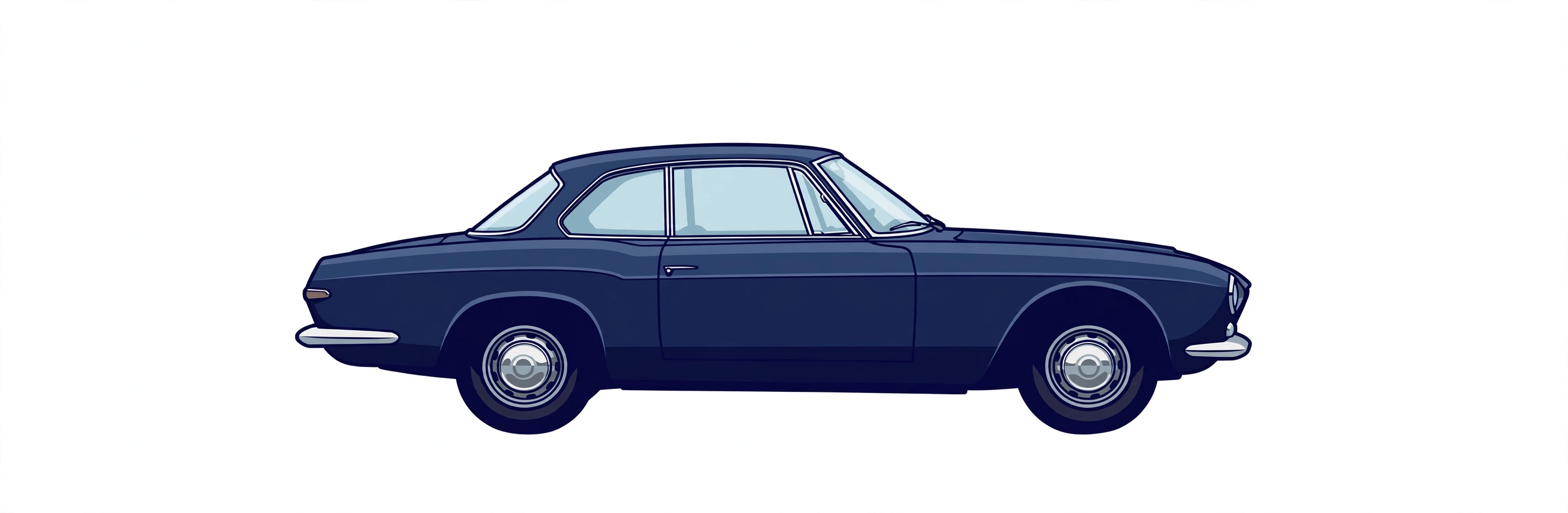
Buick Electra buyer's guide
Buick Electra -- the model's own buyer's guide: variants, values and what to check.
Years listed: 1964-1986 · Series: Full Size
Overview and history
The Electra is Buick's flagship for three decades, and for most of that time it is the biggest, softest, most richly trimmed car General Motors sells below a Cadillac. It arrives in 1959, replacing the Roadmaster at the top of the range, and it leaves in 1990 as a front-wheel-drive sedan that shares almost nothing with the original except the name, the mission and the customer. In between you get the full story of the American luxury car in one model line: tailfins and a 401-cubic-inch V8, the vast early-seventies land yachts, the sharp downsizing of 1977, the diesel and computer-carburettor years, and finally the front-drive reinvention.
Start with the name, because it carries the first myth to bury. The Electra 225 is not named for its engine. The 225 is the car's overall length in inches — about 225 inches of it on the 1959 original — and Buick keeps the badge long after the cars grow past that figure and then shrink below it. Plain Electra is the standard flagship; Electra 225 is the longer, plusher line in the early years, and by the mid-1960s the 225 badge effectively takes over the range. Later the hierarchy re-sorts itself into Electra, Electra Limited and Electra Park Avenue, with Park Avenue starting as a trim package in the late 1970s and ending as the top model in its own right. The Electra name itself comes from Electra Waggoner Biggs, a Texas sculptor and ranching heiress whose brother-in-law, Harlow Curtice, ran General Motors.
The generations matter more than the years, because an Electra changes its whole mechanical character several times. The 1959–60 cars are finned, Dynaflow-driven and built on the big C-body shell shared with Cadillac. The 1961–64 cars are leaner and cleaner, still Nailhead-powered. The 1965–70 cars bring the modern three-speed automatic and then, in sequence, the 430 and the great 455 big-block. The 1971–76 cars are the largest Electras ever built — the full flowering of the American land yacht, with the 455 strangled year by year by emissions tuning. The 1977–84 cars are the downsized generation: roughly 700 pounds lighter, a foot shorter, and powered by a rotating cast of corporate V8s, a V6 and a diesel. And from 1985 the sedan goes front-wheel drive with a V6 — while, confusingly, the Electra Estate wagon stays rear-wheel drive on the old platform, with a carburetted V8, right through to 1990. Two completely different cars wear the Electra badge in those last six years, and telling them apart is the first identity check in this guide.
Our own listings reflect that spread, weighted to the classic rear-drive years. We currently track 23 Electras, 14 for sale and 9 sold, and the pool clusters where you would hope: five from 1970, the last and best year of the 1965–70 generation, four from 1964, and a tail of 1970s and 1980s cars running up to a 1988 Estate wagon.
What unites every Electra is the ownership proposition. These are not sports cars and never pretend to be. They are torque, silence, seat comfort and presence, engineered to cross a continent at a whisper. Buy one for that, judge it by those standards, and it will not disappoint you. Judge it by rust, deferred maintenance and perished rubber — the three things that actually kill them — and you will buy well.

The models
Every Electra is a full-size car, but the body and trim menu changes constantly. Across the run you will meet two- and four-door hardtops, four-door sedans, convertibles (through 1970) and station wagons, with the wagon badged Electra Estate in the later years. Trim climbs from Electra through Electra 225, Limited and Park Avenue, and the climb is mostly upholstery, chrome, sound deadening and standard power equipment rather than mechanical difference — an important point when you price cars, because a Limited badge on a tired car is worth less than a plain badge on a sound one.
| Model | Years | Engine | Output | Built | Character |
|---|---|---|---|---|---|
| Electra and Electra 225 | 1959–1960 | 401 Nailhead V8 | 325 hp | Volume flagship line | Finned original; Dynaflow only |
| Electra 225 | 1961–1964 | 401 Nailhead, 425 optional | 325 hp, 425 gives 340 hp | Volume flagship line | Cleaner styling; the 1964 car gains a real automatic |
| Electra 225 | 1965–1966 | 401 or 425 Nailhead | 325 or 340 hp | Volume flagship line | Last Nailheads; big, handsome, well supported |
| Electra 225 | 1967–1969 | 430 V8 | 360 hp | Volume flagship line | The new big-block; strong and undervalued |
| Electra 225 | 1970 | 455 V8 | 370 hp | Volume flagship line | Peak torque year; the connoisseur's big Electra |
| Electra 225 and Limited | 1971–1976 | 455 V8 | About 250 hp net, falling to about 205 hp | Volume flagship line | The largest Electras; output fades, size does not |
| Electra, Limited and Park Avenue | 1977–1979 | Buick 350 or Oldsmobile 403 V8 | 155 to 185 hp | Volume flagship line | Downsized and sharper; the 403 is the pick |
| Electra and Park Avenue | 1980–1984 | Oldsmobile 307 V8, 252 V6, 350 diesel | 105 to 140 hp | Volume flagship line | The economy years; condition varies wildly |
| Electra and Park Avenue, front-drive | 1985–1990 | 3.0 or 3.8 V6 | 125 to 165 hp | Volume flagship line | A different car entirely; refined, front-drive |
| Electra Estate wagon | 1977–1990 | V8s, settling on the Oldsmobile 307 | 140 hp in final form | Lower volume than the sedans | Rear-drive wagon that outlives the rear-drive sedan |
Production totals for Electras are published in several conflicting aggregations — by body style, by series, by calendar or model year — so the table gives you the honest scale, a high-volume flagship line, rather than invented precision. Outputs are period gross figures for the early cars and net figures once the industry switched in 1972, which is why the 1971–76 row looks so much weaker than the 1970 car: some of that fall is real (lower compression, milder tuning) and some is simply the measuring stick changing.
The finned originals, 1959–60. Delta wings, acres of chrome, a 401 Nailhead and the Dynaflow automatic. These are show cars now — dramatic, collectible and the most expensive Electras to restore, because every piece of that brightwork has to be found, straightened and replated. Buy the best one that exists rather than a project.
The 1961–64 cars. The fins go, the styling sharpens, and the cars get easier to live with year by year. The 1961 and 1962 convertibles in our listings are the glamour models of this group, and the four 1964 cars in the pool point at the smart buy: 1964 brings the Super Turbine 400 three-speed automatic, a proper geared gearbox in place of the Dynaflow, which transforms how the car drives and how much it costs to keep driving.
The 1965–70 cars. The modern Electra takes shape: coke-bottle flanks, the Super Turbine 400 (soon renamed Turbo Hydra-Matic 400), and a rapid engine progression from Nailhead to 430 to 455. The 1970 car, with the high-compression 455 in its only year in this body, is the performance peak of the whole nameplate — five of the 23 cars in our pool are 1970s, and that is the market voting. Convertibles run through this generation and end with it in 1970.
The 1971–76 cars. The land yachts. Wheelbases and overall lengths peak, interiors turn to crushed velour and pillow-top seats in the Limited, and the 455 soldiers on under ever-heavier emissions equipment, losing compression and power each year. A 1975–76 car is the cheapest way into a big Electra and the most expensive way to feed one. These cars live or die on rust and on the state of their vinyl roofs and interiors.
The downsized cars, 1977–84. The 1977 redesign is the most successful downsizing GM ever did: the car loses real weight and length and keeps its room, its ride and most of its presence. Early cars offer the Buick 350 and the Oldsmobile 403; later cars settle into the Oldsmobile 307, the Buick 252 V6 and the Oldsmobile diesel. Park Avenue trim, with its famously loose-pillow seats, is the one people remember.
The split finale, 1985–90. The sedan moves to the front-drive C-body platform with the Buick V6 and becomes a quiet, efficient, well-made luxury car that collectors have barely noticed yet. The Estate wagon does not move at all: it stays on the rear-drive B-body with the 307 V8 and a carburettor, a brand-new 1988 car built to a 1977 recipe. Our pool holds exactly that car, a 1988 Estate wagon, and it is a time capsule of how long GM kept the old faith for wagon buyers.

Engines and gearboxes
Four engine families power the Electra across 32 years, and you identify each one differently — which matters, because sellers misdescribe them constantly, usually upwards. Learn the tells. A Nailhead has tall, almost vertical valve covers, spark plugs hidden under covers on top of the heads, and its distributor at the back of the engine. A 430 or 455 has its distributor at the front, angled valve covers and a very wide intake manifold. A downsized-era V8 could have come from Buick, Oldsmobile or Pontiac depending on year, and an Oldsmobile engine in a Buick is factory-correct for much of the late 1970s and 1980s, not a swap. A front-drive car's transverse V6 shares its basic architecture with millions of other GM cars, which is the best parts news in this whole guide.
The Nailhead: 401 and 425, 1959–1966
The Nailhead earns its nickname honestly: its valves are small — nail-sized, the story goes — and stand nearly vertical in a pent-roof combustion chamber, worked by rocker shafts under those distinctive tall covers. The design dates to 1953, and by Electra years it is a mature, torque-first engine. The 401 makes 325 hp and, more importantly for a two-ton car, a deep well of low-speed torque; the 425, offered from 1963, makes 340 hp in single-carburettor form. Both pull an Electra away with the same effortless surge, and both are happiest as cruisers.
What to know mechanically. The Nailhead is a durable engine with a few period habits. The rear main seal is a rope seal on early cars and weeps with age — a light oil mist under the back of the engine is normal old age; a drip that marks the driveway and drops the level between services is a seal job, and on these engines that job is priced by the labour to get at it, typically $900–1,800 at a shop. Oil leaks generally are the Nailhead's signature: valve-cover gaskets, the valley pan and the front seal all seep on cars that have sat, and a recommissioning budget should simply include a full gasket pass. The exhaust manifolds crack, usually audibly as a cold tick that fades as the manifold warms and expands — listen on the cold start, because a warm engine hides it. Carburetion is by Rochester 4GC or Carter AFB four-barrel depending on year; both are rebuildable by any competent carburettor shop, and most Nailhead running faults — flat spots, hot-start flooding, a rich idle — are carburettor wear, a tired mechanical fuel pump or perished vacuum hoses, not internal engine trouble. Budget $500–900 for a proper carburettor rebuild and calibration.
The real Nailhead trap is identity. A 401 and a 425 look identical from outside, and the difference is worth money. The engine's production code is stamped on the block at the front of the valley, and you decode that stamp against the year charts before you pay 425 money for a car — never take the air-cleaner decal's word, because decals are cheap and engines get swapped. The same stamp check protects you in reverse: a 425 hiding in a car sold as a 401 is the seller's loss and your gain, but only if you read the block.
The big-blocks: 430 and 455, 1967–1976
Buick replaced the Nailhead for 1967 with a completely new big-block: bigger valves laid at an angle, a front distributor, thin-wall casting and a much better-breathing head. The 430 makes 360 hp, and in 1970 Buick bored it out to create the 455 — 370 hp and 510 lb-ft of torque in its first year, a figure that puts the 1970 Electra among the strongest-torque luxury cars America ever built. The 1970 specification is the peak: high compression, the good heads, no catalyst. From 1971 compression falls, from 1972 the ratings go net and fall again, and from 1975 a catalytic converter and air-injection plumbing arrive. A 1976 455 is the same basic engine making roughly 205 hp and working much harder for its living. All of them remain smooth, quiet and immensely strong in the mechanical sense — worn examples are almost always neglected examples, not weak designs.
Two Buick big-block weaknesses are famous, and both are testable. First, the oiling system. The oil pump lives in the front timing cover, driven off the camshaft, and the cover is aluminium: as the pump gears wear the cover's housing, hot-idle oil pressure sags. A healthy 455 shows strong pressure on a mechanical gauge at cruise and a modest figure at hot idle; an engine whose hot-idle pressure is near zero on a known-good gauge, with a rattle from the front cover, is telling you the cover and pump need work — a $600–1,400 job with the cover off, and a negotiating lever, not necessarily a walk-away. Low pressure readings on the dashboard gauge alone prove nothing, because the senders lie with age; the mechanical-gauge test is the one that settles it. Second, the timing gear. GM fitted nylon-toothed cam gears in this era to quiet the chain, and the nylon embrittles with age and heat until teeth strip, usually leaving a no-start or a sudden, total loss of drive to the valvetrain. Any 430 or 455 without a documented timing-chain replacement should be priced as if the job is due — $700–1,300 at a shop — and a seller's invoice for a steel gear set is worth real money. The timing cover also corrodes where coolant passes through it, so weeping at the front of the engine on a big-block is coolant until proven otherwise, and a cover eaten thin is a replacement part, not a sealant job.
Feeding a 455 is a Rochester Quadrajet, and the Quadrajet's classic faults are covered in the problem areas below. The short version: it is an excellent carburettor that suffers from leaking fuel-well plugs, worn throttle-shaft bores and fifty years of helpful adjustment. A specialist Quadrajet rebuild, with the well plugs sealed and the shafts bushed, runs $450–850 and transforms a car.
The corporate years and the V6s, 1977–1990
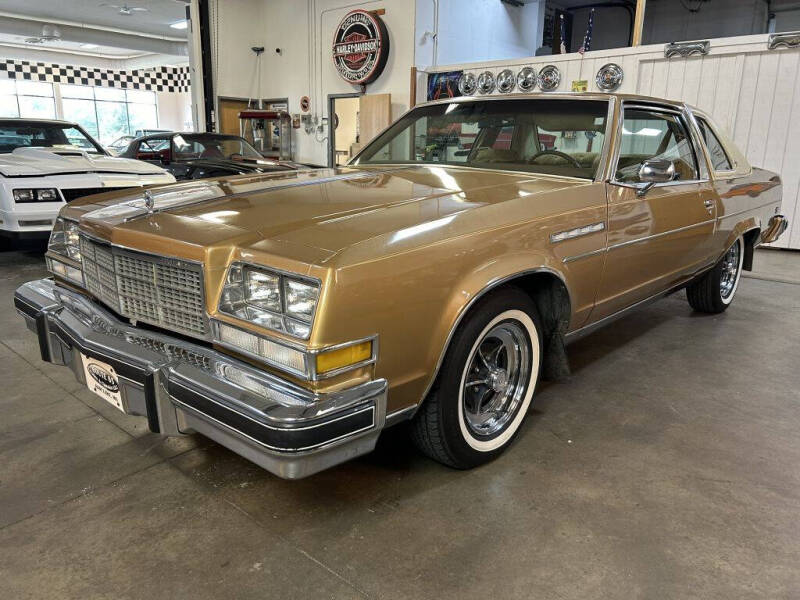
The downsized Electra opens with a choice of the Buick-built 350 (about 155–170 hp depending on year) and the Oldsmobile-built 403 (185 hp), and the 403 is the engine to have: torquier, well regarded, and the performance option of the downsized range. Through the early 1980s the range economises — the Oldsmobile 307 becomes the standard V8 at about 140 hp, the Buick 252-cubic-inch V6 appears as the economy choice, and the Oldsmobile 350 diesel is offered to buyers chasing fuel mileage. The 307 is a gentle, long-lived engine whose main enemy is its own feedback Quadrajet and the Computer Command Control system that manages it from 1981: a maze of vacuum hoses, a mixture-control solenoid that should tick steadily at idle, and sensors whose failure puts the system into a rich, thirsty limp mode. A 307 car that runs rich and hunts at idle usually needs diagnosis time and vacuum hose, not parts money — but a car whose previous owner has ripped out the computer controls and fitted a random carburettor is a car to price very carefully, because putting it right means reconstructing the whole system.
The diesel deserves its own warning. The Oldsmobile 350 diesel was adapted from a gasoline architecture and earned its reputation the hard way: head-gasket and head-bolt failures, injection-pump wear, and a fatal sensitivity to water in the fuel. Surviving diesel Electras are curiosities. Unless you are buying it deliberately, as a diesel specialist's hobby, treat a diesel car as a project with an engine conversion in its future and price it accordingly. A diesel that starts instantly from cold, idles evenly and shows no bubbles in the coolant header is a better-than-average survivor — test all three, because the cold start is where a tired diesel confesses.
The front-drive Electra of 1985 switches to Buick's V6s: a 3.0-litre early on and the 3.8-litre that becomes the standard, in sequential-injection form and, from 1988, in the balanced-shaft LN3 version making 165 hp. The 3.8 is one of GM's great engines — smooth, torquey for its size and extremely well supported. Its period faults are electronic rather than mechanical: crankshaft-position sensors that fail hot and recover cold (the classic symptom is a car that dies at operating temperature and restarts twenty minutes later), coil-pack and ignition-module failures that take out pairs of cylinders, and mass-airflow sensor drift on the earlier injected cars. All three are diagnosable, all three are affordable, and none should scare you off a good car. The rear-drive Estate wagon, meanwhile, keeps the 307 and its carburettor to the very end in 1990 — which is why the 1988 wagon in our listings is mechanically a 1970s car wearing a 1980s suit, with all the simplicity that implies.
Gearboxes
The gearbox story has four chapters. The 1959–63 cars use Buick's Dynaflow, a torque-converter transmission with a variable-pitch stator and effectively no gearchanges to feel: it surges rather than shifts. A healthy Dynaflow is silky and slow in equal measure; a tired one slips, flares on takeoff and leaks from every seal, and a rebuild is specialist work at $2,500–4,500, because the knowledge and parts are thinning out. From 1964 the Super Turbine 400 — the Turbo Hydra-Matic 400 under its Buick name, with a switch-pitch converter in its first years — gives the Electra a proper three-speed automatic, and the TH400 goes on to become the default box of the big-car era: immensely strong, cheap to rebuild at $1,800–3,000, and diagnosable by its shift quality. Firm, clean shifts are correct; a long slide into third or a delayed, thumping engagement of reverse means wear, and dark, burnt-smelling fluid on the dipstick confirms it.
The downsized cars move to the lighter TH350 and, in some late-1970s applications, the fragile TH200 — a three-speed that was marginal behind a V8 in a heavy car when new and is the first thing to check on a 1977–79 car that drives oddly. The 1980s bring overdrive: the TH200-4R four-speed serves the rear-drive cars and wagons, a good gearbox whose overdrive and lock-up converter transform motorway economy, provided the television cable is correctly adjusted — a misadjusted cable is the leading cause of early 200-4R death, because it sets the line pressure the box lives by. The front-drive cars use the THM440-T4 four-speed transaxle, generally durable, judged the same way: clean shifts, no shudder as the lock-up converter engages at cruise, and fluid that is red rather than brown.
Problem areas
Everything in this section is what actually decides an Electra purchase. Our own photo-checked sample is small and we will say so plainly: of the 23 Electras we track, five have been examined in photo detail, and rust was noted on four of those five, with visible damage noted on two — no smoke and no leaks were recorded in that small sample. Five cars prove nothing statistically, but four out of five agrees with everything the wider market knows about these cars: the mechanicals are the strong part of an Electra, and the body is where the money goes. Assume the car in front of you needs a forensic body examination and be pleasantly surprised when it passes.
Rust: the map
Rust on an Electra follows the water and the road salt, and it follows the same map on every rear-drive generation, with the details shifting by year. Work through it in this order, and remember that these are body-on-frame cars: a rotten body on a sound frame is a welding bill, while a rotten frame is a different and much worse conversation.
Rear quarter panels and wheel arches. The classic Electra rot spot. The quarters trap mud and salt behind the rear wheels, the lower edges bubble first, and on cars with rear fender skirts the skirt hides the worst of it while holding moisture against the panel — always remove or peer behind skirts. Surface bubbling is a local repair; perforation spreading into the arch lip and the panel behind the door is panel work at $800–2,000 a side done properly with paint.
Trunk floor. The boot seals and the rear-window seal leak, and the water collects under the spare wheel and in the trunk floor's low corners, exactly where nobody looks. Lift the spare out on every viewing. Staining and surface rust are a clean, treat and seal job; a floor you can push a screwdriver through is a panel replacement, and trunk rust never travels alone — it is your marker for the state of the whole rear body.
Floor pans and the cowl. Windscreen seals perish, the cowl plenum fills with leaves and its drains block, and water runs down inside the car and sits under the carpets and the thick factory sound deadening, which holds it against the floor like a sponge. Lift the carpets in all four footwells and prod. The tell-tale inside a dry-looking car is a musty smell and seat rails rusted at their feet. Floor sections are available for the popular years; fitted and painted, budget $600–1,500 a side, and treat any floor rot as a reason to look much harder at everything below the waistline.
Frames on the 1971–76 cars. The big C-body frames rust at the rear rails, around the body mounts and where the frame passes the rear wheels, and the Northeast and Midwest cars in any pool — our own listings include New York, Minnesota and Pennsylvania cars — have lived in salt country. Get the car on a lift and prod the rails, especially at the kick-up over the rear axle and at the body-mount points: a mount that has pulled through a rotten rail is fabrication work priced per car, and it can exceed the value of a cheap 1970s Electra. Body mounts themselves perish and collapse with age even on sound frames, giving you a car that sits unevenly and clonks over bumps; a mount kit is cheap, fitting it is a day's labour.
Doors, rockers and the vinyl-roof trap. Door bottoms fill with water when their drain slots block, and bubble along the lower edge — run a fingertip along every door bottom and feel for the roughness under the paint. Rocker panels rot from the inside where the front wheels throw spray. And on the 1970s Limited and Park Avenue cars, the padded vinyl roof is a rust device fitted at the factory: moisture creeps under the vinyl, especially around the rear window and the landau bars, and the roof skin and rear pillars rot invisibly until the vinyl bubbles or the headlining stains. Press along the rear pillars and around the back window on any vinyl-roof car; springy, crunchy metal under the vinyl is a roof repair that starts at $1,500 and climbs fast once the rear window has to come out and the pillars need fabrication. A car with a documented vinyl-roof removal and roof repaint has had the single best preventive job done already.
The front-drive cars rust differently. The 1985–90 sedans are unit-body cars, so the structural checks move: rear strut towers, subframe mounts, floor edges and the sills carry the loads, and rust in the towers or the subframe mounting points is structural in a way a B-body's body rust is not. The Estate wagons keep the old map — quarters, trunk (load floor), tailgate bottom and frame — and add one of their own: the tailgate and its window channels rot, and wagon-specific panels and glass are far harder to find than sedan parts.

Engine and driveline wear
Beyond the engine-family faults in the previous section, a few wear patterns cut across the whole range.
Oil consumption and smoke. A puff of blue smoke on start-up that clears in seconds is valve-stem seals, a known and budgetable job ($600–1,200 in the car on most of these engines). Blue smoke under load, or a car that breathes heavily from the oil filler with the engine running, is rings and bores — an engine-out rebuild at $4,000–7,000 for a big-block done properly. Grey-black smoke and a rich smell are fuel, not oil: carburettor or choke faults on the older cars, feedback-system faults on the 1980s cars, and almost always cheaper than the seller fears. Our small photo sample recorded no smoke mentions at all — which tells you about the sample, not about fifty-year-old V8s, so do the start-up and overrun tests yourself.
The Quadrajet's three faults. On every carburetted car from the mid-1960s onward you will likely meet the Rochester Quadrajet, and its problems are specific. The fuel-bowl well plugs leak internally, draining the bowl overnight and giving you a long, churning cold start — the test is whether the car starts instantly after sitting for two days, and the fix is part of any proper rebuild. The throttle-shaft bores wear and leak air, giving an idle that will not settle and responds to a wiggle of the shaft; the cure is bushing the baseplate. And the air horn warps from decades of uneven tightening, leaking at the gasket — visible as fuel staining around the top of the carburettor. None of these is a reason to reject a car; all three are reasons to send the carburettor to a specialist rather than fit a cheap exchange unit jetted for something else.
Cooling systems. Electras run big radiators and clutch fans, and the system fails by neglect: silted radiator cores, a fan clutch that freewheels when it should drive (test it by spinning the fan on a hot, stopped engine — it should resist and stop within a turn or two), perished hoses and a heater core that weeps into the passenger footwell and fogs the screen with a sweet smell. A car that runs hot in traffic but cool on the road has an airflow or fan-clutch problem; a car that heats steadily everywhere has a circulation problem — radiator, thermostat or water pump — and a car that pressurises its hoses within a minute of a cold start has combustion gas in the coolant, which is a head-gasket conversation. Overheating a Buick big-block warps heads, so take temperature behaviour seriously and never buy a car the seller will not let you idle for twenty minutes.
Exhaust and emissions hardware. Manifolds crack (the cold tick again), the heat-riser valve in the right-hand manifold seizes and cooks the choke or starves the engine, and from 1975 the catalytic converter can block on a car that has been running rich, presenting as a car that idles fine and will not pull past modest speed — the test is a vacuum gauge falling as you hold revs, or simply loosening the exhaust ahead of the converter on a test. Air-injection pumps seize and squeal; EGR valves carbon up and cause a stumble just off idle. Most of this is cheap parts and patience; what is expensive is a previous owner's creative deletions, which can fail you at inspection in states that test or visually check emissions equipment.
Suspension, steering and brakes
The rear-drive Electra rides on coil springs all round with a live rear axle, and the front-drive car on struts — and both wear the same way all heavy, softly sprung cars wear. Springs sag, and the car sits low and tail-down; measure arch-to-tyre clearance side to side rather than trusting your eye, because an uneven car is pointing at a broken spring or a collapsed body mount. Shock absorbers on these cars are often decades old, and a car that wallows and floats at speed is usually just a set of dampers away from respectability — $300–700 fitted for four quality units. Cars fitted with the optional automatic level control use rear air shocks fed by an engine-driven or electric compressor depending on year; a car sitting tail-down with the system silent has a leak, a dead compressor or perished air shocks, and owners often replace the whole arrangement with conventional shocks and slightly stiffer springs, which is an acceptable fix if it has been done in pairs and the car sits level.
Steering is by recirculating ball with power assistance, and it is vague by modern standards even when perfect — judge it against its own standard, not a modern car's. Play at the wheel beyond a couple of inches at the rim, knocks over bumps, or a car that wanders and needs constant correction point to worn idler and centre-link joints, a tired steering box or perished rag-joint in the column. The wear parts are all available and a full front-end refresh with an alignment runs $800–1,800. Power-steering pumps groan when low or worn, and the high-pressure hose is a common leak that sprays the engine bay with fluid and gets misdiagnosed as an engine oil leak — clean fluid that smells different from engine oil, low in the pump reservoir, settles which system is leaking.
Brakes are front discs with rear drums on most rear-drive cars, four-wheel discs appearing on some later and wagon applications, and the system is conventional and cheap to maintain — which means the faults are the faults of age and standing. Seized calipers and wheel cylinders, perished flexible hoses, a master cylinder that lets the pedal sink slowly at a stop, and hard brake lines corroded along the frame rail. A full hydraulic refresh — hoses, calipers or cylinders, master cylinder and fluid — is $800–1,800 with labour and should be a first-month job on any car that has sat. The vacuum booster fails as a hiss under the dash and a hard pedal, and on diesel cars the vacuum comes from an engine-driven pump whose failure takes the brakes' assistance and the climate controls with it. Test the brakes hard from speed on the viewing drive: an Electra should stop straight and without drama, and any pull, judder or long pedal is priced into your offer, not accepted as character.
Electrics, climate and trim
An Electra's luxury is delivered electrically and pneumatically, and this is where cheap cars become expensive hobbies. Work everything, methodically, on the viewing: every window from every switch, the power seat in every direction, the door locks, the aerial, the cruise control, the wipers and washers, and the climate system in every mode. Power-window motors and their nylon regulators fail one at a time and are fiddly rather than dear ($150–400 a door fitted); a car where all four windows are dead has a master switch, a feed or an earth problem, and is a better buy than a car where each window has died separately. The automatic climate control on later cars is run by vacuum actuators behind the dashboard, fed through hoses that perish and a programmer unit that fails; a system stuck on one temperature or one outlet is usually vacuum supply — a split hose or a failed check valve under the bonnet — before it is anything expensive, so trace the vacuum feed from the engine first. The big GM A6 air-conditioning compressor itself is famously tough; the system around it — condensers, hoses, seals converted (or not) from R12 — is where the $800–2,000 recommissioning bills live.
Interiors decide values on the later cars. The Limited and Park Avenue loose-pillow velour seats are the signature of the downsized generation, and the foam and fabric both age: bolsters split, the driver's cushion collapses, and matching that velour today is a trimmer's detective work rather than a catalogue order — a good original interior in a Park Avenue is genuinely rare and worth paying for. Headlinings sag on the 1980s cars as the foam backing crumbles ($300–600 to retrim), dashboards crack in sun states, and the vast acreage of colour-keyed plastic trim in the later cars goes brittle and breaks at its clips. On the early cars the trim problem is chrome: die-cast pieces pit, bumpers peel, and replating a 1959–60 car's brightwork can run well past $5,000, which is why the rule for the finned cars is to buy chrome, not promises. Exterior die-cast and one-year-only trim for any year is the hardest parts category in the whole Electra world — check that every piece is present on the car, because the missing piece is always the expensive one.
How to inspect one
Allow a full hour, bring a torch, a cloth-wrapped magnet, a tyre-pressure gauge and a friend to work the controls while you watch the car. If the car passes you, pay for a lift inspection before money changes hands — on a car this size, with a frame and a trunk floor to judge, it is the best money in the whole purchase.
- Start with identity and paperwork. Match the VIN on the title to the plate on the car — on the driver's door jamb or A-pillar on the earlier cars, on the dashboard plate visible through the windscreen from 1968 onward — and read the Fisher Body cowl tag on the firewall for the model, body style and trim codes, decoded against the year charts. Then check the engine against the badge using the tells from the engines section: rear distributor and tall vertical valve covers mean Nailhead, front distributor means the later big-block, and the stamped code at the front of a Nailhead's valley settles 401 versus 425. A car whose paperwork, tags and engine all agree is already ahead of half the market.
- Cold start, and insist on cold. Arrive to a cold engine. A carburetted car that starts easily after sitting, with a fast idle that steps down as it warms, has a working choke and a fuel bowl that holds fuel — the Quadrajet well-plug test from the problem areas. A front-drive V6 car should fire instantly; a diesel should start cleanly without prolonged cranking. Listen in the first thirty seconds for the cold tick of a cracked exhaust manifold and watch the tailpipe: a blue puff is valve seals, sustained blue is rings, black is fuel.
- Smoke and breathing tests. With the engine warm, have your friend blip the throttle while you watch the exhaust, then hold the car on the overrun down a hill on the test drive and watch for smoke as you reapply power — that is the stem-seal and guide test. Remove the oil filler cap at idle: heavy pulsing blow-by means ring wear, a gentle vapour is normal.
- Under the bonnet, by system. Check the oil for fuel smell and the coolant for oil; look for combustion staining around the radiator cap neck. On a 430 or 455, note the front timing cover for coolant weeping — the corrosion point from the engines section — and plan the mechanical oil-pressure gauge test if the dashboard gauge reads low at hot idle. Check the power-steering reservoir level and colour before blaming the engine for leaks underneath. Count the perished vacuum hoses; on a 1980s car, they are the diagnosis for half the faults you will find.
- The underside on a lift. Work the rust map in order: rear quarters and arches, trunk floor from below, floor pans, rockers, and on a 1971–76 car the frame rails at the rear kick-up and every body-mount point, prodded hard. Check the hard brake lines along the frame rail and the fuel lines for corrosion. Perforation in a frame rail or a pulled-through body mount is the one finding that should end the viewing unless the price already reflects fabrication work.
- Trunk and interior floors. Lift the spare wheel and look at the well corners; lift all four carpets and prod the pans; smell for the mustiness that means the cowl or the screens have been leaking. On a vinyl-roof car, press the rear pillars and the roof skin around the rear window through the vinyl, feeling for the crunch of rot underneath.
- Body, gaps and chrome. Run the magnet over the quarters, arches, door bottoms and rockers — filler announces itself. Check the door bottoms with a fingertip for bubbling, confirm the drain slots are clear, and on a wagon work the tailgate and its window. Inventory every piece of chrome and die-cast trim and note what is missing or pitted; on a 1959–60 car this inventory is a four-figure calculation.
- Suspension and steering. Bounce each corner: the car should settle in one movement. Measure arch heights side to side for sag and for a level-control car sitting down at the back. Rock each front wheel top and bottom and side to side for bearing and joint play, then judge the steering against its own period standard — a couple of inches of play at the rim is the design, a knock or a wander is wear.
- The test drive, fifteen minutes minimum. The automatic should engage drive and reverse without a long pause or a thump, shift firmly, and kick down cleanly; a Dynaflow car should surge smoothly with no flare on takeoff, and an overdrive car should settle into fourth with a gentle lock-up you can feel but not hear. Note whether a 200-4R car flares between gears — and remember the television-cable warning before condemning the box.
- Brakes and temperature. Brake hard from speed twice: straight, no judder, no pull, a pedal that stays high under sustained pressure. Then idle the car for twenty minutes and watch the temperature gauge behave, and check the fan clutch story from the problem areas if it creeps. A car the seller will not let you idle is a car whose cooling system you have just been told about.
- Every electrical and climate control. Windows from every switch, seat in every direction, locks, aerial, cruise, wipers, washers, lights. Run the climate system through every mode and temperature extreme and feel for air moving where it should; blow the air conditioning and judge it honestly — cold on the day is worth a premium, warm is a recommissioning bill.
- Interior and stance, last. Sit in every seat, especially the driver's, and feel for collapsed foam under the velour or vinyl; look at the headlining, the dash top and the state of the loose-pillow trim on a Park Avenue. Then stand back and look at the whole car: level, straight-flanked, arches even. Photograph it from twenty paces — stance and panel faults you talked yourself out of in person are obvious in a picture.

Values
The Electra market splits into three distinct markets that happen to share a badge, and you read each one differently. The early cars — the finned originals, the convertibles and the best of the 1965–70 generation — form a genuine collector market, where originality, chrome condition and documented history drive the spread between a project and a finished car. The 1971–76 cars and the downsized generation form a condition market: supply is still plentiful, nobody is restoring them at a profit, and the money follows rust-free bodies and good interiors rather than badges or rarity. The front-drive cars form a use market, priced as interesting old cars rather than collectibles, where a well-kept, low-mileage Park Avenue is worth a premium over a tired one simply because it is the nicer car to own.
Within every segment, the condition spread is the whole story. The gap between a project Electra and a sorted driver is wider than the gap between trim levels, between model years, and between most engine options — because the expensive work on these cars is body, chrome and interior, and those costs do not shrink just because the purchase price did. A Limited or Park Avenue badge adds a modest premium when the extra trim is present and working, and nothing at all when the velour is split and the power accessories are dead. Convertibles carry the strongest premium of any body style, as open cars always do, and the 1970 big-block cars carry a premium among the sedans for the reason the engines section explains: that specification exists for one year only. Wagons, especially the late rear-drive Estates, have a loyal following that keeps good ones from ever being the cheapest cars in the room.
Read asking prices with the usual scepticism, sharpened for this marque. Electras were often kept by older owners, garaged for decades and advertised by families with an emotional number in mind, so the gap between asking and achieved prices is wider here than in the sports-car market, and cars sit for sale longer. A high asking price on a common 1970s sedan is an opening position, not a market verdict; the achieved-price evidence in the recorded-sales block below this guide is the number to negotiate from. Conversely, a genuinely rust-free big car priced fairly sells quietly and quickly, and the cheap cars at the bottom of every listing set share the same biography — rust, storage, or both, and usually all three. There is no such thing as a cheap Electra that stays cheap: the purchase price is the smallest cheque you will write, so spend it on the body and the interior and let someone else's money already spent on welding and chrome be your discount.
Parts and ownership
The Electra is three ownership propositions wearing one name, and parts supply follows the same split. The rear-drive cars share their mechanical core with the LeSabre, the Wildcat and millions of other GM B- and C-body cars, which makes the service world easy: engine internals for the 350, 403, 307 and 455, brake and suspension wear parts, steering joints, seals, bearings and electrical service items are all catalogue parts, ordered today and fitted this weekend at prices close to modern-car money. The Nailhead is the exception within the family — a Buick-only engine out of production since 1966 — but it has a devoted specialist trade, and gaskets, bearings, water pumps, ignition parts and even performance components are reproduced; what you will wait for are Nailhead-specific castings and one-year pieces, and what you will pay for is Dynaflow expertise, which is genuinely thinning. Budget a full recommissioning on a car that has sat — fuel system cleaned end to end, every brake component inspected, all fluids, hoses and belts renewed — at $3,000–6,000 at a shop before you improve anything,
Harder and dearer: year-specific chrome and die-cast trim (the hardest category of all, and the reason to buy a complete car), vinyl-roof-era roof and pillar repairs, Park Avenue velour and other one-trim fabrics, convertible top hydraulics and frames, wagon tailgates and wagon glass, diesel injection equipment, feedback-carburettor and computer-control components for the early-1980s cars, and front-drive-era electronics such as ignition modules and airflow sensors — available, but increasingly a case of good used or new-old-stock hunting. The front-drive cars are otherwise the easiest Electras to own: the 3.8 V6 is supported everywhere, the transaxle is a known quantity, and any competent general shop can maintain one.
Running costs. Fuel is the headline: a big-block Electra returns consumption in the low teens per gallon in mixed use, a downsized V8 car manages the mid-teens, and the front-drive V6 is the only Electra you would call economical. Insurance and registration sit in line with other classics of similar value, and the cars are simple enough that a home mechanic with a factory service manual — buy the manual for your year before you buy parts — can handle most maintenance. Join the marque clubs and the model forums early: for the Nailhead and the one-year trim questions especially, the accumulated knowledge in the Buick clubs is a parts source, a diagnostic library and a market in itself.
Which one to buy
- The all-rounder: a 1965–66 Electra 225. The handsome body, the Super Turbine 400 automatic, the mature Nailhead and the best balance of presence and usability in the range. If you want one Electra to drive everywhere, this is it.
- The value buy: a 1964 Electra 225. The first year of the proper three-speed automatic, still wearing the cleaner early-sixties styling, and consistently overlooked next to the finned cars and the 1970. Our listings hold four of them — the pool agrees.
- The performance car: a 1970 Electra 225. The 455 in its one high-compression year in this body, with torque nothing else in the guide matches. Verify the engine and the timing-chain history, and buy the best body you can find under it.
- The cruiser: a 1977–79 Electra Limited or Park Avenue with the 403. The successful downsizing, the strongest of the corporate engines and the great loose-pillow interior. The sweet spot of comfort per dollar in the whole range.
- The family classic: a late Electra Estate wagon. Rear-drive, V8, vast and simple, with the 1988 car in our listings showing how late the recipe ran. Buy on load floor, tailgate and frame condition.
- The modern classic: a front-drive Park Avenue. The 3.8 V6 car is quiet, efficient, well built and still cheap because collectors have not arrived yet. Buy the best-kept, best-documented example and use it daily.
And the rule that overrides all of the above: buy the least rusty, most complete car you can find, in the generation you actually want. Engines, gearboxes, brakes and air conditioning are all fixable at prices you can plan for. A rotten frame, a rusted-out vinyl-roof car or a missing set of one-year chrome will cost more to put right than the finished car will ever be worth — and completeness, on an Electra, is the one specification no amount of money reliably buys back.
See the 15 Electra cars currently listed.